Bluehead Sucker

Pantosteus discobolus

Catostomidae · freshwater water fish

3 minute read · Species guide

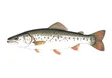
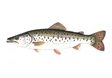
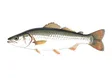
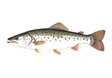
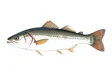
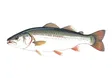
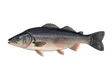
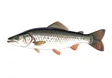
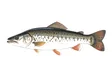
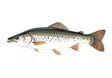
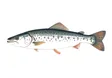
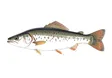
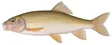
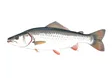
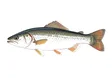
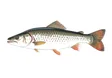
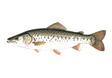
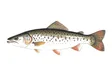
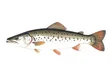
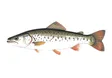
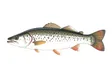
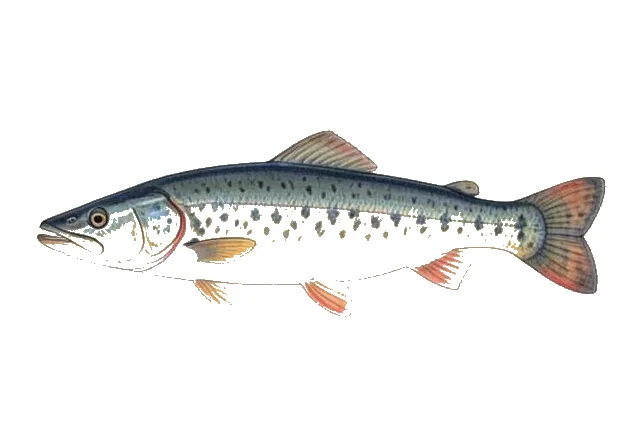
Bluehead Sucker field guide illustration

About Bluehead Sucker

The bluehead sucker (Pantosteus discobolus) is a species of freshwater cypriniform fish endemic to the intermountain Western US. Formerly placed in the genus Catostomus, it is now placed in the genus Pantosteus.

Description

The bluehead sucker is the largest of all Arizona endemic suckers, reaching lengths over 11.8 in. Their colors are very similar to the desert sucker, with dark green or dark silvery top portions and light yellow bottoms. The bluehead has the largest lips of any sucker and has tiny papillae on the lower lip. This is also the only species with the absence of an inguinal process, just behind the pectoral fins, distinguishing it from the other eight suckers. The lower lip is slightly notched at the midline, with lateral line scales in large numbers that range from 70 to 100. They have 7 to 9 dorsal fin rays and a smaller number of caudal fin rays. During breeding, the males obtain a blue patch on the top of their large heads, and the lower fins become yellow/orange with red/rosy lateral lines. These drastic coloration changes are probably due to sexual selection and female mate choice. An easy way to distinguish the bluehead from the other Arizona suckers is the distinct cartilaginous lower jaw.

Distribution in Arizona

Primary records are concentrated at the Colorado River main stem and the Grand Canyon tributaries, as well as the Colorado River drainages at Lake Mead. Blueheads are also found at Snake River above Shoshone Falls and Bear/Weber River drainages. Scattered reports around the Bonneville Basin have been made. Arizona bluehead sucker distributions are more specifically the Clear, Bright Angel, Shinumo, Kanab, and Havasu Creeks, they are becoming increasingly common below Diamond Creek. Some can be found on the Navajo Reservation and within the San Juan River basin. They can be found at elevations of 609 to 2060 m.

Habitat

Bluehead suckers prefer larger streams and rivers due to their larger size, but they can be found in a variety of habitats. This species has a wide temperature preference, as well, ranging from cold mountain brooks at 12 °C to warmer desert rivers at 27 °C. If times are good and water is clear, the suckers stay in shallow streams and eddies during the day, finding their way to hard-bottomed streams to forage at night. Primary spawning areas include the Grand Canyon tributaries within the Colorado River drainages.

Reproduction

The bluehead sucker spawns in the spring/summer when water temperatures reach > 15 °C. Males join females in gravel/sandy-bottomed streams and copulation begins, taking only a few seconds. In the Grand Canyon tributaries, mating can extend through April, May, and July. This species will not mate unless the water depth is strictly lower than 1 m, probably because the shallow water is easily heated to their desired temperature by the sun. Juveniles grow exponentially fast, reaching lengths of 60 mm and reaching sexual maturity within the first year.

Biology

Suckers use their cartilaginous jaws to scrape the algae and detritus off the stones at the bottom, and despite any shortages of these foods, suckers show little seasonal movement. Diatoms, detritus, algae, and other organic debris have been found in the gut. They can also live to be more than 20 years old.

Article text: Wikipedia contributors, Pantosteus discobolus (source revision). Licensed under CC BY-SA 4.0. Retrieved 2026-10-11.
Range

Where it lives

Share of 8,271 GBIF observation records with a state location, across 7 states.
0%
38.4%
Share of 8,271 GBIF observation records with a state location, across 7 states.

Habitat

Water and movement

Water
WoRMS records this species in fresh water.

Classification

Taxonomy

Kingdom
Animalia
Phylum
Chordata
Superclass
Actinopterygii
Class
Teleostei
Order
Cypriniformes
Genus
Pantosteus
Species
Pantosteus discobolus
ITIS TSN
1171632
WoRMS AphiaID
1535037
GBIF key
4286866

Common questions about Bluehead Sucker

What is the scientific name of Bluehead Sucker?
The scientific name is Pantosteus discobolus, in the family Catostomidae. Classification follows ITIS.
Does Bluehead Sucker live in fresh water or salt water?
WoRMS records this species in fresh water.
Where has Bluehead Sucker been recorded in the United States?
GBIF has observations in 7 states, with the most records in Utah, New Mexico, Arizona. The map shows observation records, which do not establish the complete natural range.

Closest relatives

Other Pantosteus species

Same family

More Catostomidae

Alabama Hog Sucker6 states
Hypentelium etowanumCatostomidaeNative and introducedFresh
Bigeye Jumprock3 states
Moxostoma ariommumCatostomidaeNativeFresh
Bigmouth Buffalo26 states
Ictiobus cyprinellusCatostomidaeNative and introducedFresh
Black Buffalo26 states
Ictiobus nigerCatostomidaeNative and introducedFresh
Black Redhorse
Moxostoma duquesneiCatostomidaeNativeFresh
Blackfin Sucker2 states
Thoburnia atripinnisCatostomidaeNativeFresh
Blacktail Redhorse9 states
Moxostoma poecilurumCatostomidaeNativeFresh
Blacktip Jumprock7 states
Moxostoma cervinumCatostomidaeNative and introducedFresh
Blue Sucker22 states
Cycleptus elongatusCatostomidaeNativeFresh
Bridgelip Sucker5 states
Catostomus columbianusCatostomidaeNativeFresh
Creek Chubsucker31 states
Erimyzon oblongusCatostomidaeNativeFresh
Cui-ui2 states
Chasmistes cujusCatostomidaeNativeFresh
Desert Sucker9 states
Pantosteus clarkiiCatostomidaeNativeFresh
Flannelmouth Sucker8 states
Catostomus latipinnisCatostomidaeNativeFresh
Golden Redhorse29 states
Moxostoma erythrurumCatostomidaeNative and introducedFresh
Gray Redhorse2 states
Moxostoma congestumCatostomidaeNative and introducedFresh
Greater Jumprock4 states
Moxostoma lachneriCatostomidaeNative and introducedFresh
Greater Redhorse11 states
Moxostoma valenciennesiCatostomidaeNativeFresh
Green Sucker4 states
Pantosteus virescensCatostomidaeNativeFresh
Highfin Carpsucker23 states
Carpiodes veliferCatostomidaeNative and introducedFresh
June Sucker1 states
Chasmistes liorusCatostomidaeNativeFresh
Klamath Largescale Sucker2 states
Catostomus snyderiCatostomidaeNativeFresh
Klamath Smallscale Sucker2 states
Catostomus rimiculusCatostomidaeNativeFresh
Lake Chubsucker26 states
Erimyzon sucettaCatostomidaeNative and introducedFresh

All 67 species in Catostomidae