Golden Redhorse

Moxostoma erythrurum

Catostomidae · freshwater water fish

6 minute read · Species guide

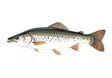
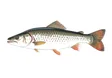
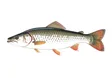
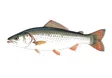
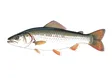
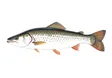
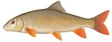
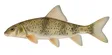
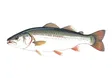
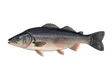
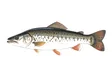
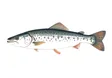
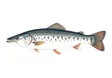
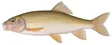
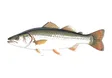
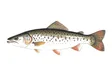
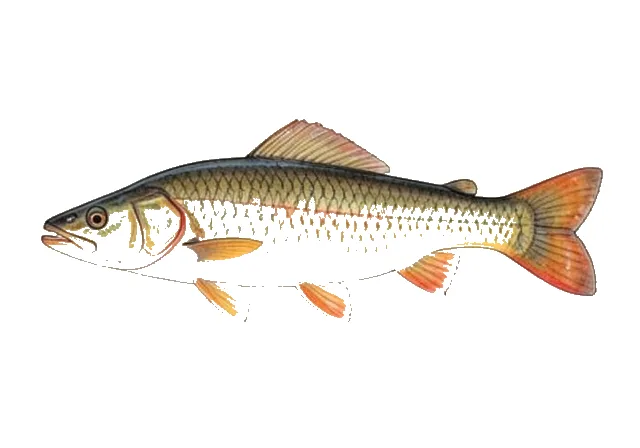
Golden Redhorse field guide illustration

About Golden Redhorse

The golden redhorse (Moxostoma erythrurum) is a species of freshwater fish endemic to Ontario and Manitoba in Canada and the Midwestern, southern, and eastern United States. It lives in calm, often silty or sandy waters in streams, small to large rivers, and lakes.

A bottom-feeder, it feeds on microcrustaceans, aquatic insects, detritus, algae, and small mollusks. The golden redhorse spawns in the spring.

Geographic distribution

The golden redhorse can be found in freshwater habitats across 25 different states in the eastern half of North America. There are populations located in the drainage basins of the Mississippi River, Ohio River, and the lower Missouri River. The fish can also be found in the Great Lakes, excluding Lake Superior, and the Lakes' basin, as well as in the Lake of the Woods. The Mobile Bay drainage basin in the states of Alabama, Georgia, and southeastern Tennessee also contains the golden redhorse.

In Mississippi there is an isolated population in the southwestern part of the state. Some suspect that it is a relict population, meaning the range of the fish was once much larger than it is today. They were introduced into the Potomac River in Maryland, Virginia, and West Virginia, but the date of this introduction is unknown. A golden redhorse was seen in this river in 1953, but was never seen there again until 1971.

In Canada, the golden redhorse is endemic to Manitoba and Ontario. The fish can be found in the Red River of the North, a river which eventually empties into Hudson Bay. Coincidentally, the Red River in Texas also houses the golden redhorse.

Physical characteristics

Golden redhorses average around 12–18 inches (30–46 cm) long and weigh between 1–2 pounds (0.45–0.91 kg), although some can reach up to 26 inches (66 cm) and 4–5 pounds (1.8–2.3 kg). The golden scales decorating its sides gave the fish its name. They have olive colored backs, white bellies, and slate gray tail fins. Their body is fusiform in shape, allowing them to fight against currents in streams to capture their prey. The mouth of the fish is in the inferior position. The dorsal fin is slightly concave and the caudal fin is notched. It has a single anal fin and paired pelvic and pectoral fins. The pelvic fins are in the abdominal position, while the pectoral fins are located in more of a thoracic position. It has a lateral line system consisting of 39 to 42 scales which is used to detect movement and vibrations in the surrounding water.

Habitat

Golden redhorses can be found in freshwater streams, creeks, and rivers with varied substrates. In pools they are generally found over sand and silt. Occasionally they have been seen living in lakes or larger reservoirs that are fed by a stream or river. Compared to other redhorse species the golden redhorse is not very sensitive to poor environmental conditions.

Diet

The diet of the golden redhorse consists of a variety of small, aquatic creatures. They consume larval insects, small mollusks, microcrustaceans, and other aquatic invertebrates. Like most other members of the sucker family, Catostomidae, detritus and algae are also staples of the golden redhorse's diet. It is a bottom-feeding species that is able to use its protrusible mouth to suck up food objects from the stream bed.

Reproduction and life cycle

The golden redhorse can live at least 17 years and becomes sexually mature at age 3–5. They spawn in the spring once water temperatures are between 17–22 °C. When this occurs depends on the geographic location, but spawning usually happens at night during April or May. Spawning most often occurs in a runs or riffles within the main stream, but some individuals may move into smaller, more well protected tributaries. The spawning streams are gravel bottomed, as their benthic, bottom-dwelling young prefer to hide beneath the stones after they hatch from their adhesive eggs.

Golden redhorses provide no parental care to their offspring. The young often form large schools and feed together along the stream bottom. Some schools may include a mixture of different redhorse species.

Relationship with humans

The golden redhorse is a game fish, and is being increasingly pursued by rod-and-line anglers. The golden redhorse is also pursued by 21st century bowfishing that produces tons of wanton waste, where fish are targeted with bow and arrows at day or night in unregulated fashion. For example in Minnesota, 21st century bowfishing redhorse waste, exclusively from tournaments, exceeds that of statewide commercial harvest by more than 200 times. Modern regulation and management for species like golden redhorse are overdue. For indirect anglers on rod-and-line, the golden redhorse is often caught by accident when anglers fish on the bottom for catfish. Fishing for members of the sucker family usually occurs in the early spring when the water temperature reaches 42 °F (6 °C). Fishing several inches off the stream bottom with simple worms as bait is a good method to catch suckers. Gigging for suckers is another common practice. This is done using a multi-headed spear at night, often with a mounted light on the bow of the boat. The golden redhorse can be cooked, smoked or pickled. The IGFA record for the species stands at 4 pounds 1 ounce (1.8 kg) caught from French Creek in Franklin, Pennsylvania in 1997.

Article text: Wikipedia contributors, Golden redhorse (source revision). Licensed under CC BY-SA 4.0. Retrieved 2026-10-11.
Diet and feeding

The FishTraits compilation records these diet categories for this species: algae or phytoplankton; detritus or unidentified plant material; invertebrates or larval fish. These are broad categories, not a claim that every individual consumes every example in a category.

Reported feeding positions include bottom feeding. The compilation combines published observations; diets can vary with age, locality, and available food.

Habitat preferences

Reported habitat associations include medium to large rivers, streams and small rivers, creeks, still-water habitats.

The source records associations with clay or silt, sand, gravel, cobble, bedrock. An association indicates reported use, rather than an exclusive requirement.

Reproduction and parental care

The compilation reports a representative maturity age of 3.5 years. Its maturity field summarizes mean, median, or modal estimates, usually for females; male estimates can be used when female data are unavailable. It is not a fixed age at which every fish first breeds.

Recorded spawning months are Apr, May, Jun for the source’s reporting region (NC). This is a regional calendar, not a range-wide schedule.

The reproductive-guild classification includes spawning on open substrates without guarding the brood.

Size and recorded longevity

FishTraits reports a maximum total length of 78 centimetres. Some entries use an estimated asymptotic length; this value should not be treated as a certified record catch.

Recorded longevity in the compilation is 8 years. Wild observations were preferred, but captive records were accepted where wild records were unavailable, and unspecified records were assumed wild. The value is not a guaranteed wild lifespan or an aquarium life expectancy.

Native range

Great Lakes, Hudson Bay (Red River), and Mississippi River basins from New York and southern Ontario to North Dakota, and south to northern Alabama and southern Oklahoma, with an isolated population in southwestern Mississippi; Atlantic Slope from Potomac River, Maryland, to Roanoke River, North Carolina (absent in Rappahannock and York River drainages), and Mobile Bay drainage in Georgia, Alabama, and southeastern Tennessee (Page and Burr 1991).

Introduction history

Unknown. First appeared in the South Branch Potomac, West Virginia, in two tributaries in 1953. Not collected again until 1971. The first record from the Gauley system was in 1976 (Jenkins and Burkhead 1994).

Record fish

State records in 3 states

  • Wisconsin5 lbs. 2.2 oz.

    Mississippi River · La Crosse · 04/21/2022

  • Minnesota4 lb 8 oz

    Otter Tail River · Otter Tail · 4/7/2018

  • Arkansas1 lb., 2 oz.

    Spring River · 05/27/2011 · D. Victor Waits, Holts Summit, MO · rod and reel

Each figure is the state agency’s own certified record. The site holds record tables for 11 states so far, so a state missing here has not been read yet. It is not a state where this fish holds no record.

Range

Where it lives

Share of 11,115 GBIF observation records with a state location, across 29 states. The orange dots are USGS stream-survey sites where this species was caught.
0%
12.6%
Share of 11,115 GBIF observation records with a state location, across 29 states. The orange dots are USGS stream-survey sites where this species was caught.

A blank area on the dot layer usually means nobody sampled there, not that the fish is absent. Turn on “every survey site” to see where the survey looked.

The USGS stream survey caught it at 4,003 of its sites, in 25 states. That survey and the GBIF records are two different counts of two different things, so the site keeps them apart.

Habitat

Water and movement

Water
WoRMS records this species in fresh water.
USGS NAS habitat
Freshwater
US status
Native transplant — native to part of the United States, moved to other waters inside it.
Migration
Undetermined
Pattern
Disagreement
7 published references do not agree on the pattern: Non-migratory, Potamodromous. The site shows every assignment rather than picking one.

Classification

Taxonomy

Kingdom
Animalia
Phylum
Chordata
Superclass
Actinopterygii
Class
Teleostei
Order
Cypriniformes
Genus
Moxostoma
Species
Moxostoma erythrurum
ITIS TSN
163939
WoRMS AphiaID
1022856
GBIF key
2358966
Outside the US
ITIS also files it in Canada.

Common questions about Golden Redhorse

What is the scientific name of Golden Redhorse?
The scientific name is Moxostoma erythrurum, in the family Catostomidae. Classification follows ITIS.
Does Golden Redhorse live in fresh water or salt water?
WoRMS records this species in fresh water.
Where has Golden Redhorse been recorded in the United States?
GBIF has observations in 29 states, with the most records in Ohio, Illinois, Oklahoma. The map shows observation records, which do not establish the complete natural range.

Closest relatives

Other Moxostoma species

Same family

More Catostomidae

Alabama Hog Sucker6 states
Hypentelium etowanumCatostomidaeNative and introducedFresh
Bigeye Jumprock3 states
Moxostoma ariommumCatostomidaeNativeFresh
Bigmouth Buffalo26 states
Ictiobus cyprinellusCatostomidaeNative and introducedFresh
Black Buffalo26 states
Ictiobus nigerCatostomidaeNative and introducedFresh
Black Redhorse
Moxostoma duquesneiCatostomidaeNativeFresh
Blackfin Sucker2 states
Thoburnia atripinnisCatostomidaeNativeFresh
Blacktail Redhorse9 states
Moxostoma poecilurumCatostomidaeNativeFresh
Blacktip Jumprock7 states
Moxostoma cervinumCatostomidaeNative and introducedFresh
Blue Sucker22 states
Cycleptus elongatusCatostomidaeNativeFresh
Bluehead Sucker7 states
Pantosteus discobolusCatostomidaeNativeFresh
Bridgelip Sucker5 states
Catostomus columbianusCatostomidaeNativeFresh
Creek Chubsucker31 states
Erimyzon oblongusCatostomidaeNativeFresh
Cui-ui2 states
Chasmistes cujusCatostomidaeNativeFresh
Desert Sucker9 states
Pantosteus clarkiiCatostomidaeNativeFresh
Flannelmouth Sucker8 states
Catostomus latipinnisCatostomidaeNativeFresh
Gray Redhorse2 states
Moxostoma congestumCatostomidaeNative and introducedFresh
Greater Jumprock4 states
Moxostoma lachneriCatostomidaeNative and introducedFresh
Greater Redhorse11 states
Moxostoma valenciennesiCatostomidaeNativeFresh
Green Sucker4 states
Pantosteus virescensCatostomidaeNativeFresh
Highfin Carpsucker23 states
Carpiodes veliferCatostomidaeNative and introducedFresh
June Sucker1 states
Chasmistes liorusCatostomidaeNativeFresh
Klamath Largescale Sucker2 states
Catostomus snyderiCatostomidaeNativeFresh
Klamath Smallscale Sucker2 states
Catostomus rimiculusCatostomidaeNativeFresh
Lake Chubsucker26 states
Erimyzon sucettaCatostomidaeNative and introducedFresh

All 67 species in Catostomidae