Desert Sucker

Pantosteus clarkii

Catostomidae · freshwater water fish

3 minute read · Species guide

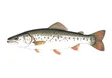
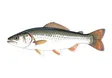
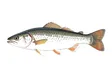
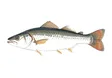
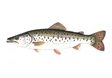
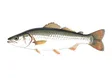
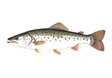
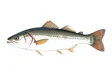
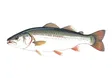
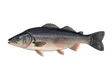
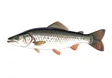
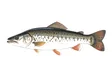
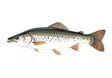
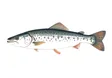
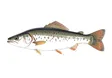
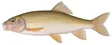
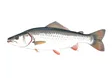
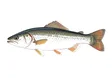
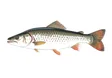
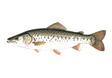
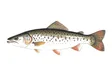
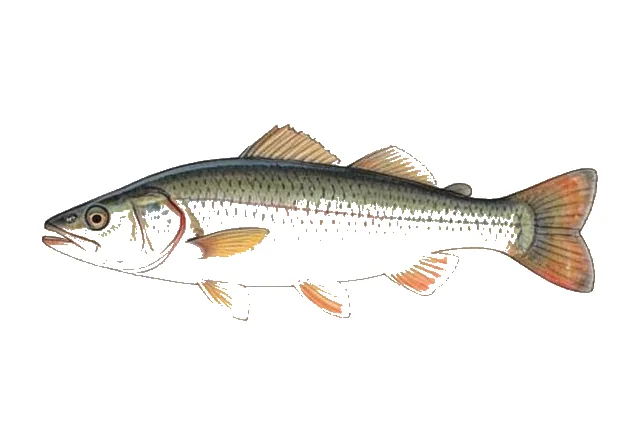
Desert Sucker field guide illustration

About Desert Sucker

The desert sucker or Gila Mountain sucker (Pantosteus clarkii), is a freshwater species of ray-finned fish in the sucker family, endemic to the Great Basin and the Colorado River Basin in the United States. It inhabits rapids and fast-flowing streams with gravelly bottoms. It is a bi-colored fish with the upper parts olive brown to dark green, and the underparts silvery-tan or yellowish. The head is cylindrical, tapering to a thick-lipped mouth on the underside. This fish can grow to 31 in (79 cm) in Arizona but is generally only about half this size elsewhere. Formerly placed in the genus Catostomus, it is now placed in the genus Pantosteus.

Description

Desert suckers are bicolored; the back and upper sides are darker, olive-brown to dark green, and the belly and lower sides are deep-yellow to silvery tan. The scales on the upper half of the body have dark spots which form faint dashed lines. Their head is cylindrical, tapering to a blunt face with the lower lip about three times as thick as upper lip. The mouth is on the underside (ventral) of the face and is proportionately large. The dorsal fin of the desert sucker has 10 to 11 rays. The adult lengths range from 4 to 16 inches (100 to 410 mm) in smaller streams, but up to 31 inches (790 mm) in Arizona. Their weight ranges from 4 to 65 ounces (110–1,840 g).

Distribution

The desert sucker is found in Nevada, Utah, Arizona and New Mexico. The desert sucker occurs in the lower Colorado River basin, below the Grand Canyon, particularly in the Gila River, and above the Grand Canyon in streams in the Virgin River basin, the White River basin and others. The total range area of the desert sucker is estimated at 128,000 km (49,000 sq mi).

Habitat

Desert suckers prefer ripply waters, rapids and flowing streams with gravelly bottoms.

Reproduction

Desert suckers reach maturity in their second year. Spawning occurs in winter and spring from January through May.

Subspecies

Three subspecies have been identified: the White River desert sucker, Catostomus clarkii intermedius (sometimes known as White River mountain sucker, Pantosteus intermedius), Virgin River desert sucker, Catostomus clarkii utahensis, and the Meadow Valley Wash desert sucker, Catostomus clarkii (unnamed).

Some ichthyologists regarded these as members of the genus Pantosteus, but later authors regard Pantosteus as a subgenus of Catostomus. There are suggestions of hybridization between Catostomus clarkii and Catostomus insignis.

Additional field notes

Desert sucker use pools and riffles differently through the day.

Sources: Pantosteus clarkii species summary

Size and daily habitat use

FishBase distinguishes the riffle habitat of small fish from the daily movements of adults. Adults occupy pools during daylight and use riffles at night in small to medium rivers. The location of a daytime survey can therefore influence which sizes are encountered.

Sources: Pantosteus clarkii species summary

Guide sources

Research reviewed 2026-10-19.

Article text: Wikipedia contributors, Desert sucker (source revision). Licensed under CC BY-SA 4.0. Retrieved 2026-10-11.
Range

Where it lives

Share of 2,175 GBIF observation records with a state location, across 9 states.
0%
46.3%
Share of 2,175 GBIF observation records with a state location, across 9 states.

Habitat

Water and movement

Water
WoRMS records this species in fresh water.

Classification

Taxonomy

Kingdom
Animalia
Phylum
Chordata
Superclass
Actinopterygii
Class
Teleostei
Order
Cypriniformes
Genus
Pantosteus
Species
Pantosteus clarkii
ITIS TSN
1171611
WoRMS AphiaID
1536904
GBIF key
2359050
Outside the US
ITIS also files it in Mexico.

Common questions about Desert Sucker

What is the scientific name of Desert Sucker?
The scientific name is Pantosteus clarkii, in the family Catostomidae. Classification follows ITIS.
Does Desert Sucker live in fresh water or salt water?
WoRMS records this species in fresh water.
Where has Desert Sucker been recorded in the United States?
GBIF has observations in 9 states, with the most records in Arizona, New Mexico, Utah. The map shows observation records, which do not establish the complete natural range.

Closest relatives

Other Pantosteus species

Same family

More Catostomidae

Alabama Hog Sucker6 states
Hypentelium etowanumCatostomidaeNative and introducedFresh
Bigeye Jumprock3 states
Moxostoma ariommumCatostomidaeNativeFresh
Bigmouth Buffalo26 states
Ictiobus cyprinellusCatostomidaeNative and introducedFresh
Black Buffalo26 states
Ictiobus nigerCatostomidaeNative and introducedFresh
Black Redhorse
Moxostoma duquesneiCatostomidaeNativeFresh
Blackfin Sucker2 states
Thoburnia atripinnisCatostomidaeNativeFresh
Blacktail Redhorse9 states
Moxostoma poecilurumCatostomidaeNativeFresh
Blacktip Jumprock7 states
Moxostoma cervinumCatostomidaeNative and introducedFresh
Blue Sucker22 states
Cycleptus elongatusCatostomidaeNativeFresh
Bluehead Sucker7 states
Pantosteus discobolusCatostomidaeNativeFresh
Bridgelip Sucker5 states
Catostomus columbianusCatostomidaeNativeFresh
Creek Chubsucker31 states
Erimyzon oblongusCatostomidaeNativeFresh
Cui-ui2 states
Chasmistes cujusCatostomidaeNativeFresh
Flannelmouth Sucker8 states
Catostomus latipinnisCatostomidaeNativeFresh
Golden Redhorse29 states
Moxostoma erythrurumCatostomidaeNative and introducedFresh
Gray Redhorse2 states
Moxostoma congestumCatostomidaeNative and introducedFresh
Greater Jumprock4 states
Moxostoma lachneriCatostomidaeNative and introducedFresh
Greater Redhorse11 states
Moxostoma valenciennesiCatostomidaeNativeFresh
Green Sucker4 states
Pantosteus virescensCatostomidaeNativeFresh
Highfin Carpsucker23 states
Carpiodes veliferCatostomidaeNative and introducedFresh
June Sucker1 states
Chasmistes liorusCatostomidaeNativeFresh
Klamath Largescale Sucker2 states
Catostomus snyderiCatostomidaeNativeFresh
Klamath Smallscale Sucker2 states
Catostomus rimiculusCatostomidaeNativeFresh
Lake Chubsucker26 states
Erimyzon sucettaCatostomidaeNative and introducedFresh

All 67 species in Catostomidae