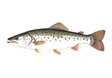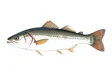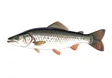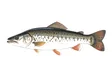
Black Buffalo

Ictiobus niger

Catostomidae · freshwater water fish

7 minute read · Species guide

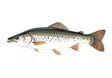
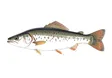
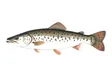
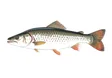
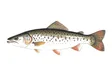
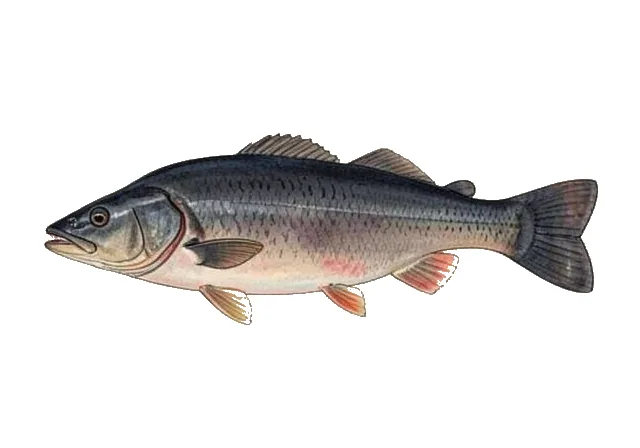
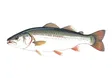
Black Buffalo field guide illustration

About Black Buffalo

The black buffalo (Ictiobus niger) is a North American species of freshwater fish in the Catostomidae or sucker family. With a lifespan of up to 108 years, it is among the longest-lived of freshwater fish species. Found in the Mississippi Basin and southern Great Lakes. It was first discovered in Canada in the western end of Lake Erie and has been reported from Boston Creek. The Tennessee distribution ranges from rivers and streams in the Cumberland Mountains, a few rivers in middle Tennessee, and in west Tennessee along the Mississippi River. The ecology of the species is quite similar to that of I. bubalus. I. niger has a ventrally positioned mouth, making the species’ diet benthic -oriented. It has a distinct body shape and a mouth position that is intermediate between those of I. bubalus and I. cyprinellus. It is distinguished with some difficulty from the former species by its smaller relative eye size and more streamlined body shape.

Geographic distribution

I. niger is found in large and small rivers in eastern North America from the Mississippi Basin to Canada. In Canada, the species was first described in Lake Erie. In the United States, the species is found in both small and large rivers in the basins of the Mississippi, Missouri, and Ohio as well as in southern Lake Michigan and Lake Erie. Among others, it is native to Iowa, South Dakota and Minnesota; more southern states include eastern Texas and Oklahoma.

Ecology

The ecology of I. niger is most closely related to I. cyprinellus. Due to the ventrally positioned mouth, the diet is benthic -oriented, with the Asiatic clam being the principal food. Detritus and sand are also ingested and contribute about 40% of the dietary volume. It is most commonly found in quiet, shallow waters. The U.S. angling record is 55.5 lb (25.2 kg) and was caught in Tennessee in 1984. The typical length is about 20–30 in (51–76 cm) with a maximum length of 48.5 in (123 cm). The typical weight is estimated to be about 10–30 lb (4.5–13.6 kg). A specimen caught in Shelby County, Tennessee, on April 1, 1980, was accepted as valid and weighed 80 lb (36 kg). I. niger relies on benthic organisms more heavily than I. bubalus. I. niger feeds mostly from the bottom.

Life history

Members of Ictiobus are large, robust-bodied suckers adapted to large rivers. Currently recognized species are readily diagnosed by morphological characters, and the group is known from fossils dating back to the Miocene. I. niger is a spring spawner. They spawn in flooded areas and backwaters of sloughs and small to large rivers. Fertilized eggs are demersal and adhesive. They hatch in 24–36 hours at 19–24 °C (66–75 °F). I. niger grows fairly rapidly, averaging 13.4 cm (5.3 in) after the first year. Black buffalo are reported to reach sexual maturity by the second year in the southern United States. The spawning period could take days, as its duration is not well established. One report of spawning buffalofish, believed to be I. niger, was made in Leflore County, Mississippi in the flood plain of the Yazoo River on April 21, 1930, when hundreds of buffalofish staged in flooded scrub along the margins of a cypress–tupelo swamp. According to observer Lee E. Yeager, the fish were insensitive to disturbance, swam into extremely shallow water not deep enough to cover their bodies and occasionally made small jumps. At three days "pale green to yellowish green" weakly aggregated egg masses were still visible, but many had been completely exposed by receding waters and turned blackish as they dried. The black buffalo can live for more than a century, and thus like other buffalofish species, the black buffalo is extremely long-lived.

Relationship with people

No specific plan exists for protection for this species in Canada other than the Fisheries Act. However, I. niger is listed as of special concern in Kentucky, Mississippi, South Dakota, and West Virginia. It has also been listed as protected in Wisconsin. From 1957 to 1959, only seven specimens were recorded in the Ohio River. In 1968–69, only four specimens were captured. Threats and issues include loss, bowfishing, modification or fragmentation of large river habitat caused by dams in the Mississippi and Wisconsin Rivers. Mistaken identity leads to the taking of this species in commercial fisheries. The exotic bighead carp shares the habitat with I. niger and consumes large amounts of zooplankton, outcompeting I. niger for needed food. The IGFA all tackle world record for the species stands at 63lbs 6oz caught from the Mississippi River in Iowa in 1999.

Management recommendations

To ensure the long life and thriving reproduction of I. niger, protection and restoration of larger river habitat is needed. Education of anglers, biologists, and the general public in taxonomy, systematics, and habitat use is needed. The species presents special difficulties, due to natural hybridization, for both research and enforcement. Dams need to be equipped with fish passages to connect fragmented habitats, invasive species that compete or degrade the habitat of native fishes need to be controlled, and bowfishing and commercial fishing need to be managed.

Article text: Wikipedia contributors, Black buffalo (source revision). Licensed under CC BY-SA 4.0. Retrieved 2026-10-11.
Diet and feeding

The FishTraits compilation records these diet categories for this species: algae or phytoplankton; aquatic or other vascular plants; detritus or unidentified plant material; invertebrates or larval fish; larger animal prey (a source category covering fish, crayfish, crabs, or frogs). These are broad categories, not a claim that every individual consumes every example in a category.

Reported feeding positions include bottom feeding. The compilation combines published observations; diets can vary with age, locality, and available food.

Habitat preferences

Reported habitat associations include medium to large rivers.

The source records associations with muck, clay or silt, sand, gravel, cobble, boulders, bedrock, vegetation, organic debris, large woody material. An association indicates reported use, rather than an exclusive requirement.

Reproduction and parental care

The compilation reports a representative maturity age of 2.5 years. Its maturity field summarizes mean, median, or modal estimates, usually for females; male estimates can be used when female data are unavailable. It is not a fixed age at which every fish first breeds.

Recorded spawning months are Apr, May for the source’s reporting region (AL). This is a regional calendar, not a range-wide schedule.

The reproductive-guild classification includes spawning on open substrates without guarding the brood.

Size and recorded longevity

FishTraits reports a maximum total length of 123 centimetres. Some entries use an estimated asymptotic length; this value should not be treated as a certified record catch.

Recorded longevity in the compilation is 24 years. Wild observations were preferred, but captive records were accepted where wild records were unavailable, and unspecified records were assumed wild. The value is not a guaranteed wild lifespan or an aquarium life expectancy.

Identification and appearance

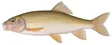
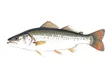
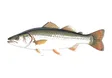
The body of the Black Buffalo is slightly compressed, nearly round, and more slender than other Ictiobus spp. The back is slate to bronze, with a greenish overcast, sides are bronze, and the belly is lighter in color. FIns are dark olive to slate. The head and snout are broadly rounded. The mouth is small and contains short, narrow, and fragile pharyngeal teeth. There are approximately 195 teeth per arch. The dorsal fin is sickle shaped with 27-31 rays, the anal fin has 8-9 rays, and pelvic fin 9-11 rays. Breeding males will have minute tubercles (small bumps) on the sides of its head. Breeding males can also be blackish in color and without tubercles (Becker 1983). Common hybridization among buffalo species has caused difficulty in identifying individual species (Dahline 2014). Current genetic analyses methods cannot consistently distinguish Black Buffalo from other buffalo species (Underhill and Schmidt 2016).

Native range

Mississippi River basins from Ohio to South Dakota and south to Louisiana; on Gulf Slope in Sabine Lake, Brazos River, and Rio Grande drainages in Louisiana, Texas, New Mexico, and Mexico (Page and Burr 1991).

Habitat and ecology

Spawning most likely occurs in April and May (Becker 1983). Black Buffalo are known to breed in streams and ponds with rapid flow, and in sand, gravel, and vegetative substrate (Breder and Rosen 1966). Spawning is not well studied but fish have been observed to aggregate in large numbers to spawn, post-spawning large amounts of eggs were found in the vegetation at the spawning site (Becker 1983). One female may mate with several males (Breder and Roseen 1966). This species will hybridize with Bigmouth Buffalo (Ictiobus cyprinellus).

The Black Buffalo may have a more benthic diet that other Ictiobus spp. Reportedly the introduced Asiatic clam is the largest part of its diet in addition to small amounts of algae, diatoms, crustaceans, and presumably native mollusk species (Etnier and Starnes 1993). Becker (1983) also notes that insects and water plants including duckweed have been observed to be a part of this species’ diet. Other fish species including Rock Bass prey on Black Buffalo and their eggs (Dahline 2014).

Introduction history

Accidental introduction in Arizona in 1918 as stock contamination with bigmouth buffalo I. cyprinellus (Minckley 1973; Rinne 1994). Wisconsin introduction likely the result of transplant associated with fish rescue operations from the Mississippi River in the 1930s (Becker 1983).

Record fish

State records in 3 states

  • Arkansas105 lbs., 0 oz.

    Harris Brake Lake · 03/14/1994 · Kenneth Harvey, Perryville, AR · other legal means

  • Arkansas92 lbs., 8 oz.

    Lake Maumelle · 02/26/2001 · Kenny DeLuca, Paron, AR · rod and reel

  • Oklahoma42 lbs 8.00 ozs

    W.R. Holway/Chimney Rock · 11/17/2013 · Jeff D. Olinger · rod and line

  • Texas27 lb

    Whitney · Oct 28, 2019 · Barry Osborn · Fly Rod, carp slayer

  • Texas26.6 lb

    Granbury · Dec 18, 2016 · Barry Osborn · Boilie

Each figure is the state agency’s own certified record. The site holds record tables for 11 states so far, so a state missing here has not been read yet. It is not a state where this fish holds no record.

Range

Where it lives

Share of 693 GBIF observation records with a state location, across 26 states. The orange dots are USGS stream-survey sites where this species was caught.
0%
28.1%
Share of 693 GBIF observation records with a state location, across 26 states. The orange dots are USGS stream-survey sites where this species was caught.

A blank area on the dot layer usually means nobody sampled there, not that the fish is absent. Turn on “every survey site” to see where the survey looked.

The USGS stream survey caught it at 283 of its sites, in 17 states. That survey and the GBIF records are two different counts of two different things, so the site keeps them apart.

Habitat

Water and movement

Water
WoRMS records this species in fresh water.
USGS NAS habitat
Freshwater
US status
Native transplant — native to part of the United States, moved to other waters inside it.
Migration
Migratory
Pattern

Classification

Taxonomy

Kingdom
Animalia
Phylum
Chordata
Superclass
Actinopterygii
Class
Teleostei
Order
Cypriniformes
Genus
Ictiobus
Species
Ictiobus niger
ITIS TSN
163957
WoRMS AphiaID
1022850
GBIF key
2359079
Outside the US
ITIS also files it in Canada, Mexico.

Common questions about Black Buffalo

What is the scientific name of Black Buffalo?
The scientific name is Ictiobus niger, in the family Catostomidae. Classification follows ITIS.
Does Black Buffalo live in fresh water or salt water?
WoRMS records this species in fresh water.
Where has Black Buffalo been recorded in the United States?
GBIF has observations in 26 states, with the most records in Illinois, Oklahoma, Texas. The map shows observation records, which do not establish the complete natural range.

Closest relatives

Other Ictiobus species

Same family

More Catostomidae

Alabama Hog Sucker6 states
Hypentelium etowanumCatostomidaeNative and introducedFresh
Bigeye Jumprock3 states
Moxostoma ariommumCatostomidaeNativeFresh
Bigmouth Buffalo26 states
Ictiobus cyprinellusCatostomidaeNative and introducedFresh
Black Redhorse
Moxostoma duquesneiCatostomidaeNativeFresh
Blackfin Sucker2 states
Thoburnia atripinnisCatostomidaeNativeFresh
Blacktail Redhorse9 states
Moxostoma poecilurumCatostomidaeNativeFresh
Blacktip Jumprock7 states
Moxostoma cervinumCatostomidaeNative and introducedFresh
Blue Sucker22 states
Cycleptus elongatusCatostomidaeNativeFresh
Bluehead Sucker7 states
Pantosteus discobolusCatostomidaeNativeFresh
Bridgelip Sucker5 states
Catostomus columbianusCatostomidaeNativeFresh
Creek Chubsucker31 states
Erimyzon oblongusCatostomidaeNativeFresh
Cui-ui2 states
Chasmistes cujusCatostomidaeNativeFresh
Desert Sucker9 states
Pantosteus clarkiiCatostomidaeNativeFresh
Flannelmouth Sucker8 states
Catostomus latipinnisCatostomidaeNativeFresh
Golden Redhorse29 states
Moxostoma erythrurumCatostomidaeNative and introducedFresh
Gray Redhorse2 states
Moxostoma congestumCatostomidaeNative and introducedFresh
Greater Jumprock4 states
Moxostoma lachneriCatostomidaeNative and introducedFresh
Greater Redhorse11 states
Moxostoma valenciennesiCatostomidaeNativeFresh
Green Sucker4 states
Pantosteus virescensCatostomidaeNativeFresh
Highfin Carpsucker23 states
Carpiodes veliferCatostomidaeNative and introducedFresh
June Sucker1 states
Chasmistes liorusCatostomidaeNativeFresh
Klamath Largescale Sucker2 states
Catostomus snyderiCatostomidaeNativeFresh
Klamath Smallscale Sucker2 states
Catostomus rimiculusCatostomidaeNativeFresh
Lake Chubsucker26 states
Erimyzon sucettaCatostomidaeNative and introducedFresh

All 67 species in Catostomidae