Greater Redhorse

Moxostoma valenciennesi

Catostomidae · freshwater water fish

4 minute read · Species guide

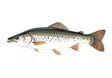
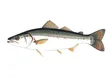
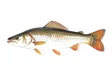
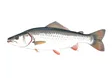
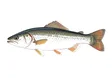
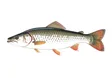
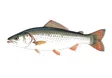
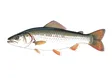
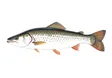
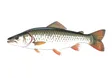
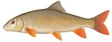
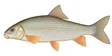
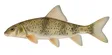
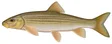
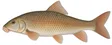
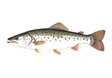
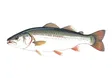
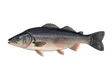
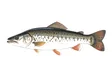
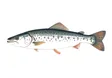
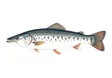
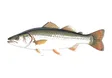
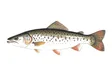
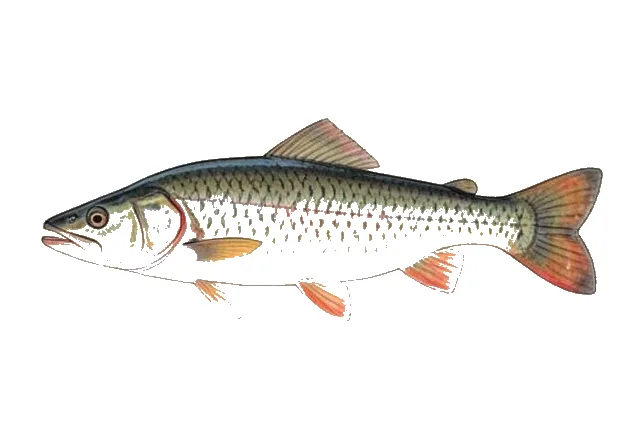
Greater Redhorse field guide illustration

About Greater Redhorse

The greater redhorse (Moxostoma valenciennesi) is a species of freshwater fish found in northeastern North America. It is the largest member of the genus Moxostoma, with a maximum length of 80 cm (31.5 in). The greater redhorse is long lived with a maximum reported age of 27 years.

Distribution and habitat

The greater redhorse is endemic to states in the northcentral and northeastern United States as well as Ontario and Quebec in Canada. It is typically found in clear, relatively fast-moving rivers and in both shallow and deep waters in some lakes. They are unable to survive in even the slightest polluted waters. They, therefore have the ability to detect contaminated water sources.

Description

The greater redhorse is the largest fish in its genus, averaging around 46 cm (18 in) and 2 kg (4.4 lb), and reaching a maximum size of 80 cm (31 in) and 5.9 kg (13 lb). This species of fish has small eye sockets in contrast to their large rounded skull. On either side of the greater redhorse's body are reddish gold pectoral fins and pelvic fins. The posterior part of the dorsal fin varies from slightly concave at youth to slightly convex in adulthood. Their tail fins are only slightly notched, a trait that usually evolved in slow swimming bottom-feeders. The greater redhorse is most easily identified by its bright rusty red colored tail fin and the rows of black spots along its sides and back.

Diet habits

A bottom-feeder's mouth opens in the inferior position of the ventral surface of the fish. It feeds on various bottom dwelling organisms including, micro crustaceans, aquatic and larval insects, detritus, snails, and algae.

Reproduction and life cycle

Spawning for the greater redhorse begins in May or June. Before they are able to build their gravel and sand nests, they locate an area in moderately fast waters. Once male territories are established, the females will visit two males at a time and begin their spawning process. The two males will surround the female and perform a shaking motion releasing both the sperm and eggs from said gendered fish. Upon burial of the eggs, the parents leave with no further parental care provided. Following fertilization, the greater redhorse eggs will hatch six to eight days at a mean temperature of 19 °C (66 °F). Growth rates of this species are controversial among various areas they inhabit. The greater redhorse takes several years to reach sexual maturity and frequently attain ages more than 20 years, making them one of the longer-lived redhorse species.

Relationship with humans

Overall, the greater redhorse is being threatened across its range. Although once not a popular sporting fish, this long-lived and late-maturing species is now subject to unregulated bowfishing, where tons of fish are shot for sport with no use of the fish afterwards and hauls exceed that of the commercial harvest by 200 times. Thus, the greater redhorse is in dire need of conservation and management, especially with respect to wanton waste of bowfishing. The greater redhorse's status as a prey species is integral to the ecosystems to which they are native. Because this species is impacted greatly by pollutants, their endangered status may come from a decreased conscientiousness of where wastes are disposed of. The IGFA world record for the species stands at 5.75 kg (12 lb 11 oz) caught from the Sauk River near Melrose, Minnesota in 2005. The greater redhorse is also being increasingly pursued by rod-and-line anglers of the 21st century.

Article text: Wikipedia contributors, Moxostoma valenciennesi (source revision). Licensed under CC BY-SA 4.0. Retrieved 2026-10-11.
Diet and feeding

The FishTraits compilation records these diet categories for this species: aquatic or other vascular plants; invertebrates or larval fish. These are broad categories, not a claim that every individual consumes every example in a category.

Reported feeding positions include bottom feeding. The compilation combines published observations; diets can vary with age, locality, and available food.

Habitat preferences

Reported habitat associations include medium to large rivers, streams and small rivers, still-water habitats.

The source records associations with sand, gravel, cobble, boulders. An association indicates reported use, rather than an exclusive requirement.

Reproduction and parental care

The compilation reports a representative maturity age of 5 years. Its maturity field summarizes mean, median, or modal estimates, usually for females; male estimates can be used when female data are unavailable. It is not a fixed age at which every fish first breeds.

Recorded spawning months are May, Jun for the source’s reporting region (WI). This is a regional calendar, not a range-wide schedule.

The reproductive-guild classification includes spawning on open substrates without guarding the brood.

Size and recorded longevity

FishTraits reports a maximum total length of 80 centimetres. Some entries use an estimated asymptotic length; this value should not be treated as a certified record catch.

Recorded longevity in the compilation is 10 years. Wild observations were preferred, but captive records were accepted where wild records were unavailable, and unspecified records were assumed wild. The value is not a guaranteed wild lifespan or an aquarium life expectancy.

Spawning movements

The compilation records significant spawning-related movement. Its combined migration flag covers movements within fresh water as well as between rivers and the sea; this flag alone does not establish which migration pattern applies.

Record fish

State records in 2 states

  • Minnesota12 lb 11 oz

    Sauk River · Stearns · 5/20/2005

  • Wisconsin10 lbs. 10.4 oz.

    Yellow River · Burnett · 05/16/2024

Each figure is the state agency’s own certified record. The site holds record tables for 11 states so far, so a state missing here has not been read yet. It is not a state where this fish holds no record.

Range

Where it lives

Share of 618 GBIF observation records with a state location, across 11 states. The orange dots are USGS stream-survey sites where this species was caught.
0%
57.1%
Share of 618 GBIF observation records with a state location, across 11 states. The orange dots are USGS stream-survey sites where this species was caught.

A blank area on the dot layer usually means nobody sampled there, not that the fish is absent. Turn on “every survey site” to see where the survey looked.

The USGS stream survey caught it at 172 of its sites, in 9 states. That survey and the GBIF records are two different counts of two different things, so the site keeps them apart.

Habitat

Water and movement

Water
WoRMS records this species in fresh water.
Migration
Migratory
Pattern

Classification

Taxonomy

Kingdom
Animalia
Phylum
Chordata
Superclass
Actinopterygii
Class
Teleostei
Order
Cypriniformes
Genus
Moxostoma
Species
Moxostoma valenciennesi
ITIS TSN
163947
WoRMS AphiaID
1015875
GBIF key
2358996
Outside the US
ITIS also files it in Canada.

Common questions about Greater Redhorse

What is the scientific name of Greater Redhorse?
The scientific name is Moxostoma valenciennesi, in the family Catostomidae. Classification follows ITIS.
Does Greater Redhorse live in fresh water or salt water?
WoRMS records this species in fresh water.
Where has Greater Redhorse been recorded in the United States?
GBIF has observations in 11 states, with the most records in Minnesota, Michigan, Wisconsin. The map shows observation records, which do not establish the complete natural range.

Closest relatives

Other Moxostoma species

Same family

More Catostomidae

Alabama Hog Sucker6 states
Hypentelium etowanumCatostomidaeNative and introducedFresh
Bigeye Jumprock3 states
Moxostoma ariommumCatostomidaeNativeFresh
Bigmouth Buffalo26 states
Ictiobus cyprinellusCatostomidaeNative and introducedFresh
Black Buffalo26 states
Ictiobus nigerCatostomidaeNative and introducedFresh
Black Redhorse
Moxostoma duquesneiCatostomidaeNativeFresh
Blackfin Sucker2 states
Thoburnia atripinnisCatostomidaeNativeFresh
Blacktail Redhorse9 states
Moxostoma poecilurumCatostomidaeNativeFresh
Blacktip Jumprock7 states
Moxostoma cervinumCatostomidaeNative and introducedFresh
Blue Sucker22 states
Cycleptus elongatusCatostomidaeNativeFresh
Bluehead Sucker7 states
Pantosteus discobolusCatostomidaeNativeFresh
Bridgelip Sucker5 states
Catostomus columbianusCatostomidaeNativeFresh
Creek Chubsucker31 states
Erimyzon oblongusCatostomidaeNativeFresh
Cui-ui2 states
Chasmistes cujusCatostomidaeNativeFresh
Desert Sucker9 states
Pantosteus clarkiiCatostomidaeNativeFresh
Flannelmouth Sucker8 states
Catostomus latipinnisCatostomidaeNativeFresh
Golden Redhorse29 states
Moxostoma erythrurumCatostomidaeNative and introducedFresh
Gray Redhorse2 states
Moxostoma congestumCatostomidaeNative and introducedFresh
Greater Jumprock4 states
Moxostoma lachneriCatostomidaeNative and introducedFresh
Green Sucker4 states
Pantosteus virescensCatostomidaeNativeFresh
Highfin Carpsucker23 states
Carpiodes veliferCatostomidaeNative and introducedFresh
June Sucker1 states
Chasmistes liorusCatostomidaeNativeFresh
Klamath Largescale Sucker2 states
Catostomus snyderiCatostomidaeNativeFresh
Klamath Smallscale Sucker2 states
Catostomus rimiculusCatostomidaeNativeFresh
Lake Chubsucker26 states
Erimyzon sucettaCatostomidaeNative and introducedFresh

All 67 species in Catostomidae