Blue Sucker

Cycleptus elongatus

Catostomidae · freshwater water fish

4 minute read · Species guide

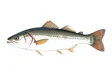
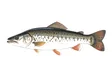
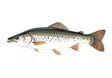
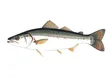
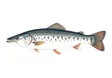
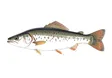
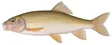
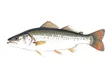
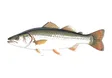
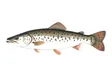
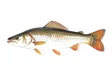
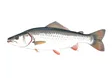
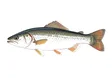
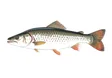
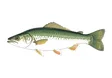
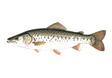
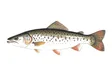
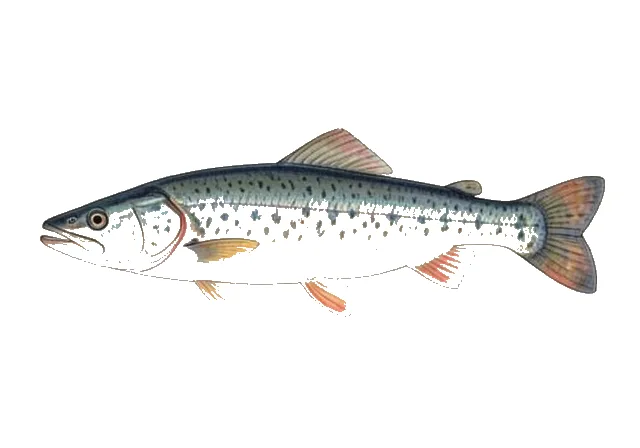
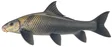
Blue Sucker field guide illustration

About Blue Sucker

The blue sucker (Cycleptus elongatus) is a long-lived freshwater species of fish in the sucker family that is of conservation concern. The species has an average weight of 2–3 kilograms (4.4–6.6 lb) and an average length of 76 centimetres (30 in). The record length has been recorded at 84 centimetres (33 in), and individuals have been documented beyond 40 years of age.

Description

Color is variable, from light steel-gray to almost jet black in the spring. The fish is streamlined, with an inferior mouth and a small/slender head that tapers to a fleshy snout. The mouth location allows the fish to feed off the bottom of its habitat. The body of this fish is elongated and slightly compressed. It has a long falcate dorsal fin which is elevated anterior with 24–35 rays. It has a long caudal peduncle and a forked caudal fin. The anal fin contains 7–8 rays on average. The scales are large and contain 55–58 along the lateral line.

Range and distribution

The blue sucker is native to the United States and Mexico. In the U.S., it lives in the Mississippi River basin north to Minnesota and Wisconsin. The Blue Sucker also lives in the Missouri River drainage to North Dakota and South Dakota and Montana. This species can also be found in the Gulf drainage from the Sabine River to the Rio Grande.

Habitat

Huge migrations of these fast, powerful fish once migrated throughout the Mississippi River basin, and spring harvests of blue sucker were a staple food for early pioneers. Blue suckers are very rare today, thought to be due to the segmentation of habitat caused by the thousands of dams which have been built in the last century. Blues frequent the thalweg of large river systems, in heavy current.

Diet

Blue suckers obtain their food off the bottom of rivers and other bodies of freshwater through a mouth in the inferior position. Some organisms that they eat are aquatic insect larvae, crustaceans, plant materials and algae.

Reproduction

The blue sucker has a spawning time from around March until June. This varies on the location of the fish and also the water temperature. Fifty-three degrees is the average water temperature in which males and females find their spawning area. This area is in fast moving water around two feet deep. Rocks in the area will also be larger than gravel, but they will be smaller than boulders. The peak water temperature is sixty-two degrees and the actual spawning time will usually last around two weeks. Male suckers will continue to come to the area until spawning is officially over. Females will go to the area, lay her eggs, and leave once she is finished and they have been fertilized. Recent evidence indicates their recruitment patterns are episodic, and their life history is longer-lived than previously realized.

Conservation

The blue sucker is sensitive to water pollution, and is only able to live in water that is well irrigated and unpolluted. This is why it is common to see them in rivers. The species is imperiled in numerous US states, and its conservation status in other states is likely in need of revision.

Trivia

The blue sucker also goes by the name blackhorse, the bluefish, the razor back, the sockerel, the gourd seed sucker, the Missouri Sucker, the slenderhead sucker, and the sweet sucker.

Etymology

"Cycleptus"is a Greek word meaning circular or slender."Elongatus" is a Latin word meaning elongated.

Article text: Wikipedia contributors, Blue sucker (source revision). Licensed under CC BY-SA 4.0. Retrieved 2026-10-11.
Diet and feeding

The FishTraits compilation records these diet categories for this species: algae or phytoplankton; aquatic or other vascular plants; invertebrates or larval fish. These are broad categories, not a claim that every individual consumes every example in a category.

Reported feeding positions include bottom feeding. The compilation combines published observations; diets can vary with age, locality, and available food.

Habitat preferences

Reported habitat associations include medium to large rivers.

The source records associations with gravel, cobble. An association indicates reported use, rather than an exclusive requirement.

Reproduction and parental care

The compilation reports a representative maturity age of 6 years. Its maturity field summarizes mean, median, or modal estimates, usually for females; male estimates can be used when female data are unavailable. It is not a fixed age at which every fish first breeds.

Recorded spawning months are Apr, May for the source’s reporting region (WI). This is a regional calendar, not a range-wide schedule.

The reproductive-guild classification includes spawning on open substrates without guarding the brood.

Size and recorded longevity

FishTraits reports a maximum total length of 93 centimetres. Some entries use an estimated asymptotic length; this value should not be treated as a certified record catch.

Recorded longevity in the compilation is 11.5 years. Wild observations were preferred, but captive records were accepted where wild records were unavailable, and unspecified records were assumed wild. The value is not a guaranteed wild lifespan or an aquarium life expectancy.

Record fish

The Montana state record

  • Montana13.29 lbs.

    Marias River · 4/19/19 · Jason Karls

Each figure is the state agency’s own certified record. The site holds record tables for 11 states so far, so a state missing here has not been read yet. It is not a state where this fish holds no record.

Range

Where it lives

Share of 675 GBIF observation records with a state location, across 22 states. The orange dots are USGS stream-survey sites where this species was caught.
0%
37.5%
Share of 675 GBIF observation records with a state location, across 22 states. The orange dots are USGS stream-survey sites where this species was caught.

A blank area on the dot layer usually means nobody sampled there, not that the fish is absent. Turn on “every survey site” to see where the survey looked.

The USGS stream survey caught it at 170 of its sites, in 18 states. That survey and the GBIF records are two different counts of two different things, so the site keeps them apart.

Habitat

Water and movement

Water
WoRMS records this species in fresh water.
Migration
Migratory
Pattern

Classification

Taxonomy

Kingdom
Animalia
Phylum
Chordata
Superclass
Actinopterygii
Class
Teleostei
Order
Cypriniformes
Genus
Cycleptus
Species
Cycleptus elongatus
ITIS TSN
163953
WoRMS AphiaID
1022872
GBIF key
2359101
Outside the US
ITIS also files it in Mexico.

Common questions about Blue Sucker

What is the scientific name of Blue Sucker?
The scientific name is Cycleptus elongatus, in the family Catostomidae. Classification follows ITIS.
Does Blue Sucker live in fresh water or salt water?
WoRMS records this species in fresh water.
Where has Blue Sucker been recorded in the United States?
GBIF has observations in 22 states, with the most records in Texas, Illinois, Kansas. The map shows observation records, which do not establish the complete natural range.

Closest relatives

Other Cycleptus species

Same family

More Catostomidae

Alabama Hog Sucker6 states
Hypentelium etowanumCatostomidaeNative and introducedFresh
Bigeye Jumprock3 states
Moxostoma ariommumCatostomidaeNativeFresh
Bigmouth Buffalo26 states
Ictiobus cyprinellusCatostomidaeNative and introducedFresh
Black Buffalo26 states
Ictiobus nigerCatostomidaeNative and introducedFresh
Black Redhorse
Moxostoma duquesneiCatostomidaeNativeFresh
Blackfin Sucker2 states
Thoburnia atripinnisCatostomidaeNativeFresh
Blacktail Redhorse9 states
Moxostoma poecilurumCatostomidaeNativeFresh
Blacktip Jumprock7 states
Moxostoma cervinumCatostomidaeNative and introducedFresh
Bluehead Sucker7 states
Pantosteus discobolusCatostomidaeNativeFresh
Bridgelip Sucker5 states
Catostomus columbianusCatostomidaeNativeFresh
Creek Chubsucker31 states
Erimyzon oblongusCatostomidaeNativeFresh
Cui-ui2 states
Chasmistes cujusCatostomidaeNativeFresh
Desert Sucker9 states
Pantosteus clarkiiCatostomidaeNativeFresh
Flannelmouth Sucker8 states
Catostomus latipinnisCatostomidaeNativeFresh
Golden Redhorse29 states
Moxostoma erythrurumCatostomidaeNative and introducedFresh
Gray Redhorse2 states
Moxostoma congestumCatostomidaeNative and introducedFresh
Greater Jumprock4 states
Moxostoma lachneriCatostomidaeNative and introducedFresh
Greater Redhorse11 states
Moxostoma valenciennesiCatostomidaeNativeFresh
Green Sucker4 states
Pantosteus virescensCatostomidaeNativeFresh
Highfin Carpsucker23 states
Carpiodes veliferCatostomidaeNative and introducedFresh
June Sucker1 states
Chasmistes liorusCatostomidaeNativeFresh
Klamath Largescale Sucker2 states
Catostomus snyderiCatostomidaeNativeFresh
Klamath Smallscale Sucker2 states
Catostomus rimiculusCatostomidaeNativeFresh
Lake Chubsucker26 states
Erimyzon sucettaCatostomidaeNative and introducedFresh

All 67 species in Catostomidae