Cui-ui

Chasmistes cujus

Catostomidae · freshwater water fish

5 minute read · Species guide

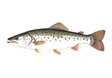
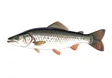
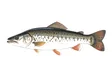
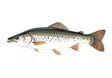
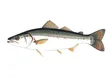
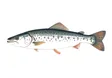
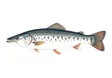
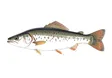
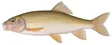
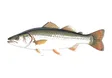
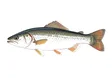
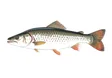
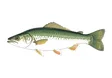
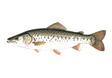
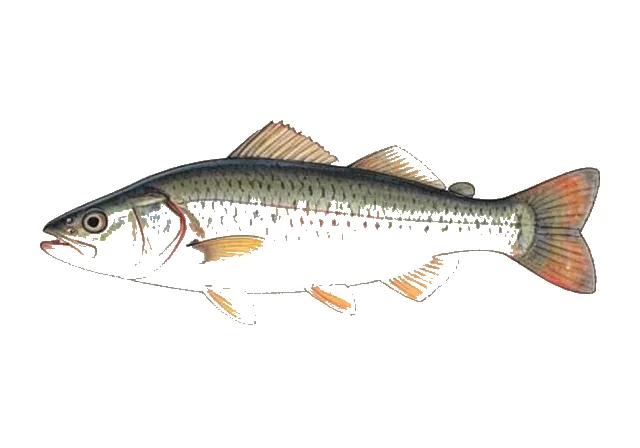
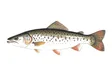
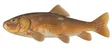
Cui-ui field guide illustration

About Cui-ui

The cui-ui (Chasmistes cujus) is a large sucker fish endemic to Pyramid Lake and, prior to its desiccation in the 20th century, Winnemucca Lake in northwestern Nevada. It feeds primarily on zooplankton and possibly on nanoplankton (such as algae and diatoms). The maximum size of male cui-ui is approximately 53 cm (21 in) and 1.6 kg (3.5 lb), while females reach approximately 64 cm (25 in) and 2.7 kg (6.0 lb). A cui-ui typically lives for 40 years but does not reach sexual maturity until at least age eight. The cui-ui is an endangered species, and one of the few surviving members of its genus.

The cui-ui population is generally improving in numbers, having attained an estimated population exceeding one million in 1993, thanks to the efforts of the U.S. Environmental Protection Agency in analysis of the Truckee River spawning grounds and of the Nevada Department of Environmental Protection and EPA in following up on protection measures. The reason the cui-ui remains endangered (though upgraded from critically endangered in 2014) is the recent history of recruitment variation, illustrating that in many years of the 1970s and 1980s there was virtually no recruitment whatsoever due to unsuccessful spawning in an unfavorable water quality and water flow environment of the Truckee River. The species' outlook is uncertain since a recovery plan based on an enhanced understanding of Pyramid Lake and Truckee River water quality has been published and U.S. Congress adopted a protection plan.

Pyramid Lake water quality

Pyramid Lake, the second largest natural lake in the western U.S. prior to construction of the Derby Dam, has been the focus of several water quality investigations, the most detailed starting in the mid-1980s. Under direction of the U.S. Environmental Protection Agency, a comprehensive dynamic hydrology transport model was developed by Earth Metrics Inc.; the model's name was subsequently changed to DSSAM, and it was applied to analyze impacts of a variety of land use and wastewater management decisions throughout the 3,120-square-mile (8,100 km) Truckee River Basin. Analytes addressed included nitrogen, reactive phosphate, dissolved oxygen, and ten other parameters. Based upon use of the model, some decisions have been influenced to enhance Pyramid Lake water quality and aid the viability of Pyramid Lake biota, including the cui-ui. The dynamic river model was particularly useful for analyzing Truckee River temperature variations, since the cui-ui often swim upstream to spawn, and their fry are vulnerable to elevations in river temperature.

Spawning behavior

The cui-ui is potamodromous, and will attempt to ascend the Truckee River to spawn in mid-April. If inflow is insufficient to permit this, the cui-ui may attempt to spawn in Pyramid Lake, but generally with little success due to the salinity of that lake. Water releases from the Boca reservoir and Stampede reservoirs were (as of 2004) timed to assist the spawning run, although in drought years this water is reserved for the Reno metropolitan area. These releases are critical to successful spawning since low warm flows at the Truckee River delta are inhospitable to upstream migration of adults.

The Pyramid Lake Paiute Tribe of the Pyramid Lake Reservation maintain three hatcheries to ensure the long term viability of the cui-ui. These measures have greatly increased cui-ui populations, although it is still listed as an endangered species.

Cultural history

The Pyramid Lake Paiute Tribe are the Cui-ui Ticutta, also spelled Kuyuidikado, which translated to "cui-ui eaters." Together with the Lahontan cutthroat trout (Oncorhynchus clarkii henshawi) the cui-ui was an important food supply for the Cui-ui Tikutta and neighboring Paiute bands who traveled to Pyramid Lake to share in the harvest during the spring spawning runs.

Subsequent to European American settlement of western Nevada in the 1860s many Cui-ui Ticutta made a living by selling fish, although the European Americans generally preferred trout to cui-ui. Cui-ui were also still important for subsistence, despite Bureau of Indian Affairs attempts to encourage farming and discourage fishing.

After the 1905 construction of Derby Dam which diverted much of the Truckee River's flow, the Pyramid Lake fishery declined. By 1930, it no longer supplied even subsistence food. Although conditions have improved recently, the cui-ui are managed for cultural and ecological purposes, not as a human food source.

Article text: Wikipedia contributors, Cui-ui (source revision). Licensed under CC BY-SA 4.0. Retrieved 2026-10-11.
Diet and feeding

The FishTraits compilation records these diet categories for this species: invertebrates or larval fish. These are broad categories, not a claim that every individual consumes every example in a category.

Reported feeding positions include surface or water-column feeding. The compilation combines published observations; diets can vary with age, locality, and available food.

Habitat preferences

Reported habitat associations include streams and small rivers, still-water habitats.

The source records associations with sand, gravel. An association indicates reported use, rather than an exclusive requirement.

Reproduction and parental care

The compilation reports a representative maturity age of 6 years. Its maturity field summarizes mean, median, or modal estimates, usually for females; male estimates can be used when female data are unavailable. It is not a fixed age at which every fish first breeds.

Recorded spawning months are Apr, May, Jun for the source’s reporting region (NV). This is a regional calendar, not a range-wide schedule.

The reproductive-guild classification includes spawning on open substrates without guarding the brood.

Size and recorded longevity

FishTraits reports a maximum total length of 70 centimetres. Some entries use an estimated asymptotic length; this value should not be treated as a certified record catch.

Recorded longevity in the compilation is 41 years. Wild observations were preferred, but captive records were accepted where wild records were unavailable, and unspecified records were assumed wild. The value is not a guaranteed wild lifespan or an aquarium life expectancy.

Spawning movements

The compilation records significant spawning-related movement. Its combined migration flag covers movements within fresh water as well as between rivers and the sea; this flag alone does not establish which migration pattern applies.

Range

Where it lives

Share of 64 GBIF observation records with a state location, across 2 states.
0%
98.4%
Share of 64 GBIF observation records with a state location, across 2 states.

Share of records by state

Habitat

Water and movement

Water
WoRMS records this species in fresh water.
Migration
Migratory
Pattern

Classification

Taxonomy

Kingdom
Animalia
Phylum
Chordata
Superclass
Actinopterygii
Class
Teleostei
Order
Cypriniformes
Genus
Chasmistes
Species
Chasmistes cujus
ITIS TSN
163962
WoRMS AphiaID
1383103
GBIF key
2359093

Common questions about Cui-ui

What is the scientific name of Cui-ui?
The scientific name is Chasmistes cujus, in the family Catostomidae. Classification follows ITIS.
Does Cui-ui live in fresh water or salt water?
WoRMS records this species in fresh water.
Where has Cui-ui been recorded in the United States?
GBIF has observations in 2 states, with the most records in Nevada, California. The map shows observation records, which do not establish the complete natural range.

Closest relatives

Other Chasmistes species

Same family

More Catostomidae

Alabama Hog Sucker6 states
Hypentelium etowanumCatostomidaeNative and introducedFresh
Bigeye Jumprock3 states
Moxostoma ariommumCatostomidaeNativeFresh
Bigmouth Buffalo26 states
Ictiobus cyprinellusCatostomidaeNative and introducedFresh
Black Buffalo26 states
Ictiobus nigerCatostomidaeNative and introducedFresh
Black Redhorse
Moxostoma duquesneiCatostomidaeNativeFresh
Blackfin Sucker2 states
Thoburnia atripinnisCatostomidaeNativeFresh
Blacktail Redhorse9 states
Moxostoma poecilurumCatostomidaeNativeFresh
Blacktip Jumprock7 states
Moxostoma cervinumCatostomidaeNative and introducedFresh
Blue Sucker22 states
Cycleptus elongatusCatostomidaeNativeFresh
Bluehead Sucker7 states
Pantosteus discobolusCatostomidaeNativeFresh
Bridgelip Sucker5 states
Catostomus columbianusCatostomidaeNativeFresh
Creek Chubsucker31 states
Erimyzon oblongusCatostomidaeNativeFresh
Desert Sucker9 states
Pantosteus clarkiiCatostomidaeNativeFresh
Flannelmouth Sucker8 states
Catostomus latipinnisCatostomidaeNativeFresh
Golden Redhorse29 states
Moxostoma erythrurumCatostomidaeNative and introducedFresh
Gray Redhorse2 states
Moxostoma congestumCatostomidaeNative and introducedFresh
Greater Jumprock4 states
Moxostoma lachneriCatostomidaeNative and introducedFresh
Greater Redhorse11 states
Moxostoma valenciennesiCatostomidaeNativeFresh
Green Sucker4 states
Pantosteus virescensCatostomidaeNativeFresh
Highfin Carpsucker23 states
Carpiodes veliferCatostomidaeNative and introducedFresh
June Sucker1 states
Chasmistes liorusCatostomidaeNativeFresh
Klamath Largescale Sucker2 states
Catostomus snyderiCatostomidaeNativeFresh
Klamath Smallscale Sucker2 states
Catostomus rimiculusCatostomidaeNativeFresh
Lake Chubsucker26 states
Erimyzon sucettaCatostomidaeNative and introducedFresh

All 67 species in Catostomidae