Rock Bass

Ambloplites rupestris

Centrarchidae · freshwater water fish

7 minute read · Species guide

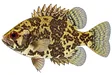
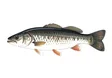
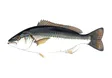
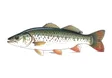
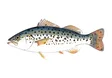
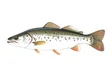
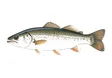
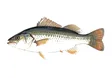
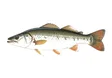
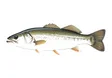
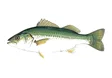
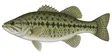
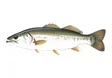
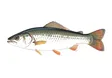
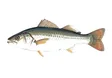
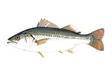
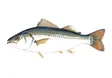
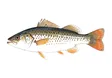
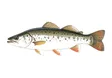
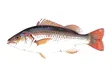
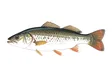
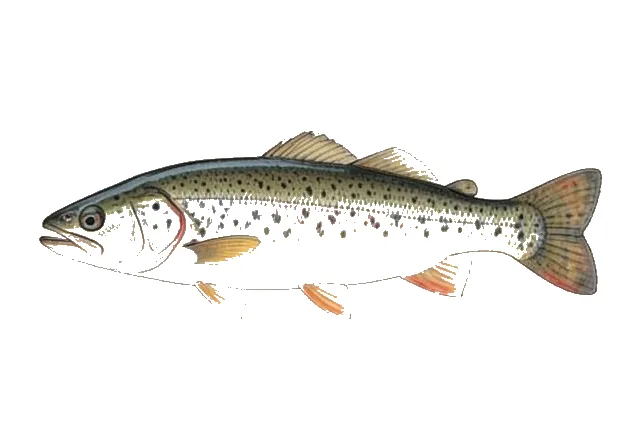
Rock Bass field guide illustration

About Rock Bass

The rock bass (Ambloplites rupestris), also known as the rock perch, goggle-eye, red eye, and black perch, is a freshwater fish native to east-central North America. This red-eyed fish is a species of freshwater fish in the sunfish family (Centrarchidae) of order Centrarchiformes and can be distinguished from other similar species by the six spines in the anal fin (other sunfish have only three anal fin spines).

Distribution

Rock bass are native to the St Lawrence River and Great Lakes system, the upper and middle Mississippi River basin in North America from Québec to Saskatchewan in the north down to Missouri and Arkansas, south to the Savannah River, and throughout the eastern U.S. from New York through Kentucky and Tennessee to the northern portions of Alabama and Georgia and Florida in the south. The rock bass has also been found in the Nueces River system in Texas. A population introduced to the Loire River in France between 1904 and 1910 is successfully self-sustaining, but not invasively expanding, more than 100 years later.

Description

They are similar in appearance to smallmouth bass, but are usually quite a bit smaller. Identifying characteristics of rock bass are their two dorsal fins that have spinous and soft-rayed united portions, a large mouth, six anal spines, red eyes; rows of dark dots on their sides. The mouth of a rock bass is located in the terminal position, below the snout, with small conical teeth to eat prey. The average rock bass is between 6 and 10 in (150 and 250 mm), and they rarely weigh over a pound. Few rock bass live beyond 10 to 12 years. A. rupestris, the largest and most common of the Ambloplites species, has reached a maximum recorded length of 43 cm (17 in), and a maximum recorded weight of 1.4 kg (3.1 lb). It can live as long as 10 years. These fish have body coloring from golden brown to olive with a white to silver colored belly and have the ability to rapidly change their color to match their surroundings. This chameleon-like trait allows them to thrive throughout their wide range.

Habitat

Rock bass prefer clear, rocky, and vegetated stream pools and lake margins. Rocky banks of northeastern lakes and reservoirs are a common habitat for rock bass. Their favorite habitat contains some vegetation with rocky bottoms and cool to warm waters. Rock bass species are usually found near rocky shorelines. They can be surprisingly unflustered by the presence of human activity, living under lakeside docks and near swimming areas. Rock bass are frequently seen in groups, particularly near other sunfish.

Diet

Large bass, northern pike, muskie, and walleye prey on young rock bass. Rock bass compete with smallmouth bass for food. It is carnivorous, and its diet consists of smaller fish, including their own young at times, yellow perch, and minnows, as well as insects, and crustaceans. Rock bass are occasionally known to take food from the surface. Adult Rock bass may eat heavily, particularly in the evening and early in the morning.

Reproduction

Rock bass are sexually mature at about two to three years of age. Rock bass are polygynandrous, in which both females and males have multiple mates during the breeding season. Spawning occurs from April to early June in warm waters ranging 12–15 °C (54–59 °F), with females laying from 2,000 to 11,000 eggs. Like other members of the sunfish family, the male will dig a nest near the lake shallows, and will aggressively guard it. A spawning area may be heavily used, with several other rock bass nests very close together. As a result, males can become quite aggressive as they attempt to defend territory and attract and hold females. Rock bass lack courtship displays, so the female enters the nest and joins the male in his circular behavior. Both the female and male simultaneously release their sperm and eggs into the nest. The male guards and fans the eggs, and later raises the young for a short time. Rock bass are known to grow quickly.

Conservation

Rock bass are successfully surviving in their environments and are listed as a species of "least concern" on the IUCN Red List. Based on their population stability, rock bass do not require any special monitoring or conservation management plans. As a sport fish, rock bass are managed to some extent by regulations. There are slot limits for rock bass on some bodies of water. Artificial nesting habitat or ponds can be employed to improve rock bass populations.

IGFA records

Rock bass are considered game fish throughout much of their range, the IGFA all-tackle world record for the species is a tie between 1.36 kg (3 lb 0 oz) fish – one caught in the York River in Ontario, Canada, and one from Lake Erie in Pennsylvania, US, in 1974 and 1998 respectively.

Misconceptions

Ambloplites constellatus (Ozark bass), a species of rock bass from the Ozark upland of Arkansas, and Ambloplites ariommus (shadow bass) are true rock bass, but regarded as separate species. Ambloplites rupestris is sometimes called the redeye or redeye bass in Canada, but this name refers more properly to Micropterus coosae, a distinct species of centrarchid native to parts of the American South. Rafinesque originally assigned the rock bass to Bodianus, a genus of marine wrasses (family Labridae).

Article text: Wikipedia contributors, Rock bass (source revision). Licensed under CC BY-SA 4.0. Retrieved 2026-10-11.
Diet and feeding

The FishTraits compilation records these diet categories for this species: invertebrates or larval fish; larger animal prey (a source category covering fish, crayfish, crabs, or frogs). These are broad categories, not a claim that every individual consumes every example in a category.

Reported feeding positions include bottom feeding and surface or water-column feeding. The compilation combines published observations; diets can vary with age, locality, and available food.

Habitat preferences

Reported habitat associations include medium to large rivers, streams and small rivers, creeks, still-water habitats.

The source records associations with muck, gravel, cobble, vegetation, organic debris, large woody material. An association indicates reported use, rather than an exclusive requirement.

Reproduction and parental care

The compilation reports a representative maturity age of 3 years. Its maturity field summarizes mean, median, or modal estimates, usually for females; male estimates can be used when female data are unavailable. It is not a fixed age at which every fish first breeds.

Recorded spawning months are Apr, May, Jun for the source’s reporting region (NC). This is a regional calendar, not a range-wide schedule.

The reproductive-guild classification includes guarding eggs or young at a spawning substrate or nest.

Size and recorded longevity

FishTraits reports a maximum total length of 43 centimetres. Some entries use an estimated asymptotic length; this value should not be treated as a certified record catch.

Recorded longevity in the compilation is 8 years. Wild observations were preferred, but captive records were accepted where wild records were unavailable, and unspecified records were assumed wild. The value is not a guaranteed wild lifespan or an aquarium life expectancy.

Native range

St. Lawrence River and Great Lakes, Hudson Bay (Red River), and Mississippi River basins, from Quebec to Saskatchewan, south to the Savannah River drainage, Georgia, and northern Alabama, and Missouri (native in Missouri only to the Meramec River) (Page and Burr 1991; Cashner et al. 1992).

Introduction history

Intentional stocking for sportfishing. Introduced into the Tongue River in Wyoming and moved downstream into Montana (Holton 1990). Rock Bass were extensively stocked in Missouri by state personnel during the 1930s and 1940s (Pflieger 1997). Probably gained access to the Hudson River in New York via migration through either the Erie and/or the Champlain canals (Mills et al. 1997). They were first taken there in a 1932 survey (Mills et al. 1997).

Ecological impacts

Rock Bass have severely affected Roanoke bass populations in the upper Roanoke drainage through hybridization and competition (Lee et al. 1980 et seq.; Jenkins and Burkhead 1994). Roanoke bass declined after 1965, when Rock Bass reached high densities (Jenkins and Burkhead 1994). Ambloplites in eastern Oklahoma may represent hybrid forms between A. ariommus and A. rupestris as a result of intensive stocking efforts during the late 1800s and early 1900s (Cashner and Matthews 1988). Jenkins and Burkhead (1994) speculated that introduced Rock Bass may have contributed to the demise of an isolated population of trout-perch Percopsis omiscomaycus in the Potomac River in Virginia and Maryland. Nonnative predators, including Rock Bass, have been shown to reduce the abundance and diversity of native prey species in several Pacific Northwest rivers (Hughes and Herlihy 2012).

Record fish

State records in 6 states

  • Wisconsin2 lbs. 15 oz.

    Shadow Lake · Waupaca · 06/02/1990

  • Minnesota2 lb 4 oz

    Mille Lacs Lake · Mille Lacs · 9/28/2024 · Ryan Wells, Minneapolis

  • Arkansas1 lb., 8 oz.

    Norfork Lake (Clear Creek) · 08/02/1982 · Jerry Heard, Everton, AR · rod and reel

  • Alabama1 lb 6 oz

    Paint Rock River · 5/6/1995 · James R. Stewart , Scottsboro

  • Montana1.31 lbs.

    Lower Crazy Head Springs Pond · 4/26/14 · Karson Campbell

  • Georgia1 lb, 0 oz

    South Chickamauga Creek · April 6, 2024 · Jeffrey Forester

Each figure is the state agency’s own certified record. The site holds record tables for 11 states so far, so a state missing here has not been read yet. It is not a state where this fish holds no record.

Range

Where it lives

Share of 36,118 GBIF observation records with a state location, across 44 states. The orange dots are USGS stream-survey sites where this species was caught.
0%
25.2%
Share of 36,118 GBIF observation records with a state location, across 44 states. The orange dots are USGS stream-survey sites where this species was caught.

A blank area on the dot layer usually means nobody sampled there, not that the fish is absent. Turn on “every survey site” to see where the survey looked.

The USGS stream survey caught it at 5,855 of its sites, in 35 states. That survey and the GBIF records are two different counts of two different things, so the site keeps them apart.

Habitat

Water and movement

Water
WoRMS records this species in fresh water.
USGS NAS habitat
Freshwater
US status
Native transplant — native to part of the United States, moved to other waters inside it.
Migration
Not migratory

Classification

Taxonomy

Kingdom
Animalia
Phylum
Chordata
Superclass
Actinopterygii
Class
Teleostei
Order
Perciformes
Genus
Ambloplites
Species
Ambloplites rupestris
ITIS TSN
168097
WoRMS AphiaID
151293
GBIF key
2394514
Outside the US
ITIS also files it in Canada, Mexico.

Common questions about Rock Bass

What is the scientific name of Rock Bass?
The scientific name is Ambloplites rupestris, in the family Centrarchidae. Classification follows ITIS.
Does Rock Bass live in fresh water or salt water?
WoRMS records this species in fresh water.
Where has Rock Bass been recorded in the United States?
GBIF has observations in 44 states, with the most records in Pennsylvania, Minnesota, Michigan. The map shows observation records, which do not establish the complete natural range.

Closest relatives

Other Ambloplites species

Same family

More Centrarchidae

Alabama Bass11 states
Micropterus henshalliCentrarchidaeNative and introducedFresh
Banded Sunfish15 states
Enneacanthus obesusCentrarchidaeNativeFresh
Bantam Sunfish12 states
Lepomis symmetricusCentrarchidaeNativeFresh
Black Crappie49 states
Pomoxis nigromaculatusCentrarchidaeNative and introducedFresh
Blackbanded Sunfish8 states
Enneacanthus chaetodonCentrarchidaeNativeFresh
Bluegill49 states
Lepomis macrochirusCentrarchidaeNative and introducedFresh
Bluespotted Sunfish14 states
Enneacanthus gloriosusCentrarchidaeNative and introducedFresh
Cahaba Bass1 states
Micropterus cahabaeCentrarchidaeNativeFresh
Chattahoochee Bass2 states
Micropterus chattahoochaeCentrarchidaeNativeFresh
Dollar Sunfish18 states
Lepomis marginatusCentrarchidaeNativeFresh
Flier18 states
Centrarchus macropterusCentrarchidaeNativeFresh
Florida Largemouth Bass9 states
Micropterus floridanusCentrarchidaeNative and introducedFresh
Green Sunfish46 states
Lepomis cyanellusCentrarchidaeNative and introducedFresh
Guadalupe Bass2 states
Micropterus treculiiCentrarchidaeNative and introducedFresh
Largemouth Bass48 states
Micropterus salmoidesCentrarchidaeNative and introducedFresh
Lepomis solis7 states
CentrarchidaeNative
Longear Sunfish31 states
Lepomis megalotisCentrarchidaeNative and introducedFresh
Mud Sunfish11 states
Acantharchus pomotisCentrarchidaeNativeFresh
Northern Sunfish8 states
Lepomis peltastesCentrarchidaeNativeFresh
Orangespotted Sunfish27 states
Lepomis humilisCentrarchidaeNative and introducedFresh
Ozark Bass3 states
Ambloplites constellatusCentrarchidaeNativeFresh
Pumpkinseed46 states
Lepomis gibbosusCentrarchidaeNative and introducedFreshBrackish
Redbreast Sunfish29 states
Lepomis auritusCentrarchidaeNative and introducedFresh
Redear Sunfish37 states
Lepomis microlophusCentrarchidaeNative and introducedFresh

All 40 species in Centrarchidae