White Crappie

Pomoxis annularis

Centrarchidae · freshwater water fish

9 minute read · Species guide

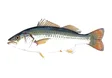
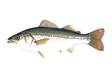
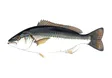
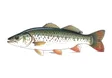
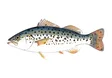
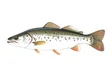
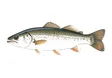
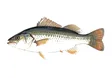
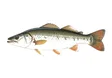
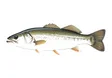
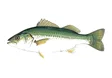
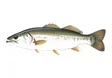
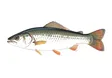
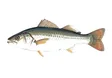
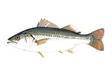
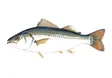
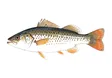
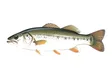
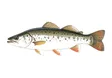
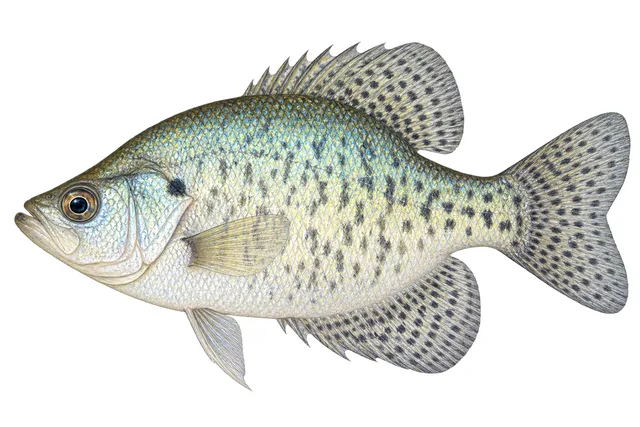
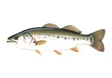
White Crappie field guide illustration

About White Crappie

The white crappie (Pomoxis annularis) is a freshwater fish found in North America, one of the two species of crappies. Alternate common names for the species include goldring, silver perch, white perch and sac-a-lait. USS Goldring is named for the fish. The genus name Pomoxis refers to crappies' sharp operculum, while the species name annularis means 'having rings', i.e., it has vaguely vertical bars on the body.

Description

White crappies are morphologically similar to black crappies (Pomoxis nigromaculatus). They have 5–10 dark vertical bars along their bodies, rather than randomly scattered spots like those of the black crappie. The white crappie has a silvery color with green or brown shades along its back, with dark lateral bars along its side, and a white belly. The dorsal fins of the white crappie start farther back on the body than those of the black crappie. The anal fin is about the same size as the dorsal fin. The white crappie has six dorsal fin spines, whereas the black crappie has seven or eight dorsal fin spines. White crappies are also slightly more elongated than black crappies. The white crappie is a deep-bodied fish with a flattened body, or a depth that is one-third of the length of the fish. White crappies have spinous rays and ctenoid fish scales found in advanced teleosts. The exposed part of the scale has tiny tooth-like projections (cteni). Both species of crappies have a terminal mouth position with many small, conical teeth in two rows along the mouth, which are called cardiform because they resemble a tool used for wool carding. Crappies belong to the family Centrarchidae in the order Perciformes within class Actinopterygii.

The white crappie rarely exceeds 2 pounds (0.91 kg), and typically lives 2–7 years. The species is generally about 9–10 inches (23–25 cm) in length as an adult. The current International Game Fish Association all-tackle world record for a white crappie is 2.35 kg (5.2 lb), caught on July 31, 1957, near Enid Dam, Mississippi, by angler Fred Bright, while the IGFA all-tackle length world record is a 39-centimetre (15 in) fish, caught on October 14, 2022, in Grenada Lake, Mississippi, by angler Doug Borries.

Distribution

White crappies are native to the Great Lakes, Hudson Bay, and the Mississippi River basins expanding from New York and southern Ontario westward to South Dakota and southward to Texas. This species has a large geographic range in the United States and currently has a stable population. Currently, this species is listed as a least concern species for conservation efforts.

Habitat

White crappies can be found in large rivers, reservoirs, and lakes. White crappies are more tolerant of turbid (murky) waters than black crappies, and the white crappie usually outnumbers the black crappie in turbid waters. White crappies also generally outnumber black crappies in areas with little rooted aquatic vegetation. White crappies are most commonly found in rivers and low-velocity areas such as pools and backwaters of rivers. They are most abundant in lakes and reservoirs larger than 5 acres. The white crappie can be found in the open water during the mornings and evenings, but during the day this species is found in shallower, quiet waters (6–12 feet (1.8–3.7 m) deep) surrounded by structure.

Reproduction

White crappies spawn in May and June when the water temperature reaches 56 °F (13 °C). Males construct nests by creating small, bowl-shaped depressions on the bottom around brush, rocks, and logs in the shallow water. During the spawning season, males develop dark coloration on their throats. Females lay 5,000 to 30,000 eggs. The males guard these nests until the fry swim away. Males guard these nests because it helps ensure the success of their genes being passed on to the next generation. The white crappie typically grows 3–5 inches (7.6–12.7 cm) within the first year of its life and can grow an additional 3–4 inches in the second year. The white crappies reach maturity around their second or third year. The maximum lifespan of white crappies is 8 to 10 years with the average lifespan being 3 to 4 years in unmanaged waters and 6 years in managed waters.

Diet

White crappies are neither cruise- nor ambush-feeding strategists. Instead, they swim intermittently and only search for prey when stationary. This strategy is considered saltatory, or pause-and-travel search. Using this strategy, juveniles can grow rapidly in the first few days of life. This strategy is energetically favored to reduce search time for the species. White crappies in the larval and juvenile stages of life eat zooplankton and continue to feed primarily on small invertebrates during their first year of life.

When white crappies reach a length of 12–15 centimetres (4.7–5.9 in), they are considered adult. The adults feed mainly on small fish such as minnows and young American shad, and large invertebrates such as crayfish and hellgrammites. Their diet can vary depending on their location. They feed the most in June through October. In the spring, they feed moderately, with their activity slowing during the winter months. In Mississippi, they feed on mayflies such as Hexagenia atrocaudata and Pentagenia vittigera. In Illinois, and probably elsewhere, they feast on American gizzard shad. In Pennsylvania and Ohio, adults eat small common carp, yellow perch, bluegill, and other white crappies. The terminal mouth position, sometimes known as the normal position, allows for this species to feed on what is in front of it.

Article text: Wikipedia contributors, White crappie (source revision). Licensed under CC BY-SA 4.0. Retrieved 2026-10-11.
Diet and feeding

The FishTraits compilation records these diet categories for this species: invertebrates or larval fish; larger animal prey (a source category covering fish, crayfish, crabs, or frogs). These are broad categories, not a claim that every individual consumes every example in a category.

Reported feeding positions include bottom feeding and surface or water-column feeding. The compilation combines published observations; diets can vary with age, locality, and available food.

Habitat preferences

Reported habitat associations include medium to large rivers, streams and small rivers, still-water habitats.

The source records associations with muck, clay or silt, sand, vegetation, organic debris, large woody material. An association indicates reported use, rather than an exclusive requirement.

Reproduction and parental care

The compilation reports a representative maturity age of 1.5 years. Its maturity field summarizes mean, median, or modal estimates, usually for females; male estimates can be used when female data are unavailable. It is not a fixed age at which every fish first breeds.

Recorded spawning months are Apr, May, Jun for the source’s reporting region (NC). This is a regional calendar, not a range-wide schedule.

The reproductive-guild classification includes guarding eggs or young at a spawning substrate or nest.

Size and recorded longevity

FishTraits reports a maximum total length of 53 centimetres. Some entries use an estimated asymptotic length; this value should not be treated as a certified record catch.

Recorded longevity in the compilation is 10 years. Wild observations were preferred, but captive records were accepted where wild records were unavailable, and unspecified records were assumed wild. The value is not a guaranteed wild lifespan or an aquarium life expectancy.

Identification and appearance

White crappie, Pomoxis annularis, have deep laterally compressed bodies which are iridescent olive green in color on the back and silvery white on the sides. The sides will also have 10 or fewer indistinct dark vertical bars. The head is small with a sharp depression in the profile above their eyes and the mouth appears to project because it is large and oblique. The dorsal and anal fins are large and round with 5-6 spines. Dorsal fins have 13-15 rays and anal fins have 17-18 rays. In the pelvic fins there is 1 spine and 5 rays and in rounded pectoral fins 15 rays. Dorsal, anal, and caudal fins are checkered with dark spots. The lateral line of White crappie is arched with 38-45 scales. Breeding males are very dark with the head and breast becoming nearly black (Moyle 1976).

Native range

Southern Great Lakes, Hudson Bay (Red River), and Mississippi River basins from New York and southern Ontario west to Minnesota and South Dakota, and south to the Gulf; Gulf Slope drainages from Mobile Bay, Georgia and Alabama, to the Neuces River, Texas (Page and Burr 1991).

Habitat and ecology

White crappie are found in warm, turbid lakes, rivers, river backwaters and are most abundant in lakes and reservoirs greater than 5 acres in size. In rivers, Pomoxis annularis prefers low velocity areas (Edwards et al. 1982; Moyle 1976). Vegetation is not required in habitat (Becker 1983). Despite White Crappie’ tolerance of, and apparent preference for turbid waters, greater growth is observed in clearer water (Edwards et al. 1982). Optimum water temperature range is 27-29°C and the maximum observed temperature was 31.1°C (Becker 1983). Ideal dissolved oxygen concentrations are 5 mg/L and the lowest concentration White Crappie have been observed at was 2.2 mg/L. It is assumed that the safe pH range is 5-9 and for best production a pH of 6.5-8.5 is required. The highest salinity in which White crappie have been observed is 1.3 ppt (Edwards et al. 1982). White crappie are schooling fish and schools are frequently localized in distribution (Becker 1983). During the winter they are reportedly inactive and remain close to the bottom in deep water (Moyle 1976). Spawning begins in April or May when temperatures reach 17-20°C, but spawning could possibly be delayed by continuously low water temperatures. Males will construct nests in colonies of shallow depressions in hard clay bottoms, near beds of plants, algae or submerged plant debris to which eggs typically adhere. Nests are typically near overhanging bushes or banks in water that is less than 1 meter deep but nests have also been observed in 7 meter deep water (Moyle 1976; Hansen 1951). White crappie have exhibited territorial behavior over nests and will chase away intruders until eggs have hatched, which typically takes 2-5 days. Growth rates of White crappie can vary greatly depending on conditions and it is common for stunting and overcrowding to occur (Etnier and Starnes 1993). Individuals become mature in their second or third spring. It is rare for individuals to survive more than five years with 50% of fish in a brood typically dead by the third year of life (Becker 1983). The maximum lifespan is estimated to be 10 years (Etnier and Starnes 1993). White crappie congregate around submerged logs or boulders in 2-4 m deep water during the day and leave to feed in open water during the evening and early morning. They use long, fine gill rakers for straining zooplankton from the water and also have large protrusible mouths for consuming large prey. White crappie are an opportunistic feeders and will feed on fish and available aquatic insects (Moyle 1976). Individuals less than a year old only feed on zooplankton, but as they become mature fish become the most important source of food (Becker 1983). Fish identified in the stomach contents of White crappie include the Spotfin shiner, Lepomis spp., the Tessellated darter, among other unidentified fish (Mathur 1972). It is preyed upon by larger fishes which can include Largemouth bass, Smallmouth bass, Northern pike and Muskellunge (Becker 1983).

Introduction history

Intentional stocking for sportfishing.

Ecological impacts

White Crappie prey on threatened and endangered juvenile salmon that spawn in rivers of the Northwest United States and may further contribute to salmon decline through habitat alteration, though the extent of those impacts are unknown (Sanderson et al. 2009). Nonnative predators, including crappie, have been shown to reduce the abundance and diversity of native prey species in several Pacific Northwest rivers (Hughes and Herlihy 2012).

Record fish

State records in 9 states

  • Bibb County pond · April 10, 1984 · Theresa Kemp

  • Oklahoma4 lbs 15.00 ozs

    Kingfisher Co. Pond · 05/04/1991 · Frank Robinson · rod and line

  • Alabama4 lbs 9 oz

    Lake Martin, Tallapoosa Co. · 5/8/2000 · Jeremy S. White , Alexander City

  • Alabama4 lbs 8 oz

    Guntersville Reservoir · 4/4/1974 · Jack Grant , Altoona

  • Arkansas4 lbs., 7 oz.

    Mingo Creek · 04/12/1993 · Shelby D. Cooper, Bald Knob, AR · rod and reel

  • Minnesota3 lb 15 oz

    Lake Constance · Wright · 7/28/2002

  • Wisconsin3 lb. 13.1 oz.

    Cranberry Marsh · Monroe · 05/04/2003

  • Idaho3.8 lb

    Crane Creek Reservoir · 07/16/2012 · Trenten Smith

  • Montana3.68 lbs.

    Tongue River · 5/10/96 · Gene Bassett

  • Texas3 lb

    Hubbard Creek Reservoir · Mar 1, 2023 · Michael Bacon · Crappie Jig Monkey Milk

  • Texas2.56 lb

    Conroe · Feb 23, 2007 · William Edney · Fly Rod,

Each figure is the state agency’s own certified record. The site holds record tables for 11 states so far, so a state missing here has not been read yet. It is not a state where this fish holds no record.

Statute

The official state fish of Louisiana

  • Louisianaas White crappie (freshwater), named 1993

A state fish is chosen by statute. It says nothing about how common the fish is in the state. See every official state fish.

Range

Where it lives

Share of 24,969 GBIF observation records with a state location, across 42 states. The orange dots are USGS stream-survey sites where this species was caught.
0%
31%
Share of 24,969 GBIF observation records with a state location, across 42 states. The orange dots are USGS stream-survey sites where this species was caught.

A blank area on the dot layer usually means nobody sampled there, not that the fish is absent. Turn on “every survey site” to see where the survey looked.

The USGS stream survey caught it at 1,529 of its sites, in 32 states. That survey and the GBIF records are two different counts of two different things, so the site keeps them apart.

Habitat

Water and movement

Water
WoRMS records this species in fresh water.
USGS NAS habitat
Freshwater
US status
Native transplant — native to part of the United States, moved to other waters inside it.
Migration
Migratory
Pattern

Classification

Taxonomy

Kingdom
Animalia
Phylum
Chordata
Superclass
Actinopterygii
Class
Teleostei
Order
Perciformes
Genus
Pomoxis
Species
Pomoxis annularis
ITIS TSN
168166
WoRMS AphiaID
1022855
GBIF key
2394534
Outside the US
ITIS also files it in Canada.

Common questions about White Crappie

What is the scientific name of White Crappie?
The scientific name is Pomoxis annularis, in the family Centrarchidae. Classification follows ITIS.
Does White Crappie live in fresh water or salt water?
WoRMS records this species in fresh water.
Where has White Crappie been recorded in the United States?
GBIF has observations in 42 states, with the most records in Pennsylvania, Texas, Oklahoma. The map shows observation records, which do not establish the complete natural range.

Closest relatives

Other Pomoxis species

Same family

More Centrarchidae

Alabama Bass11 states
Micropterus henshalliCentrarchidaeNative and introducedFresh
Banded Sunfish15 states
Enneacanthus obesusCentrarchidaeNativeFresh
Bantam Sunfish12 states
Lepomis symmetricusCentrarchidaeNativeFresh
Black Crappie49 states
Pomoxis nigromaculatusCentrarchidaeNative and introducedFresh
Blackbanded Sunfish8 states
Enneacanthus chaetodonCentrarchidaeNativeFresh
Bluegill49 states
Lepomis macrochirusCentrarchidaeNative and introducedFresh
Bluespotted Sunfish14 states
Enneacanthus gloriosusCentrarchidaeNative and introducedFresh
Cahaba Bass1 states
Micropterus cahabaeCentrarchidaeNativeFresh
Chattahoochee Bass2 states
Micropterus chattahoochaeCentrarchidaeNativeFresh
Dollar Sunfish18 states
Lepomis marginatusCentrarchidaeNativeFresh
Flier18 states
Centrarchus macropterusCentrarchidaeNativeFresh
Florida Largemouth Bass9 states
Micropterus floridanusCentrarchidaeNative and introducedFresh
Green Sunfish46 states
Lepomis cyanellusCentrarchidaeNative and introducedFresh
Guadalupe Bass2 states
Micropterus treculiiCentrarchidaeNative and introducedFresh
Largemouth Bass48 states
Micropterus salmoidesCentrarchidaeNative and introducedFresh
Lepomis solis7 states
CentrarchidaeNative
Longear Sunfish31 states
Lepomis megalotisCentrarchidaeNative and introducedFresh
Mud Sunfish11 states
Acantharchus pomotisCentrarchidaeNativeFresh
Northern Sunfish8 states
Lepomis peltastesCentrarchidaeNativeFresh
Orangespotted Sunfish27 states
Lepomis humilisCentrarchidaeNative and introducedFresh
Ozark Bass3 states
Ambloplites constellatusCentrarchidaeNativeFresh
Pumpkinseed46 states
Lepomis gibbosusCentrarchidaeNative and introducedFreshBrackish
Redbreast Sunfish29 states
Lepomis auritusCentrarchidaeNative and introducedFresh
Redear Sunfish37 states
Lepomis microlophusCentrarchidaeNative and introducedFresh

All 40 species in Centrarchidae