Virgin Chub

Gila seminuda

Leuciscidae · freshwater water fish

2 minute read · Species guide

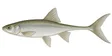
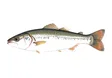
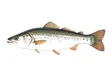
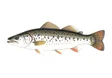
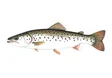
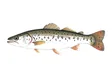
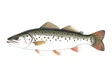
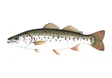
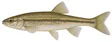
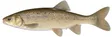
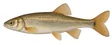
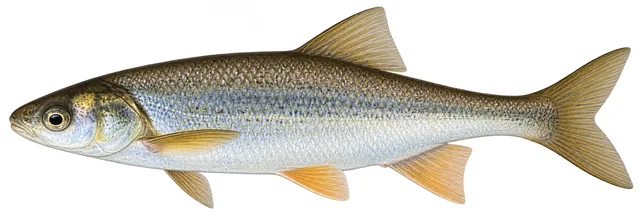
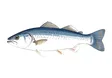
Virgin Chub field guide illustration

About Virgin Chub

The Virgin chub or the Virgin River chub (Gila seminuda) is a species of freshwater ray-finned fish belonging to the family Leuciscidae, which includes the daces, chubs, Eurasian minnows and related species. This is a medium-sized, silvery minnow, generally less than 15 cm (5.9 in) long and reaching lengths of 25 cm (9.8 in). The back, breast, and part of the belly are embedded with small scales, naked in some individuals. The length of the head divided by the depth of the caudal peduncle typically results in a ratio of 4.0 to 5.0 (rarely exceeding 5.0, which approximates G. elegans). The scales are typically lacking basal radii or are with extremely faint lines.

Range

It is restricted to two tributaries of the Colorado River, the Virgin River in Arizona, Nevada, and Utah, and the upper and middle reaches of the Muddy River in Nevada. The Arizona range of the Virgin chub is restricted to the Virgin River within Mohave County.

Habitat

In its native habitat, it occurs only in the generally warm, turbid, and saline mainstream of the Virgin and Muddy Rivers, and very rarely in the immediate mouths of their major tributaries. The Virgin chub is most common in deeper areas where waters are swift, but not turbulent, and most often is associated with boulders or other types of cover.

Population trends

The Virgin chub is continuing to decline. In 1988 an attempt to remove red shiners (which are a common competitor with the Virgin chub) from 35 km (22 mi) of habitat on the Virgin River, ended in failure as populations of Virgin chub continued to be decimated by other factors including habitat modifications.

Management factors

Activities that are known to be detrimental to Virgin chub populations are the de-watering of habitats through the re-routing of stream water, stream impoundment, channelization, domestic livestock grazing, timber harvesting, mining, road construction, polluting, and stocking non-natives.

Threats: widespread modification and reduction of habitat; dewatering by agricultural diversion; increased temperature, salinity, and turbidity of the Virgin River; introduction of non-native fish and parasite species.

Management needs: protect and enhance habitat, including water quantity and quality; ameliorate effects of nonnative fish species in chub waters; re-establish additional populations.

Hybrid origin

The Virgin chub likely evolved via introgressive hybridization between the roundtail chub, G. robusta, and the bonytail chub, G. elegans. Evidence for a hybrid origin of the Virgin chub is based on morphology and allozymes. The mitochondrial DNA of the Virgin chub is nearly identical to that of G. elegans.

Article text: Wikipedia contributors, Virgin chub (source revision). Licensed under CC BY-SA 4.0. Retrieved 2026-10-11.

Range

Where it lives

Share of 106 GBIF observation records with a state location, across 4 states.
0%
50%
Share of 106 GBIF observation records with a state location, across 4 states.

Habitat

Water and movement

Water
WoRMS records this species in fresh water.
USGS NAS habitat
Freshwater
US status
Native transplant — native to part of the United States, moved to other waters inside it.
Migration
Undetermined

Classification

Taxonomy

Kingdom
Animalia
Phylum
Chordata
Superclass
Actinopterygii
Class
Teleostei
Order
Cypriniformes
Genus
Gila
Species
Gila seminuda
ITIS TSN
553395
WoRMS AphiaID
1020327
GBIF key
2360105

Common questions about Virgin Chub

What is the scientific name of Virgin Chub?
The scientific name is Gila seminuda, in the family Leuciscidae. Classification follows ITIS.
Does Virgin Chub live in fresh water or salt water?
WoRMS records this species in fresh water.
Where has Virgin Chub been recorded in the United States?
GBIF has observations in 4 states, with the most records in Nevada, Arizona, Utah. The map shows observation records, which do not establish the complete natural range.

Closest relatives

Other Gila species

Same family

More Leuciscidae

Alabama Shiner4 states
Cyprinella callistiaLeuciscidaeNativeFresh
Allegheny Pearl Dace19 states
Margariscus margaritaLeuciscidaeNative and introducedFresh
Altamaha Shiner1 states
Cyprinella xaenuraLeuciscidaeNativeFresh
Alvord Chub2 states
Siphateles alvordensisLeuciscidaeNativeFresh
Apalachee Shiner3 states
Pteronotropis grandipinnisLeuciscidaeNativeFresh
Arkansas River Shiner5 states
Notropis girardiLeuciscidaeNative and introducedFresh
Arroyo Chub1 states
Gila orcuttiiLeuciscidaeNative and introducedFresh
Bandfin Shiner5 states
Luxilus zonistiusLeuciscidaeNative and introducedFresh
Bannerfin Shiner5 states
Cyprinella leedsiLeuciscidaeNativeFresh
Beautiful Shiner3 states
Cyprinella formosaLeuciscidaeNativeFresh
Bedrock Shiner3 states
Notropis rupestrisLeuciscidaeNativeFresh
Bigeye Chub25 states
Hybopsis amblopsLeuciscidaeNative and introducedFresh
Bigeye Shiner17 states
Notropis boopsLeuciscidaeNative and introducedFresh
Bigmouth Chub3 states
Nocomis platyrhynchusLeuciscidaeNativeFresh
Bigmouth Shiner21 states
Notropis dorsalisLeuciscidaeNative and introducedFresh
Blackchin Shiner13 states
Notropis heterodonLeuciscidaeNativeFresh
Blackmouth Shiner3 states
Notropis melanostomusLeuciscidaeNativeFresh
Blacknose Shiner21 states
Notropis heterolepisLeuciscidaeNative and introducedFresh
Blackside Dace2 states
Chrosomus cumberlandensisLeuciscidaeNativeFresh
Blackspot Shiner5 states
Notropis atrocaudalisLeuciscidaeNativeFresh
Blacktail Shiner14 states
Cyprinella venustaLeuciscidaeNative and introducedFresh
Blacktip Shiner4 states
Lythrurus atrapiculusLeuciscidaeNative and introducedFresh
Bleeding Shiner8 states
Luxilus zonatusLeuciscidaeNativeFresh
Blotched Chub6 states
Erimystax insignisLeuciscidaeNativeFresh

All 267 species in Leuciscidae