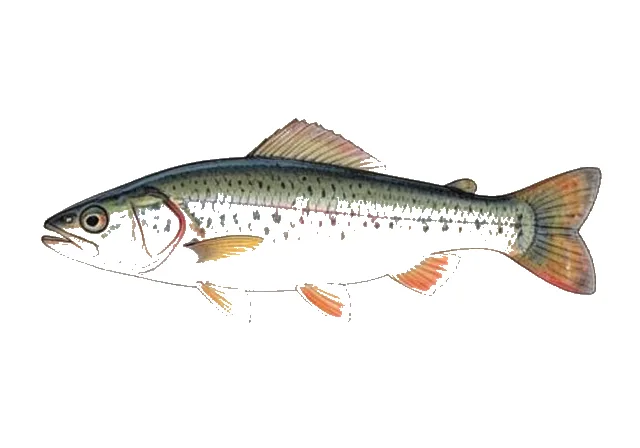
Beautiful Shiner

Cyprinella formosa

Leuciscidae · freshwater water fish

5 minute read · Species guide

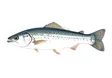
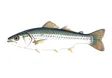
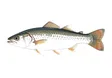
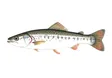
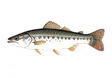
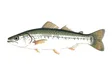
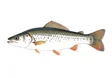
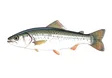
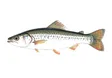
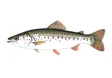
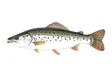
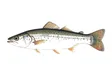
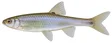
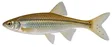
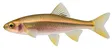
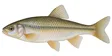
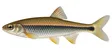
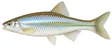
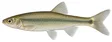
Beautiful Shiner field guide illustration

About Beautiful Shiner

The beautiful shiner (Cyprinella formosa) is a species of freshwater ray-finned fish in the family Leuciscidae, the shiners, daces and minnows. It is found in Mexico and Arizona and New Mexico in the United States. It is one of 22 species of Cyprinella found in North America.

Description

The beautiful shiner is one of the smaller species of Arizona native fish, reaching lengths of only 3.5 inches. They have pointed snouts with compressed heads and bodies, giving them a very slender appearance. Their lateral lines are slightly curved with 30 to 40 small scales. Shiners also have a lower number of fin rays, which can distinguish them from longfin daces or suckers. The dorsal and pelvic fins have only eight fin rays, with anal fin rays ranging from eight to 9. Shiners have pharyngeal teeth than line up in single lines inside their mouths, which also make them easily distinguishable. Coloration patterns include either orange or bright red bodies, with silvery gray lateral lines along their scales. Melanophores line the dorsal portions, giving them the opportunity to change colors while mating. During mating, the males will turn their caudal fins yellow or orange, for certain unknown sexually selective reasons. Males can sometimes have either bluish or red heads.

Distribution in Arizona

These shiners are typically found in the waters of Cochise County and San Bernardino Creek. They were extirpated from the United States for a brief period during 1969-70, but they have recently been reintroduced to Arizona and other regions of the Southwest. The San Bernardino Wildlife Refuge has been working for the recovery of this threatened species by reintroducing it into various ponds around Cochise County. After the reintroduction in 1990, the beautiful shiner has made its way from Cochise County to Southern parts of Sonora and Mexico, traveling to the Santa Maria and Santa Clara drainages to spawn. This species can also be found Rio Yaqui and Mimbres Rivers. They have a stricter range in elevation, being found only in rivers between 2600 and 5600 feet, and they are restricted to Riparian biotic communities.

Habitat

Their more preferred habitats are sandy, rocky-bottomed streams of smaller sizes. Attempts have been made to reintroduce the species into man-made ponds; some successful recoveries of populations have been noted and some unsuccessful. The largest populations have been found in smaller riffles in the Yaqui River, as well as smaller tributaries within Cochise County. Smaller eddies and riffles are preferred, because of the greater number of aquatic and terrestrial invertebrates can be found for feeding. Although this species eats primarily invertebrates, it is considered omnivorous, as it also feeds on detritus.

Reproduction

The knowledge about the reproduction patterns of this species is limited. Federal law protects members of the endangered or threatened species, making it difficult to legally catch or study them. They will spread their eggs over aquatic vegetation or brush in attempt to hide them from predators. They also prefer warmer waters during copulation, mating only between the months of May and July.

Conservation biology

Beautiful shiners live in highly volatile environments. Their predators include garter snakes, bullfrogs, and other non-native fish, resulting in extra energy spent hiding their eggs during spawning. The introduction of non-native green sunfish and bullfrogs has contributed largely to a decline in fitness, because these other animals are outcompeting this species for habitat. Arizona placed the beautiful shiner on the endangered species list in 1988, and little has been done to recover their numbers. Aquifer pumping, reduction in stream flows, and predation by non-native green sunfish, are all major contributing factors to the decline of the species according to Nature Serve (2002). The San Bernardino Ranch has current plans to populate the area, and other projects involve federal habitat preservation. The Dexter National Fish Hatchery & Technology Center has had the most success, because they have developed an effective method for reintroducing the species, and providing the criteria for spawning.

Article text: Wikipedia contributors, Beautiful shiner (source revision). Licensed under CC BY-SA 4.0. Retrieved 2026-10-11.


Diet and feeding

The FishTraits compilation records these diet categories for this species: algae or phytoplankton; invertebrates or larval fish. These are broad categories, not a claim that every individual consumes every example in a category.

Reported feeding positions include bottom feeding and surface or water-column feeding. The compilation combines published observations; diets can vary with age, locality, and available food.

Habitat preferences

Reported habitat associations include medium to large rivers, streams and small rivers, creeks, springs or subterranean waters.

The source records associations with sand, gravel. An association indicates reported use, rather than an exclusive requirement.

Reproduction and parental care

The compilation reports a representative maturity age of 1.5 years. Its maturity field summarizes mean, median, or modal estimates, usually for females; male estimates can be used when female data are unavailable. It is not a fixed age at which every fish first breeds.

Batch or serial spawning has been reported somewhere in the species’ range. This does not establish the same spawning pattern for every population.

Recorded spawning months are Feb, Mar, Apr, May, Jun for the source’s reporting region (MEX). This is a regional calendar, not a range-wide schedule.

The reproductive-guild classification includes hiding a brood without subsequent guarding.

Size and recorded longevity

FishTraits reports a maximum total length of 9 centimetres. Some entries use an estimated asymptotic length; this value should not be treated as a certified record catch.

Recorded longevity in the compilation is 3 years. Wild observations were preferred, but captive records were accepted where wild records were unavailable, and unspecified records were assumed wild. The value is not a guaranteed wild lifespan or an aquarium life expectancy.

Range

Where it lives

Share of 25 GBIF observation records with a state location, across 3 states.
0%
64%
Share of 25 GBIF observation records with a state location, across 3 states.

Share of records by state

Habitat

Water and movement

Water
WoRMS records this species in fresh water.
Migration
Undetermined

Classification

Taxonomy

Kingdom
Animalia
Phylum
Chordata
Superclass
Actinopterygii
Class
Teleostei
Order
Cypriniformes
Genus
Cyprinella
Species
Cyprinella formosa
ITIS TSN
163780
WoRMS AphiaID
1017171
GBIF key
5207648
Outside the US
ITIS also files it in Mexico.

Common questions about Beautiful Shiner

What is the scientific name of Beautiful Shiner?
The scientific name is Cyprinella formosa, in the family Leuciscidae. Classification follows ITIS.
Does Beautiful Shiner live in fresh water or salt water?
WoRMS records this species in fresh water.
Where has Beautiful Shiner been recorded in the United States?
GBIF has observations in 3 states, with the most records in New Mexico, Arizona, Texas. The map shows observation records, which do not establish the complete natural range.

Closest relatives

Other Cyprinella species

Alabama Shiner4 states
Cyprinella callistiaLeuciscidaeNativeFresh
Altamaha Shiner1 states
Cyprinella xaenuraLeuciscidaeNativeFresh
Bannerfin Shiner5 states
Cyprinella leedsiLeuciscidaeNativeFresh
Blacktail Shiner14 states
Cyprinella venustaLeuciscidaeNative and introducedFresh
Blue Shiner4 states
Cyprinella caeruleaLeuciscidaeNativeFresh
Bluestripe Shiner4 states
Cyprinella callitaeniaLeuciscidaeNativeFresh
Bluntface Shiner11 states
Cyprinella camuraLeuciscidaeNativeFresh
Conchos Shiner1 states
Cyprinella panarcysLeuciscidaeNativeFresh
Fieryblack Shiner3 states
Cyprinella pyrrhomelasLeuciscidaeNative and introducedFresh
Greenfin Shiner3 states
Cyprinella chloristiaLeuciscidaeNativeFresh
Ocmulgee Shiner3 states
Cyprinella callisemaLeuciscidaeNativeFresh
Plateau Shiner1 states
Cyprinella lepidaLeuciscidaeNativeFresh
Proserpine Shiner1 states
Cyprinella proserpinaLeuciscidaeNativeFresh
Red Shiner28 states
Cyprinella lutrensisLeuciscidaeNative and introducedFresh
Santee Chub2 states
Cyprinella zanemaLeuciscidaeNativeFresh
Satinfin Shiner17 states
Cyprinella analostanaLeuciscidaeNative and introducedFresh
Spotfin Shiner31 states
Cyprinella spilopteraLeuciscidaeNative and introducedFresh
Steelcolor Shiner26 states
Cyprinella whippleiLeuciscidaeNative and introducedFresh
Tallapoosa Shiner2 states
Cyprinella gibbsiLeuciscidaeNativeFresh
Thicklip Chub3 states
Cyprinella labrosaLeuciscidaeNativeFresh
Tricolor Shiner5 states
Cyprinella trichroistiaLeuciscidaeNativeFresh
Whitefin Shiner4 states
Cyprinella niveaLeuciscidaeNativeFresh
Whitetail Shiner14 states
Cyprinella galacturaLeuciscidaeNative and introducedFresh

Same family

More Leuciscidae

Alabama Shiner4 states
Cyprinella callistiaLeuciscidaeNativeFresh
Allegheny Pearl Dace19 states
Margariscus margaritaLeuciscidaeNative and introducedFresh
Altamaha Shiner1 states
Cyprinella xaenuraLeuciscidaeNativeFresh
Alvord Chub2 states
Siphateles alvordensisLeuciscidaeNativeFresh
Apalachee Shiner3 states
Pteronotropis grandipinnisLeuciscidaeNativeFresh
Arkansas River Shiner5 states
Notropis girardiLeuciscidaeNative and introducedFresh
Arroyo Chub1 states
Gila orcuttiiLeuciscidaeNative and introducedFresh
Bandfin Shiner5 states
Luxilus zonistiusLeuciscidaeNative and introducedFresh
Bannerfin Shiner5 states
Cyprinella leedsiLeuciscidaeNativeFresh
Bedrock Shiner3 states
Notropis rupestrisLeuciscidaeNativeFresh
Bigeye Chub25 states
Hybopsis amblopsLeuciscidaeNative and introducedFresh
Bigeye Shiner17 states
Notropis boopsLeuciscidaeNative and introducedFresh
Bigmouth Chub3 states
Nocomis platyrhynchusLeuciscidaeNativeFresh
Bigmouth Shiner21 states
Notropis dorsalisLeuciscidaeNative and introducedFresh
Blackchin Shiner13 states
Notropis heterodonLeuciscidaeNativeFresh
Blackmouth Shiner3 states
Notropis melanostomusLeuciscidaeNativeFresh
Blacknose Shiner21 states
Notropis heterolepisLeuciscidaeNative and introducedFresh
Blackside Dace2 states
Chrosomus cumberlandensisLeuciscidaeNativeFresh
Blackspot Shiner5 states
Notropis atrocaudalisLeuciscidaeNativeFresh
Blacktail Shiner14 states
Cyprinella venustaLeuciscidaeNative and introducedFresh
Blacktip Shiner4 states
Lythrurus atrapiculusLeuciscidaeNative and introducedFresh
Bleeding Shiner8 states
Luxilus zonatusLeuciscidaeNativeFresh
Blotched Chub6 states
Erimystax insignisLeuciscidaeNativeFresh
Blue Chub3 states
Gila coeruleaLeuciscidaeNative and introducedFresh

All 267 species in Leuciscidae