Arroyo Chub

Gila orcuttii

Leuciscidae · freshwater water fish

6 minute read · Species guide

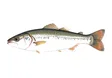
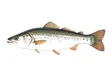
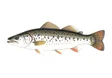
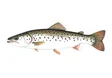
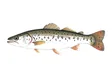
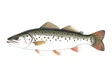
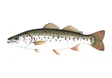
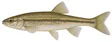
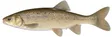
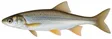
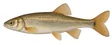
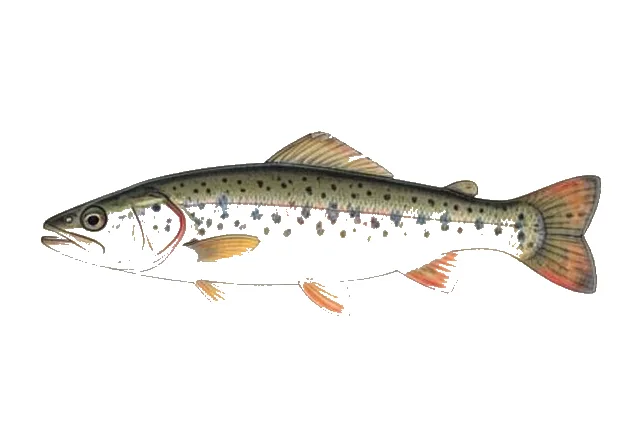
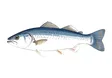
Arroyo Chub field guide illustration

About Arroyo Chub

The arroyo chub (Gila orcuttii) is a species of freshwater ray-finned fish belonging to the family Leuciscidae, which includes the daces, chubs, Eurasian minnows and related species. This species is found only in the coastal streams of southern California, United States.

Description

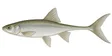
The Arroyo chub is a small to moderately small fish with a robust, fusiform body and a thick caudal peduncle. It has a rounded snout, a terminal to slightly subterminal mouth, and proportionally large eyes.

Coloration: The dorsal surface is typically olive or gray, transitioning to silver or white on the ventral side. Many individuals display a faint lateral stripe.

Fin anatomy: The species exhibits the typical cyprinid arrangement of a single dorsal fin along with pectoral, pelvic, anal, and forked caudal fins. The dorsal fin has 8 rays, and the anal fin has 7 rays. Males often develop enlarged fins and breeding tubercles on the pectoral fins during the spawning season.

Size: Adults generally reach 7–10 cm (2.8–3.9 in), with larger individuals approaching 12 cm (4.7 in).

Native range

The Arroyo chub is native to coastal streams of Southern California, occurring primarily in Los Angeles, Orange, Riverside, and San Diego counties. Its range includes drainages of the Los Angeles River (including the Arroyo Seco), San Gabriel River, Santa Ana River, San Juan Creek, Malibu Creek, Santa Margarita River, and San Luis Rey River systems. Recent surveys have detected the species in 18 of 40 sampled streams across all seven historically occupied watersheds, though often restricted to upper or less-disturbed reaches.

Introduced range

Human-mediated introductions have been documented in the Santa Ynez River, Santa Clara River, Ventura River, Santa Maria River, Cuyama River, and Mojave River drainages. These introductions are believed to stem from bait bucket releases and accidental transfers during trout stocking.

Habitat preferences

The Arroyo chub is a habitat generalist meaning it is capable of thriving in a broad variety of environmental conditions rather than being restricted to a narrow habitat type. However, it tends to favor flowing pools, runs, and slow to moderate current zones in small to medium-sized streams with sandy or muddy substrates.

The species tolerates warm temperatures, hypoxic summer conditions, and high-flow winter periods. Reported thermal tolerance ranges from approximately 10 to 24–26 °C (50 to 75–79 °F). Arroyo chub are frequently found in deeper (> 40 cm (16 in)) pool habitats, especially those providing vegetative cover or shelter. They can also persist in intermittent streams, surviving in remnant pools during dry periods.

Arroyo Chubs exhibit high mobility within their watersheds, with movement patterns primarily driven by seasonal cues. During summer months, juveniles typically inhabit shallow pools and areas with instream cover. Conversely, during periods of winter flooding, they shelter under log jams and other large woody debris for refugia.

Diet and behavior

Arroyo chub are omnivorous. Their diet includes algae, aquatic insects, small crustaceans, and in some cases mollusks or insect larvae (e.g. caddisfly larvae) depending on habitat conditions. In warmer water systems, algae may dominate their diet, making up a large proportion of stomach contents; in cooler creek systems, more invertebrate prey may be important. In the northern portion of its range, roots of the floating water fern (Azolla filiculoides) constitutes a significant component of the species' diet.

Spawning typically occurs in spring through summer (February to August in some reports), with peak activity in June-July. Females release small batches of eggs, which adhere to vegetation, substrate, or debris. Eggs hatch in about 4 days at 24 °C (75 °F), larvae initially remain near the substrate before swimming upward to fill their swim bladders, and juveniles often congregate in slow or still water with vegetation cover. Juvenile fish may reach roughly 60 mm (2.4 in) in the first year.

Hybridization: introduced populations of G. orcuttii have hybridized with the endangered Mohave tui chub (Gila bicolor mohavensis) in some cases, threatening genetic integrity of the tui chub.

Threats

Most populations have retreated into upstream refuges as lower watershed habitats have been degraded or lost.

Conservation actions

Conservation efforts focus on habitat restoration, reintroduction, and population monitoring. Projects such as the Central Arroyo Seco Stream Restoration Program aim to create backwater habitats, install woody structures and flow deflectors, and improve channel complexity to support stable populations. Genetic monitoring is ongoing to detect hybridization risks, particularly in areas where introductions have occurred.

Ecological and human importance

Arroyo chub play a significant ecological role in Southern California stream ecosystems. As omnivores, they help regulate algal growth and serve as prey for native birds, reptiles, and larger fishes. Their presence is often used as an indicator of stream health, given their sensitivity to severe habitat degradation.

From a conservation standpoint, protecting Arroyo chub populations contributes to preserving biodiversity in one of the most human-modified freshwater regions in North America. Restoring their habitat also benefits numerous other native aquatic species.

Taxonomy and naming

Gila orcuttii was first described by C. H. Eigenmann & R. S. Eigenmann in 1890. The species name honors Charles Russell Orcutt, an early collector and naturalist. The genus Gila includes several species of chubs, and distinguishing among them can be challenging due to overlapping ranges and occasional hybridization.

Article text: Wikipedia contributors, Arroyo chub (source revision). Licensed under CC BY-SA 4.0. Retrieved 2026-10-11.
Diet and feeding

The FishTraits compilation records these diet categories for this species: algae or phytoplankton; aquatic or other vascular plants; invertebrates or larval fish. These are broad categories, not a claim that every individual consumes every example in a category.

Reported feeding positions include bottom feeding and surface or water-column feeding. The compilation combines published observations; diets can vary with age, locality, and available food.

Habitat preferences

Reported habitat associations include medium to large rivers, streams and small rivers, creeks.

The source records associations with muck, clay or silt, sand, gravel, cobble. An association indicates reported use, rather than an exclusive requirement.

Reproduction and parental care

The compilation reports a representative maturity age of 1 years. Its maturity field summarizes mean, median, or modal estimates, usually for females; male estimates can be used when female data are unavailable. It is not a fixed age at which every fish first breeds.

Batch or serial spawning has been reported somewhere in the species’ range. This does not establish the same spawning pattern for every population.

Recorded spawning months are Feb, Mar, Apr, May, Jun, Jul, Aug for the source’s reporting region (CA). This is a regional calendar, not a range-wide schedule.

The reproductive-guild classification includes spawning on open substrates without guarding the brood.

Size and recorded longevity

FishTraits reports a maximum total length of 12 centimetres. Some entries use an estimated asymptotic length; this value should not be treated as a certified record catch.

Recorded longevity in the compilation is 4 years. Wild observations were preferred, but captive records were accepted where wild records were unavailable, and unspecified records were assumed wild. The value is not a guaranteed wild lifespan or an aquarium life expectancy.

Native range

Malibu Creek, Santa Clara, San Luis Rey, and Santa Margarita River drainages, southern California (Page and Burr 1991).

Introduction history

Bait bucket release, stock contamination with trout and mosquitofish in the 1930s and 1940s (Swift et al. 1993). Although originally thought to be native to the Mohave River, it was later discovered that the species' presence was the result of bait introductions about 1930 by trout anglers (Miller et al. 1991). The stocking of San Felipe Creek was part of a series of experiments to test the effects of changed environment on meristic and morphometric characters (Miller 1968).

Ecological impacts

Introduced G. orcuttii hybridized with endangered Mohave tui chub G. bicolor mohavensis; since its introduction in the 1930s the continued mass hybridization is believed to have replaced all, or most, pure stock of the tui chub in the Mohave River drainage (Hubbs and Miller 1943; Moyle 1976a, 1976b; Miller et al. 1991; Swift et al. 1993).

Range

Where it lives

Share of 665 GBIF observation records with a state location, across 1 states.
0%
100%
Share of 665 GBIF observation records with a state location, across 1 states.

Share of records by state

Habitat

Water and movement

Water
WoRMS records this species in fresh water.
USGS NAS habitat
Freshwater
US status
Native transplant — native to part of the United States, moved to other waters inside it.
Migration
Undetermined

Classification

Taxonomy

Kingdom
Animalia
Phylum
Chordata
Superclass
Actinopterygii
Class
Teleostei
Order
Cypriniformes
Genus
Gila
Species
Gila orcuttii
ITIS TSN
553278
WoRMS AphiaID
1019652
GBIF key
2360106

Common questions about Arroyo Chub

What is the scientific name of Arroyo Chub?
The scientific name is Gila orcuttii, in the family Leuciscidae. Classification follows ITIS.
Does Arroyo Chub live in fresh water or salt water?
WoRMS records this species in fresh water.
Where has Arroyo Chub been recorded in the United States?
GBIF has observations in 1 states, with the most records in California. The map shows observation records, which do not establish the complete natural range.

Closest relatives

Other Gila species

Same family

More Leuciscidae

Alabama Shiner4 states
Cyprinella callistiaLeuciscidaeNativeFresh
Allegheny Pearl Dace19 states
Margariscus margaritaLeuciscidaeNative and introducedFresh
Altamaha Shiner1 states
Cyprinella xaenuraLeuciscidaeNativeFresh
Alvord Chub2 states
Siphateles alvordensisLeuciscidaeNativeFresh
Apalachee Shiner3 states
Pteronotropis grandipinnisLeuciscidaeNativeFresh
Arkansas River Shiner5 states
Notropis girardiLeuciscidaeNative and introducedFresh
Bandfin Shiner5 states
Luxilus zonistiusLeuciscidaeNative and introducedFresh
Bannerfin Shiner5 states
Cyprinella leedsiLeuciscidaeNativeFresh
Beautiful Shiner3 states
Cyprinella formosaLeuciscidaeNativeFresh
Bedrock Shiner3 states
Notropis rupestrisLeuciscidaeNativeFresh
Bigeye Chub25 states
Hybopsis amblopsLeuciscidaeNative and introducedFresh
Bigeye Shiner17 states
Notropis boopsLeuciscidaeNative and introducedFresh
Bigmouth Chub3 states
Nocomis platyrhynchusLeuciscidaeNativeFresh
Bigmouth Shiner21 states
Notropis dorsalisLeuciscidaeNative and introducedFresh
Blackchin Shiner13 states
Notropis heterodonLeuciscidaeNativeFresh
Blackmouth Shiner3 states
Notropis melanostomusLeuciscidaeNativeFresh
Blacknose Shiner21 states
Notropis heterolepisLeuciscidaeNative and introducedFresh
Blackside Dace2 states
Chrosomus cumberlandensisLeuciscidaeNativeFresh
Blackspot Shiner5 states
Notropis atrocaudalisLeuciscidaeNativeFresh
Blacktail Shiner14 states
Cyprinella venustaLeuciscidaeNative and introducedFresh
Blacktip Shiner4 states
Lythrurus atrapiculusLeuciscidaeNative and introducedFresh
Bleeding Shiner8 states
Luxilus zonatusLeuciscidaeNativeFresh
Blotched Chub6 states
Erimystax insignisLeuciscidaeNativeFresh
Blue Chub3 states
Gila coeruleaLeuciscidaeNative and introducedFresh

All 267 species in Leuciscidae