Bigmouth Chub

Nocomis platyrhynchus

Leuciscidae · freshwater water fish

3 minute read · Species guide

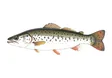
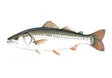
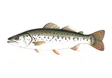
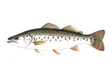
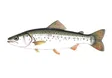
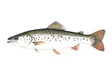
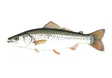
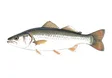
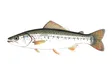
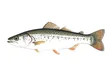
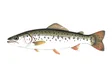
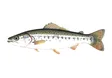
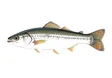
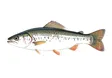
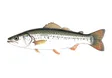
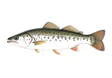
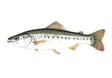
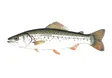
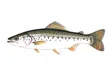
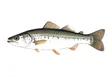
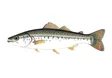
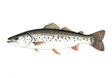
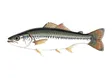
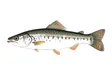
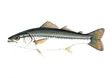
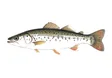
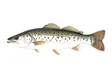
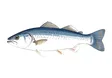
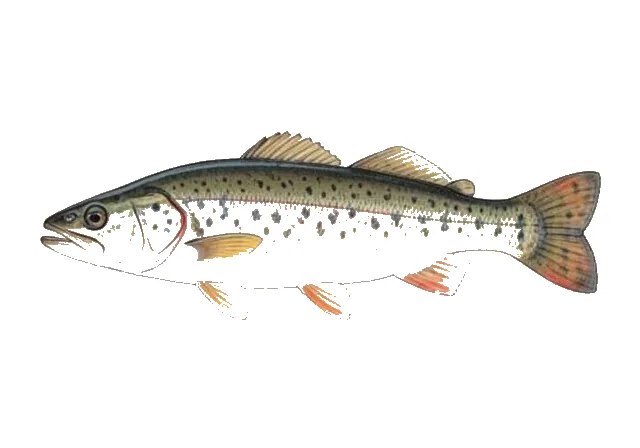
Bigmouth Chub field guide illustration

About Bigmouth Chub

The bigmouth chub (Nocomis platyrhynchus) is a species of freshwater fish belonging to the family Leuciscidae, the shiners, daces and minnows. This species is found in the eastern United States.

Description

The bigmouth chub has a body length that averages 15.2 centimeters and can reach up to 21.4 centimeters. The chub has an elongated body that is nearly circular in cross section. It has a triangular head and a pointy snout. The mouth of the chub is medium-sized and has a barbell on each side.

The chub has eight dorsal fin rays, eight pelvic fin rays, seven anal fin rays, and fourteen to seventeen pectoral fin rays.

The fish is covered with cycloid scales. The scales on the chub's dorsal section, or top of the fish, have brown pigment. The scales on the ventral section, or bottom of the fish, lack pigment and are white in appearance.

Habitat

It is generally found in pools and fast moving waterways in North Carolina, Virginia, West Virginia. Many populations are located in the New River of West Virginia and its tributaries. The fish prefers clear rivers with warm temperatures. The substrate of rivers inhabited by the bigmouth chub ranges from pebbles to boulders. It avoids the shallowest parts of rivers and waterways, and tends to be found near substrate.

Reproduction

The chub reproduces through spawning. Spawning occurs in gravel spawning mounds created by the male. The mounds tend to be located in areas with small to large-sized gravel and with medium water speeds.

Conservation status

It is ranked as being of least concern by the International Union for Conservation of Nature. The fish is not seen as at risk for extinction due to its large and stable population size, large habitat range and a lack of wide-scale threats to its survival.

Article text: Wikipedia contributors, Bigmouth chub (source revision). Licensed under CC BY-SA 4.0. Retrieved 2026-10-11.
Diet and feeding

The FishTraits compilation records these diet categories for this species: invertebrates or larval fish; larger animal prey (a source category covering fish, crayfish, crabs, or frogs). These are broad categories, not a claim that every individual consumes every example in a category.

Reported feeding positions include bottom feeding and surface or water-column feeding. The compilation combines published observations; diets can vary with age, locality, and available food.

Habitat preferences

Reported habitat associations include medium to large rivers, streams and small rivers.

The source records associations with gravel, cobble, boulders. An association indicates reported use, rather than an exclusive requirement.

Reproduction and parental care

The compilation reports a representative maturity age of 2.5 years. Its maturity field summarizes mean, median, or modal estimates, usually for females; male estimates can be used when female data are unavailable. It is not a fixed age at which every fish first breeds.

Recorded spawning months are May, Jun for the source’s reporting region (NC). This is a regional calendar, not a range-wide schedule.

The reproductive-guild classification includes guarding eggs or young at a spawning substrate or nest.

Size and recorded longevity

FishTraits reports a maximum total length of 21.4 centimetres. Some entries use an estimated asymptotic length; this value should not be treated as a certified record catch.

Recorded longevity in the compilation is 4 years. Wild observations were preferred, but captive records were accepted where wild records were unavailable, and unspecified records were assumed wild. The value is not a guaranteed wild lifespan or an aquarium life expectancy.

Range

Where it lives

Share of 397 GBIF observation records with a state location, across 3 states. The orange dots are USGS stream-survey sites where this species was caught.
0%
37.5%
Share of 397 GBIF observation records with a state location, across 3 states. The orange dots are USGS stream-survey sites where this species was caught.

A blank area on the dot layer usually means nobody sampled there, not that the fish is absent. Turn on “every survey site” to see where the survey looked.

The USGS stream survey caught it at 49 of its sites, in 3 states. That survey and the GBIF records are two different counts of two different things, so the site keeps them apart.

Habitat

Water and movement

Water
WoRMS records this species in fresh water.
Migration
Undetermined

Classification

Taxonomy

Kingdom
Animalia
Phylum
Chordata
Superclass
Actinopterygii
Class
Teleostei
Order
Cypriniformes
Genus
Nocomis
Species
Nocomis platyrhynchus
ITIS TSN
163397
WoRMS AphiaID
1013150
GBIF key
2365437

Common questions about Bigmouth Chub

What is the scientific name of Bigmouth Chub?
The scientific name is Nocomis platyrhynchus, in the family Leuciscidae. Classification follows ITIS.
Does Bigmouth Chub live in fresh water or salt water?
WoRMS records this species in fresh water.
Where has Bigmouth Chub been recorded in the United States?
GBIF has observations in 3 states, with the most records in Virginia, West Virginia, North Carolina. The map shows observation records, which do not establish the complete natural range.

Closest relatives

Other Nocomis species

Same family

More Leuciscidae

Alabama Shiner4 states
Cyprinella callistiaLeuciscidaeNativeFresh
Allegheny Pearl Dace19 states
Margariscus margaritaLeuciscidaeNative and introducedFresh
Altamaha Shiner1 states
Cyprinella xaenuraLeuciscidaeNativeFresh
Alvord Chub2 states
Siphateles alvordensisLeuciscidaeNativeFresh
Apalachee Shiner3 states
Pteronotropis grandipinnisLeuciscidaeNativeFresh
Arkansas River Shiner5 states
Notropis girardiLeuciscidaeNative and introducedFresh
Arroyo Chub1 states
Gila orcuttiiLeuciscidaeNative and introducedFresh
Bandfin Shiner5 states
Luxilus zonistiusLeuciscidaeNative and introducedFresh
Bannerfin Shiner5 states
Cyprinella leedsiLeuciscidaeNativeFresh
Beautiful Shiner3 states
Cyprinella formosaLeuciscidaeNativeFresh
Bedrock Shiner3 states
Notropis rupestrisLeuciscidaeNativeFresh
Bigeye Chub25 states
Hybopsis amblopsLeuciscidaeNative and introducedFresh
Bigeye Shiner17 states
Notropis boopsLeuciscidaeNative and introducedFresh
Bigmouth Shiner21 states
Notropis dorsalisLeuciscidaeNative and introducedFresh
Blackchin Shiner13 states
Notropis heterodonLeuciscidaeNativeFresh
Blackmouth Shiner3 states
Notropis melanostomusLeuciscidaeNativeFresh
Blacknose Shiner21 states
Notropis heterolepisLeuciscidaeNative and introducedFresh
Blackside Dace2 states
Chrosomus cumberlandensisLeuciscidaeNativeFresh
Blackspot Shiner5 states
Notropis atrocaudalisLeuciscidaeNativeFresh
Blacktail Shiner14 states
Cyprinella venustaLeuciscidaeNative and introducedFresh
Blacktip Shiner4 states
Lythrurus atrapiculusLeuciscidaeNative and introducedFresh
Bleeding Shiner8 states
Luxilus zonatusLeuciscidaeNativeFresh
Blotched Chub6 states
Erimystax insignisLeuciscidaeNativeFresh
Blue Chub3 states
Gila coeruleaLeuciscidaeNative and introducedFresh

All 267 species in Leuciscidae