Bonytail Chub

Gila elegans

Leuciscidae · freshwater water fish

5 minute read · Species guide

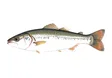
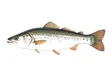
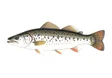
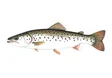
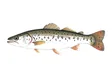
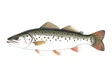
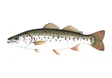
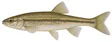
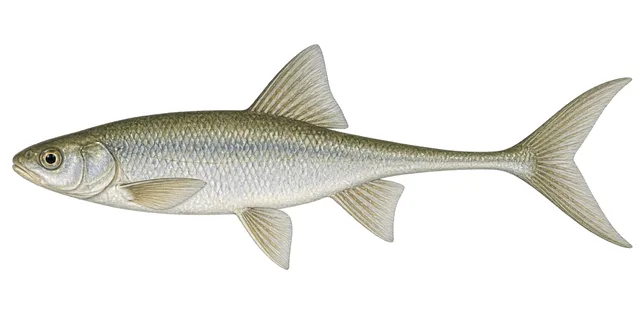
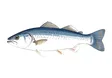
Bonytail Chub field guide illustration

About Bonytail Chub

The bonytail chub or bonytail (Gila elegans) is a species of freshwater ray-finned fish belonging to the family Leuciscidae, which includes the daces, chubs, Eurasian minnows, and related species. This fish is native to the Colorado River Basin of Arizona, California, Colorado, Nevada, New Mexico, Utah, and Wyoming in the Southwestern United States; it has been extirpated from the part of the basin in Mexico. It was once abundant and widespread in the basin, its numbers and range have declined to where it has been listed as endangered since 1980 (Endangered Species Act of 1973) and 1986 (IUCN), a fate shared by the other large Colorado basin endemic fish species such as the Colorado pikeminnow, humpback chub, and razorback sucker. It is now the rarest of the endemic big-river fishes of the Colorado River. Twenty species are in the genus Gila, seven of which are found in Arizona.

Description

A bonytail chub can grow to 62 cm (2 ft) long. Like many other desert fishes, its coloring tends to be darker above and lighter below, serving as a camouflage. Breeding males have red fin bases. They have a streamlined body and a terminal mouth. Bonytail chubs have bodies that sometimes arch into a smooth, predorsal hump (in adults). While their skull is quite concave, their caudal peduncle (tailside) is thin and almost looks like a pencil (hence, "bony tail"). The coloration of bonytail chubs is usually dark dorsally and lighter ventrally, but in very clear waters, they look almost black all over. During breeding season, males and females have distinct coloration, as well. Mature males have bright red-orange lateral bands between their paired fins, while females have a more subdued coloration that is described with the males.

Range and status

The bonytail chub was once found in the Colorado River basin in many U.S. states, including Arizona, California, Colorado, Nevada, New Mexico, Utah, and Wyoming. It also occurred in the part of the basin in Mexico, but it has been extirpated from this country. This fish species experienced the most abrupt decline of any of the long-lived fishes native to the main stems of the Colorado River system. No remaining wild population is self-sustaining, and it is functionally extinct. Its survival currently relies on release of hatchery -produced fish; several hatcheries maintain this species. Bonytail chubs were one of the first fish species to reflect the changes that occurred in the Colorado River basin after the construction of Hoover Dam; the fish was extirpated from the lower basin between 1926 and 1950. They may still be found in the Green River of Utah and perhaps in the larger Colorado River water bodies. Gila elegans was added to the US list of endangered species on April 23, 1980 and was first recognized as endangered in 1986 by IUCN. In 2013, its IUCN status was upgraded to critically endangered.

Reintroduction of the bonytail chub is contentious. Some are concerned about the amount of water used to increase stream flows that are required for adequate bonytail chub habitat. Bass fishermen are concerned about facilitating the recovery of the bonytail chub by the removal of smallmouth bass, a popular gamefish. Fears of spreading the quagga mussel, an invasive species that clogs water pipelines and fouls marine equipment, has halted the reintroduction of the bonytail chub in Arizona, pending establishment of a stocking protocol that is satisfactory to Arizona wildlife officials.

Habitat

Bonytail chub prefer backwaters with rocky or muddy bottoms and flowing pools, although they have been reported in swiftly moving water. They are mostly restricted to rocky canyons today, but were historically abundant in the wide downstream sections of rivers.

Biology

Young bonytail chubs typically eat aquatic plants, while adults feed mostly on small fish, algae, plant debris, and terrestrial insects.

Bonytail chubs are long-lived and may reach an age of up to 50 years.

Reproduction

Little is known about their reproductive habits, but they are thought to spawn in midsummer and perhaps hybridize with both roundtail and humpback chubs. Spawning in Lake Mohave has been observed during May, while in the upper Green River, it occurs in June and July. Eggs are laid randomly over the bottom, and no parental care occurs.

Conservation

The bonytail chub's population sizes are small and declining. The depletion of the population is primarily due to the habitat alterations caused by dams and competition and predation by non-native fish.

A USFWS Recovery Plan established in 1990 included the objectives of protecting the habitats of the bonytail chub, and even reintroducing hatchery-reared fish into the wild.

The Bonytail Chub Recovery Plan was approved on September 4, 1990, and refugia for the bonytail chub exist today in several places: Dexter National Fish Hatchery, New Mexico; Arizona Game and Fish Page Springs Hatchery; Ouray National Wildlife Refuge, Ouray, Utah; Buenos Aires National Wildlife Refuge, Sasabe, Arizona; and Niland Native Fish Ponds, California.

Article text: Wikipedia contributors, Bonytail chub (source revision). Licensed under CC BY-SA 4.0. Retrieved 2026-10-11.

Diet and feeding

The FishTraits compilation records these diet categories for this species: algae or phytoplankton; aquatic or other vascular plants; detritus or unidentified plant material; invertebrates or larval fish. These are broad categories, not a claim that every individual consumes every example in a category.

Reported feeding positions include surface or water-column feeding. The compilation combines published observations; diets can vary with age, locality, and available food.

Habitat preferences

Reported habitat associations include medium to large rivers.

The source records associations with muck, sand, gravel, cobble, open water. An association indicates reported use, rather than an exclusive requirement.

Reproduction and parental care

The compilation reports a representative maturity age of 4.5 years. Its maturity field summarizes mean, median, or modal estimates, usually for females; male estimates can be used when female data are unavailable. It is not a fixed age at which every fish first breeds.

Recorded spawning months are May, Jun for the source’s reporting region (CA). This is a regional calendar, not a range-wide schedule.

The reproductive-guild classification includes spawning on open substrates without guarding the brood.

Size and recorded longevity

FishTraits reports a maximum total length of 64 centimetres. Some entries use an estimated asymptotic length; this value should not be treated as a certified record catch.

Recorded longevity in the compilation is 49 years. Wild observations were preferred, but captive records were accepted where wild records were unavailable, and unspecified records were assumed wild. The value is not a guaranteed wild lifespan or an aquarium life expectancy.

Range

Where it lives

Share of 204 GBIF observation records with a state location, across 7 states.
0%
33.8%
Share of 204 GBIF observation records with a state location, across 7 states.

Habitat

Water and movement

Water
WoRMS records this species in fresh water.
Migration
Migratory
Pattern

Classification

Taxonomy

Kingdom
Animalia
Phylum
Chordata
Superclass
Actinopterygii
Class
Teleostei
Order
Cypriniformes
Genus
Gila
Species
Gila elegans
ITIS TSN
163553
WoRMS AphiaID
1021645
GBIF key
2360109
Outside the US
ITIS also files it in Mexico.

Common questions about Bonytail Chub

What is the scientific name of Bonytail Chub?
The scientific name is Gila elegans, in the family Leuciscidae. Classification follows ITIS.
Does Bonytail Chub live in fresh water or salt water?
WoRMS records this species in fresh water.
Where has Bonytail Chub been recorded in the United States?
GBIF has observations in 7 states, with the most records in New Mexico, Arizona, California. The map shows observation records, which do not establish the complete natural range.

Closest relatives

Other Gila species

Same family

More Leuciscidae

Alabama Shiner4 states
Cyprinella callistiaLeuciscidaeNativeFresh
Allegheny Pearl Dace19 states
Margariscus margaritaLeuciscidaeNative and introducedFresh
Altamaha Shiner1 states
Cyprinella xaenuraLeuciscidaeNativeFresh
Alvord Chub2 states
Siphateles alvordensisLeuciscidaeNativeFresh
Apalachee Shiner3 states
Pteronotropis grandipinnisLeuciscidaeNativeFresh
Arkansas River Shiner5 states
Notropis girardiLeuciscidaeNative and introducedFresh
Arroyo Chub1 states
Gila orcuttiiLeuciscidaeNative and introducedFresh
Bandfin Shiner5 states
Luxilus zonistiusLeuciscidaeNative and introducedFresh
Bannerfin Shiner5 states
Cyprinella leedsiLeuciscidaeNativeFresh
Beautiful Shiner3 states
Cyprinella formosaLeuciscidaeNativeFresh
Bedrock Shiner3 states
Notropis rupestrisLeuciscidaeNativeFresh
Bigeye Chub25 states
Hybopsis amblopsLeuciscidaeNative and introducedFresh
Bigeye Shiner17 states
Notropis boopsLeuciscidaeNative and introducedFresh
Bigmouth Chub3 states
Nocomis platyrhynchusLeuciscidaeNativeFresh
Bigmouth Shiner21 states
Notropis dorsalisLeuciscidaeNative and introducedFresh
Blackchin Shiner13 states
Notropis heterodonLeuciscidaeNativeFresh
Blackmouth Shiner3 states
Notropis melanostomusLeuciscidaeNativeFresh
Blacknose Shiner21 states
Notropis heterolepisLeuciscidaeNative and introducedFresh
Blackside Dace2 states
Chrosomus cumberlandensisLeuciscidaeNativeFresh
Blackspot Shiner5 states
Notropis atrocaudalisLeuciscidaeNativeFresh
Blacktail Shiner14 states
Cyprinella venustaLeuciscidaeNative and introducedFresh
Blacktip Shiner4 states
Lythrurus atrapiculusLeuciscidaeNative and introducedFresh
Bleeding Shiner8 states
Luxilus zonatusLeuciscidaeNativeFresh
Blotched Chub6 states
Erimystax insignisLeuciscidaeNativeFresh

All 267 species in Leuciscidae