Blackchin Shiner

Notropis heterodon

Leuciscidae · freshwater water fish

7 minute read · Species guide

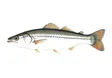
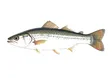
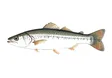
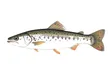
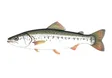
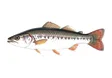
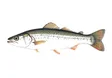
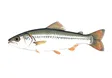
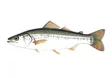
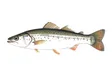
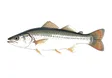
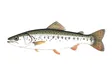
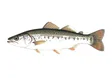
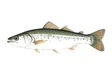
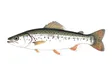
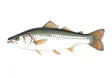
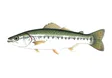
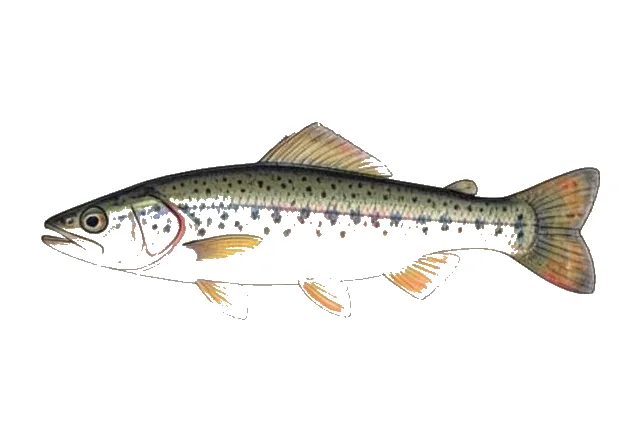
Blackchin Shiner field guide illustration

About Blackchin Shiner

The blackchin shiner (Miniellus heterodon) is a species of freshwater ray-finned fish belonging to the family Leuciscidae, the shiners, daces and minnows. Described by Edward Drinker Cope in 1865, it is not a well-known species. It is a close relative of the blacknose shiner. Chiefly occurring now in the Great Lakes and occasionally in upper Mississippi River drainages, the blackchin once ranged commonly as far south as Illinois and Ohio. This fish resides over sandy bottoms in cool waters that provide a lot of cover for the small minnow. Omnivorous, it eats worms and small arthropods as well as plant material. Blackchin shiners are unique because of their anatomical features, such as the black coloring, the incomplete lateral line, and a distinctive dental arrangement.

Taxonomy

American naturalist Edward Drinker Cope described the blackchin shiner in 1865 as Alburnops heterodon, from specimens collected in Lansing and Grosse Isle, Michigan. The original type specimens have been lost. The genus Alburnops was later sunk into the large genus Notropis.

The common name of the blackchin shiner comes from the black pigment of the scales on the tip of the lower jaw. This coloring runs over their eyes, across the gills, and along the side, all the way to the base of their tail. This is especially unique because the stripe appears to zig-zag around the scales, whereas the stripes of other shiners do not.

Description

Blackchin shiners have a thin strip of golden scales just above their black stripe. They also have scales on their backs and upper sides that have dark edges, which make them unique from other shiners. Another thing that makes this species of shiner unique, especially from the closely related bigeye shiner, is that blackchin shiners have an incomplete lateral line with a dusky spot above and below each sensory pore. All fins of blackchin shiners are transparent, and the underbelly is a pale cream shade.

The scales of these fishes are thinner, flexible scales called bony-ridged scales. Blackchins have scales called cycloid scales, which are round and, compared to the scales of other fishes, smooth. These scales are a clue that this species is primitive in comparison to other teleosts, many of whom have ctenoid scales. For species of fish with either version of leptoid scales, the age of the fish can be determined by examining the pattern of ridges on a scale, similar to how tree trunk rings display the age of a tree.

A straight lateral line is positioned roughly near the center of their sides. These fish also have eight anal fin rays on the tail fin, which is a forked version of a homocercal tail. The dorsal fin lies behind the middle of the body. The dorsal fins of all soft-rayed teleosts are supported by soft, flexible rays, and this shiner is no different. The paired ventral fins of shiners are located in the abdominal position, where these pelvic fins are expected to be found: back near the anus. The teeth located at the back of the throat are arranged in two rows, with one tooth in the outer row and four in the inner row, which distinguishes them from related species. The mouth of the blackchin shiner is a pale, off-white color on the inside. These characteristics all help biologists distinguish between various taxonomies.

They are usually measured between 1.5 and 2.5 inches, but have been recorded at up to 4.5 inches. These deep-bodied fishes have a compressed body. However, unlike other deep-bodied fishes, the preferred depth of the fish has shown no relation to the length of the fish. Contrarily typical to deep-bodied fish, blackchins can produce short bursts of speed, but cannot sustain their speed for long. Their maneuverable bodies are slim, which allows them accuracy and efficiency near the safety of weeds, but proves difficult for them when they encounter moving water.

Distribution

Blackchin shiners are only known to be found in North America. They have been seen widely throughout southern Quebec in Canada, and from Vermont to Minnesota to Iowa in the United States. They mostly remain in the Great Lakes and upper Mississippi River basins, but a few have been spotted in various Atlantic drainages, the upper Ohio River basin, and the Hudson Bay area.

Habitat and ecology

The species mostly resides in cool glacial lakes. However, the habitat preference is for a protected weedy area. Therefore, they have also been found near the inlets and outlets of large lakes, in shallow pools, in slow creeks, and in small rivers. These freshwater fish are usually found over sandy bottoms, and seem to prefer clear waters, because they do not remain long in heavily silted waters. When disturbed, this shiner hides in the weeds for protection.

Conservation status

The blackchin shiner is currently not of ecological concern. There may be some minor threats, but populations appears to be fairly stable, as it is represented across a large and broad spectrum of locations. Whether the fish are remaining stable or in slight decline is currently unknown due to a lack of data, but they are ranked as a species of 'Least Concern'. However, it is thought that they were once widely populous in Illinois as well as Ohio, and are now only lightly scattered throughout those states. It was thought to have vanished from Ohio before 1940, until it was found in Myers Lake in Canton, Ohio, and a single fish turned up in Nettle Lake in northwestern Ohio in the early 1980s. It is classified as threatened in Illinois.

Life history

Juvenile blackchin shiners are visually and anatomically similar to their adult counterparts, although the black lateral line may be faint.

Reproduction

When breeding, the male blackchin shiner can turn golden-yellow. Wart-like nodules sometimes appear on its crown and pectoral fins. These coloring differences appear to make him more attractive to females of his kind. Female blackchin shiners collected between the months of July and August are often reported to be carrying mature eggs. This suggests that spawning begins around May.

Food chain

Blackchin shiners are highly abundant, small fish. These factors increase the likelihood that the blackchin shiner is a food source for juvenile northern pike (Esox lucius) and yellow perch (Perca flavescens), both of which are found in the same areas of Manitoba.

Diet

Water fleas (cladocera) and midges have been found inside the blackchin shiner's digestive system, the presence of the latter showing that the fish takes them at the river surface. The worms and plant material also found in the stomachs of these fish lend evidence that this omnivore also has the ability to do some foraging and bottom-feeding, as well.

The mouth of a blackchin shiner is located in the terminal position, which is the most common location. This anatomical location alludes to the fact that these shiners probably feed midwater, although this position is versatile and therefore alone does not provide conclusive evidence of this.

Article text: Wikipedia contributors, Blackchin shiner (source revision). Licensed under CC BY-SA 4.0. Retrieved 2026-10-12.


Diet and feeding

The FishTraits compilation records these diet categories for this species: algae or phytoplankton; detritus or unidentified plant material; invertebrates or larval fish. These are broad categories, not a claim that every individual consumes every example in a category.

Reported feeding positions include bottom feeding and surface or water-column feeding. The compilation combines published observations; diets can vary with age, locality, and available food.

Habitat preferences

Reported habitat associations include streams and small rivers, creeks, still-water habitats.

The source records associations with clay or silt, sand, vegetation, organic debris. An association indicates reported use, rather than an exclusive requirement.

Reproduction and parental care

The compilation reports a representative maturity age of 1 years. Its maturity field summarizes mean, median, or modal estimates, usually for females; male estimates can be used when female data are unavailable. It is not a fixed age at which every fish first breeds.

Batch or serial spawning has been reported somewhere in the species’ range. This does not establish the same spawning pattern for every population.

Recorded spawning months are Jun, Jul, Aug for the source’s reporting region (WI). This is a regional calendar, not a range-wide schedule.

The reproductive-guild classification includes spawning on open substrates without guarding the brood.

Size and recorded longevity

FishTraits reports a maximum total length of 7.1 centimetres. Some entries use an estimated asymptotic length; this value should not be treated as a certified record catch.

Recorded longevity in the compilation is 4 years. Wild observations were preferred, but captive records were accepted where wild records were unavailable, and unspecified records were assumed wild. The value is not a guaranteed wild lifespan or an aquarium life expectancy.

Range

Where it lives

Share of 1,395 GBIF observation records with a state location, across 13 states.
0%
39%
Share of 1,395 GBIF observation records with a state location, across 13 states.

Habitat

Water and movement

Water
WoRMS records this species in fresh water.
Migration
Undetermined

Classification

Taxonomy

Kingdom
Animalia
Phylum
Chordata
Superclass
Actinopterygii
Class
Teleostei
Order
Cypriniformes
Genus
Notropis
Species
Notropis heterodon
ITIS TSN
163445
WoRMS AphiaID
1420801
GBIF key
2362223
Outside the US
ITIS also files it in Canada.

Common questions about Blackchin Shiner

What is the scientific name of Blackchin Shiner?
The scientific name is Notropis heterodon, in the family Leuciscidae. Classification follows ITIS.
Does Blackchin Shiner live in fresh water or salt water?
WoRMS records this species in fresh water.
Where has Blackchin Shiner been recorded in the United States?
GBIF has observations in 13 states, with the most records in Minnesota, Michigan, New York. The map shows observation records, which do not establish the complete natural range.

Closest relatives

Other Notropis species

Arkansas River Shiner5 states
Notropis girardiLeuciscidaeNative and introducedFresh
Bedrock Shiner3 states
Notropis rupestrisLeuciscidaeNativeFresh
Bigeye Shiner17 states
Notropis boopsLeuciscidaeNative and introducedFresh
Bigmouth Shiner21 states
Notropis dorsalisLeuciscidaeNative and introducedFresh
Blackmouth Shiner3 states
Notropis melanostomusLeuciscidaeNativeFresh
Blacknose Shiner21 states
Notropis heterolepisLeuciscidaeNative and introducedFresh
Blackspot Shiner5 states
Notropis atrocaudalisLeuciscidaeNativeFresh
Bluntnose Shiner3 states
Notropis simusLeuciscidaeNativeFresh
Bridle Shiner22 states
Notropis bifrenatusLeuciscidaeNativeFresh
Burrhead Shiner3 states
Notropis asperifronsLeuciscidaeNativeFresh
Cahaba Shiner1 states
Notropis cahabaeLeuciscidaeNativeFresh
Cape Fear Shiner1 states
Notropis mekistocholasLeuciscidaeNativeFresh
Carmine Shiner16 states
Notropis percobromusLeuciscidaeNativeFresh
Channel Shiner15 states
Notropis wickliffiLeuciscidaeNativeFresh
Chihuahua Shiner1 states
Notropis chihuahuaLeuciscidaeNative and introducedFresh
Chub Shiner4 states
Notropis potteriLeuciscidaeNative and introducedFresh
Coastal Shiner8 states
Notropis petersoniLeuciscidaeNativeFresh
Comely Shiner11 states
Notropis amoenusLeuciscidaeNative and introducedFresh
Coosa Shiner9 states
Notropis xaenocephalusLeuciscidaeNative and introducedFresh
Dusky Shiner6 states
Notropis cummingsaeLeuciscidaeNativeFresh
Emerald Shiner35 states
Notropis atherinoidesLeuciscidaeNative and introducedFresh
Fluvial Shiner3 states
Notropis edwardraneyiLeuciscidaeNativeFresh
Ghost Shiner16 states
Notropis buchananiLeuciscidaeNative and introducedFresh
Greenhead Shiner6 states
Notropis chlorocephalusLeuciscidaeNativeFresh

Same family

More Leuciscidae

Alabama Shiner4 states
Cyprinella callistiaLeuciscidaeNativeFresh
Allegheny Pearl Dace19 states
Margariscus margaritaLeuciscidaeNative and introducedFresh
Altamaha Shiner1 states
Cyprinella xaenuraLeuciscidaeNativeFresh
Alvord Chub2 states
Siphateles alvordensisLeuciscidaeNativeFresh
Apalachee Shiner3 states
Pteronotropis grandipinnisLeuciscidaeNativeFresh
Arkansas River Shiner5 states
Notropis girardiLeuciscidaeNative and introducedFresh
Arroyo Chub1 states
Gila orcuttiiLeuciscidaeNative and introducedFresh
Bandfin Shiner5 states
Luxilus zonistiusLeuciscidaeNative and introducedFresh
Bannerfin Shiner5 states
Cyprinella leedsiLeuciscidaeNativeFresh
Beautiful Shiner3 states
Cyprinella formosaLeuciscidaeNativeFresh
Bedrock Shiner3 states
Notropis rupestrisLeuciscidaeNativeFresh
Bigeye Chub25 states
Hybopsis amblopsLeuciscidaeNative and introducedFresh
Bigeye Shiner17 states
Notropis boopsLeuciscidaeNative and introducedFresh
Bigmouth Chub3 states
Nocomis platyrhynchusLeuciscidaeNativeFresh
Bigmouth Shiner21 states
Notropis dorsalisLeuciscidaeNative and introducedFresh
Blackmouth Shiner3 states
Notropis melanostomusLeuciscidaeNativeFresh
Blacknose Shiner21 states
Notropis heterolepisLeuciscidaeNative and introducedFresh
Blackside Dace2 states
Chrosomus cumberlandensisLeuciscidaeNativeFresh
Blackspot Shiner5 states
Notropis atrocaudalisLeuciscidaeNativeFresh
Blacktail Shiner14 states
Cyprinella venustaLeuciscidaeNative and introducedFresh
Blacktip Shiner4 states
Lythrurus atrapiculusLeuciscidaeNative and introducedFresh
Bleeding Shiner8 states
Luxilus zonatusLeuciscidaeNativeFresh
Blotched Chub6 states
Erimystax insignisLeuciscidaeNativeFresh
Blue Chub3 states
Gila coeruleaLeuciscidaeNative and introducedFresh

All 267 species in Leuciscidae