Blue Chub

Gila coerulea

Leuciscidae · freshwater water fish

4 minute read · Species guide

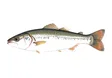
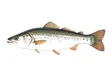
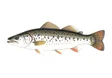
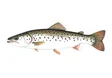
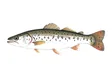
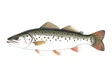
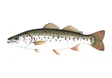
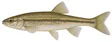
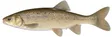
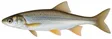
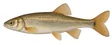
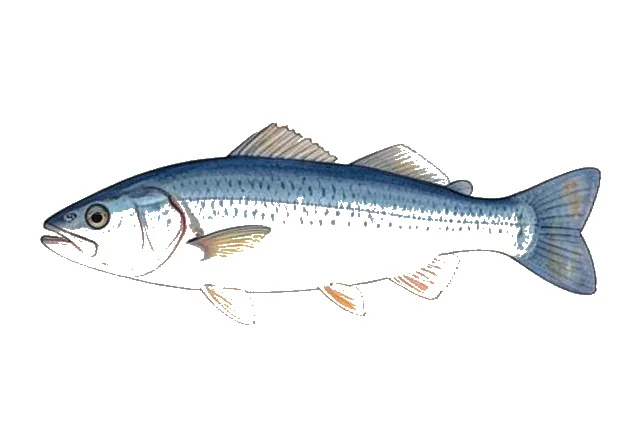
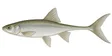
Blue Chub field guide illustration

About Blue Chub

The blue chub (Gila coerulea) is a species of freshwater ray-finned fish belonging to the family Leuciscidae, which includes the daces, chubs, Eurasian minnows and related species. This fish is found in the western United States.

Taxonomy

The blue chub was first formally described as Cheonda coerulea in 1859 by the French biologist Charles Frédéric Girard with its type locality given as the Lost River in California. It is now classified within the genus Gila which is classified in the subfamily Laviniinae of the family Leuciscidae.

Etymology

The blue chub is classified in the genus Gila, a genus proposed in 1853 by Spencer Fullerton Baird and Charles Frédéric Girard. Baird and Girard did not explain what the name alluded to, it may be to the Gila River, although Baird and Girard said the first three species they classified in this genus were found in the neighbouring Zuni River, which they may have thought were both part of the same drainage. Alternatively, they chose the name to give the genus a southwestern United States flavor. The specific name, coerulea is an alternative spelling of caerulea, which means "dark blue". Girard described this species as having a grayish blue back.

Description

The blue chub has its dorsal fin supported by 9 soft rays while the anal fin contains 8 or 9 soft rays. It has a large eye, a pointed snout with a terminal mouth which extends as far as the front of the eye. It has a rather slender, laterally compressed body with a slender caudal peduncle. They have silvery sides with a dark back. The males develop a blue snout, orange fins and orange flanks in the breeding season. They rarely exceed 38 cm (15 in) in length, with a maximum total length of 41 cm (16 in).

Distribution and habitat

The blue chub is endemic to the Western United States where it is found in the Lost River and the Klamath River in California and Oregon. It has colonised reservoirs downstream of Klamath Falls where it was not thought to be present in the past. It has also been introduced to other river catchments in Oregon. This species prefers rocky habitats in pools of small streams to large rivers and along the rocky shores of reservoirs and lakes.

Biology

The blue chub feeds on the aquatic larvae of insects, water fleas, and filamentous algae. They can tolerate low levels of dissolved oxygen and water temperatures as high as 32 °C (90 °F). They spawn in Upper Klamath Lake in may and June when the water temperature reaches 15 to 18 °C (59 to 64 °F), laying eggs along shorelines of rock, gravel or rubble. each spawing female will be attended by a small number of males. This species can live to 17 years old.

Conservation

The blue chub is classed as Least-concern by the International Union for Conservation of Nature although they state that water abstraction and introduced non native invasive species, especially the fathead minnow (Pimephales promelas).

Article text: Wikipedia contributors, Blue chub (source revision). Licensed under CC BY-SA 4.0. Retrieved 2026-10-11.

Diet and feeding

The FishTraits compilation records these diet categories for this species: algae or phytoplankton; invertebrates or larval fish. These are broad categories, not a claim that every individual consumes every example in a category.

Habitat preferences

Reported habitat associations include medium to large rivers, streams and small rivers, creeks, still-water habitats.

The source records associations with gravel, cobble, boulders. An association indicates reported use, rather than an exclusive requirement.

Reproduction and parental care

The compilation reports a representative maturity age of 4 years. Its maturity field summarizes mean, median, or modal estimates, usually for females; male estimates can be used when female data are unavailable. It is not a fixed age at which every fish first breeds.

Recorded spawning months are May, Jun for the source’s reporting region (OR). This is a regional calendar, not a range-wide schedule.

Size and recorded longevity

FishTraits reports a maximum total length of 41 centimetres. Some entries use an estimated asymptotic length; this value should not be treated as a certified record catch.

Recorded longevity in the compilation is 17 years. Wild observations were preferred, but captive records were accepted where wild records were unavailable, and unspecified records were assumed wild. The value is not a guaranteed wild lifespan or an aquarium life expectancy.

Native range

Klamath and Lost River systems of Oregon and California (Lee et al. 1980 et seq.; Page and Burr 1991).

Introduction history

Unknown. According to Logan (personal communication), Oregon introductions took place during the 1920s.

Range

Where it lives

Share of 140 GBIF observation records with a state location, across 3 states.
0%
90%
Share of 140 GBIF observation records with a state location, across 3 states.

Share of records by state

Habitat

Water and movement

Water
WoRMS records this species in fresh water.
USGS NAS habitat
Freshwater
US status
Native transplant — native to part of the United States, moved to other waters inside it.
Migration
Undetermined

Classification

Taxonomy

Kingdom
Animalia
Phylum
Chordata
Superclass
Actinopterygii
Class
Teleostei
Order
Cypriniformes
Genus
Gila
Species
Gila coerulea
ITIS TSN
163548
WoRMS AphiaID
1419418
GBIF key
2360123

Common questions about Blue Chub

What is the scientific name of Blue Chub?
The scientific name is Gila coerulea, in the family Leuciscidae. Classification follows ITIS.
Does Blue Chub live in fresh water or salt water?
WoRMS records this species in fresh water.
Where has Blue Chub been recorded in the United States?
GBIF has observations in 3 states, with the most records in Oregon, California, Utah. The map shows observation records, which do not establish the complete natural range.

Closest relatives

Other Gila species

Same family

More Leuciscidae

Alabama Shiner4 states
Cyprinella callistiaLeuciscidaeNativeFresh
Allegheny Pearl Dace19 states
Margariscus margaritaLeuciscidaeNative and introducedFresh
Altamaha Shiner1 states
Cyprinella xaenuraLeuciscidaeNativeFresh
Alvord Chub2 states
Siphateles alvordensisLeuciscidaeNativeFresh
Apalachee Shiner3 states
Pteronotropis grandipinnisLeuciscidaeNativeFresh
Arkansas River Shiner5 states
Notropis girardiLeuciscidaeNative and introducedFresh
Arroyo Chub1 states
Gila orcuttiiLeuciscidaeNative and introducedFresh
Bandfin Shiner5 states
Luxilus zonistiusLeuciscidaeNative and introducedFresh
Bannerfin Shiner5 states
Cyprinella leedsiLeuciscidaeNativeFresh
Beautiful Shiner3 states
Cyprinella formosaLeuciscidaeNativeFresh
Bedrock Shiner3 states
Notropis rupestrisLeuciscidaeNativeFresh
Bigeye Chub25 states
Hybopsis amblopsLeuciscidaeNative and introducedFresh
Bigeye Shiner17 states
Notropis boopsLeuciscidaeNative and introducedFresh
Bigmouth Chub3 states
Nocomis platyrhynchusLeuciscidaeNativeFresh
Bigmouth Shiner21 states
Notropis dorsalisLeuciscidaeNative and introducedFresh
Blackchin Shiner13 states
Notropis heterodonLeuciscidaeNativeFresh
Blackmouth Shiner3 states
Notropis melanostomusLeuciscidaeNativeFresh
Blacknose Shiner21 states
Notropis heterolepisLeuciscidaeNative and introducedFresh
Blackside Dace2 states
Chrosomus cumberlandensisLeuciscidaeNativeFresh
Blackspot Shiner5 states
Notropis atrocaudalisLeuciscidaeNativeFresh
Blacktail Shiner14 states
Cyprinella venustaLeuciscidaeNative and introducedFresh
Blacktip Shiner4 states
Lythrurus atrapiculusLeuciscidaeNative and introducedFresh
Bleeding Shiner8 states
Luxilus zonatusLeuciscidaeNativeFresh
Blotched Chub6 states
Erimystax insignisLeuciscidaeNativeFresh

All 267 species in Leuciscidae