Blacktail Shiner

Cyprinella venusta

Leuciscidae · freshwater water fish

8 minute read · Species guide

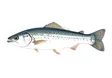
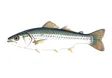
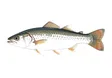
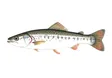
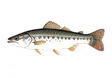
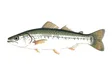
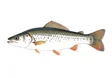
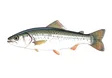
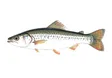
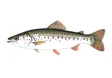
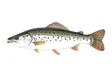
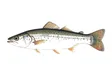
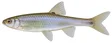
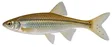
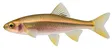
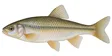
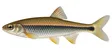
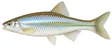
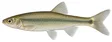
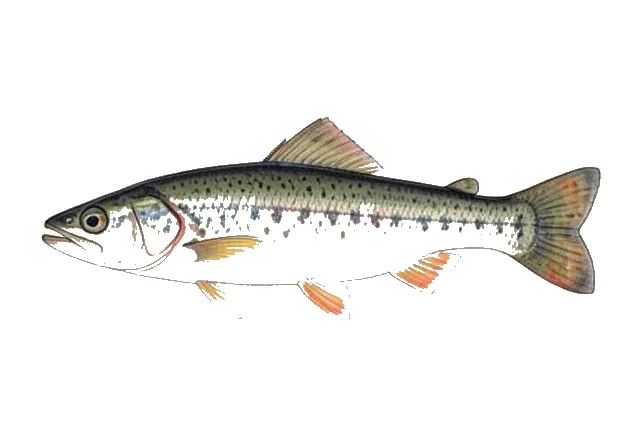
Blacktail Shiner field guide illustration

About Blacktail Shiner

The blacktail shiner (Cyprinella venusta) is a species of freshwater ray-finned fish in the family Leuciscidae, the shiners, daces and minnows. This fish is found in the United States.

Description and anatomy

The blacktail shiner is a somewhat slender minnow with 8–9 rays on the anal fin, and a prominent black spot at the base of the caudal fin (tail fin). The back is usually yellowish-olive, and the sides are silvery with hints of blue. Adults usually reach 4 inches (100 mm) in length. The blacktail shiner has a large, black caudal spot which distinguishes it from most other minnows. The caudal spot of the blacktail shiner may be faint, especially in populations inhabiting turbid waters, and they could likely be confused with the red shiner (C. lutrensis); however, the red shiner has 9 anal rays (versus 8) and usually 35 or fewer lateral scales (versus 36 or more).

Geographic distribution

The blacktail shiner occurs in Gulf of Mexico drainages from Suwannee River, Georgia and Florida, to Rio Grande, Texas; Mississippi River basin (mostly on Former Mississippi Embayment) from southern Illinois to Louisiana and west in Red River drainage to western Oklahoma.

Blacktail shiners are found in the southern United States west of the Appalachian Mountains. The species ranges east and west from north central Florida to West Texas, and north to southern Illinois. In Texas, blacktail shiners are unknown in the Panhandle, being found primarily from the Edwards Plateau eastward.

The blacktail shiner has also been found from the Rio Grande basin in Texas, east to the Suwannee River, and north through the Mississippi River basin to the confluence of the Ohio River. Two of the three recognized subspecies occur in Alabama. The slender blacktail shiner, C. v. stigmaturus, is found in the upper Mobile River basin (most frequently above the Fall Line), while the eastern blacktail shiner, C. v. cercositgma, occurs in the lower Mobile River basin and coastal rivers draining the state. Intergradations between these subspecies have been recognized in the Alabama, Cahaba, and Tallapoosa river systems.

Ecology and habitat

The blacktail shiner feeds primarily on invertebrates. Its diet includes algae, seeds, and aquatic and terrestrial insects. Aquatic insects and algae were the most common food items of blacktail shiners in the Blanco River, Texas; sediment and detritus were found in 21% of the 36 guts examined. Blacktail shiners feed primarily during the day. Blacktail shiners may serve as major food resource for piscivorous spotted bass (Micropterus punctulatus) during the summer in Village Creek (Neches River), Texas.

The blacktail shiner is most common in pools and runs of clear, sandy-bottomed, small to medium rivers, typically in areas with sparse vegetation and strong current, but upland populations occur in creeks over substrates with more gravel and rubble. Populations in the western part of the species' range are often found in turbid water. Blacktail shiner mesohabitat is ubiquitously distributed among pools, runs, and riffles with silt, gravel, and bedrock substrates. In the Blanco River, Texas, blacktail shiners were most abundant in swift runs in the spring and summer. The species occurred throughout the year in riffle and sandbank habitats in Village Creek (Neches River), Texas. During summer, most individuals were collected from sandbank habitats; they were also found in deep channel and riffle habitats, though no blacktail shiners longer than 47 millimeters (1.9 in) occurred in riffles. Individuals smaller than 17 millimeters (0.67 in) were found predominately in riffle habitats during fall and winter. Juveniles occurred almost exclusively in sandbank mesohabitat during spring. Blacktail shiners are commonly found in sandy or rocky areas of Lake Texoma (Oklahoma/Texas), generally in clearer water of the downstream area; they are occasionally abundant in the tailwaters, and rarely found in the headwaters.

The blacktail shiner hybridizes with the red shiner (C. lutrensis) in Texas and in Illinois.

Life history

The lifespan of the blacktail shiner is up to 4 years in the Leaf River system, Mississippi and up to 5 years in the Blanco River, Texas.

In Texas, the blacktail shiner spawning season is April through September. In Mississippi, it is late March through early October, with most females reproductive from April to early September. In Village Creek, Texas, blacktail shiners revealed size distribution patterns consistent with a protracted spawning season.

Prime spawning habitat for the blacktail shiner is in fractional crevices; generally located in flowing water, preferring crevices in current velocities of 0.30 meters per second (0.98 ft/s). Populations in reservoirs chose crevice sites in locations of much lower current speeds. In the Blanco River, Texas, blacktail shiners were observed depositing eggs underneath small boulders and large cobble in a bedrock riffle in the swiftest current velocities available. Males respond to sounds produced by spawning females and are able to distinguish these sounds from those produced by related female red shiners. Males are territorial, defending a crevice from other males. Breeding pair swims along the crevice, the female deposits eggs; usually the sperm has already been released into the crevice, so the eggs are deposited into a crevice with viable sperm. Immediately after spawning, the male doubles back and eats any eggs that failed to make it into the crevice. Small males (sneakers) try to fertilize eggs by darting between the dominant male and spawning female. Both large and small males will enter another male's territory and deposit sperm in a crevice before the male courts a female to lay eggs in the crevice.

One study in the Blanco River, Texas found that female blacktail shiners had up to 340 ova. Another study in southwestern Mississippi found that clutch sizes ranged between 139 and 459 ova in females 48.6–72.0 millimeters (1.91–2.83 in); average mature ovum diameter was 1.15 millimeters (0.045 in); ovaries in mature females constituted 5.8-19.1% of the somatic body weight. Females from the Pearl River, Mississippi, spawned 20–46 clutches during the reproductive season. The size of sexual maturation is between 32 millimeters (1.3 in) and 42 millimeters (1.7 in).

In the Leaf River system, Mississippi, average length was 24 millimeters (0.94 in) for age 1, 46 millimeters (1.8 in) for age 2, and 72 millimeters (2.8 in) for age 3; populations consisted mainly of age classes 0 and I In the first year, blacktail shiners reach about 45 to 60 millimeters (1.8 to 2.4 in). Average length was 45 millimeters (1.8 in) for age 0, 66 millimeters (2.6 in) for age 1, 90 millimeters (3.5 in) for age 3 and older in the Blanco River, Texas.

Management

The blacktail shiner is of relatively low conservation concern. Their populations are stable, but some issues of concern include habitat changes associated with flood control projects, siltation from development sites, deterioration of water quality, and recent water drawdown for mining and irrigation. Activities such as construction and operation of hydroelectric facilities, flood control, additional irrigation diversions, bank stabilization, oil and gas drilling, mining, grazing, stocking or introduction of nonnative fishes may jeopardize the continued existence of the blacktail shiner. Another potential impact on the population could be hybridization.

Article text: Wikipedia contributors, Blacktail shiner (source revision). Licensed under CC BY-SA 4.0. Retrieved 2026-10-11.


Diet and feeding

The FishTraits compilation records these diet categories for this species: aquatic or other vascular plants; detritus or unidentified plant material; invertebrates or larval fish; fish or frog eggs. These are broad categories, not a claim that every individual consumes every example in a category.

Reported feeding positions include bottom feeding and surface or water-column feeding. The compilation combines published observations; diets can vary with age, locality, and available food.

Habitat preferences

Reported habitat associations include medium to large rivers, streams and small rivers, creeks.

The source records associations with sand, gravel, cobble, open water. An association indicates reported use, rather than an exclusive requirement.

Reproduction and parental care

The compilation reports a representative maturity age of 1 years. Its maturity field summarizes mean, median, or modal estimates, usually for females; male estimates can be used when female data are unavailable. It is not a fixed age at which every fish first breeds.

Batch or serial spawning has been reported somewhere in the species’ range. This does not establish the same spawning pattern for every population.

Recorded spawning months are May, Jun, Jul, Aug for the source’s reporting region (TN). This is a regional calendar, not a range-wide schedule.

The reproductive-guild classification includes hiding a brood without subsequent guarding.

Size and recorded longevity

FishTraits reports a maximum total length of 19 centimetres. Some entries use an estimated asymptotic length; this value should not be treated as a certified record catch.

Recorded longevity in the compilation is 3.5 years. Wild observations were preferred, but captive records were accepted where wild records were unavailable, and unspecified records were assumed wild. The value is not a guaranteed wild lifespan or an aquarium life expectancy.

Identification and appearance

Smith (1979); Page and Burr (1991); Etnier and Starnes (1993); Pflieger (1997); another name commonly used is Notropis venustus. During recent years Cyprinella venusta has been recognized as a species complex, possibly representing as many as five different species (Gilbert, personal communication; also see Kristmundsdottir and Gold 1996). Recently, Gilbert (1998) formally elevated a few of the forms to species.

Native range

Gulf drainages from Suwannee River, Georgia and Florida, to Rio Grande, Texas; Mississippi River basin (mostly on Former Mississippi Embayment) from southern Illinois to Louisiana and west in Red River drainage to western Oklahoma (Page and Burr 1991).

Introduction history

This species gained access to Kentucky Lake, Tennessee, via a canal connection, presumably the Tennessee-Tombigbee waterway (Etnier and Starnes 1993). Although not reported from Stockton Lake, Missouri, until 1986, Pflieger (1997) suspected that it was inadvertently introduced into the lake as a stock contaminant along with an intentional introduction of the inland silverside Menidia beryllina from Lake Texoma, Oklahoma, in 1970. Branson (1968) concluded that Blacktail Shiners found in the Utah portion of the Virgin River probably migrated upstream from Lake Mead, but he did not speculate on the possible means of introduction into that lake. It is not certain when and how this species gained access to the Ocmulgee River drainage of Georgia. Bart et al. (1994) concluded that the species came from the nearby Flint River, but they were unable to determine if the species' presence in the Ocmulgee was the result of some natural event or of a bait bucket release.

Ecological impacts

In the Ocmulgee of Georgia, there is the potential for the Blacktail Shiner to negatively affect closely related species native to the system through hybridization or competitive displacement (Bart et al. 1994). According to Bart et al. (1994), three native congeners are present in the Ocmulgee, the Ocmulgee shiner Cyprinella callisema, the bannerfin shiner C. leedsi, and the Altamaha shiner C. xaenura; the latter is listed as a state endangered species.

Range

Where it lives

Share of 23,534 GBIF observation records with a state location, across 14 states. The orange dots are USGS stream-survey sites where this species was caught.
0%
44.9%
Share of 23,534 GBIF observation records with a state location, across 14 states. The orange dots are USGS stream-survey sites where this species was caught.

A blank area on the dot layer usually means nobody sampled there, not that the fish is absent. Turn on “every survey site” to see where the survey looked.

The USGS stream survey caught it at 796 of its sites, in 11 states. That survey and the GBIF records are two different counts of two different things, so the site keeps them apart.

Habitat

Water and movement

Water
WoRMS records this species in fresh water.
USGS NAS habitat
Freshwater
US status
Native transplant — native to part of the United States, moved to other waters inside it.
Migration
Undetermined

Classification

Taxonomy

Kingdom
Animalia
Phylum
Chordata
Superclass
Actinopterygii
Class
Teleostei
Order
Cypriniformes
Genus
Cyprinella
Species
Cyprinella venusta
ITIS TSN
163809
WoRMS AphiaID
1016054
GBIF key
5207640
Outside the US
ITIS also files it in Mexico.

Common questions about Blacktail Shiner

What is the scientific name of Blacktail Shiner?
The scientific name is Cyprinella venusta, in the family Leuciscidae. Classification follows ITIS.
Does Blacktail Shiner live in fresh water or salt water?
WoRMS records this species in fresh water.
Where has Blacktail Shiner been recorded in the United States?
GBIF has observations in 14 states, with the most records in Texas, Alabama, Mississippi. The map shows observation records, which do not establish the complete natural range.

Closest relatives

Other Cyprinella species

Alabama Shiner4 states
Cyprinella callistiaLeuciscidaeNativeFresh
Altamaha Shiner1 states
Cyprinella xaenuraLeuciscidaeNativeFresh
Bannerfin Shiner5 states
Cyprinella leedsiLeuciscidaeNativeFresh
Beautiful Shiner3 states
Cyprinella formosaLeuciscidaeNativeFresh
Blue Shiner4 states
Cyprinella caeruleaLeuciscidaeNativeFresh
Bluestripe Shiner4 states
Cyprinella callitaeniaLeuciscidaeNativeFresh
Bluntface Shiner11 states
Cyprinella camuraLeuciscidaeNativeFresh
Conchos Shiner1 states
Cyprinella panarcysLeuciscidaeNativeFresh
Fieryblack Shiner3 states
Cyprinella pyrrhomelasLeuciscidaeNative and introducedFresh
Greenfin Shiner3 states
Cyprinella chloristiaLeuciscidaeNativeFresh
Ocmulgee Shiner3 states
Cyprinella callisemaLeuciscidaeNativeFresh
Plateau Shiner1 states
Cyprinella lepidaLeuciscidaeNativeFresh
Proserpine Shiner1 states
Cyprinella proserpinaLeuciscidaeNativeFresh
Red Shiner28 states
Cyprinella lutrensisLeuciscidaeNative and introducedFresh
Santee Chub2 states
Cyprinella zanemaLeuciscidaeNativeFresh
Satinfin Shiner17 states
Cyprinella analostanaLeuciscidaeNative and introducedFresh
Spotfin Shiner31 states
Cyprinella spilopteraLeuciscidaeNative and introducedFresh
Steelcolor Shiner26 states
Cyprinella whippleiLeuciscidaeNative and introducedFresh
Tallapoosa Shiner2 states
Cyprinella gibbsiLeuciscidaeNativeFresh
Thicklip Chub3 states
Cyprinella labrosaLeuciscidaeNativeFresh
Tricolor Shiner5 states
Cyprinella trichroistiaLeuciscidaeNativeFresh
Whitefin Shiner4 states
Cyprinella niveaLeuciscidaeNativeFresh
Whitetail Shiner14 states
Cyprinella galacturaLeuciscidaeNative and introducedFresh

Same family

More Leuciscidae

Alabama Shiner4 states
Cyprinella callistiaLeuciscidaeNativeFresh
Allegheny Pearl Dace19 states
Margariscus margaritaLeuciscidaeNative and introducedFresh
Altamaha Shiner1 states
Cyprinella xaenuraLeuciscidaeNativeFresh
Alvord Chub2 states
Siphateles alvordensisLeuciscidaeNativeFresh
Apalachee Shiner3 states
Pteronotropis grandipinnisLeuciscidaeNativeFresh
Arkansas River Shiner5 states
Notropis girardiLeuciscidaeNative and introducedFresh
Arroyo Chub1 states
Gila orcuttiiLeuciscidaeNative and introducedFresh
Bandfin Shiner5 states
Luxilus zonistiusLeuciscidaeNative and introducedFresh
Bannerfin Shiner5 states
Cyprinella leedsiLeuciscidaeNativeFresh
Beautiful Shiner3 states
Cyprinella formosaLeuciscidaeNativeFresh
Bedrock Shiner3 states
Notropis rupestrisLeuciscidaeNativeFresh
Bigeye Chub25 states
Hybopsis amblopsLeuciscidaeNative and introducedFresh
Bigeye Shiner17 states
Notropis boopsLeuciscidaeNative and introducedFresh
Bigmouth Chub3 states
Nocomis platyrhynchusLeuciscidaeNativeFresh
Bigmouth Shiner21 states
Notropis dorsalisLeuciscidaeNative and introducedFresh
Blackchin Shiner13 states
Notropis heterodonLeuciscidaeNativeFresh
Blackmouth Shiner3 states
Notropis melanostomusLeuciscidaeNativeFresh
Blacknose Shiner21 states
Notropis heterolepisLeuciscidaeNative and introducedFresh
Blackside Dace2 states
Chrosomus cumberlandensisLeuciscidaeNativeFresh
Blackspot Shiner5 states
Notropis atrocaudalisLeuciscidaeNativeFresh
Blacktip Shiner4 states
Lythrurus atrapiculusLeuciscidaeNative and introducedFresh
Bleeding Shiner8 states
Luxilus zonatusLeuciscidaeNativeFresh
Blotched Chub6 states
Erimystax insignisLeuciscidaeNativeFresh
Blue Chub3 states
Gila coeruleaLeuciscidaeNative and introducedFresh

All 267 species in Leuciscidae