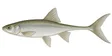
Utah Chub

Gila atraria

Leuciscidae · freshwater water fish

7 minute read · Species guide

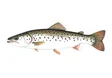
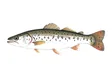
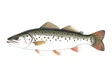
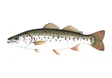
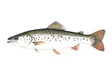
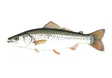
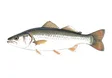
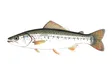
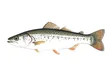
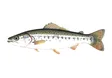
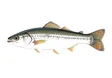
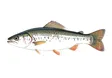
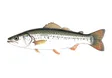
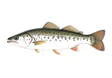
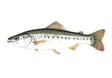
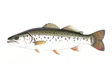
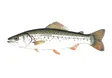
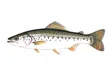
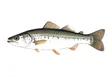
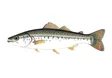
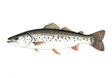
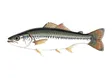
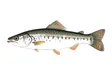
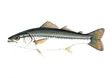
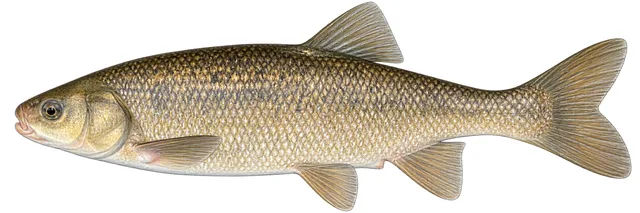
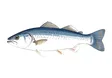
Utah Chub field guide illustration

About Utah Chub

The Utah chub (Gila atraria) is a freshwater fish of the family Leuciscidae native to the western United States, where it is abundant in the upper Snake River basin and the Bonneville basin. The species name atraria references the Latin word ater, which means black. The name is likely a reference to the dark coloration of the fins and body.

Description

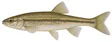
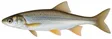
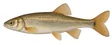
The dorsal fin of the Utah chub contains nine rays and is located directly over the pelvic fins. Coloration of this species is variable; the dorsal side is generally olive-green ranging to nearly black, and sometimes with a bluish shade, while the sides are silvery, brassy, or golden. Males have somewhat more of a golden look, especially during spawning season, often including a narrow golden stripe along the upper side. Fin colors include olive-green, yellow, and golden shades. A maximum total length of 56 cm (22 in) and weight of 1,360 g (48 oz) was reported from Bear Lake, but sizes of 15–20 cm (5.9–7.9 in) are more typical in many locations. Age estimates on pectoral rays and otoliths suggest that Utah chub can live over 10 years. In most populations, a majority of Utah chub are under seven years old.

Distribution and habitat

The native range of Utah chub includes the Snake River basin in Idaho and Wyoming and the Bonneville basin in Utah and Idaho. The Utah chub has been introduced elsewhere, including various reservoirs in the Colorado River basin of Utah and Wyoming and to the upper Missouri River basin of Montana. Most Utah chub introductions are thought to be the product of angler bait bucket release.

Utah chub can be found in a variety of habitats, from irrigation ditches to large rivers and lakes. Within these systems, they prefer areas with dense vegetation. This species is also tolerant to extreme environmental conditions such as high alkalinity.

Diet

Utah chub are omnivorous with highly plastic diets, consuming plants, algae, and a variety of aquatic invertebrates such as dipterans, chironomids, zooplankton, and crustaceans. When abundant, zooplankton such as Daphnia comprise a majority of diet.

Reproduction

Broadcast spawning occurs in shallow water during late spring and summer, when water temperatures are around 10–15 °C (50–59 °F). Peak spawning activity occurs around 16 °C (61 °F). During the spawn, 2–6 male fish escort each female, and externally fertilize deposited eggs on the lake or river bottom. The eggs hatch in about one week, with hatch time depending on water temperature.

Management

Although easily captured while fishing, most anglers do not consider Utah chub a desirable catch and may find it a nuisance while targeting gamefish. However, Utah chub are occasionally used as bait to catch other piscivorous gamefish. Their usage as live bait has resulted in numerous illegal introductions outside their native range, and has caused states such as Utah and Wyoming to outlaw the use of live Utah chub as bait.

Populations of Utah chub, both native and introduced, are generally viewed as nuisance due to competition with stocked gamefish such as rainbow trout (Oncorhynchus mykiss). Additionally, introduction of Utah chub may pose a threat to native fish through competition or introduction of disease. However, in contrast to observed effects on rainbow trout populations, competitive interactions between an invasive population of Utah chub and Yellowstone cutthroat trout (Oncorhynchus clarkii bouvieri) were not identified in Henrys Lake, Idaho.

State wildlife agencies such as the Utah Division of Wildlife Resources have used reclamation projects on various lakes and reservoirs to eliminate or greatly reduce populations of Utah chub. A majority of reclamation projects are completed using the piscicide rotenone. Although these projects can be successful, they are expensive and may not be a viable long-term management solution, as Utah chub populations may persist or be illegally reintroduced after treatment. Additionally, rotenone reclamation projects are often unpopular with the public, which may limit their appeal as a repeated management tool. Some efforts to reduce Utah chub population size have included top-down control by stocking predatory fish such as walleye (Sander vitreus), tiger muskellunge (Esox masquinongy × lucius), and cutthroat trout (Oncorhynchus clarkii). These methods have also proven effective at controlling Utah chub, in some cases extirpating populations; however, this strategy may result in the establishment of predatory fish outside their native range.

Article text: Wikipedia contributors, Utah chub (source revision). Licensed under CC BY-SA 4.0. Retrieved 2026-10-11.
Diet and feeding

The FishTraits compilation records these diet categories for this species: algae or phytoplankton; aquatic or other vascular plants; invertebrates or larval fish; larger animal prey (a source category covering fish, crayfish, crabs, or frogs); fish or frog eggs. These are broad categories, not a claim that every individual consumes every example in a category.

Reported feeding positions include bottom feeding and surface or water-column feeding. The compilation combines published observations; diets can vary with age, locality, and available food.

Habitat preferences

Reported habitat associations include medium to large rivers, streams and small rivers, creeks, still-water habitats, springs or subterranean waters.

The source records associations with vegetation. An association indicates reported use, rather than an exclusive requirement.

Reproduction and parental care

The compilation reports a representative maturity age of 2 years. Its maturity field summarizes mean, median, or modal estimates, usually for females; male estimates can be used when female data are unavailable. It is not a fixed age at which every fish first breeds.

Recorded spawning months are May, Jun, Jul, Aug for the source’s reporting region (UT). This is a regional calendar, not a range-wide schedule.

The reproductive-guild classification includes spawning on open substrates without guarding the brood.

Size and recorded longevity

FishTraits reports a maximum total length of 56 centimetres. Some entries use an estimated asymptotic length; this value should not be treated as a certified record catch.

Recorded longevity in the compilation is 8 years. Wild observations were preferred, but captive records were accepted where wild records were unavailable, and unspecified records were assumed wild. The value is not a guaranteed wild lifespan or an aquarium life expectancy.

Spawning movements

The compilation records significant spawning-related movement. Its combined migration flag covers movements within fresh water as well as between rivers and the sea; this flag alone does not establish which migration pattern applies.

Native range

Upper Snake River system, Wyoming and Idaho, and Lake Bonneville basin (including Great Salt Lake drainage and Sevier River system), southeastern Idaho and Utah (Page and Burr 1991).

Introduction history

Many introductions have been the result of bait bucket releases (Holden and Stalnaker 1975b; Simpson and Wallace 1978; Sigler and Sigler 1987). Hubbs et al. (1974) found evidence that the species may have been introduced to certain sites in the Great Basin by early Mormon settlers. These researchers also speculated that Native Americans may have brought Utah Chubs into Shoshone Spring. The species may have been introduced to Murphy Spring, in Steptoe Valley, as forage for sportfish, although its establishment may have resulted from bait bucket releases (Hubbs et al. 1974). In some areas the species has become widespread because of natural dispersal from original points of introduction (e.g., Madison and Missouri rivers in Montana). Holden (1991) stated that it first appeared in Flaming Gorge Reservoir on the Wyoming-Utah border in 1964.

Ecological impacts

Introduced populations often reach great abundance and become serious competitors with sport fish, especially trout (Sigler and Miller 1963). For instance, this species has been found to depress growth of kokanee salmon Oncorhynchus nerka through competition for food (Teuscher and Luecke 1996). Hubbs et al. (1974) also noted that it has a tendency toward population explosion and habitat dominance in artificial impoundments. Utah Chub became a major management concern in Flaming Gorge Reservoir by the late 1960s, in part, because it appeared to compete with trout for planktonic foods and because the species established growth records of its own (Holden 1991). Introduced Utah Chub, along with other introduced species, may have replaced the relict dace Relictus solitariu s at Murphy Spring, Nevada (Hubbs et al. 1974). Predation by, and hybridization with, the Utah Chub are considered some of the most serious hazards to the least chub Iotichthys phlegethontis in Utah (Sigler and Sigler 1987), a species proposed for federal listing as an endangered species (U.S. Fish and Wildlife Service 1997). Attempts at eradication have been largely unsuccessful and costly (Sigler and Sigler 1987).

Record fish

State records in 3 states

  • Idaho2.81 lb

    Lake Walcott · 02/07/2010 · Alfred E. Woolstenhulme

  • Montana2.39 lbs.

    Canyon Ferry Reservoir · 3/7/2022 · Steve Hagen

  • Utah1 lb. 15 oz.

    Starvation Reservoir · 2009 · Krystal Rasmussen

Each figure is the state agency’s own certified record. The site holds record tables for 11 states so far, so a state missing here has not been read yet. It is not a state where this fish holds no record.

Range

Where it lives

Share of 1,202 GBIF observation records with a state location, across 7 states.
0%
65.6%
Share of 1,202 GBIF observation records with a state location, across 7 states.

Habitat

Water and movement

Water
WoRMS records this species in fresh water.
USGS NAS habitat
Freshwater
US status
Native transplant — native to part of the United States, moved to other waters inside it.
Migration
Undetermined

Classification

Taxonomy

Kingdom
Animalia
Phylum
Chordata
Superclass
Actinopterygii
Class
Teleostei
Order
Cypriniformes
Genus
Gila
Species
Gila atraria
ITIS TSN
163543
WoRMS AphiaID
1019977
GBIF key
2360064

Common questions about Utah Chub

What is the scientific name of Utah Chub?
The scientific name is Gila atraria, in the family Leuciscidae. Classification follows ITIS.
Does Utah Chub live in fresh water or salt water?
WoRMS records this species in fresh water.
Where has Utah Chub been recorded in the United States?
GBIF has observations in 7 states, with the most records in Wyoming, Utah, Nevada. The map shows observation records, which do not establish the complete natural range.

Closest relatives

Other Gila species

Same family

More Leuciscidae

Alabama Shiner4 states
Cyprinella callistiaLeuciscidaeNativeFresh
Allegheny Pearl Dace19 states
Margariscus margaritaLeuciscidaeNative and introducedFresh
Altamaha Shiner1 states
Cyprinella xaenuraLeuciscidaeNativeFresh
Alvord Chub2 states
Siphateles alvordensisLeuciscidaeNativeFresh
Apalachee Shiner3 states
Pteronotropis grandipinnisLeuciscidaeNativeFresh
Arkansas River Shiner5 states
Notropis girardiLeuciscidaeNative and introducedFresh
Arroyo Chub1 states
Gila orcuttiiLeuciscidaeNative and introducedFresh
Bandfin Shiner5 states
Luxilus zonistiusLeuciscidaeNative and introducedFresh
Bannerfin Shiner5 states
Cyprinella leedsiLeuciscidaeNativeFresh
Beautiful Shiner3 states
Cyprinella formosaLeuciscidaeNativeFresh
Bedrock Shiner3 states
Notropis rupestrisLeuciscidaeNativeFresh
Bigeye Chub25 states
Hybopsis amblopsLeuciscidaeNative and introducedFresh
Bigeye Shiner17 states
Notropis boopsLeuciscidaeNative and introducedFresh
Bigmouth Chub3 states
Nocomis platyrhynchusLeuciscidaeNativeFresh
Bigmouth Shiner21 states
Notropis dorsalisLeuciscidaeNative and introducedFresh
Blackchin Shiner13 states
Notropis heterodonLeuciscidaeNativeFresh
Blackmouth Shiner3 states
Notropis melanostomusLeuciscidaeNativeFresh
Blacknose Shiner21 states
Notropis heterolepisLeuciscidaeNative and introducedFresh
Blackside Dace2 states
Chrosomus cumberlandensisLeuciscidaeNativeFresh
Blackspot Shiner5 states
Notropis atrocaudalisLeuciscidaeNativeFresh
Blacktail Shiner14 states
Cyprinella venustaLeuciscidaeNative and introducedFresh
Blacktip Shiner4 states
Lythrurus atrapiculusLeuciscidaeNative and introducedFresh
Bleeding Shiner8 states
Luxilus zonatusLeuciscidaeNativeFresh
Blotched Chub6 states
Erimystax insignisLeuciscidaeNativeFresh

All 267 species in Leuciscidae