Chiselmouth

Gila alutacea

Leuciscidae · freshwater water fish

2 minute read · Species guide

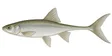
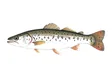
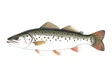
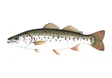
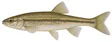
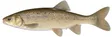
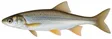
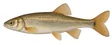
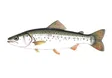
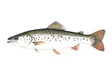
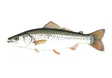
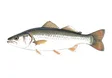
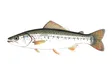
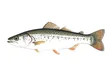
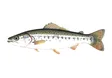
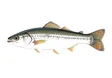
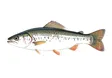
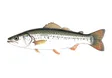
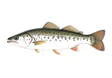
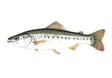
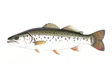
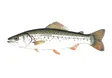
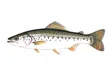
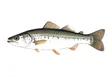
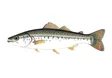
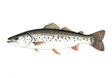
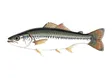
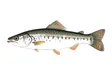
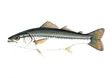
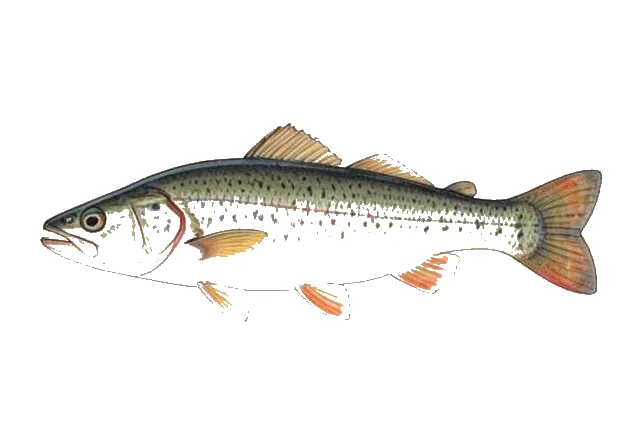
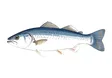
Chiselmouth field guide illustration

About Chiselmouth

The chiselmouth (Gila alutacea) is a species of freshwater ray-finned fishes belonging to the family Leuciscidae. This fish is found in western North America. It is named for the sharp hard plate on its lower jaw, which is used to scrape rocks for algae.

NativeFresh

Taxonomy

The chiselmouth was first formally described as Acrocheilus alutaceus in 1855 by Louis Agassiz and Charles Pickering with its type locality given as Willamette Falls, Oregon City, Clackamas County, Oregon and Wallawalla River at Whitman, then part of Walla Walla County. Agassiz and Pickering classified this species in the genus Acrocheilus, of which it was considered the only extant species. In addition to A. alutaceus, an extinct species, Acrocheilus latus (Cope, 1870) is known from the Late Miocene and Early Pliocene -aged Glenns Ferry & Ringold Formation of Idaho and Washington. Acrocheilus is now considered to be a synonym of Gila, within the subfamily Laviniinae of the family Leuciscidae.

Description

The chiselmouth's body plan generally follows the standard cyprinid form, generally elongated and slightly compressed. The snout is very blunt, with the lower jaw's plate (which consists of cornified epithelium) jutting out slightly. Coloration is rather drab, dark brown above and lighter lower down. Many individuals also have a pattern of black dots, and younger fish may have a dark area at the base of the tail. The single dorsal fin has 10 soft rays, while the anal fin and well-developed pelvic fins each have 9–10 rays. Chiselmouths can reach a length of 30 cm (12 in).

Distribution and habitat

Chiselmouths are typically found in warmer parts of streams and rivers in the drainages of the Columbia River, Fraser River, and the Harney-Malheur system of the Great Basin. Some are found in lakes, migrating into streams to spawn. Although abundant in many parts of their range, behavior remains little-known. Chiselmouth were among the fishes typically utilized by the Nez Perce people as food.

Diet

Young fish feed on surface insects. When the chisel develops (at around 0.6 inches length), they shift to scraping, making short darting movements at the substrate to dislodge whatever is on it, and sucking it in. Although they consume filamentous algae, it seems to not be digested much despite a long coiled intestine, and their primary food actually consists of diatoms.

Additional field notes

Chiselmouth change their food and mouth shape as they grow.

Sources: Gila alutacea species summary

Young fish and adults

FishBase describes adults feeding chiefly on diatoms, with filamentous algae also taken, while young fish eat insects at the surface. Young fish have a more rounded lower lip than adults. In adults the sharpened lower edge works against a small hard plate inside the upper lip, and the intestine is at least twice the body length.

Sources: Gila alutacea species summary

Guide sources

Research reviewed 2026-10-19.

Article text: Wikipedia contributors, Chiselmouth (source revision). Licensed under CC BY-SA 4.0. Retrieved 2026-10-11.
Record fish

The Idaho state record

  • Idaho1.16 lb

    Salmon River · 04/15/2003 · Justin Powell

Each figure is the state agency’s own certified record. The site holds record tables for 11 states so far, so a state missing here has not been read yet. It is not a state where this fish holds no record.

Range

Where it lives

GBIF holds no US occurrence record for this species under this name. That is a gap in the record, not evidence that the fish is absent: ITIS files it as a US species.

Habitat

Water and movement

Water
WoRMS records this species in fresh water.

Classification

Taxonomy

Kingdom
Animalia
Phylum
Chordata
Superclass
Actinopterygii
Class
Teleostei
Order
Cypriniformes
Genus
Gila
Species
Gila alutacea
ITIS TSN
1199065
WoRMS AphiaID
1805568
Outside the US
ITIS also files it in Canada.

Common questions about Chiselmouth

What is the scientific name of Chiselmouth?
The scientific name is Gila alutacea, in the family Leuciscidae. Classification follows ITIS.
Does Chiselmouth live in fresh water or salt water?
WoRMS records this species in fresh water.

Closest relatives

Other Gila species

Same family

More Leuciscidae

Alabama Shiner4 states
Cyprinella callistiaLeuciscidaeNativeFresh
Allegheny Pearl Dace19 states
Margariscus margaritaLeuciscidaeNative and introducedFresh
Altamaha Shiner1 states
Cyprinella xaenuraLeuciscidaeNativeFresh
Alvord Chub2 states
Siphateles alvordensisLeuciscidaeNativeFresh
Apalachee Shiner3 states
Pteronotropis grandipinnisLeuciscidaeNativeFresh
Arkansas River Shiner5 states
Notropis girardiLeuciscidaeNative and introducedFresh
Arroyo Chub1 states
Gila orcuttiiLeuciscidaeNative and introducedFresh
Bandfin Shiner5 states
Luxilus zonistiusLeuciscidaeNative and introducedFresh
Bannerfin Shiner5 states
Cyprinella leedsiLeuciscidaeNativeFresh
Beautiful Shiner3 states
Cyprinella formosaLeuciscidaeNativeFresh
Bedrock Shiner3 states
Notropis rupestrisLeuciscidaeNativeFresh
Bigeye Chub25 states
Hybopsis amblopsLeuciscidaeNative and introducedFresh
Bigeye Shiner17 states
Notropis boopsLeuciscidaeNative and introducedFresh
Bigmouth Chub3 states
Nocomis platyrhynchusLeuciscidaeNativeFresh
Bigmouth Shiner21 states
Notropis dorsalisLeuciscidaeNative and introducedFresh
Blackchin Shiner13 states
Notropis heterodonLeuciscidaeNativeFresh
Blackmouth Shiner3 states
Notropis melanostomusLeuciscidaeNativeFresh
Blacknose Shiner21 states
Notropis heterolepisLeuciscidaeNative and introducedFresh
Blackside Dace2 states
Chrosomus cumberlandensisLeuciscidaeNativeFresh
Blackspot Shiner5 states
Notropis atrocaudalisLeuciscidaeNativeFresh
Blacktail Shiner14 states
Cyprinella venustaLeuciscidaeNative and introducedFresh
Blacktip Shiner4 states
Lythrurus atrapiculusLeuciscidaeNative and introducedFresh
Bleeding Shiner8 states
Luxilus zonatusLeuciscidaeNativeFresh
Blotched Chub6 states
Erimystax insignisLeuciscidaeNativeFresh

All 267 species in Leuciscidae