Spotfin Shiner

Cyprinella spiloptera

Leuciscidae · freshwater water fish

4 minute read · Species guide

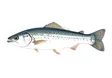
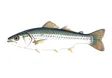
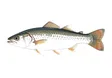
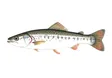
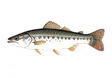
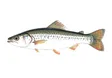
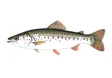
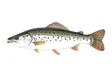
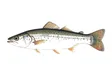
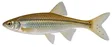
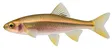
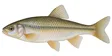
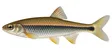
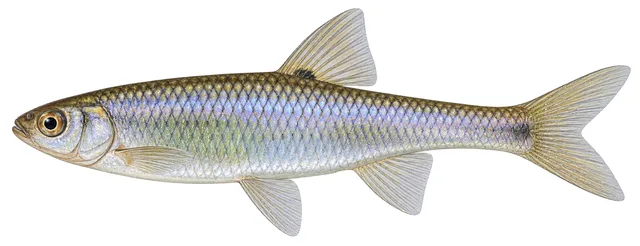
Spotfin Shiner field guide illustration

About Spotfin Shiner

Cyprinella spiloptera, the spotfin shiner is a species of freshwater ray-finned fish in the family Leuciscidae, the shiners, daces and minnows. It is a small sized freshwater fish found abundantly in many watercourses of North America.

Taxonomy

Edward Drinker Cope described the spotfin shiner in 1867, it is known also as the silver-finned minnow or the satin-finned minnow.

Description

The spotfin shiner has a black blotch of pigment on the membrane between its last three rays of the dorsal fin; this spot may be obscure or faint in small spotfin shiners. They are deep-bodied and have a black vertical bar posterior to their operculum. Their mouths open in the terminal position, they have diamond-shaped scales, and each scale is outlined with black pigment. Breeding males become heavily pigmented and steel bluish in color during late spring and early summer, and they have ventral fins that also become dull yellow to bright yellow. The heads of breeding male spotfin shiners become covered with small tubercles, and they feel rough, almost like sandpaper. Spotfin shiners also have 37–39 lateral line scales. Spotfin shiners have eight anal fin rays unlike its close relative, the satinfin.

Distribution and habitat

Cyprinela spiloptera inhabit all but one of the Great Lakes (Superior), and are found from the Saint Lawrence drainage, Quebec to the Potomac river drainage, Virginia. They also inhabit areas from Ontario and New York to North Dakota, as well as south to Alabama and eastern regions of Oklahoma. C. spiloptera are also located in isolated areas of the Ozark mountains. C. spiloptera are freshwater, benthopologic fishes that prefer temperate climates. They inhabit sand and gravel runs and pools of creeks, as well as small to medium rivers with clear, permanent flow.

Feeding

Adult C. spiloptera prey on surface insects and immature aquatic organisms.

Conservation status

Currently, C. spiloptera are listed by the IUCN as having the least concern for conservation.

Life cycle and reproduction

The spawning season of C. spiloptera lasts from mid-June until mid-August. Adult females deposit their eggs inside small crevices of rocks and submerged logs or roots. Their eggs, which typically hatch in about five days, are defended by the male. The maximum reported age of C. spiloptera is five years, but most usually only live to be around two years of age.

Etymology

Cyprinella is Latin for carp, with the diminutive -ella and spiloptera is derived from the Latin words spilos, or spot and pteron, meaning wing or fin.

Article text: Wikipedia contributors, Cyprinella spiloptera (source revision). Licensed under CC BY-SA 4.0. Retrieved 2026-10-11.


Diet and feeding

The FishTraits compilation records these diet categories for this species: aquatic or other vascular plants; detritus or unidentified plant material; invertebrates or larval fish; larger animal prey (a source category covering fish, crayfish, crabs, or frogs). These are broad categories, not a claim that every individual consumes every example in a category.

Reported feeding positions include bottom feeding and surface or water-column feeding. The compilation combines published observations; diets can vary with age, locality, and available food.

Habitat preferences

Reported habitat associations include medium to large rivers, streams and small rivers.

The source records associations with sand, gravel, cobble. An association indicates reported use, rather than an exclusive requirement.

Reproduction and parental care

The compilation reports a representative maturity age of 2 years. Its maturity field summarizes mean, median, or modal estimates, usually for females; male estimates can be used when female data are unavailable. It is not a fixed age at which every fish first breeds.

Batch or serial spawning has been reported somewhere in the species’ range. This does not establish the same spawning pattern for every population.

Recorded spawning months are May, Jun, Jul, Aug for the source’s reporting region (NC). This is a regional calendar, not a range-wide schedule.

The reproductive-guild classification includes hiding a brood without subsequent guarding.

Size and recorded longevity

FishTraits reports a maximum total length of 12 centimetres. Some entries use an estimated asymptotic length; this value should not be treated as a certified record catch.

Recorded longevity in the compilation is 5 years. Wild observations were preferred, but captive records were accepted where wild records were unavailable, and unspecified records were assumed wild. The value is not a guaranteed wild lifespan or an aquarium life expectancy.

Identification and appearance

Becker (1983); Page and Burr (1991); Etnier and Starnes (1993); commonly used name is Notropis spilopterus. Maximum size: 12 cm.

Native range

Atlantic Slope from St. Lawrence drainage, Quebec, to Potomac River drainage, Virginia; Great Lakes (except Lake Superior), Hudson Bay (Red River), and Mississippi River basins from Ontario and New York to southeastern North Dakota and south to Alabama and eastern Oklahoma; isolated populations in Ozarks (Page and Burr 1991).

Introduction history

Spotfin Shiners have been stocked intentionally as a forage fish in Nebraska (Bouc 1987). It most likely entered Smith Mountain Lake, Virginia, from the nearby New drainage, possibly transferred with white bass from Claytor Lake (Jenkins and Burkhead 1994). The method of introduction into other areas has not been reported although introduction via bait bucket releases is a possibility in some areas.

Range

Where it lives

Share of 14,029 GBIF observation records with a state location, across 31 states. The orange dots are USGS stream-survey sites where this species was caught.
0%
19.7%
Share of 14,029 GBIF observation records with a state location, across 31 states. The orange dots are USGS stream-survey sites where this species was caught.

A blank area on the dot layer usually means nobody sampled there, not that the fish is absent. Turn on “every survey site” to see where the survey looked.

The USGS stream survey caught it at 4,032 of its sites, in 26 states. That survey and the GBIF records are two different counts of two different things, so the site keeps them apart.

Habitat

Water and movement

Water
WoRMS records this species in fresh water.
USGS NAS habitat
Freshwater
US status
Native transplant — native to part of the United States, moved to other waters inside it.
Migration
Not migratory

Classification

Taxonomy

Kingdom
Animalia
Phylum
Chordata
Superclass
Actinopterygii
Class
Teleostei
Order
Cypriniformes
Genus
Cyprinella
Species
Cyprinella spiloptera
ITIS TSN
163803
WoRMS AphiaID
1020798
GBIF key
5207691
Outside the US
ITIS also files it in Canada.

Common questions about Spotfin Shiner

What is the scientific name of Spotfin Shiner?
The scientific name is Cyprinella spiloptera, in the family Leuciscidae. Classification follows ITIS.
Does Spotfin Shiner live in fresh water or salt water?
WoRMS records this species in fresh water.
Where has Spotfin Shiner been recorded in the United States?
GBIF has observations in 31 states, with the most records in Ohio, Illinois, Kentucky. The map shows observation records, which do not establish the complete natural range.

Closest relatives

Other Cyprinella species

Alabama Shiner4 states
Cyprinella callistiaLeuciscidaeNativeFresh
Altamaha Shiner1 states
Cyprinella xaenuraLeuciscidaeNativeFresh
Bannerfin Shiner5 states
Cyprinella leedsiLeuciscidaeNativeFresh
Beautiful Shiner3 states
Cyprinella formosaLeuciscidaeNativeFresh
Blacktail Shiner14 states
Cyprinella venustaLeuciscidaeNative and introducedFresh
Blue Shiner4 states
Cyprinella caeruleaLeuciscidaeNativeFresh
Bluestripe Shiner4 states
Cyprinella callitaeniaLeuciscidaeNativeFresh
Bluntface Shiner11 states
Cyprinella camuraLeuciscidaeNativeFresh
Conchos Shiner1 states
Cyprinella panarcysLeuciscidaeNativeFresh
Fieryblack Shiner3 states
Cyprinella pyrrhomelasLeuciscidaeNative and introducedFresh
Greenfin Shiner3 states
Cyprinella chloristiaLeuciscidaeNativeFresh
Ocmulgee Shiner3 states
Cyprinella callisemaLeuciscidaeNativeFresh
Plateau Shiner1 states
Cyprinella lepidaLeuciscidaeNativeFresh
Proserpine Shiner1 states
Cyprinella proserpinaLeuciscidaeNativeFresh
Red Shiner28 states
Cyprinella lutrensisLeuciscidaeNative and introducedFresh
Santee Chub2 states
Cyprinella zanemaLeuciscidaeNativeFresh
Satinfin Shiner17 states
Cyprinella analostanaLeuciscidaeNative and introducedFresh
Steelcolor Shiner26 states
Cyprinella whippleiLeuciscidaeNative and introducedFresh
Tallapoosa Shiner2 states
Cyprinella gibbsiLeuciscidaeNativeFresh
Thicklip Chub3 states
Cyprinella labrosaLeuciscidaeNativeFresh
Tricolor Shiner5 states
Cyprinella trichroistiaLeuciscidaeNativeFresh
Whitefin Shiner4 states
Cyprinella niveaLeuciscidaeNativeFresh
Whitetail Shiner14 states
Cyprinella galacturaLeuciscidaeNative and introducedFresh

Same family

More Leuciscidae

Alabama Shiner4 states
Cyprinella callistiaLeuciscidaeNativeFresh
Allegheny Pearl Dace19 states
Margariscus margaritaLeuciscidaeNative and introducedFresh
Altamaha Shiner1 states
Cyprinella xaenuraLeuciscidaeNativeFresh
Alvord Chub2 states
Siphateles alvordensisLeuciscidaeNativeFresh
Apalachee Shiner3 states
Pteronotropis grandipinnisLeuciscidaeNativeFresh
Arkansas River Shiner5 states
Notropis girardiLeuciscidaeNative and introducedFresh
Arroyo Chub1 states
Gila orcuttiiLeuciscidaeNative and introducedFresh
Bandfin Shiner5 states
Luxilus zonistiusLeuciscidaeNative and introducedFresh
Bannerfin Shiner5 states
Cyprinella leedsiLeuciscidaeNativeFresh
Beautiful Shiner3 states
Cyprinella formosaLeuciscidaeNativeFresh
Bedrock Shiner3 states
Notropis rupestrisLeuciscidaeNativeFresh
Bigeye Chub25 states
Hybopsis amblopsLeuciscidaeNative and introducedFresh
Bigeye Shiner17 states
Notropis boopsLeuciscidaeNative and introducedFresh
Bigmouth Chub3 states
Nocomis platyrhynchusLeuciscidaeNativeFresh
Bigmouth Shiner21 states
Notropis dorsalisLeuciscidaeNative and introducedFresh
Blackchin Shiner13 states
Notropis heterodonLeuciscidaeNativeFresh
Blackmouth Shiner3 states
Notropis melanostomusLeuciscidaeNativeFresh
Blacknose Shiner21 states
Notropis heterolepisLeuciscidaeNative and introducedFresh
Blackside Dace2 states
Chrosomus cumberlandensisLeuciscidaeNativeFresh
Blackspot Shiner5 states
Notropis atrocaudalisLeuciscidaeNativeFresh
Blacktail Shiner14 states
Cyprinella venustaLeuciscidaeNative and introducedFresh
Blacktip Shiner4 states
Lythrurus atrapiculusLeuciscidaeNative and introducedFresh
Bleeding Shiner8 states
Luxilus zonatusLeuciscidaeNativeFresh
Blotched Chub6 states
Erimystax insignisLeuciscidaeNativeFresh

All 267 species in Leuciscidae