Blue Shiner

Cyprinella caerulea

Leuciscidae · freshwater water fish

4 minute read · Species guide

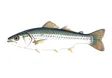
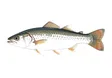
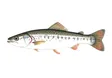
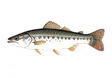
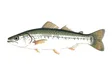
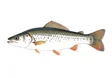
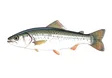
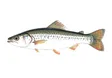
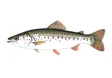
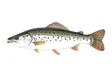
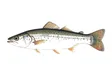
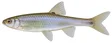
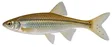
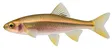
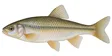
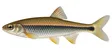
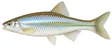
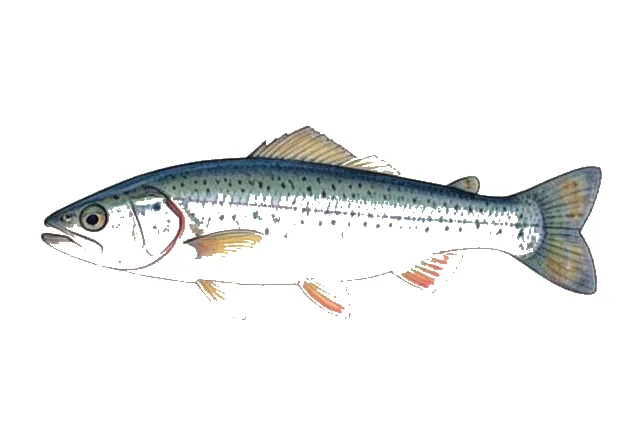
Blue Shiner field guide illustration

About Blue Shiner

The blue shiner (Cyprinella caerulea) is a species of freshwater ray-finned fish in the family Leuciscidae, the shiners, daces and minnows. It is native to the southeastern United States, where it is endemic to the Cahaba and Coosa River systems of the Mobile River Basin. This is a federally listed threatened species under the Endangered Species Act of the United States.

Geographic distribution

C. caerulea is endemic to the basin of the Mobile River. Because of population declines, it is now restricted to the Coosa River system in four disjunct populations in northeast Alabama, northwest Georgia, and southeast Tennessee.

Within the Coosa River system, the fish was native to Choccolocco Creek, the Little River, Weogufka Creek, and Big Wills Creek in Alabama; the Coosawattee River the Oostanaula River in Georgia, and the Conasauga River in Georgia and Tennessee. The causes of the population declines are not fully clear, but they are likely due to the degradation of habitat and water degradation caused by urbanization, pollution, and sedimentation. The extirpation from the Cahaba River in Alabama could be due to extensive urban development. Efforts are currently being made to reverse the effects of habitat and water degradation. If they are successful, the blue shiner may be delisted.

Biology

The blue shiner is a temperate, freshwater fish that occupies benthopelagic zones in streams. It occurs in second to fourth order streams with a moderate to low river currents, favoring sand and gravel substrates, and sometimes cobble. It generally remains at depths of 0.15 to 1 meter. It requires clear waters for feeding, because it is a visual drift feeder, taking invertebrates from the drift of the water column. Excess sedimentation in the habitat has an adverse effect on the fish, hindering its ability to feed.

The spawning behavior of this species is similar to that of C. trichroistia and C. gibbsi. A single male will protect a territory and females arrive to deposit eggs. During spawning, the female forcefully sprays eggs into crevices. It does not engage in parental care. Adequate water flows are required to remove debris and sediment, keeping open the crevices that the fish requires for egg deposition. Clear waters are also required for the females to visualize the males, which perform displays to attract them.

The spawning season of the blue shiner starts in early May and ends in late August. It may produce more than one clutch per season. The life span of the fish is about three years, with two-year-old individuals producing the most spawn.

Conservation

With water degradation being one of the main reasons for decline, conservation activities are focused on improving water quality. Construction near waterways should be reduced, as should dam-building and water pollution.

Currently, the largest population of C. caerulea is in the Conasauga River. This has become the focus of conservation efforts and research. Estimations of abundance are made by assessing individual subpopulations. Research activities include sampling using electrofishing and netting.

Article text: Wikipedia contributors, Blue shiner (source revision). Licensed under CC BY-SA 4.0. Retrieved 2026-10-11.


Diet and feeding

The FishTraits compilation records these diet categories for this species: detritus or unidentified plant material; invertebrates or larval fish; larger animal prey (a source category covering fish, crayfish, crabs, or frogs); fish or frog eggs. These are broad categories, not a claim that every individual consumes every example in a category.

Reported feeding positions include surface or water-column feeding. The compilation combines published observations; diets can vary with age, locality, and available food.

Habitat preferences

Reported habitat associations include medium to large rivers, streams and small rivers.

The source records associations with muck, clay or silt, sand, gravel, cobble. An association indicates reported use, rather than an exclusive requirement.

Reproduction and parental care

The compilation reports a representative maturity age of 1.5 years. Its maturity field summarizes mean, median, or modal estimates, usually for females; male estimates can be used when female data are unavailable. It is not a fixed age at which every fish first breeds.

Batch or serial spawning has been reported somewhere in the species’ range. This does not establish the same spawning pattern for every population.

Recorded spawning months are May, Jun, Jul, Aug for the source’s reporting region (TN). This is a regional calendar, not a range-wide schedule.

The reproductive-guild classification includes hiding a brood without subsequent guarding.

Size and recorded longevity

FishTraits reports a maximum total length of 10 centimetres. Some entries use an estimated asymptotic length; this value should not be treated as a certified record catch.

Recorded longevity in the compilation is 3 years. Wild observations were preferred, but captive records were accepted where wild records were unavailable, and unspecified records were assumed wild. The value is not a guaranteed wild lifespan or an aquarium life expectancy.

Range

Where it lives

Share of 210 GBIF observation records with a state location, across 4 states.
0%
38.1%
Share of 210 GBIF observation records with a state location, across 4 states.

Habitat

Water and movement

Water
WoRMS records this species in fresh water.
Migration
Not migratory

Classification

Taxonomy

Kingdom
Animalia
Phylum
Chordata
Superclass
Actinopterygii
Class
Teleostei
Order
Cypriniformes
Genus
Cyprinella
Species
Cyprinella caerulea
ITIS TSN
163768
WoRMS AphiaID
1422443
GBIF key
5207694

Common questions about Blue Shiner

What is the scientific name of Blue Shiner?
The scientific name is Cyprinella caerulea, in the family Leuciscidae. Classification follows ITIS.
Does Blue Shiner live in fresh water or salt water?
WoRMS records this species in fresh water.
Where has Blue Shiner been recorded in the United States?
GBIF has observations in 4 states, with the most records in Alabama, Tennessee, Georgia. The map shows observation records, which do not establish the complete natural range.

Closest relatives

Other Cyprinella species

Alabama Shiner4 states
Cyprinella callistiaLeuciscidaeNativeFresh
Altamaha Shiner1 states
Cyprinella xaenuraLeuciscidaeNativeFresh
Bannerfin Shiner5 states
Cyprinella leedsiLeuciscidaeNativeFresh
Beautiful Shiner3 states
Cyprinella formosaLeuciscidaeNativeFresh
Blacktail Shiner14 states
Cyprinella venustaLeuciscidaeNative and introducedFresh
Bluestripe Shiner4 states
Cyprinella callitaeniaLeuciscidaeNativeFresh
Bluntface Shiner11 states
Cyprinella camuraLeuciscidaeNativeFresh
Conchos Shiner1 states
Cyprinella panarcysLeuciscidaeNativeFresh
Fieryblack Shiner3 states
Cyprinella pyrrhomelasLeuciscidaeNative and introducedFresh
Greenfin Shiner3 states
Cyprinella chloristiaLeuciscidaeNativeFresh
Ocmulgee Shiner3 states
Cyprinella callisemaLeuciscidaeNativeFresh
Plateau Shiner1 states
Cyprinella lepidaLeuciscidaeNativeFresh
Proserpine Shiner1 states
Cyprinella proserpinaLeuciscidaeNativeFresh
Red Shiner28 states
Cyprinella lutrensisLeuciscidaeNative and introducedFresh
Santee Chub2 states
Cyprinella zanemaLeuciscidaeNativeFresh
Satinfin Shiner17 states
Cyprinella analostanaLeuciscidaeNative and introducedFresh
Spotfin Shiner31 states
Cyprinella spilopteraLeuciscidaeNative and introducedFresh
Steelcolor Shiner26 states
Cyprinella whippleiLeuciscidaeNative and introducedFresh
Tallapoosa Shiner2 states
Cyprinella gibbsiLeuciscidaeNativeFresh
Thicklip Chub3 states
Cyprinella labrosaLeuciscidaeNativeFresh
Tricolor Shiner5 states
Cyprinella trichroistiaLeuciscidaeNativeFresh
Whitefin Shiner4 states
Cyprinella niveaLeuciscidaeNativeFresh
Whitetail Shiner14 states
Cyprinella galacturaLeuciscidaeNative and introducedFresh

Same family

More Leuciscidae

Alabama Shiner4 states
Cyprinella callistiaLeuciscidaeNativeFresh
Allegheny Pearl Dace19 states
Margariscus margaritaLeuciscidaeNative and introducedFresh
Altamaha Shiner1 states
Cyprinella xaenuraLeuciscidaeNativeFresh
Alvord Chub2 states
Siphateles alvordensisLeuciscidaeNativeFresh
Apalachee Shiner3 states
Pteronotropis grandipinnisLeuciscidaeNativeFresh
Arkansas River Shiner5 states
Notropis girardiLeuciscidaeNative and introducedFresh
Arroyo Chub1 states
Gila orcuttiiLeuciscidaeNative and introducedFresh
Bandfin Shiner5 states
Luxilus zonistiusLeuciscidaeNative and introducedFresh
Bannerfin Shiner5 states
Cyprinella leedsiLeuciscidaeNativeFresh
Beautiful Shiner3 states
Cyprinella formosaLeuciscidaeNativeFresh
Bedrock Shiner3 states
Notropis rupestrisLeuciscidaeNativeFresh
Bigeye Chub25 states
Hybopsis amblopsLeuciscidaeNative and introducedFresh
Bigeye Shiner17 states
Notropis boopsLeuciscidaeNative and introducedFresh
Bigmouth Chub3 states
Nocomis platyrhynchusLeuciscidaeNativeFresh
Bigmouth Shiner21 states
Notropis dorsalisLeuciscidaeNative and introducedFresh
Blackchin Shiner13 states
Notropis heterodonLeuciscidaeNativeFresh
Blackmouth Shiner3 states
Notropis melanostomusLeuciscidaeNativeFresh
Blacknose Shiner21 states
Notropis heterolepisLeuciscidaeNative and introducedFresh
Blackside Dace2 states
Chrosomus cumberlandensisLeuciscidaeNativeFresh
Blackspot Shiner5 states
Notropis atrocaudalisLeuciscidaeNativeFresh
Blacktail Shiner14 states
Cyprinella venustaLeuciscidaeNative and introducedFresh
Blacktip Shiner4 states
Lythrurus atrapiculusLeuciscidaeNative and introducedFresh
Bleeding Shiner8 states
Luxilus zonatusLeuciscidaeNativeFresh
Blotched Chub6 states
Erimystax insignisLeuciscidaeNativeFresh

All 267 species in Leuciscidae