Pacific Sardine

Sardinops sagax

Clupeidae · saltwater water fish

4 minute read · Species guide

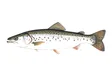
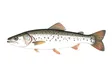
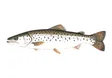
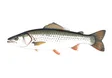
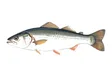
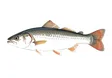
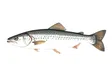
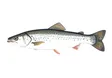
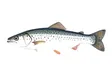
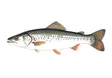
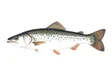
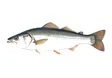
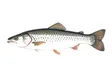
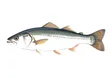
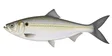
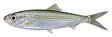
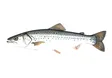
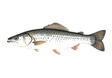
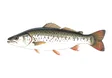
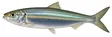
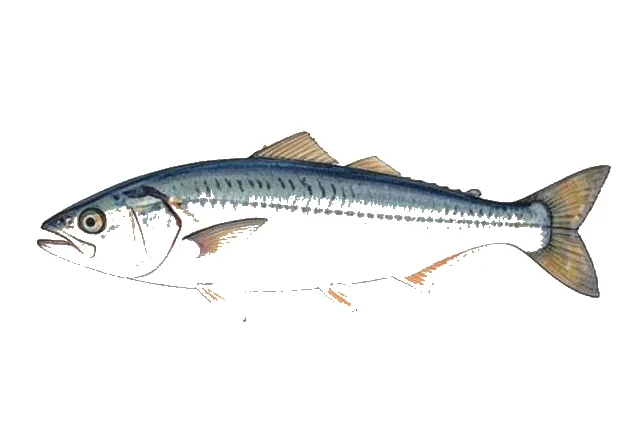
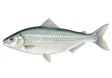
Pacific Sardine field guide illustration

About Pacific Sardine

Pacific sardines are small schooling fish whose lives connect plankton with larger ocean predators. Along the North American Pacific coast, they move between feeding and spawning areas and gather in dense schools near the surface. Their populations can change dramatically, so the abundance of a school in one place does not tell the whole story of the stock.

Appearance and identification

Look for a blue-green back above pale flanks, with dark spots arranged along the middle of the sides. NOAA describes one to three sets of these spots. The contrast between the colored back and white sides is a useful starting point when identifying a sardine, alongside its small size.

NOAA's West Coast profile uses the regional scientific name Sardinops sagax caerulea. This database files the fish at species rank as Sardinops sagax. The extra name in the regional account identifies the Pacific form discussed in that profile.

Sources: Pacific Sardine species profile

Growth and lifespan

Pacific sardines grow quickly and can exceed 12 inches in length. NOAA reports a potential lifespan of 13 years, while noting that most do not survive beyond about five years. Maximum age and the age of a typical fish are therefore different figures.

Sources: Pacific Sardine species profile

Range and habitat

The North American range described by NOAA extends from southeastern Alaska to Baja California, Mexico. Sardines occupy the water column in both nearshore and offshore coastal waters and sometimes enter estuaries. They are not restricted to a single type of shoreline habitat.

A sardine school is often encountered near the surface. Dense schools are part of the species' normal way of life, but its distribution also changes seasonally as fish move along the coast.

Sources: Pacific Sardine species profile

Diet and ecological role

Their food is plankton: small plants and animals suspended in the water. Sardines in turn provide food for larger fishes, marine mammals, and seabirds. This makes them an important link between plankton production and predators that cannot obtain the same food directly in the same way.

Sources: Pacific Sardine species profile

Spawning and early life

Depending on conditions, sardines begin reproducing at one or two years old. Females can spawn repeatedly during a season rather than releasing all their eggs in a single event. Eggs are fertilized outside the body, and NOAA gives a hatching time of about three days.

Sources: Pacific Sardine species profile

Schooling and seasonal movement

Movement differs with age. Older adults may travel from spawning areas around southern California and northern Baja California to feeding and spawning areas off the Pacific Northwest and Canada. Younger adults appear to concentrate their feeding migrations more in central and northern California.

Those routes describe broad patterns, not a single journey followed by every sardine. Schooling behavior, age, and seasonal location all matter when interpreting where the fish is found.

Sources: Pacific Sardine species profile

Population change and conservation

NOAA describes pronounced natural rises and falls in sardine abundance. Its 2025 assessment classified the managed stock as overfished; that stock assessment is separate from whether the current fishing rate is too high. The agency's profile also describes a rebuilding plan and a precautionary abundance threshold used in fishery management.

The biology of the fish and the condition of a managed stock answer different questions. The linked NOAA account provides the dated assessment and management information behind those distinctions.

Sources: Pacific Sardine species profile
Guide sources

Research reviewed 2026-10-13.

NOAA Fisheries

NOAA assessments and reference details

NOAA management region
West Coast

Population status

Pacific sardine is overfished (2025 stock assessment), and is not subject to overfishing based on 2023 catch data. Summary stock assessment information can be found on Stock SMART .

The population size varies naturally, which can lead to large fluctuations (boom-bust cycles) in abundance and catch.

A precautionary measure is built into sardine management to stop directed fishing when the population falls below 150,000 metric tons. The latest population estimate is below that level, and managers have closed the fishery.

Fishery management

NOAA Fisheries and the Pacific Fishery Management Council manage the Pacific sardine fishery.

Managed under the Coastal Pelagic Species Fishery Management Plan : Catch limits are in place to prevent overfishing. Catch limit is allocated among three fishing seasons throughout the year. Permits are needed to harvest Pacific sardines. Gear restrictions are in place to reduce bycatch. Catch is monitored through logbooks and observers. A rebuilding plan to rebuild the stock to the target population level is in place with a target date of 2035.

Range

Where it lives

Share of 6,466 GBIF observation records with a state location, across 5 states.
0%
99.4%
Share of 6,466 GBIF observation records with a state location, across 5 states.

Habitat

Water and movement

Water
WoRMS records this species in the sea.

Classification

Taxonomy

Kingdom
Animalia
Phylum
Chordata
Superclass
Actinopterygii
Class
Teleostei
Order
Clupeiformes
Family
Clupeidae
Genus
Sardinops
Species
Sardinops sagax
NOAA species
sagax caerulea
ITIS TSN
161729
WoRMS AphiaID
217452
GBIF key
2412583
Outside the US
ITIS also files it in Mexico.

Common questions about Pacific Sardine

What is the scientific name of Pacific Sardine?
The scientific name is Sardinops sagax, in the family Clupeidae. Classification follows ITIS.
Does Pacific Sardine live in fresh water or salt water?
WoRMS records this species in the sea.
Where has Pacific Sardine been recorded in the United States?
GBIF has observations in 5 states, with the most records in California, Oregon, Washington. The map shows observation records, which do not establish the complete natural range.

Same family

More Clupeidae

Alabama Shad13 states
Alosa alabamaeClupeidaeNativeFreshSaltBrackish
Alewife29 states
Alosa pseudoharengusClupeidaeNative and introducedFreshSaltBrackish
American Gizzard Shad41 states
Dorosoma cepedianumClupeidaeNative and introducedFreshSaltBrackish
American Shad25 states
Alosa sapidissimaClupeidaeNative and introducedFreshSaltBrackish
Atlantic Herring17 states
Clupea harengusClupeidaeNativeSaltBrackish
Atlantic Menhaden19 states
Brevoortia tyrannusClupeidaeNativeSaltBrackish
Atlantic Red Herring15 states
Etrumeus teresClupeidaeNativeSalt
Atlantic Thread Herring13 states
Opisthonema oglinumClupeidaeNativeSalt
Blueback Herring21 states
Alosa aestivalisClupeidaeNative and introducedFreshSaltBrackish
Bluestripe Herring2 states
Herklotsichthys quadrimaculatusClupeidaeIntroducedFreshSaltBrackish
Dwarf Herring2 states
Jenkinsia lamprotaeniaClupeidaeNativeSalt
False Herring3 states
Harengula clupeolaClupeidaeNativeSaltBrackish
Finescale Menhaden4 states
Brevoortia gunteriClupeidaeNativeSaltBrackish
Florida Round Herring1 states
Jenkinsia stoliferaClupeidaeNativeSalt
Gulf Menhaden8 states
Brevoortia patronusClupeidaeNativeSalt
Hickory Shad15 states
Alosa mediocrisClupeidaeNativeFreshSaltBrackish
Marquesan Sardinella1 states
Sardinella marquesensisClupeidaeIntroducedSalt
Middling Thread Herring1 states
Opisthonema medirastreClupeidaeNativeSalt
Pacific Herring4 states
Clupea pallasiiClupeidaeNativeFreshSaltBrackish
Redear Herring5 states
Harengula humeralisClupeidaeNativeSalt
Round Sardinella12 states
Sardinella auritaClupeidaeNativeSaltBrackish
Scaled Sardine10 states
Harengula jaguanaClupeidaeNativeSaltBrackish
Skipjack Shad24 states
Alosa chrysochlorisClupeidaeNative and introducedFreshSaltBrackish
Threadfin Shad30 states
Dorosoma petenenseClupeidaeNative and introducedFreshSaltBrackish

All 26 species in Clupeidae