Atlantic Herring

Clupea harengus

Clupeidae · saltwater and brackish water fish

14 minute read · Species guide

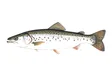
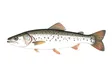
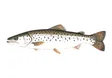
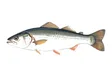
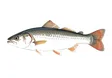
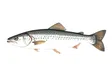
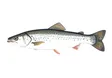
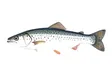
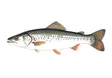
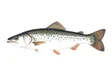
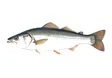
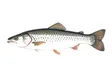
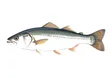
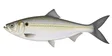
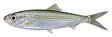
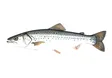
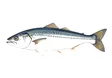
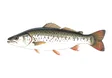
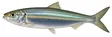
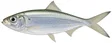
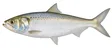
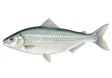
Atlantic Herring field guide illustration

About Atlantic Herring

Atlantic herring (Clupea harengus) is a herring in the family Clupeidae. It is one of the most abundant fish species in the world. Atlantic herrings can be found on both sides of the northern Atlantic Ocean, congregating in large schools. They can grow up to 45 centimetres (18 in) in length and weigh up to 1.1 kilograms (2.4 lb). They feed on copepods, krill and small fish, while their natural predators are seals, whales, cod and other larger fish.

The Atlantic herring fishery has long been an important part of the economy of New England and the Atlantic provinces of Canada. This is because the fish congregate relatively near to the coast in massive schools, notably in the cold waters of the semi-enclosed Gulf of Maine and Gulf of St. Lawrence. North Atlantic herring schools have been measured up to 4 cubic kilometres (0.96 cu mi) in size, containing an estimated four billion fish.

Description

Atlantic herring have a fusiform body. Gill rakers in their mouths filter incoming water, trapping any zooplankton and phytoplankton.

Atlantic herring are in general fragile. They have large and delicate gill surfaces, and contact with foreign matter can strip away their large scales.

They have retreated from many estuaries worldwide due to excess water pollution although in some estuaries that have been cleaned up, herring have returned. The presence of their larvae indicates cleaner and more – oxygenated waters.

Range and habitat

Atlantic herring can be found on both sides of the Atlantic Ocean. They range, shoaling and schooling, across North Atlantic waters such as the Gulf of Maine, the Gulf of St Lawrence, the Bay of Fundy, the Labrador Sea, the Davis Straits, the Beaufort Sea, the Denmark Strait, the Norwegian Sea, the North Sea, the Skagerrak, the English Channel, the Celtic Sea, the Irish Sea, the Bay of Biscay and Sea of the Hebrides. Although Atlantic herring are found in the northern waters surrounding the Arctic, they are not considered to be an Arctic species.

Baltic herring

The small-sized herring in the inner parts of the Baltic Sea, which is also less fatty than the true Atlantic herring (Clupea harengus harengus), is considered a distinct subspecies, "Baltic herring" (Clupea harengus membras), despite the lack of a distinctive genome. The Baltic herring has a specific name in many local languages (Swedish strömming, Finnish silakka, Estonian räim, silk, Livonian siļk, Russian салака, Polish śledź bałtycki, Latvian siļķe, Lithuanian silkė) and is popularly and in cuisine considered distinct from herring. For example, the Swedish dish surströmming is made from Baltic herring.

The Baltic herring was elected the national fish of Estonia in 2007. Helsinki is also known for its annual herring market since 1743.

Fisheries for Baltic herring have been at unsustainable levels since the Middle Ages. Around this time, the primary Baltic herring catch consisted of an autumn-spawning population. Cooling in the mid-16th century related to the Little Ice Age, combined with this overfishing, led to a dramatic loss of productivity in the population of autumn-spawning herring that rendered it nearly extinct. Due to this, the autumn-spawning herring were largely replaced by a spring -spawning population, which has since comprised most of the Baltic herring fisheries; this population is also at risk of overfishing.

Life cycle

Herrings reach sexual maturity when they are 3 to 5 years old. The life expectancy once mature is 12 to 16 years. Atlantic herring may have different spawning components within a single stock which spawn during different seasons. They spawn in estuaries, coastal waters or in offshore banks. Fertilization is external, as in most other fish: the female releases between 20,000 and 40,000 eggs and the males simultaneously release masses of milt so that they mix freely in the sea. Once fertilized the 1 to 1.4 mm diameter eggs sink to the sea bed where their sticky surface adheres to gravel or weed. They mature in 1–3 weeks; in 14–19 °C (57–66 °F) water it takes 6–8 days, in 7.5 °C (45.5 °F) it takes 17 days. They will mature only if the water temperature stays below 19 °C (66 °F). The hatched larvae are 3 to 4 mm long and transparent except for the eyes which have some pigmentation.

Population

Herrings are most seen in the North Atlantic Ocean, from the coast of South Carolina until Greenland, and from the Baltic Sea until Novaya Zemlya. In the North Sea people can distinguish four different main populations spawning in different periods:

These four populations live outside of the spawn season interchangeably. In their spawn season, each population gathers together on their own spawn grounds.

In the past, there was another, fifth distinct population, the Zuiderzee herring, which spawned in the former Zuiderzee. This population disappeared when the Zuiderzee was drained by the Dutch as part of the larger Zuiderzee Works.

Ecology

Herring-like fish are the most important fish group on the planet. They are also the most populous fish. They are the dominant converter of zooplankton into fish, consuming copepods, arrow worms chaetognatha, pelagic amphipods hyperiidae, mysids and krill in the pelagic zone. Conversely, they are a central prey item or forage fish for higher trophic levels. The reasons for this success are still enigmatic; one speculation attributes their dominance to the huge, extremely fast cruising schools they inhabit.

Orca, cod, dolphins, porpoises, sharks, rockfish, seabirds, whales, squid, sea lions, seals, tuna, salmon, and fishermen are among the predators of these fishes.

Herring's pelagic–prey includes copepods (e.g. Centropagidae, Calanus spp., Acartia spp., Temora spp.), amphipods like Hyperia spp., larval snails, diatoms by larvae below 20 millimetres (0.79 in), peridinians, molluscan larvae, fish eggs, krill like Meganyctiphanes norvegica, mysids, small fishes, menhaden larvae, pteropods, annelids, tintinnids by larvae below 45 millimetres (1.8 in), Haplosphaera, Pseudocalanus.

Schooling

Atlantic herring can school in immense numbers. Radakov estimated herring schools in the North Atlantic can occupy up to 4.8 cubic kilometres with fish densities between 0.5 and 1.0 fish/cubic metre, equivalent to several million fish in one school.

Herring are amongst the most spectacular schoolers ("obligate schoolers" under older terminology). They aggregate in groups that consist of thousands to hundreds of thousands or even millions of individuals. The schools traverse the open oceans.

Schools have a very precise spatial arrangement that allows the school to maintain a relatively constant cruising speed. Schools from an individual stock generally travel in a triangular pattern between their spawning grounds, e.g. Southern Norway, their feeding grounds (Iceland) and their nursery grounds (Northern Norway). Such wide triangular journeys are probably important because feeding herrings cannot distinguish their own offspring. They have excellent hearing, and a school can react very quickly to evade predators. Herring schools keep a certain distance from a moving scuba diver or a cruising predator like a killer whale, forming a vacuole which looks like a doughnut from a spotter plane. The phenomenon of schooling is far from understood, especially the implications on swimming and feeding-energetics. Many hypotheses have been put forward to explain the function of schooling, such as predator confusion, reduced risk of being found, better orientation, and synchronized hunting. However, schooling has disadvantages such as: oxygen- and food-depletion and excretion buildup in the breathing media. The school-array probably gives advantages in energy saving although this is a highly controversial and much debated field.

Schools of herring can on calm days sometimes be detected at the surface from more than a mile away by the little waves they form, or from a few meters at night when they trigger bioluminescence in surrounding plankton ("firing"). All underwater recordings show herring constantly cruising reaching speeds up to 108 centimetres (43 in) per second, and much higher escape speeds.

Genetics

Atlantic herring populations show very little genome-wide genetic differentiation. Pairwise fixation index values range from 0.013 to 0.061 across 53 population samples. However, a few hundred loci show strong differentiation. These loci are associated with ecological adaptation to salinity, spawning season, and local light and temperature conditions. Candidate genes include PRLR, a prolactin receptor involved in osmoregulation, TSHR, which regulates seasonal reproduction in vertebrates, and RHO, a gene that has a missense change which adapts vision to the red-shifted light of the Baltic Sea. When researchers used 794 highly differentiated markers in a principal component analysis (PCA), they found seven main population groups. On the other hand, 169,394 undifferentiated markers did not separate the groups. This suggests that adaptive variation is most useful for understanding herring population structure rather than neutral variation. Four of the differentiated regions have been identified as large chromosomal inversions on chromosomes 6, 12, 17, and 23, and two of these were confirmed with long-read sequencing.

Fisheries

The Atlantic herring fishery is managed by multiple organizations that work together on the rules and regulations applying to herring. As of 2010 the species was not threatened by overfishing.

Aquariums

Because of their feeding habits, cruising desire, collective behavior, and fragility, they survive in very few aquaria worldwide despite their abundance in the ocean. Even the best facilities leave them slim and slow compared to healthy wild schools.

Article text: Wikipedia contributors, Atlantic herring (source revision). Licensed under CC BY-SA 4.0. Retrieved 2026-10-11.
NOAA Fisheries

Life history and status

NOAA management region
New England/Mid-Atlantic, Southeast

About the species

U.S. wild-caught Atlantic herring is a smart seafood choice because it is sustainably managed and responsibly harvested under U.S. regulations.

Population status

According to the 2024 stock assessment, Atlantic herring is overfished, but not subject to overfishing. Summary stock assessment information can be found on Stock SMART .

Herring populations are naturally highly variable.

Appearance

  • Atlantic herring are small schooling fish.
  • They are silvery in color, with a bluish or greenish-blue back.

Biology

  • Atlantic herring are one of nearly 200 herring species in the family Clupeidae .
  • They grow quickly, up to 14 inches.
  • They can live up to 15 years.
  • They are able to reproduce when they reach age 4.
  • Atlantic herring migrate in schools to areas where they feed, spawn, and spend the winter.
  • They spawn as early as August in Nova Scotia and eastern Maine and from October through November in the southern Gulf of Maine, Georges Bank, and Nantucket Shoals.
  • Female herring can produce 30,000 to 200,000 eggs.
  • They deposit their eggs on rock, gravel, or sand ocean bottom.
  • Schools of herring can produce so many eggs that they cover the ocean bottom in a dense carpet of eggs several centimeters thick.
  • The eggs usually hatch in 7 to 10 days, depending on temperature.
  • By late spring, larvae grow into juvenile herring, which form large schools in coastal waters during the summer.
  • Atlantic herring is an important species in the food web of the northwest Atlantic Ocean.
  • A variety of bottom-dwelling fish—including winter flounder, cod, haddock, and red hake—feed on herring eggs.
  • Juvenile herring are heavily preyed upon due to their abundance and small size. A number of fish, sharks, skates, marine mammals, and seabirds prey on herring.
  • Atlantic herring feed on zooplankton (tiny floating animals), krill, and fish larvae.

Where they live

  • Atlantic herring are found in coastal and continental shelf waters.
  • Atlantic herring are found on both sides of the North Atlantic. In the western North Atlantic, they are found from Labrador to Cape Hatteras, North Carolina.

Fishery management

The Atlantic States Marine Fisheries Commission coordinates management of the herring fishery in state waters, and the New England Fishery Management Council manages the fishery in federal waters. The two entities develop their regulations in close coordination. Individual states are responsible for implementing regulations recommended by the Atlantic States Marine Fisheries Commission, and NOAA Fisheries is responsible for implementing regulations recommended by the New England Fishery Management Council.

Managed under the Atlantic Herring Fishery Management Plan and Interstate Fishery Management Plan for Atlantic Herring : Managed using an annual catch limit for the entire herring fishery that is based upon scientific information on the status of the stock. The annual catch limit is divided into four area-specific sub-annual catch limits. When an area-specific limit is reached, the directed fishery in that area is closed and only incidental catches of herring are allowed. A limited access permit program limits the number of vessels that can participate in the directed fishery for herring. Vessels that do not qualify for a limited access permit can be issued an open access permit, allowing them to harvest a small amount of herring (6,600 pounds) per day or per trip. Managers limit the amount of herring a vessel can possess in one day or on one trip, depending on the type of permit it holds. The Interstate Fishery Management Plan for Atlantic Herring contains measures that close areas to herring fishing when herring are spawning. A rebuilding plan to rebuild the stock to the target population level is in place with a target date of 2031.

Commercial gear

Minimum mesh size

Not applicable.

Other Gear Restrictions

The use of midwater trawl gear is prohibited in Area 1A from June 1 to September 30.

Herring as Bait

Vessels may possess herring solely for personal use as bait without holding a herring permit as long as the vessel does not have purse seine, midwater trawl, pelagic gillnet, sink gillnet, or bottom trawl gear on board.

Vessels may use pelagic gillnets to catch herring for use as bait. Pelagic gillnet gear is defined as a single gillnet not longer than 300 feet and not greater than 6 feet deep, with a maximum mesh size of 3 inches. The pelagic gillnet must be attached to the vessel and fished in the upper two-thirds of the water column.

Herring Roe

A vessel issued a herring permit may possess herring roe provided that the carcasses of the herring from which it came are not discarded at sea.

Herring Vessels Working Cooperatively

Each vessel working cooperatively in the herring fishery, including vessels pair trawling, purse seining, and transferring herring at-sea, must be issued a valid herring permit to fish for, possess, or land Atlantic herring and are subject to the most restrictive herring possession limit associated with the permits issued to vessels working cooperatively.

Herring Carrier Vessels

Atlantic herring carrier vessels operating under a letter of authorization or an Atlantic herring carrier VMS trip declaration may not possess, transfer, or land any species other than Atlantic herring, except that they may possess Northeast multispecies transferred by vessels issued either Category A or B Herring Permit, consistent with the applicable possession limits for such vessels.

Management

How is this fishery managed?

The herring fishery is managed through an annual catch limit (ACL) that is allocated to four distinct management areas (sub-ACLs, also known as management area quotas).

What are the different management areas for the herring fishery?

Area 1A – Inshore Gulf of Maine

Area 1B – Offshore Gulf of Maine

Area 2 – South Coastal Area

Area 3 – Georges Bank

For a map of these areas, please visit our herring regulated and closed areas page .

Who manages this fishery?

Herring is managed in federal waters by the New England Fishery Management Council and NOAA Fisheries. Herring is managed in state waters by the Atlantic States Marine Fisheries Commission and individual states. Individual states may set different regulations, such as possession/landing restrictions or spawning area closures. If state regulations differ from federal regulations, herring permit holders must adhere to the more restrictive regulations.

What is the fishing year for this fishery?

January 1 – December 31

How often do the quotas change for this fishery?

Specifications are set every three years for the herring fishery. The specifications from the previous year roll over if specifications are not in place at the start of the fishing year. NOAA Fisheries may also make adjustments to herring fishery specifications during the fishing year as required by the herring regulations (e.g., adjustments to account for catch overages and carryover of unharvested catch from a management area).

What is the control date for this fishery?

September 16, 1999

What time of year are Atlantic herring most commonly found?

The fishery generally follows herring as they migrate. Fishing in the southern portion of herring’s range (especially off the coast of New Jersey) is common in the winter, while fishing on Georges Bank and in the Gulf of Maine is more common between May and November.

What is the geographic extent of the fishery?

Herring are distributed from North Carolina to Maine and from inshore to offshore waters to the edge of the continental shelf. The species is most abundant north of Cape Cod and has become increasingly scarce south of New Jersey. The majority of the harvest comes from federal waters.

At what depths are herring found?

Adult Atlantic herring are found in shallow inshore waters (20 meters deep) to offshore waters up to 200 meters deep.

What gear types are primarily used for herring?

Trawls (bottom and mid-water, single and paired), purse seines, gillnets, and weirs are the primary gears used by the commercial herring fishery.

Science

NOAA Fisheries conducts various research activities on the biology, behavior, and population health of Atlantic herring. The results of this research are used to inform management decisions for this species.

For detailed information about stock status, management, assessments, and resource trends, you can search for Atlantic herring, and any other species of interest, using NOAA’s StockSMART web tool .

Atlantic Herring Research in the Northeast

Scientists at the Northeast Fisheries Science Center collect data on herring through bottom trawl surveys as well as a dedicated herring acoustic survey, concentrated on the Georges Bank region. Private research institutions, the science center, and members of the lobster fishing industry—who have an interest in the herring resource as a bait source—have conducted acoustic herring surveys since 1998 using smaller industry vessels. Their sampling is largely concentrated on inshore Gulf of Maine herring stocks.

Stock Assessment Review Index

Fishery Stock Assessments in New England and the Mid-Atlantic provides general information about stock assessments, and the Stock Assessment Review Index contains copies of completed assessment documents.

Range

Where it lives

Share of 4,017 GBIF observation records with a state location, across 17 states.
0%
89%
Share of 4,017 GBIF observation records with a state location, across 17 states.

Habitat

Water and movement

Water
WoRMS records this species in brackish water and the sea.

Classification

Taxonomy

Kingdom
Animalia
Phylum
Chordata
Superclass
Actinopterygii
Class
Teleostei
Order
Clupeiformes
Family
Clupeidae
Genus
Clupea
Species
Clupea harengus
ITIS TSN
161722
WoRMS AphiaID
126417
GBIF key
8351946
Outside the US
ITIS also files it in Canada.

Common questions about Atlantic Herring

What is the scientific name of Atlantic Herring?
The scientific name is Clupea harengus, in the family Clupeidae. Classification follows ITIS.
Does Atlantic Herring live in fresh water or salt water?
WoRMS records this species in brackish water and the sea.
Where has Atlantic Herring been recorded in the United States?
GBIF has observations in 17 states, with the most records in Maine, Alaska, Massachusetts. The map shows observation records, which do not establish the complete natural range.

Closest relatives

Other Clupea species

Same family

More Clupeidae

Alabama Shad13 states
Alosa alabamaeClupeidaeNativeFreshSaltBrackish
Alewife29 states
Alosa pseudoharengusClupeidaeNative and introducedFreshSaltBrackish
American Gizzard Shad41 states
Dorosoma cepedianumClupeidaeNative and introducedFreshSaltBrackish
American Shad25 states
Alosa sapidissimaClupeidaeNative and introducedFreshSaltBrackish
Atlantic Menhaden19 states
Brevoortia tyrannusClupeidaeNativeSaltBrackish
Atlantic Red Herring15 states
Etrumeus teresClupeidaeNativeSalt
Atlantic Thread Herring13 states
Opisthonema oglinumClupeidaeNativeSalt
Blueback Herring21 states
Alosa aestivalisClupeidaeNative and introducedFreshSaltBrackish
Bluestripe Herring2 states
Herklotsichthys quadrimaculatusClupeidaeIntroducedFreshSaltBrackish
Dwarf Herring2 states
Jenkinsia lamprotaeniaClupeidaeNativeSalt
False Herring3 states
Harengula clupeolaClupeidaeNativeSaltBrackish
Finescale Menhaden4 states
Brevoortia gunteriClupeidaeNativeSaltBrackish
Florida Round Herring1 states
Jenkinsia stoliferaClupeidaeNativeSalt
Gulf Menhaden8 states
Brevoortia patronusClupeidaeNativeSalt
Hickory Shad15 states
Alosa mediocrisClupeidaeNativeFreshSaltBrackish
Marquesan Sardinella1 states
Sardinella marquesensisClupeidaeIntroducedSalt
Middling Thread Herring1 states
Opisthonema medirastreClupeidaeNativeSalt
Pacific Herring4 states
Clupea pallasiiClupeidaeNativeFreshSaltBrackish
Pacific Sardine5 states
Sardinops sagaxClupeidaeNativeSalt
Redear Herring5 states
Harengula humeralisClupeidaeNativeSalt
Round Sardinella12 states
Sardinella auritaClupeidaeNativeSaltBrackish
Scaled Sardine10 states
Harengula jaguanaClupeidaeNativeSaltBrackish
Skipjack Shad24 states
Alosa chrysochlorisClupeidaeNative and introducedFreshSaltBrackish
Threadfin Shad30 states
Dorosoma petenenseClupeidaeNative and introducedFreshSaltBrackish

All 26 species in Clupeidae