Additional field notes
Bluestripe herring shift between sheltered daytime schools and offshore nighttime feeding areas.
Sources: Herklotsichthys quadrimaculatus species summary
A daily movement pattern
FishBase describes daytime schools near mangroves, lagoons, and shallow coastal bays, followed by movement farther offshore into deeper water at night. Protected sandy beaches and the shelter beneath wharves are also reported gathering places. This daily pattern helps explain why a conspicuous daytime school may not remain in the same place after dark.
Feeding is mainly nocturnal. Young fish take copepods, while adults add larger prey including shrimp, marine worms, arrow worms, and small fish. The species breeds during its first year. FishBase suggests survival may extend only a few months beyond maturity, describing a short life cycle rather than a long-lived schooling fish.
Sources: Herklotsichthys quadrimaculatus species summary
Guide sources
Research reviewed 2026-10-19.
Article text: Wikipedia contributors, Herklotsichthys quadrimaculatus (source revision). Licensed under CC BY-SA 4.0. Retrieved 2026-10-11.
Identification and appearance
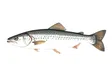
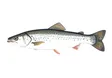
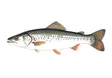
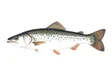
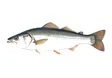
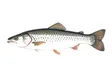
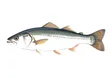
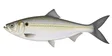
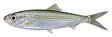
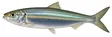
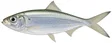
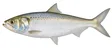
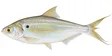
Herklotsichthys quadrimaculatus is silvery, blue-green dorsally and silver on the sides and belly (Randall 2003). There are narrow wing-shaped scales beneath normal scales between the head and dorsal fin which distinguish this species from similar looking clupeids (Baldwin 1984). There are a pair of gold spots, one above the other, behind the upper edge of the operculum (Myers 1989).
Native range
Indo-Pacific from South Africa and the Red Sea to southern Japan and the Ogasawara Islands, northern Australia and Samoa (Mundy 2005).
Habitat and ecology
Herklotsichthys quadrimaculatus form dense schools near mangroves and above sandy shallows of coastal lagoons during the day and move to deeper water, 1-10 km offshore, at night to feed (Williams and Clarke 1983, Myers 1989, Randall 2003). The majority of their diet is crustacean zooplankton and larval fish (Milton et al. 1994). Reproduction probably occurs year-round, but the primary spawning season in Hawaii is May-July (Williams and Clarke 1983). This is an annual species that grows rapidly and matures at an early age, 5-6 months (Williams and Clarke 1983).
Introduction history
According to Randall (1987), this species was likely brought on-board a National Marine Fisheries Service vessel while exploring the Marshall Islands to use as a bait for tuna fishing on the return trip to Hawaii. Presumably, the remaining fish were dumped into Kewalo Basin, Oahu, when the ship returned to port.
Ecological impacts
Ironically, the introduction of this species seems to be much more successful than the carefully planned introduction of the Marquesan sardine (Sardinella marquesensis) to the Hawaiian islands. According to Randall (1987), fishermen blame proliferation of the goldspot herring for reduced stocks of native baitfishes and silversides.