False Herring

Harengula clupeola

Clupeidae · saltwater and brackish water fish

2 minute read · Species guide

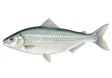
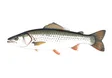
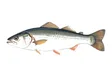
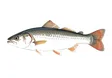
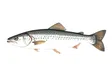
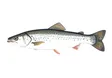
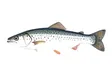
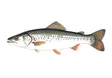
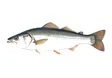
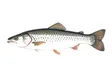
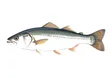
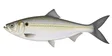
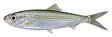
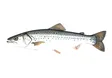
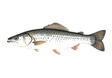
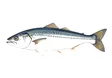
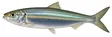
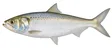
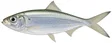
False Herring field guide illustration

About False Herring

Harenngula clupeola, the false herring, or false pilchard', is a species of marine ray-finned fish belonging to the family Dorosomatidae, the gizzard shads and sardinellas. The false herring is found in the Western Atlantic Ocean from eastern Florida and the Bahamas through the Gulf of Mexico south to Santa Catarina in Brazil.

Taxonomy

Harengula clupeola was first formally described as Clupea clupeola in 1829 by the French zoologist Georges Cuvier with its type locality given as Martinique. In 1847 Achille Valenciennes described Harengua latulus, the first use of the genus name Harengula and in 1861 Theodore Gill designated H. latulus as the type species of the genus Harengula. H. latulus is now considered to be a junior synonym of Clupea clupeola. The genus Harengula is classified within the family Dorosomatidae which belongs to the suborder Clupeoidei in the order Clupeiformes.

Description

Harengula clupeola has a slender body with a weakly curved ventral profile. The dorsal fin is supported by between 15 and 21 soft rays while the anal fin contains between 12 and 23 soft rays. There is a wide tooth plate on the tongue and another behind it, these are between 3 and 5 times as wide as their total length. The rear toothplate has a clear bulge at its front. It scales have a rather strong attachment and are not easily shed.It is a silvery fish with a dark greenish back and an indistinct yellow or light orange spot on the margin of the operculum. There is no dark tip to the dorsal fin. This species has a maximum published total length of 22.5 cm (8.9 in).

Distribution and habitat

Harengula clupeola is found in the Western Atlantic Ocean where it occurs from eastern Florida and the Bahamas through the Gulf of Mexico, the Caribbean Sea, south to Santa Catarina in Brazil. This is a coastal, pelagic species found in estuaries and lagoons in marine and brackish waters.

Biology

Harengula clupeola is a pelagic, schooling fish. It is a nocturnal predator feeding on pteropods, polychaetes, fish eggs, and zooplankton, particularly copepods. It forms schools to spawn and spawns a number of times per season.

Additional field notes

False herring form coastal schools across marine and brackish habitats.

Sources: Harengula clupeola species summary

Close-up identification

FishBase describes firmly attached scales that are not easily shed, a dorsal-fin tip without dark pigment, and a faint yellow or orange patch at the edge of the gill cover. Smaller individuals often school along sandy beaches. The species also uses estuaries and lagoons and tolerates low salinities.

Sources: Harengula clupeola species summary

Guide sources

Research reviewed 2026-10-19.

Article text: Wikipedia contributors, Harengula clupeola (source revision). Licensed under CC BY-SA 4.0. Retrieved 2026-10-12.
Range

Where it lives

Share of 71 GBIF observation records with a state location, across 3 states.
0%
62%
Share of 71 GBIF observation records with a state location, across 3 states.

Share of records by state

Habitat

Water and movement

Water
WoRMS records this species in brackish water and the sea.

Classification

Taxonomy

Kingdom
Animalia
Phylum
Chordata
Superclass
Actinopterygii
Class
Teleostei
Order
Clupeiformes
Family
Clupeidae
Genus
Harengula
Species
Harengula clupeola
ITIS TSN
161753
WoRMS AphiaID
277549
GBIF key
2412951
Outside the US
ITIS also files it in Caribbean Territories, Mexico.

Common questions about False Herring

What is the scientific name of False Herring?
The scientific name is Harengula clupeola, in the family Clupeidae. Classification follows ITIS.
Does False Herring live in fresh water or salt water?
WoRMS records this species in brackish water and the sea.
Where has False Herring been recorded in the United States?
GBIF has observations in 3 states, with the most records in Florida, Texas, Louisiana. The map shows observation records, which do not establish the complete natural range.

Closest relatives

Other Harengula species

Same family

More Clupeidae

Alabama Shad13 states
Alosa alabamaeClupeidaeNativeFreshSaltBrackish
Alewife29 states
Alosa pseudoharengusClupeidaeNative and introducedFreshSaltBrackish
American Gizzard Shad41 states
Dorosoma cepedianumClupeidaeNative and introducedFreshSaltBrackish
American Shad25 states
Alosa sapidissimaClupeidaeNative and introducedFreshSaltBrackish
Atlantic Herring17 states
Clupea harengusClupeidaeNativeSaltBrackish
Atlantic Menhaden19 states
Brevoortia tyrannusClupeidaeNativeSaltBrackish
Atlantic Red Herring15 states
Etrumeus teresClupeidaeNativeSalt
Atlantic Thread Herring13 states
Opisthonema oglinumClupeidaeNativeSalt
Blueback Herring21 states
Alosa aestivalisClupeidaeNative and introducedFreshSaltBrackish
Bluestripe Herring2 states
Herklotsichthys quadrimaculatusClupeidaeIntroducedFreshSaltBrackish
Dwarf Herring2 states
Jenkinsia lamprotaeniaClupeidaeNativeSalt
Finescale Menhaden4 states
Brevoortia gunteriClupeidaeNativeSaltBrackish
Florida Round Herring1 states
Jenkinsia stoliferaClupeidaeNativeSalt
Gulf Menhaden8 states
Brevoortia patronusClupeidaeNativeSalt
Hickory Shad15 states
Alosa mediocrisClupeidaeNativeFreshSaltBrackish
Marquesan Sardinella1 states
Sardinella marquesensisClupeidaeIntroducedSalt
Middling Thread Herring1 states
Opisthonema medirastreClupeidaeNativeSalt
Pacific Herring4 states
Clupea pallasiiClupeidaeNativeFreshSaltBrackish
Pacific Sardine5 states
Sardinops sagaxClupeidaeNativeSalt
Redear Herring5 states
Harengula humeralisClupeidaeNativeSalt
Round Sardinella12 states
Sardinella auritaClupeidaeNativeSaltBrackish
Scaled Sardine10 states
Harengula jaguanaClupeidaeNativeSaltBrackish
Skipjack Shad24 states
Alosa chrysochlorisClupeidaeNative and introducedFreshSaltBrackish
Threadfin Shad30 states
Dorosoma petenenseClupeidaeNative and introducedFreshSaltBrackish

All 26 species in Clupeidae