Pacific Herring

Clupea pallasii

Clupeidae · freshwater and saltwater and brackish water fish

18 minute read · Species guide

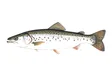
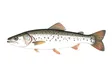
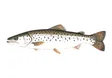
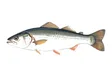
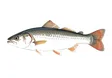
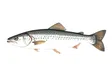
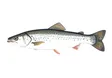
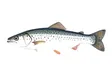
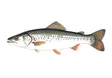
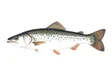
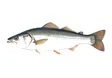
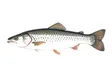
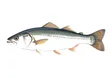
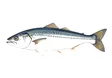
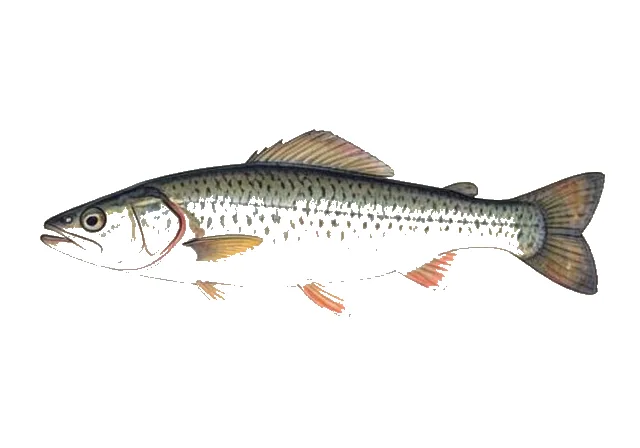
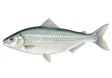
Pacific Herring field guide illustration

About Pacific Herring

The Pacific herring (Clupea pallasii) is a species of the herring family associated with the Pacific Ocean environment of North America and northeast Asia. It is a silvery fish with unspined fins and a deeply forked caudal fin. The distribution is widely along the California coast from Baja California north to Alaska and the Bering Sea; in Asia, the distribution is south to Japan, Korea, and China. Clupea pallasii is considered a keystone species because of its very high productivity and interactions with many predators and prey. Pacific herring spawn in variable seasons, but often in the early part of the year in intertidal and sub-tidal environments, commonly on eelgrass, seaweed or other submerged vegetation. They do not die after spawning and can breed in successive years. According to government sources, the Pacific herring fishery collapsed in the year 1993 and is slowly recovering to commercial viability in several North American stock areas. The species is named for Peter Simon Pallas, a noted German naturalist and explorer.

Subspecies

In the late 1900s, two subspecies were proposed based on genetic and morphologic studies: C. p marisalbi from the White Sea and C. p. suworowi from the eastern Barents and Kara Seas. However, later mtDNA studies showed similar genetic variation even within the subspecies groups. As of July 2026, whether or not genetic variation is enough to justify a subspecies split is still under debate.

Morphology

Pacific herring have a bluish-green back and silver-white sides and bellies; they are otherwise unmarked. The silvery color derives from guanine crystals embedded in their laterals, leading to an effective camouflage phenomenon. There is a single dorsal fin located mid-body and a deeply forked tail-fin. Their bodies are compressed laterally, and ventral scales protrude in a somewhat serrated fashion. Unlike other genus members, they have no scales on heads or gills; moreover, their scales are large and easy to extract. This species of fish may attain a length of 45 centimetres (18 in) in exceptional cases and weigh up to 550 grams (19 oz), but a typical adult size is closer to 33 centimetres (13 in). The fish interior is quite bony with oily flesh.

This species has no teeth on the jawline, but some are exhibited on the vomer. Pacific herring have an unusual retinal morphology that allows filter feeding in extremely dim lighting environments. This species is capable of rapid vertical motion, due to the existence of a complex nerve receptor system design that connects to the gas bladder.

Life cycle

Pacific herring prefer spawning locations in sheltered bays and estuaries. Along the American Pacific Coast, some of the principal areas are San Francisco Bay, Richardson Bay, Tomales Bay and Humboldt Bay. Adult males and females make their way from the open ocean to bays and coves around November or December, although in the far north of the range, these dates may be somewhat later. Conditions that trigger spawning are not altogether clear, but after spending weeks congregating in the deeper channels, both males and females will begin to enter shallower inter-tidal or sub-tidal waters. Submerged vegetation, especially eelgrass, is a preferred substrate for oviposition. A single female may lay as many as 20,000 eggs in one spawn following ventral contact with submerged substrates. However, the juvenile survival rate is only about one resultant adult per ten thousand eggs, due to high predation by numerous other species.

The precise staging of spawning is not understood, although some researchers suggest the male initiates the process by release of milt, which has a pheromone that stimulates the female to begin oviposition. The behavior seems to be collective so that an entire school may spawn in the period of a few hours, producing an egg density of up to 6,000,000 eggs per square meter. The fertilized spherical eggs, measuring 1.2 to 1.5 millimeters in diameter, incubate for approximately ten days in estuarine waters that are about 10 degrees Celsius. Eggs and juveniles are subject to heavy predation.

Fisheries

Pacific herring fisheries (fishing grounds) had been sustainably exploited by indigenous people for millennia, not only on the Pacific Coasts of North America, but in Japan and the Russian Far East. In all these cases, industrial fishing for herring oil and fertilizer has encroached or seized these fishing areas, leading to collapses in the fish stock.

The Ainu of Ezo (now Hokkaido) caught herring using basic dip nets (hand nets), but Japanese fishermen during the late Edo Period into Meiji Era began to operate increasingly large-scaled capture of herring in these grounds, first using gillnets and later "pound nets"(or traps). Intensive fishing resulted in the so-called"Million-Ton Era" of the late nineteenth century onward. Herring fishery near Hokkaido collapsed in the late 1950s.

Much like Japan, commercial herring fisheries in Alaska, US, and British Columbia underwent the phase of § Reduction fishery (for fertilizer and oil), and when Japanese herring fleets suffered scarcity in the late 1950s, North American fisheries began to cater to the Japanese market especially for the herring roe (§ Roe fishery; § Spawn on kelp fishery), known in Japan as § kazunoko. Alaska Department of Fish and Game has managed Alaskan resources and issues quota has released their biomass estimate figures since 1975, but the figures remain highly volatile.

Herring has long been fished by First Nations on the Central Coast of British Columbia, and elsewhere. In 1997 the Supreme Court of Canada rendered its decision in the Gladstone decision (R. v. Gladstone)- recognizing a pre-existing aboriginal right to fish herring and gather herring eggs on their traditional territory, including for commercial purposes, to the Heiltsuk Nation.

Due to overfishing, the total North American Pacific herring fishery collapsed in 1993 and is slowly recovering with active management by North American resource managers. In various sub-areas, the Pacific herring fishery collapsed at slightly differing times; for example, the Pacific herring fishery in Richardson Bay collapsed in 1983. The species has been re-appearing in harvestable numbers in a number of North American fisheries including San Francisco Bay, Richardson Bay, Tomales Bay, Half Moon Bay, Humboldt Bay all in California, and Sitka Sound, Alaska. In other areas, such as Auke Bay, Alaska, which in the late 1970s was the largest harvestable stock of herring in Alaska, the species remains severely depleted.

Pacific herring are currently harvested commercially for bait and for roe. Past commercial uses included fish oil and fish meal.

Reduction fishery

The Alaskan herring industry began in 1880s as "reduction"plants which processed herrings into fish meal and oil, with the meal utilized mostly as animal fodder or fertilizer, and the oil mostly for soap. Since it began the reduction in 1882 until around 1917, the business was a practical monopoly of the North West Trading Company which established its processing plant at Killisnoo, Alaska. The use of"Norwegian method" of catching using oar-propelled seine boats did continue until 1923 here, but was being supplanted by the purse seine (purse seiner [ de ]) introduced into herring fishery after around 1900..

Concerns had developed regarding this practice as early as the 1900s, regarding localized fish stock depletion, adverse food chain effects on commercially valuable fish types that prey on herring, and the ethics of taking fish for purposes other than human food or bait. However, the industry persisted in Alaska until it ceased operations in 1966.

In Canada, the earliest recorded catches were for the purpose of producing dry-salted herring, starting around 1904, peaking around the 1920s, but declining to initial catch tonnages by 1934 due to sagging demand. Reduction (fertilizer) fishing operated in Canada during the years 1935–1967. The end was due to the collapse of the fish population.

Roe fishery

Just as the reduction industry was phasing out in Alaska in the 1960s, there emerged an alternate industry to exploit herring in another way, i.e., harvesting only the "roe sacs" ("egg skein") inside the females, to meet the Japanese demand for "kazunoko". A similar shift took from the defunct reduction fishing took place in Canada: after the herring population recovered somewhat, a Canadian roe fishery industry sprang up in 1971 to cater to the Japanese market.).

A commercially viable product demands the eggs to be "ripe", or swollen to the right size, which only occurs within a few days of spawning, and there is a narrow window for the catch. Accordingly, the season is very short, a matter of days: it lasted all of 90 minutes in the April 1975 season.

These egg skeins need to retain perfection of shape to fetch highest value, and to that end, the fish are frozen or brine-frozen then rethawed in freshwater before extracting the egg skeins.

Spawn on kelp fishery

Shoals of herring during the reproductive season lay clusters of eggs on kelp and other seaweed, and the seasonal collection has been a time-honored traditional practice among the natives of Pacific Coast of Alaska and Canada, witnessed and recorded in the 18th and 19th centuries, and has been traded and a trade item. The natives traditionally foraged wild-grown eggs on various seaweed, or laid on introduced hemlock branches,.

The Japanese market for kazunoko kombu (数の子コンブ; 'herring roe kelp') or (子持ちコンブ; 'child holding kelp') is best served, so it has been claimed, by preferably using products laid on giant kelp (Macrocystis pyrifera), which only grew in Southeast Alaska or down in Canada.

commercial harvest of wild-caught roe began in that region at Craig/ Craig / Klawock, in 1959 Export to Japan began 1962. So that in wild foraging surged at Craig/Klawock 1963, burgeoned in Sitka in 1964, and at a third site at Hydaburg in 1966 were harvesting in southeast Alaska: overfilling their 250 tons quota in 1966. The season had to be drastically shortened or canceled due to depletion from the following year.

Transplanting and impounding kelp

In 1960 and 1961 "open-pounds", stocked with kelp to lure herring egg-laying, were operated in the town of Craig, on Prince of Wales Island, probably for the first time in Alaska. But afterwards, intensified harvest led to closure of season, and it was not until 1992 that harvest of semi-farmed eggs on kelp in closed-pounds resumed.

The shortage of spawn led to seeking new harvesting grounds in areas where giant kelp do not naturally grow, and demand and harvest developed for eggs on alternate seaweeds, such as Desmarestia sp. or "hair seaweed". Amidst the 1968 shortage, commercial collection of spawn of Fucus began, in Bristol Bay, east of Togiak. And in 1959 spawn from various algae began to be commercially collect from Prince William Sound, peaking in 1975, ending with the depletion of the "kelp".

During the shortage, an enterprising operator experimented with transplanting "unused" kelp from remoter areas into kelp-depleted spawning grounds, or into eelgrass territory. He sometimes attached kelp cut elsewhere to barges he owned.

In Canada, "impoundments" began to be used, whereby floating enclosures at sea are stocked with kelp, mature herring are introduced, and the egg-deposited kelp to be later harvest. Canada issued their first licenses in 1975, initially about half to indigenous operators, in Northern British Columbia. The enclosure ("closed pounds") technique was subsequently copied by Alaskans. The "impoundments"or"closed ponds"consisted of a square (wooden) frame holding a pocket of"suspended webbing" as enclosure space. Inside, rows of kelp are hung on strings.

Decline

Alaska's principal areas for roe fishery, according to the 2022 season allotted tonnage were: Sitka Sound (late March) 45,164 short tons (90,000,000 lb), Kodiak Island (April 1) 8,075 short tons (16,000,000 lb), and Togiak (May) 65,107 short tons (130,000,000 lb). However the allowed quotas were hardly expected to be filled, given the drastic downturn in Japanese demand. During the heydays of the 1990s, the pre-spawn herring commanded $1000 per ton, yielding a gross $60 million to fisherman, but by 2020 the tally fell to a $5 million figure. In 2023, the last roe processing plant in Togiak indicated it would not be purchasing herring, and the season was cancelled.

Conservation

On April 2, 2007, the Juneau group of the Sierra Club submitted a petition to list Pacific herring in the Lynn Canal, Alaska, area as a threatened or endangered distinct population segment under the criteria of the U.S. Endangered Species Act (ESA). On April 11, 2008, that petition was denied because the Lynn Canal population was not found to qualify as a distinct population segment. However, the National Marine Fisheries Service did announce would be initiating a status review for a wider Southeast Alaska distinct population segment of Pacific herring that includes the Lynn Canal population. The Southeast Alaska DPS of Pacific herring extends from Dixon Entrance northward to Cape Fairweather and Icy Point and includes all Pacific herring stocks in Southeast Alaska.

On February 5, 2018, researchers at Western Washington University began researching causes for the decline in Pacific herring populations in the Puget Sound; a prominent speculated reason is the loss of eelgrass, an important spawning substrate for the herring.

Kazunoko

The herring egg roe or "egg skein", called kazunoko had traditionally commanded a good price in Japanese markets, and the herring roe fishery and processing industry (especially in Alaska), geared towards export to that country, has been described above under § Roe fishery.

As for the culinary aspects, the kazunoko merchandized in Japan primarily fall into either hoshi kazunoko (干し数の子; 'dried kazunko') or shio kazunoko (塩数の子; 'dried kazunko'). There is also a lower-grade substitute called shio kazunoko (味付け数の子; 'dried kazunko'), made from Atlantic herring roe (which is considered a softer or "less crunchy" in texture).

The roe is eaten mostly as the New Year's fare, called osechi, consisting of an assortment of symbolically propitious foods, with herring representing fertility (production of many children).

Article text: Wikipedia contributors, Pacific herring (source revision). Licensed under CC BY-SA 4.0. Retrieved 2026-10-11.
NOAA Fisheries

Life history and status

Length
Up to 10 inches (Northeastern Pacific)
Weight
0.6 pounds (Northeastern Pacific)
Lifespan
Up to 20 years (Bering Sea)
NOAA management region
Alaska, West Coast

About the species

Pacific Herring is a coastal schooling species found on both the eastern and western sides of the Pacific Ocean. In the eastern North Pacific Ocean, Pacific Herring range from Beaufort Sea, Alaska, south to Baja California, Mexico.

Status

In February of 1999, we received a petition to designate Pacific Herring from Puget Sound, Washington, as a threatened or endangered species under the Endangered Species Act (ESA) . In 2001, we found that listing Puget Sound Herring as threatened or endangered was not warranted because the population did not constitute a species, subspecies, or distinct population segment (DPS) under the ESA. However, we further determined that Puget Sound Pacific Herring, including the Cherry Point population, belonged to a larger group of Pacific Herring termed the Georgia Basin Pacific Herring DPS, and that this DPS was neither at risk of extinction, nor likely to become so.

In May 2004, a group of environmental organizations petitioned NOAA Fisheries to list the Cherry Point Pacific Herring population under the ESA. This population is called Cherry Point herring because of its location in Puget Sound, Washington. Cherry Point Pacific Herring numbers have been in decline since 1973. In June 2005, we announced that listing the Cherry Point Pacific Herring population under the ESA was not warranted because the population did not constitute a species, subspecies, or DPS under the ESA.

In 2007, we received a petition to designate the Lynn Canal population of Pacific Herring as a threatened or endangered DPS under the ESA . In 2008, we found that listing Lynn Canal Pacific Herring population as threatened or endangered under the ESA was not warranted because the population did not constitute a species, subspecies, or DPS under the ESA. However, we initiated a status review for a larger Southeast Alaska DPS (Dixon Entrance northward to Cape Fairweather and Icy Point). This DPS included all Pacific Herring populations in Southeast Alaska, including the Lynn Canal population. In 2014, we determined that listing the Southeast Alaska DPS of Pacific Herring under the ESA was not warranted.

Biology

  • Pacific Herring typically form large schools from the water's surface to depths of 1,300 feet. In addition to schooling, they use countershading for protection from predators. They are dark blue to olive on their backs and silver on their sides and belly, which makes them hard to see from above and below.
  • Maximum size, age at maturity, and longevity vary throughout the coast. Pacific Herring in southern locations (e.g., California) exhibit small size, mature earlier, and die younger. In contrast, Pacific Herring in the north (e.g., Bering Sea) obtain a far larger size at a similar age, mature later, and live longer. In Puget Sound, adult spawners range from 2-15 years in age; however, most are between ages 3 and 7. In the far northern Beaufort Sea, Pacific Herring can live 14-16 years and 18-20 years in the Bering Sea. Maximum length is 10 inches (26 cm) in Puget Sound, British Columbia, and the Beaufort Sea; 13 inches (34 cm) in the Bering Sea; and 9.5 inches (24 cm) in the Gulf of Alaska.
  • Adult Pacific Herring migrate into estuaries to breed once per year, with timing varying by latitude. They do not feed from the start of this migration through spawning, a period of up to two weeks. Pacific Herring spawn along shorelines in intertidal and shallow subtidal zones. They deposit their eggs on kelp, eelgrass, and other available structures. After spawning, herring return to their summer feeding areas.
  • After hatching, Pacific Herring larvae remain in nearshore waters close to their spawning grounds to feed and grow in the protective cover of shallow water habitats. After two to three months, the larvae metamorphose into juveniles. During the summer of their first year, these juveniles form schools in shallow bays, inlets, and channels. These schools disappear in the fall and then move to deep water for the next two to three years.
  • Pacific Herring feed on phytoplankton and zooplankton in nutrient-rich waters associated with oceanic upwelling. Young feed mainly on crustaceans, but also eat decapod and mollusk larvae. Adults prey mainly on large crustaceans and small fishes. Although some mixing occurs, tagging studies show that Pacific Herring stick together, remaining in the same school for years.

Management

Sitka

Hoonah Sound

Seymour Canal

Hobart-Houghton

Tenakee Inlet

Ernest Sound

West Behm Canal

Craig

Revilla Channel (Kah Shakes/Cat Island)

Lynn Canal

California - Historical aspects and current management of commercial fisheries for Pacific Herring in California are detailed in the California Pacific Herring Fishery Management Plan . Up until 2009, commercial harvest of Pacific Herring was allowed in ocean waters off California; however, directed commercial harvest of Pacific Herring in marine waters was banned beginning January 1, 2010. Currently, bycatch of Pacific Herring still occurs in fisheries for other coastal pelagic species but no more than 10% of any landing by weight can be Pacific Herring. This bycatch may be sold as bait or as animal feed. Pacific Herring spawn in numerous sheltered inlets, sounds, bays, and estuaries from San Diego Bay to Crescent City Harbor in California. However, only San Francisco Bay, Tomales Bay, Humboldt Bay, and Crescent City have spawning stocks abundant enough to have supported fisheries. Currently, over 90% of landings originate from San Francisco Bay. Pacific Herring are currently harvested for bait, fresh fish, and primarily for their roe, in the form of pre-spawn egg sacs. The products of this sac roe fishery have been mainly marketed in Japan.

Oregon - Currently, commercial fishing for Pacific Herring is open all year in the marine waters of Oregon. Although Pacific Herring have been known to spawn in most coastal bays and estuaries in Oregon, they spawn regularly in Yaquina, Umpqua, and Coos bays, usually from February through early April. Bait fisheries for Pacific Herring are allowed in most bays and estuaries, but a state-managed limited-entry commercial Pacific Herring roe fishery is only allowed in Yaquina Bay, typically from January through April 15. Further details on Oregon's Pacific Herring fisheries are available in the 2019 ODFW Commercial Fisheries Regulations Synopsis .

Washington - Historical aspects and current management of commercial fisheries for Pacific Herring in Washington are detailed in the Forage Fish Management Plan and the latest Washington State Herring Stock Status Report . Commercial fisheries for Pacific Herring in Puget Sound, prior to 1920, were conducted on or near the spawning grounds. The fish were mostly exported as a kippered and dry-salted product to Asian markets. From 1920 to the 1950s, the commercial Pacific Herring fisheries supplied bait for use in large commercial halibut, shark, crab, and cod fisheries, as well as in recreational salmon fisheries during the 1940s and 1950s. A general-purpose Pacific Herring fishery occurred in northern Puget Sound from 1956 to 1983 and most of the catch was used for bait, food for zoo animals, or reduced to meal and oil. Pacific Herring sac-roe (1973–1980) and spawn-on-kelp (1990–1996) commercial fisheries mainly operated on Pacific Herring from the Cherry Point population. Both of these later fisheries were eventually closed due to continued decreases in stock abundance. Currently, no directed Pacific Herring fishery harvest is allowed in Washington's coastal waters. In recent years, only commercial fishing for sport bait has been allowed in inland waters of Puget Sound. The sport bait fishery occurs primarily in south and central Puget Sound and primarily exploits 1.5-year-old Pacific Herring that are at the size preferred by recreational salmon fishermen. There are two coastal Washington stocks, Willapa Bay and Grays Harbor, which spawn from February through March. A small commercial bait fishery has operated on the Grays Harbor stock.

The discreteness of the population segment in relation to the remainder of the species (or subspecies) to which it belongs.

The significance of the population segment to the remainder of the species (or subspecies) to which it belongs.

Similarity in age composition of Pacific Herring in the Strait of Georgia and Puget Sound supporting discreteness of Georgia Basin Pacific Herring.

Ecological uniqueness of the inshore waters of Puget Sound and the Strait of Georgia supporting the significance of Georgia Basin Pacific Herring to the taxon as a whole.

Cherry Point does not represent a unique or unusual ecological setting for Pacific Herring.

Loss of Cherry Point Pacific Herring would not result in a significant gap in the extensive range of Pacific Herring.

The Cherry Point stock does not exhibit "marked" genetic differentiation relative to other Pacific Herring populations.

Announcement of Listing Determination/Not Warranted

Status Review of Southeast Alaska Herring (PDF, 177 pages)

Summary of Peer Reviewer Comments and Response for the Status Review of Southeast Alaska Herring (PDF, 7 pages)

Status Review of Lynn Canal Pacific Herring (PDF, 155 pages)

June 2006 – Status Review of Cherry Point Pacific Herring

June 7, 2005 – Federal Register Notice

June 6, 2005 – News release

January 24, 2005 – Herring Status Review Summary (PDF, 33 pages)

August 10, 2004 – Federal Register notice

May 14, 2004 – Supplemental Petition to List Herring (PDF, 36 pages).

January 21, 2004 – Petition to List Herring January 2004 Petition to List Herring (PDF, 52 pages).

April 3, 2001 – Federal Register Notice (66 FR 17659)

March 2001 – Herring Status Review

June 21, 1999 – Federal Register Notice (64 FR 33037)

February 8, 1999 – Petition to list Pacific Herring and 17 other marine fish species in Puget Sound

Range

Where it lives

Share of 3,755 GBIF observation records with a state location, across 4 states.
0%
74.7%
Share of 3,755 GBIF observation records with a state location, across 4 states.

Habitat

Water and movement

Water
WoRMS records this species in fresh water, brackish water and the sea.

Classification

Taxonomy

Kingdom
Animalia
Phylum
Chordata
Superclass
Actinopterygii
Class
Teleostei
Order
Clupeiformes
Family
Clupeidae
Genus
Clupea
Species
Clupea pallasii
ITIS TSN
551209
WoRMS AphiaID
151159
GBIF key
4284072
Outside the US
ITIS also files it in Canada, Mexico.

Common questions about Pacific Herring

What is the scientific name of Pacific Herring?
The scientific name is Clupea pallasii, in the family Clupeidae. Classification follows ITIS.
Does Pacific Herring live in fresh water or salt water?
WoRMS records this species in fresh water, brackish water and the sea.
Where has Pacific Herring been recorded in the United States?
GBIF has observations in 4 states, with the most records in California, Washington, Alaska. The map shows observation records, which do not establish the complete natural range.
How long does Pacific Herring live?
NOAA Fisheries lists its lifespan as Up to 20 years (Bering Sea).
How big does Pacific Herring get?
NOAA Fisheries lists its length as Up to 10 inches (Northeastern Pacific) and its weight as 0.6 pounds (Northeastern Pacific).

Closest relatives

Other Clupea species

Same family

More Clupeidae

Alabama Shad13 states
Alosa alabamaeClupeidaeNativeFreshSaltBrackish
Alewife29 states
Alosa pseudoharengusClupeidaeNative and introducedFreshSaltBrackish
American Gizzard Shad41 states
Dorosoma cepedianumClupeidaeNative and introducedFreshSaltBrackish
American Shad25 states
Alosa sapidissimaClupeidaeNative and introducedFreshSaltBrackish
Atlantic Herring17 states
Clupea harengusClupeidaeNativeSaltBrackish
Atlantic Menhaden19 states
Brevoortia tyrannusClupeidaeNativeSaltBrackish
Atlantic Red Herring15 states
Etrumeus teresClupeidaeNativeSalt
Atlantic Thread Herring13 states
Opisthonema oglinumClupeidaeNativeSalt
Blueback Herring21 states
Alosa aestivalisClupeidaeNative and introducedFreshSaltBrackish
Bluestripe Herring2 states
Herklotsichthys quadrimaculatusClupeidaeIntroducedFreshSaltBrackish
Dwarf Herring2 states
Jenkinsia lamprotaeniaClupeidaeNativeSalt
False Herring3 states
Harengula clupeolaClupeidaeNativeSaltBrackish
Finescale Menhaden4 states
Brevoortia gunteriClupeidaeNativeSaltBrackish
Florida Round Herring1 states
Jenkinsia stoliferaClupeidaeNativeSalt
Gulf Menhaden8 states
Brevoortia patronusClupeidaeNativeSalt
Hickory Shad15 states
Alosa mediocrisClupeidaeNativeFreshSaltBrackish
Marquesan Sardinella1 states
Sardinella marquesensisClupeidaeIntroducedSalt
Middling Thread Herring1 states
Opisthonema medirastreClupeidaeNativeSalt
Pacific Sardine5 states
Sardinops sagaxClupeidaeNativeSalt
Redear Herring5 states
Harengula humeralisClupeidaeNativeSalt
Round Sardinella12 states
Sardinella auritaClupeidaeNativeSaltBrackish
Scaled Sardine10 states
Harengula jaguanaClupeidaeNativeSaltBrackish
Skipjack Shad24 states
Alosa chrysochlorisClupeidaeNative and introducedFreshSaltBrackish
Threadfin Shad30 states
Dorosoma petenenseClupeidaeNative and introducedFreshSaltBrackish

All 26 species in Clupeidae