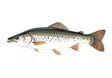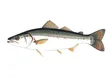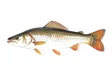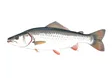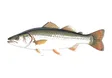
Silver Redhorse

Moxostoma anisurum

Catostomidae · freshwater water fish

6 minute read · Species guide

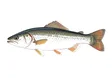
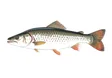
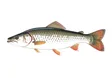
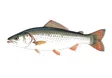
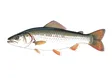
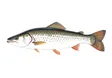
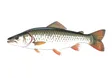
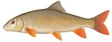
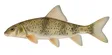
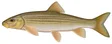
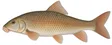
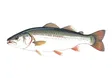
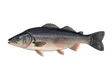
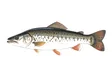
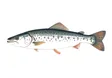
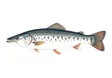
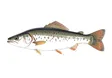
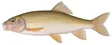
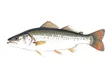
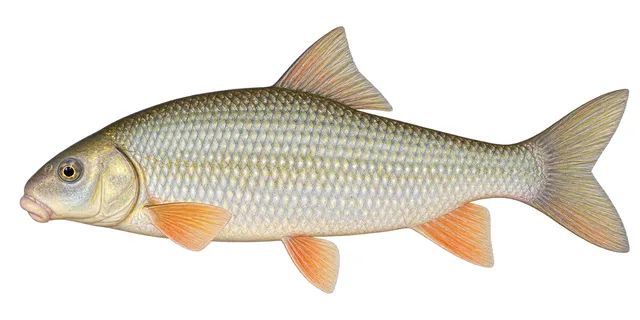
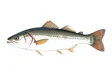
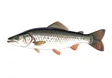
Silver Redhorse field guide illustration

About Silver Redhorse

The silver redhorse (Moxostoma anisurum: Moxostoma= mouth to suck; anisurum = unequal tail) is a species of freshwater fish endemic to Canada and the United States. It is the longest-lived redhorse known (a group of 25 extant species), with a maximum reported age of 41 years. Sometimes called redhorse or sucker for short, it is in the family Catostomidae with other suckers. The species is distributed from Quebec to Alberta and is also in the Mississippi River, St. Lawrence River, Ohio River, and the Great Lakes basins. The current world record is 6.75 kilograms (14 lb 14 oz), caught by Chris Stephenson on Pickwick Lake in Alabama, April 1995 and certified by National Freshwater Fishing Hall of Fame. This species is of growing interest to rod-and-line anglers. The long-lived and late-maturing silver redhorse is also a sportfish pursued by kill-and-dump bowfishing, a 21st century unregulated sport that produces tons of wanton waste, and thus management and conservation are in need of updating.

Morphology

The silver redhorse is silver on both sides and has a dark gray-brown back and a slate gray tail. The caudal fin is large and moderately forked. Each lobe of the fin is pointed and equal in size. On the silver sides there are 41–42 cycloid lateral line scales. The single dorsal fin does not have any dorsal spines, but instead contains 14–17 soft rays. Their dorsal fin is slightly convex (rounded outward) and is located approximately in the middle of the back. There is no adipose fin (unstructured fin found behind the rayed dorsal fin) present on the back of the fish. The mouth of the silver redhorse is in the inferior position, as it is a bottom feeder. The rear edge of the silver redhorse lips forms a deep "V". Because of extreme similarities, the silver red horse is commonly confused with the Black redhorse and the Golden redhorse. However, both of these redhorses have slightly concave dorsal fins (curves in toward body) with only 12–14 fin rays. Additionally the Silver red horse is more deep-bodied than the golden or black redhorse. It typically weights 2–5 pounds (0.91–2.27 kg) and measures 18–24 inches (46–61 cm) long, but it can reach up to 10 pounds (4.5 kg) and 30 in (760 mm).

Geographic distribution

The native range of the silver red horse is the Great Lakes and the St. Lawrence and Mississippi River basins. However, there have been instances in which the fish was found in Clayton lake and the New River Drainage in North Carolina. The silver redhorse is also widely distributed in eastern North America from Missouri to Quebec with most residing in the southeastern United States. It is typically found in lakes and in small to large rivers, where it often lives in undercut banks or protruding tree roots. They are also found in deep pools with little to no current and a sand substrate at the bottom of the pool useful for burying their eggs. They are a good indicator of water quality as they cannot tolerate murky water.

Diet

Due to its inferior mouth position, this fish is a bottom feeder. It feeds on mollusks, algae, detritus, immature insects, and other small invertebrates. Monogenea parasites have been found in the gills of the silver redhorse.

Life history

The silver redhorse generally spawns in the spring in or around April or May when the water temperatures reach around 53 °F (12 °C). They take advantage of the shallow landforms flowing channels, also known as riffles, and spawn at the top and the bottoms of the riffles at night. One study in Quebec, Canada found that the silver redhorse is abundant in what they call V-males, as they outnumber the females considerably. For every female on the spawning bed, there is a minimum of 2 males that are used to successfully reproduce. The common methodology includes two males pressing a female between them, causing a vibration to occur while the egg and the sperm are released. The females bury their eggs in the gravel and offer no further parental care. Reproduction maturity for the species happens late in its life usually around four to five years of age. The species thrives in deep bottomed lakes and river systems which promote optimal nest succession year in and year out. The lifespan for the species is several decades, with 41 years being the maximum age reported.

Relationship with humans

The species is quite abundant in southeastern rivers including the Mississippi, Missouri, and Ohio river systems. The silver redhorse is increasingly recreationally fished for throughout most of the areas in which it inhabits. This includes bowfishing, a sport which disposes whole-bodied native fish by the ton, including silver redhorse. In Minnesota, 21st century tournament bowfishing of redhorse exceeds the commercial harvest level by more than 200 times. Currently, this long-lived, late-maturing, and variably-reproducing species is of conservation concern and urgently requires new management. The silver redhorse is listed as threatened in the Strawberry River basin in Arkansas. The IGFA all-tackle record is tied at 5.19 kg (11 lb 7 oz), with one being caught from Plum Creek in Wisconsin in 1985, and the other from the Chagrin River, Ohio on 19 March 2024.

Article text: Wikipedia contributors, Silver redhorse (source revision). Licensed under CC BY-SA 4.0. Retrieved 2026-10-11.
Diet and feeding

The FishTraits compilation records these diet categories for this species: aquatic or other vascular plants; detritus or unidentified plant material; invertebrates or larval fish; larger animal prey (a source category covering fish, crayfish, crabs, or frogs). These are broad categories, not a claim that every individual consumes every example in a category.

Reported feeding positions include bottom feeding and surface or water-column feeding. The compilation combines published observations; diets can vary with age, locality, and available food.

Habitat preferences

Reported habitat associations include medium to large rivers, streams and small rivers, still-water habitats.

The source records associations with clay or silt, sand, gravel, cobble, boulders, bedrock. An association indicates reported use, rather than an exclusive requirement.

Reproduction and parental care

The compilation reports a representative maturity age of 6 years. Its maturity field summarizes mean, median, or modal estimates, usually for females; male estimates can be used when female data are unavailable. It is not a fixed age at which every fish first breeds.

Recorded spawning months are Mar, Apr for the source’s reporting region (NC). This is a regional calendar, not a range-wide schedule.

The reproductive-guild classification includes spawning on open substrates without guarding the brood.

Size and recorded longevity

FishTraits reports a maximum total length of 74 centimetres. Some entries use an estimated asymptotic length; this value should not be treated as a certified record catch.

Recorded longevity in the compilation is 12 years. Wild observations were preferred, but captive records were accepted where wild records were unavailable, and unspecified records were assumed wild. The value is not a guaranteed wild lifespan or an aquarium life expectancy.

Spawning movements

The compilation records significant spawning-related movement. Its combined migration flag covers movements within fresh water as well as between rivers and the sea; this flag alone does not establish which migration pattern applies.

Native range

Great Lakes, St. Lawrence, and Mississippi River basins (Page and Burr 2011).

Habitat and ecology

This species is a benthic forager, consuming insect larvae, crustaceans, mollusks, algae, and detritus (Jenkins and Burkhead 1994).

Record fish

State records in 4 states

  • Alabama14 lbs 14 oz

    Wilson Dam tailwater · 4/24/1995 · Chris Stephenson, B'ham

  • Wisconsin11 lbs. 7 oz.

    Plum Creek · Vilas · 05/29/1985

  • Minnesota10 lb 6 oz

    Rainy River · Koochiching · 4/28/2018

  • Arkansas6 lbs., 9 oz.

    Eleven Point River · 12/12/2020 · Russell “Rusty” Gibson, Marmaduke, AR · rod and reel

Each figure is the state agency’s own certified record. The site holds record tables for 11 states so far, so a state missing here has not been read yet. It is not a state where this fish holds no record.

Range

Where it lives

Share of 3,022 GBIF observation records with a state location, across 22 states. The orange dots are USGS stream-survey sites where this species was caught.
0%
21.7%
Share of 3,022 GBIF observation records with a state location, across 22 states. The orange dots are USGS stream-survey sites where this species was caught.

A blank area on the dot layer usually means nobody sampled there, not that the fish is absent. Turn on “every survey site” to see where the survey looked.

The USGS stream survey caught it at 1,186 of its sites, in 20 states. That survey and the GBIF records are two different counts of two different things, so the site keeps them apart.

Habitat

Water and movement

Water
WoRMS records this species in fresh water.
USGS NAS habitat
Freshwater
US status
Native transplant — native to part of the United States, moved to other waters inside it.
Migration
Migratory
Pattern

Classification

Taxonomy

Kingdom
Animalia
Phylum
Chordata
Superclass
Actinopterygii
Class
Teleostei
Order
Cypriniformes
Genus
Moxostoma
Species
Moxostoma anisurum
ITIS TSN
163933
WoRMS AphiaID
1022837
GBIF key
2358964
Outside the US
ITIS also files it in Canada.

Common questions about Silver Redhorse

What is the scientific name of Silver Redhorse?
The scientific name is Moxostoma anisurum, in the family Catostomidae. Classification follows ITIS.
Does Silver Redhorse live in fresh water or salt water?
WoRMS records this species in fresh water.
Where has Silver Redhorse been recorded in the United States?
GBIF has observations in 22 states, with the most records in Minnesota, Pennsylvania, Illinois. The map shows observation records, which do not establish the complete natural range.

Closest relatives

Other Moxostoma species

Same family

More Catostomidae

Alabama Hog Sucker6 states
Hypentelium etowanumCatostomidaeNative and introducedFresh
Bigeye Jumprock3 states
Moxostoma ariommumCatostomidaeNativeFresh
Bigmouth Buffalo26 states
Ictiobus cyprinellusCatostomidaeNative and introducedFresh
Black Buffalo26 states
Ictiobus nigerCatostomidaeNative and introducedFresh
Black Redhorse
Moxostoma duquesneiCatostomidaeNativeFresh
Blackfin Sucker2 states
Thoburnia atripinnisCatostomidaeNativeFresh
Blacktail Redhorse9 states
Moxostoma poecilurumCatostomidaeNativeFresh
Blacktip Jumprock7 states
Moxostoma cervinumCatostomidaeNative and introducedFresh
Blue Sucker22 states
Cycleptus elongatusCatostomidaeNativeFresh
Bluehead Sucker7 states
Pantosteus discobolusCatostomidaeNativeFresh
Bridgelip Sucker5 states
Catostomus columbianusCatostomidaeNativeFresh
Creek Chubsucker31 states
Erimyzon oblongusCatostomidaeNativeFresh
Cui-ui2 states
Chasmistes cujusCatostomidaeNativeFresh
Desert Sucker9 states
Pantosteus clarkiiCatostomidaeNativeFresh
Flannelmouth Sucker8 states
Catostomus latipinnisCatostomidaeNativeFresh
Golden Redhorse29 states
Moxostoma erythrurumCatostomidaeNative and introducedFresh
Gray Redhorse2 states
Moxostoma congestumCatostomidaeNative and introducedFresh
Greater Jumprock4 states
Moxostoma lachneriCatostomidaeNative and introducedFresh
Greater Redhorse11 states
Moxostoma valenciennesiCatostomidaeNativeFresh
Green Sucker4 states
Pantosteus virescensCatostomidaeNativeFresh
Highfin Carpsucker23 states
Carpiodes veliferCatostomidaeNative and introducedFresh
June Sucker1 states
Chasmistes liorusCatostomidaeNativeFresh
Klamath Largescale Sucker2 states
Catostomus snyderiCatostomidaeNativeFresh
Klamath Smallscale Sucker2 states
Catostomus rimiculusCatostomidaeNativeFresh

All 67 species in Catostomidae