Lake Chubsucker

Erimyzon sucetta

Catostomidae · freshwater water fish

6 minute read · Species guide

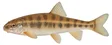
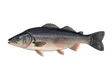
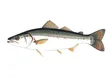
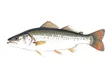
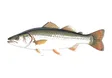
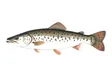
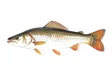
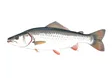
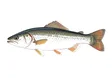
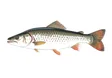
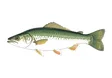
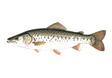
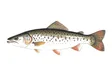
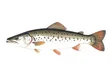
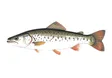
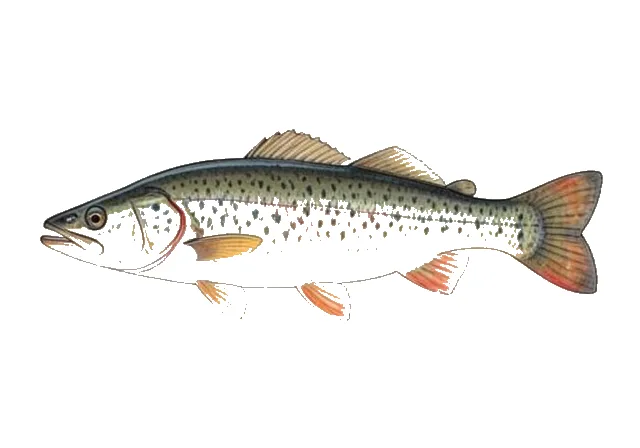
Lake Chubsucker field guide illustration

About Lake Chubsucker

The lake chubsucker (Erimyzon sucetta) is a species of freshwater fish endemic to North America, found in the Great Lakes and the Mississippi River basin, as far north as Ontario, Canada, extending south to the Gulf of Mexico. It is mainly found in lakes, ponds, and swamps, rarely in streams.

The fish is an intermediate level consumer that feeds on benthic detritus, specifically on microcrustacea and midge larvae. Its average length is 25.8 cm. E. sucetta reportedly scatters its eggs randomly over aquatic vegetation and submerged grass in ponds or over gravelly areas cleared by males.

While not in acute danger, the chubsucker faces habitat disturbance due to siltation caused by agricultural practices as well as coal ash spills. Its range has declined in Missouri, Arkansas, Ohio, and possibly Tennessee.

Geographic distribution

The lake chubsucker is found in North America in the Great Lakes and Mississippi River basin lowlands. Its range extends from southern Ontario to the Gulf of Mexico, west to Wisconsin and Texas, and east to Southern Virginia and South Florida. In the US it has been extirpated from areas of Southern Illinois, Iowa, and Pennsylvania. It is also declining in abundance in Missouri, Arkansas, Tennessee, and Ohio.

This decline in abundance is largely due to habitat modification or destruction, such as changing the level of turbidity of the water, changing sedimentation levels, introducing exotic, invasive species, altering nutrient levels, and introducing toxins. In some of these areas, it is possible that the fish is still around in small numbers, but it is very difficult to collect and therefore hard to establish extirpation conclusively.

In Canada the fish is thought to have been extirpated from Jeanette's Creek and areas of Big Creek and Tea Creek.

Ecology

The lake chubsucker is found in warmer waters, approximately 28°- 34 °C. Other specifications include clear, still water, with low turbidity. A high level of vegetative cover is also often present, often more than 70% coverage. Wetlands, ponds, and floodplain lakes are areas where the chubsucker is typically found. It is a benthic fish, preferring shallow, freshwater. They are found where the lakes have sand or silt mixed with organic debris.

The chubsucker is an omnivore, eating both vegetation and invertebrates, such as small crustaceans, chironomid larvae, and algae. Vegetation can make up to 70% of its diet. When chubsuckers are small (83–103mm) filamentous algae had a 100% occurrence, cladocerans and chironomid larvae had a 25%, and copepods a 13% occurrence. However, when they are larger, (127–152mm) copepods becomes more important with a 50% occurrence, followed by algae with a 25% occurrence, and cladocera, ostracods, and chironomid larvae all had 13% occurrences.

The fish's predators include largemouth bass (Micropterus salmoides), and other basses. Humans have the power to interfere with the chubsucker, particularly when it comes to coal combustion. Studies performed by Snodgrass et al. showed that although mortality rates did not necessarily significantly increase in the presence of coal combustion by-products, altered swimming performance, as well as increased toxin levels given less food availability, were both side effects of living in contaminated waters. Other activities, such as building dams, which dramatically changes the siltation levels of the chubsucker habitat, also negatively affect the abundance of the fish.

Life history

This fish breeds in late March and continues until early July, and in individual areas the breeding period lasts about two weeks. The eggs are spread either over vegetation or in gravelly areas, which have been previously cleared by the male. The number of eggs varies between 3000 and 20,000. Its eggs hatch after one week and the juveniles become sexually mature at three, while its lifespan generally ranges five to six years.

Juveniles and first-time breeders are most sensitive to changes in the environment, as are often caused by humans, such as diverting rivers, and thereby changing turbidity of the water. Increased siltation also hit these two stages the hardest as such activity changes the substrates on which the fish breeds, as well as where the small juveniles are trying to survive.

Management

This fish species is not currently listed as threatened or endangered, and the populations in the southern United States are thought to be secure. Because of this, it is somewhat difficult to find management plans for this species. There has been research done to determine its usefulness in improving the growth of largemouth bass, a popular sporting fish, though it does not seem to be able to sustain the predator by itself. Since the fish is secure throughout 50% of its range, states like Alabama have listed it as a fish species of lowest concern. There are some areas where the chubsucker has been extirpated, or is at least thought to be, such as in New York. According to their website, New York management includes trying to find extant populations if they are still present.

The most important cause of the fish's decline in abundance would appear to be siltation due to human practices of agriculture. There do not appear to be any refuges or conservation easements specific to the lake chubsucker as it is not considered endangered. In Canada some research was conducted to determine how the lake chubsucker was faring, since it has been extirpated in several areas. With no further harm and no recovery efforts, it was suggested that the extant lake chubsucker populations would reach minimum viable population standards in about 12 years.

Populations of E. sucetta in Louisiana, Mississippi, Alabama, and Georgia, are listed as secure; Michigan's is ranked as apparently secure, Texas, Oklahoma, Tennessee, North Carolina, Indiana, and Wisconsin are listed as vulnerable, and the populations of Arkansas, Missouri, Illinois, Kentucky, Ohio, Virginia, and Ontario are imperiled. The fish is presumed extirpated in Iowa and Pennsylvania.

Article text: Wikipedia contributors, Lake chubsucker (source revision). Licensed under CC BY-SA 4.0. Retrieved 2026-10-11.
Diet and feeding

The FishTraits compilation records these diet categories for this species: algae or phytoplankton; aquatic or other vascular plants; detritus or unidentified plant material; invertebrates or larval fish. These are broad categories, not a claim that every individual consumes every example in a category.

Reported feeding positions include bottom feeding. The compilation combines published observations; diets can vary with age, locality, and available food.

Habitat preferences

Reported habitat associations include streams and small rivers, creeks, still-water habitats, springs or subterranean waters.

The source records associations with muck, clay or silt, sand, gravel, vegetation. An association indicates reported use, rather than an exclusive requirement.

Reproduction and parental care

The compilation reports a representative maturity age of 3 years. Its maturity field summarizes mean, median, or modal estimates, usually for females; male estimates can be used when female data are unavailable. It is not a fixed age at which every fish first breeds.

Recorded spawning months are Mar, Apr, May for the source’s reporting region (NC). This is a regional calendar, not a range-wide schedule.

The reproductive-guild classification includes spawning on open substrates without guarding the brood.

Size and recorded longevity

FishTraits reports a maximum total length of 41 centimetres. Some entries use an estimated asymptotic length; this value should not be treated as a certified record catch.

Recorded longevity in the compilation is 12 years. Wild observations were preferred, but captive records were accepted where wild records were unavailable, and unspecified records were assumed wild. The value is not a guaranteed wild lifespan or an aquarium life expectancy.

Native range

Great Lakes and Mississippi River basin lowlands from southern Ontario to Wisconsin and south to Gulf of America; Atlantic Slope from southern Virginia to southern Florida; Gulf Slope drainage from Charlotte Harbor, Florida, to Guadalupe River, Texas (Page and Burr 1991).

Introduction history

Intentionally stocked as a forage fish in Nebraska. Unknown means in Illinois.

Range

Where it lives

Share of 6,304 GBIF observation records with a state location, across 26 states. The orange dots are USGS stream-survey sites where this species was caught.
0%
60.5%
Share of 6,304 GBIF observation records with a state location, across 26 states. The orange dots are USGS stream-survey sites where this species was caught.

A blank area on the dot layer usually means nobody sampled there, not that the fish is absent. Turn on “every survey site” to see where the survey looked.

The USGS stream survey caught it at 153 of its sites, in 14 states. That survey and the GBIF records are two different counts of two different things, so the site keeps them apart.

Habitat

Water and movement

Water
WoRMS records this species in fresh water.
USGS NAS habitat
Freshwater
US status
Native transplant — native to part of the United States, moved to other waters inside it.
Migration
Migratory
Pattern

Classification

Taxonomy

Kingdom
Animalia
Phylum
Chordata
Superclass
Actinopterygii
Class
Teleostei
Order
Cypriniformes
Genus
Erimyzon
Species
Erimyzon sucetta
ITIS TSN
163922
WoRMS AphiaID
159991
GBIF key
2358939
Outside the US
ITIS also files it in Canada.

Common questions about Lake Chubsucker

What is the scientific name of Lake Chubsucker?
The scientific name is Erimyzon sucetta, in the family Catostomidae. Classification follows ITIS.
Does Lake Chubsucker live in fresh water or salt water?
WoRMS records this species in fresh water.
Where has Lake Chubsucker been recorded in the United States?
GBIF has observations in 26 states, with the most records in Florida, Michigan, Texas. The map shows observation records, which do not establish the complete natural range.

Closest relatives

Other Erimyzon species

Same family

More Catostomidae

Alabama Hog Sucker6 states
Hypentelium etowanumCatostomidaeNative and introducedFresh
Bigeye Jumprock3 states
Moxostoma ariommumCatostomidaeNativeFresh
Bigmouth Buffalo26 states
Ictiobus cyprinellusCatostomidaeNative and introducedFresh
Black Buffalo26 states
Ictiobus nigerCatostomidaeNative and introducedFresh
Black Redhorse
Moxostoma duquesneiCatostomidaeNativeFresh
Blackfin Sucker2 states
Thoburnia atripinnisCatostomidaeNativeFresh
Blacktail Redhorse9 states
Moxostoma poecilurumCatostomidaeNativeFresh
Blacktip Jumprock7 states
Moxostoma cervinumCatostomidaeNative and introducedFresh
Blue Sucker22 states
Cycleptus elongatusCatostomidaeNativeFresh
Bluehead Sucker7 states
Pantosteus discobolusCatostomidaeNativeFresh
Bridgelip Sucker5 states
Catostomus columbianusCatostomidaeNativeFresh
Creek Chubsucker31 states
Erimyzon oblongusCatostomidaeNativeFresh
Cui-ui2 states
Chasmistes cujusCatostomidaeNativeFresh
Desert Sucker9 states
Pantosteus clarkiiCatostomidaeNativeFresh
Flannelmouth Sucker8 states
Catostomus latipinnisCatostomidaeNativeFresh
Golden Redhorse29 states
Moxostoma erythrurumCatostomidaeNative and introducedFresh
Gray Redhorse2 states
Moxostoma congestumCatostomidaeNative and introducedFresh
Greater Jumprock4 states
Moxostoma lachneriCatostomidaeNative and introducedFresh
Greater Redhorse11 states
Moxostoma valenciennesiCatostomidaeNativeFresh
Green Sucker4 states
Pantosteus virescensCatostomidaeNativeFresh
Highfin Carpsucker23 states
Carpiodes veliferCatostomidaeNative and introducedFresh
June Sucker1 states
Chasmistes liorusCatostomidaeNativeFresh
Klamath Largescale Sucker2 states
Catostomus snyderiCatostomidaeNativeFresh
Klamath Smallscale Sucker2 states
Catostomus rimiculusCatostomidaeNativeFresh

All 67 species in Catostomidae