Blotchside Logperch

Percina burtoni

Percidae · freshwater water fish

3 minute read · Species guide

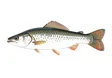
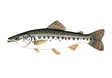
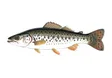
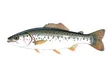
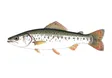
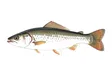
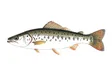
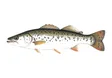
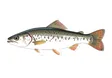
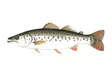
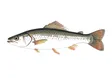
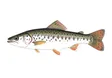
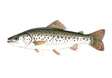
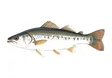
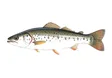
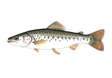
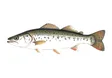
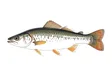
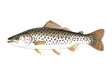
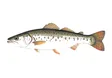
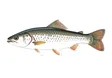
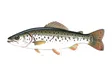
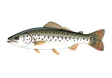
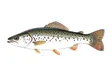
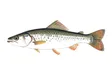
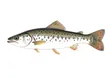
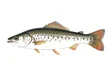
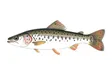
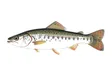
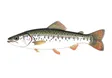
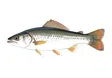
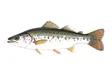
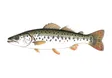
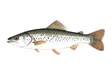
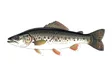
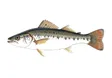
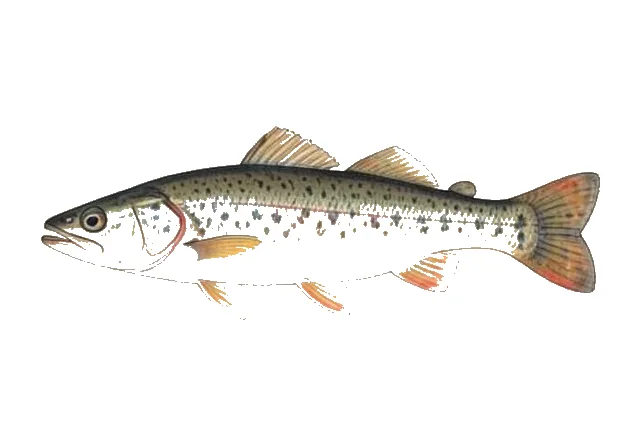
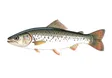
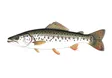
Blotchside Logperch field guide illustration

About Blotchside Logperch

Percina burtoni, the blotchside logperch or blotchside darter, is a small, endangered species of freshwater ray-finned fish, a darter from the subfamily Etheostomatinae, part of the family Percidae, which also contains the perches, ruffes and pikeperches. It is endemic to the United States and classified as vulnerable on the IUCN Red List.

Taxonomy

The blotchside darter was formerly described as a subspecies of Percina caprodes. It was first formally described as P. c. burtoni in 1945 by the American ichthyologist Henry Weed Fowler (1878–1961) with the type locality given as The Swannanoa River near Oteen in Buncombe County, North Carolina. The specific name honors the eminent naturalist who collected the type, Edward Milby Burton (1898–1977), formerly of the Charleston Museum.

Description

The blotchside darter is mostly covered with blotches on the midlateral row of the body. It has prepectoral scales and an orange submarginal band in the first dorsal fin. There are 15–18 dorsal spines, 14–15 dorsal rays, 14–15 pectoral rays, 2 anal spines, 10–12 anal rays, and 6 branchiostegal rays.

The species is olive in color dorsally, cream-colored ventrally, and has a lateral series of 8–10 dark green to black round or oval blotches. There is a distinct black spot at the base of the tail. The head is dark above and white below. In the first dorsal fin is a thin black margin. There is a thin orange submarginal band and a wide diffuse black basal band. The second dorsal and caudal fins have several narrow black bands; other fins are clear or yellow in color.

Distribution and habitat

The blotchside darter is endemic to the United States. It can occasionally be found in the Tennessee River system in Tennessee, Virginia, and North Carolina. It formerly occurred in the Cumberland River system in Kentucky and Tennessee and may still persist in what is known as Little South Fork in Kentucky.

The species lives in swift streams and is usually found over gravel in water 0.5–1 m in depth. It has been observed in clear, moderately large streams in which a variety of fishes occur, indicating that it requires high water quality and ecosystem health. It appears intolerant of reservoir conditions.

Conservation

The blotchside darter is classified as vulnerable on the IUCN Red List. It is known from several dozen localities, but total population size is unknown. It is likely to be detrimentally affected by siltation, turbidity, chemical pollution, and impoundment.

Article text: Wikipedia contributors, Percina burtoni (source revision). Licensed under CC BY-SA 4.0. Retrieved 2026-10-11.
Diet and feeding

The FishTraits compilation records these diet categories for this species: invertebrates or larval fish. These are broad categories, not a claim that every individual consumes every example in a category.
Reported feeding positions include bottom feeding. The compilation combines published observations; diets can vary with age, locality, and available food.

Habitat preferences

Reported habitat associations include medium to large rivers, streams and small rivers.

The source records associations with gravel, cobble. An association indicates reported use, rather than an exclusive requirement.

Reproduction and parental care

The compilation reports a representative maturity age of 3 years. Its maturity field summarizes mean, median, or modal estimates, usually for females; male estimates can be used when female data are unavailable. It is not a fixed age at which every fish first breeds.

Recorded spawning months are Apr, May for the source’s reporting region (NC). This is a regional calendar, not a range-wide schedule.

The reproductive-guild classification includes hiding a brood without subsequent guarding.

Size and recorded longevity

FishTraits reports a maximum total length of 16 centimetres. Some entries use an estimated asymptotic length; this value should not be treated as a certified record catch.

Recorded longevity in the compilation is 4 years. Wild observations were preferred, but captive records were accepted where wild records were unavailable, and unspecified records were assumed wild. The value is not a guaranteed wild lifespan or an aquarium life expectancy.

Range

Where it lives

Share of 369 GBIF observation records with a state location, across 17 states.
0%
35%
Share of 369 GBIF observation records with a state location, across 17 states.

Habitat

Water and movement

Water
WoRMS records this species in fresh water.
Migration
Not migratory

Classification

Taxonomy

Kingdom
Animalia
Phylum
Chordata
Superclass
Actinopterygii
Class
Teleostei
Order
Perciformes
Family
Percidae
Genus
Percina
Species
Percina burtoni
ITIS TSN
168479
WoRMS AphiaID
1014432
GBIF key
2382050

Common questions about Blotchside Logperch

What is the scientific name of Blotchside Logperch?
The scientific name is Percina burtoni, in the family Percidae. Classification follows ITIS.
Does Blotchside Logperch live in fresh water or salt water?
WoRMS records this species in fresh water.
Where has Blotchside Logperch been recorded in the United States?
GBIF has observations in 17 states, with the most records in Tennessee, Ohio, Virginia. The map shows observation records, which do not establish the complete natural range.

Closest relatives

Other Percina species

Same family

More Percidae

All 229 species in Percidae