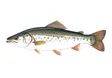
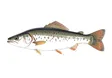
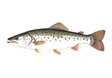
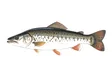
Common names

Types of sucker

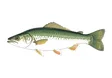
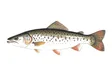
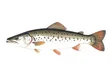
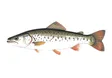
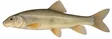
35 species carry sucker in an English common name. They sit in 1 family, so the group is a name, not a scientific rank.

About sucker

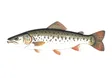
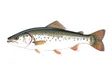
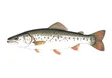
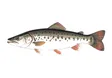
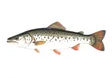
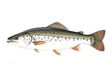
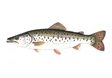
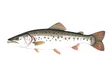
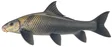
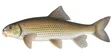
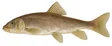
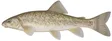
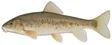
The Catostomidae are the suckers of the order Cypriniformes, with about 78 species in this family of freshwater fishes. The Catostomidae are almost exclusively native to North America. The only exceptions are Catostomus catostomus, found in both North America and Russia, and Myxocyprinus asiaticus found only in China. In the Ozarks they are a common food fish and a festival is held each year to celebrate them. The bigmouth buffalo, Ictiobus cyprinellus, can reach an age up to 127 years, making it the oldest known freshwater teleost by more than 50 years.

Description and biology

The mouths of these fish are most commonly located on the underside of their head (subterminal), with thick, fleshy lips. Most species are less than 60 cm (2.0 ft) in length, but the largest species (Ictiobus and Myxocyprinus) can surpass 100 cm (3.3 ft). They are distinguished from related fish by having a long pharyngeal bone in the throat, containing a single row of teeth.

Catostomids are most often found in rivers, but can be found in any freshwater environment. Their food ranges from detritus and bottom-dwelling organisms (such as crustaceans and worms), to surface insects, crayfish, small terrestrial vertebrates, and other fish.

Fossil record

Basal Catostomidae fossils have been uncovered and dated to the Middle Eocene in Colorado and Utah. The earliest catostomine sucker fossils are of Pantosteus from the Middle Miocene of Oregon.

As food

They can be taken by many fishing methods, including angling and gigging. Often, species such as Catostomus commersonii and Hypentelium nigricans are preferred for eating. They can be canned, smoked, or fried, but small incisions often must be made in the flesh (termed "scoring") before frying to allow small internal bones to be palatable. Suckers were an important source of food for Indigenous Americans across the continent. Many fishing methods were employed with the most elaborate being stone fish traps constructed on spawning rivers, remnants of these traps can be seen today in Ahjumawi Lava Springs State Park where the Achomawi people trapped Sacramento suckers. In the west these relationships became even more important after the decline in salmon runs due to damming and habitat destruction, some groups of native people relied on seasonal sucker runs for a significant amount of their food until the 1950s.

In China there is a significant aquaculture industry dedicated to raising Myxocyprinus asiaticus for food. Historically they were an important component of wild fisheries on the Yangtze, but the wild populations are under pressure from pollution, habitat destruction and hydroelectric dam projects.

Recreational fishing

Some Catostomidae, especially those of Ictiobus and Moxostoma, are the subject of major recreational fisheries while most are the subject of at least limited recreational fisheries. Throughout much of their range species are considered to be rough fish. Suckers have historically been scapegoated for human environmental destruction and their impacts on popular fish species such as Pacific salmon and smallmouth bass. This has led to their widespread and unnecessary destruction at the hands of ignorant anglers.

Subfamilies and genera

Catostomidae is classified into the following subfamilies and genera:

The fossil genus Jianghanichthys was previously placed in the Catastomidae, but is now placed in its own family, Jianghanichthyidae.
Sucker species in focus

These species profiles show how members of the group differ. Their biology describes each named species, rather than every fish in the group.

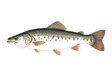
Longnose Sucker

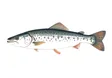
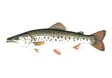
The longnose sucker (Catostomus catostomus) is a species of cypriniform freshwater fish in the family Catostomidae. It is native to North America from the northern United States to the top of the continent. It is also found in Russia in rivers of eastern Siberia, and is one of only two species of sucker native to Asia (the other is the Chinese Myxocyprinus asiaticus).

Description

The body of the longnose sucker is long and round with dark olive or grey sides and top and a light underside. They are up to 64 cm (25 in) in total length and weigh up to 3.3 kg (7.3 lb).

Longnose suckers are easily confused with white suckers (Catostomus commersoni), which appear very similar. However, longnose suckers can be distinguished by their comparatively finer scales.

Distribution and ecology

The longnose sucker inhabits cold, clear waters, including lakes, pools, rivers and streams, and occasionally also brackish waters. In North America, it ranges north from the Columbia, Delaware, Missouri and Monongahela river basins, as well as the Great Lakes basin. The Russian population, which sometimes is referred to as the Siberian sucker (C. c. rostratus), is found in the Yana, Indigirka, Alazeya and Kolyma river basins.

It is a bottom-feeding fish, eating aquatic plants, algae, and small invertebrates. They are preyed upon by larger predatory fish, such as bass, walleye, trout, northern pike, muskellunge and burbot.

Relationship with humans

They are fished for game and food and also used as bait to catch the larger predators. The International Game Fish Association (IGFA) world record sits at 2.97 kg (6 lb 9 oz) taken from the St. Joseph River in Michigan on December 2, 1989, by angler Ben Knoll.

The longnose sucker is a freshwater fish native to North America, particularly found in rivers and lakes. Its relationship with humans is based around recreational fishing.

Read the full species guide.

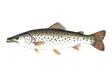
Largescale Sucker

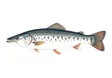
The largescale sucker (Catostomus macrocheilus) is a species of sucker, a type of freshwater fish, found in western North America.

Description

It has a rounded snout with a downturned mouth on its underside (as opposed to a mouth at end of the head like most fish). It has large scales and narrow tail base (caudal peduncle).

Juveniles are under 4 in (10 cm) in length. Adults can reach a length of 24 in (61 cm) and 7 lb (3.2 kg) in parts of their range. Juveniles are mottled brown or olive green with dark spots and white to yellow belly. Adults are bronze to orange on top with lighter undersides.

Distribution and habitat

The largescale sucker is native to the Pacific Northwest, occurring from British Columbia south to Oregon. It is widespread in the Columbia River system. It occurs in the slower-moving portions of rivers and streams, and in lakes.

Biology

Largescale suckers spawn in the spring in shallow water over sandy areas of streams or the sandy or small gravel shoals of lakes. Females may produce up to 20,000 adhesive eggs. The young feed upon small zooplankton until they become bottom dwellers. Then they feed on benthic aquatic invertebrates, diatoms, and other plant material. They are an important part of the food web and the diet of fish-eating animals (such as osprey, eagles, river otters, and other fish).

Read the full species guide.

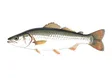
Bridgelip Sucker
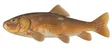
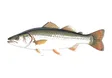
The bridgelip sucker (Catostomus columbianus) is a fish in the family Catostomidae that occupies the Columbia River system. Like all sucker fish, they live only in fresh water. Bridgelip suckers have a tendency to live in deeper waters during the day and move into shallower water around evening time. As adults they eat periphyton (green growth and microorganisms found on submerged substrata). Adolescents, however, eat aquatic hatchlings and zooplankton. Adult bridgelip sucker range in size from 5 inches to 17 inches. They spawn around May, when the water temperature is between 8-13 C, and lay somewhere around 9,955 and 21,040 eggs. Inside of the Columbia River system, the bridgelip sucker shares much of its territory another similar looking sucker, the largescale sucker.

Read the full species guide.

Range

Where sucker live

How many of the 35 species are recorded in each state.
0
17
How many of the 35 species are recorded in each state.

Species

All 35 sucker species

Alabama Hog Sucker6 states
Hypentelium etowanumCatostomidaeNative and introducedFresh
Blackfin Sucker2 states
Thoburnia atripinnisCatostomidaeNativeFresh
Blue Sucker22 states
Cycleptus elongatusCatostomidaeNativeFresh
Bluehead Sucker7 states
Pantosteus discobolusCatostomidaeNativeFresh
Bridgelip Sucker5 states
Catostomus columbianusCatostomidaeNativeFresh
Desert Sucker9 states
Pantosteus clarkiiCatostomidaeNativeFresh
Flannelmouth Sucker8 states
Catostomus latipinnisCatostomidaeNativeFresh
Green Sucker4 states
Pantosteus virescensCatostomidaeNativeFresh
June Sucker1 states
Chasmistes liorusCatostomidaeNativeFresh
Klamath Largescale Sucker2 states
Catostomus snyderiCatostomidaeNativeFresh
Klamath Smallscale Sucker2 states
Catostomus rimiculusCatostomidaeNativeFresh
Largescale Sucker6 states
Catostomus macrocheilusCatostomidaeNativeFresh
Longnose Sucker29 states
Catostomus catostomusCatostomidaeNative and introducedFreshBrackish
Lost River Sucker2 states
Deltistes luxatusCatostomidaeNativeFresh
Modoc Sucker2 states
Catostomus micropsCatostomidaeNativeFresh
Mountain Sucker13 states
Pantosteus platyrhynchusCatostomidaeNative and introducedFresh
Northern Hog Sucker31 states
Hypentelium nigricansCatostomidaeNative and introducedFresh
Owens Sucker1 states
Catostomus fumeiventrisCatostomidaeNative and introducedFresh
Razorback Sucker8 states
Xyrauchen texanusCatostomidaeNativeFresh
Rio Grande Sucker5 states
Pantosteus plebeiusCatostomidaeNative and introducedFresh
Roanoke Hog Sucker2 states
Hypentelium roanokenseCatostomidaeNative and introducedFresh
Rustyside Sucker2 states
Thoburnia hamiltoniCatostomidaeNativeFresh
Sacramento Sucker2 states
Catostomus occidentalisCatostomidaeNative and introducedFresh
Santa Ana Sucker1 states
Pantosteus santaanaeCatostomidaeNative and introducedFresh
Shortnose Sucker2 states
Chasmistes brevirostrisCatostomidaeNativeFresh
Sonora Sucker5 states
Catostomus insignisCatostomidaeNativeFresh
Southeastern Blue Sucker4 states
Cycleptus meridionalisCatostomidaeNativeFresh
Spotted Sucker24 states
Minytrema melanopsCatostomidaeNative and introducedFresh
Summer Sucker1 states
Catostomus utawanaCatostomidaeNativeFresh
Tahoe Sucker3 states
Catostomus tahoensisCatostomidaeNative and introducedFresh
Torrent Sucker3 states
Thoburnia rhothoecaCatostomidaeNative and introducedFresh
Tyee Sucker1 states
Catostomus tsiltcoosensisCatostomidaeNativeFreshBrackish
Utah Sucker8 states
Catostomus ardensCatostomidaeNative and introducedFresh
Warner Sucker2 states
Catostomus warnerensisCatostomidaeNativeFresh
White Sucker45 states
Catostomus commersoniiCatostomidaeNative and introducedFreshBrackish