Spotted Sucker

Minytrema melanops

Catostomidae · freshwater water fish

6 minute read · Species guide

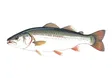
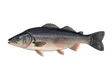
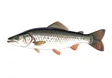
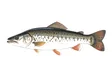
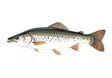
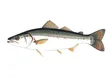
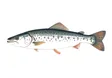
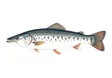
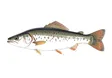
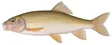
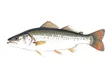
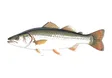
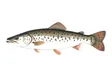
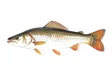
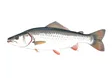
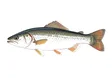
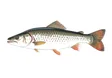
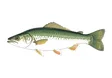
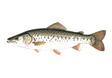
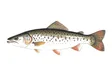
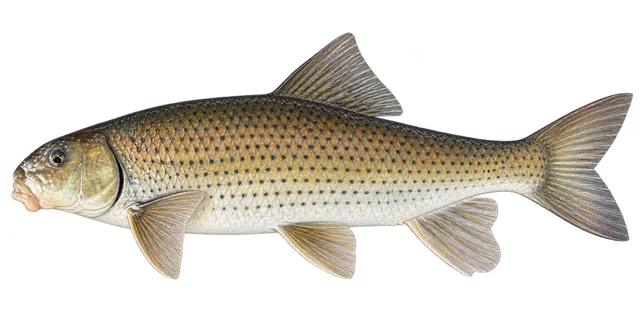
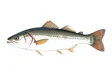
Spotted Sucker field guide illustration

About Spotted Sucker

The spotted sucker (Minytrema melanops) is a species of sucker (fish) that is native to eastern North America. The spotted sucker inhabits deep pools of small to medium rivers over clay, sand or gravel. They are occasionally found in creeks and large rivers. Through its life stages, the spotted sucker goes from a mid-depth predator to a bottom forager. Spotted suckers have a lifespan of approximately six years and spawn in April and May. Limited knowledge of the occurrence, abundance, and natural history of this species has been an impediment to status assessment and the determination of need for conservation measures within this family.

Description

Spotted suckers have a dark spot at the base of each scale giving them the appearance of having many rows of small black spots on their body and can reach about 19 inches.

Geographic distribution

The spotted sucker has a very wide distribution. They are widely found throughout the central and southeastern United States and reach southern Canada. They are distributed within and east of the Great Lakes and Mississippi River basin but these species are at the southeastern limits of their distribution in the Apalachicola River. It is found in the lower Great Lakes and Mississippi River Basins from Pennsylvania to Minnesota and in Atlantic and Gulf Slope drainages in North Carolina to western Texas. Populations in the United States have remained stable and they are still relatively common. The spotted sucker prefers clean, clear bodies water with a firm substrate. It is reported that they are abundant in oxbow lakes and other areas without a strong current. They do not tolerate pollution or siltation very well and because of this they have been lost in some areas of their historic range such as Illinois. Numbers are also declining in areas such as Ohio and Kansas. Farther north in Canada the species is a species of concern due to declining numbers and deteriorating water quality. This represents the northernmost area of their range, so they may have always been rare in Canada.

Ecology

The feeding habits of M. melanops show a distinct change throughout its life cycle. As larvae the fish feed upon individual zooplankton. Larvae up to 25 millimeters in length were observed feeding in shallow back waters during the day. The spotted sucker begins to ingest organic matter once they reach approximately 25 millimeters. It is at this length that they become bottom feeders. At about 50 millimeters Minytrema begins to feed on the substrate and benthos and sand become part of the stomach contents. As larvae and juvenile Minytrema feeds in schools, but as they become adults they separate to feed in deeper waters. There is not much known about the feeding habits of adults. It is believed that suckers feed primarily during dusk and dawn. Spotted suckers primarily feed upon organic fragments, copepods, cladocerans, and chironomids. Other benthic invertebrates have been found in gut contents, but are not a large part of the diet. The stomach content of spotted suckers varies with the time of the year. In the spring, summer, and autumn large numbers of zooplankton are ingested. In the summer and autumn chironomids are also found. This shows the change in abundance with the change in season. Numerically, organic fragments and sand are most abundantly found in the gut. This is followed by diatoms, copepods and cladocerans making up much of the remainder. From the differences in abundance and types of particles in gut contents from different populations, it appears that Minytrema is not selective for any particular group, but harvests those groups that are seasonally or regionally abundant.

Predators of the spotted sucker typically vary depending on the environment. It depends heavily on clean waters with no silt to survive. It prefers sluggish water, but has been found in some turbid environments. Human activities have caused for the streams that Minytrema lives in to become silted, thus making it hard for them to survive. However, dams have also caused impoundments which can cause slower moving waters and boost populations.

Life history

Spawning season for the spotted suckers begin anywhere from early March to early May when the water temperature reaches approximately 12 to 19 °C (54 to 66 °F). The fish migrate upstream to smaller tributaries in January to spawn in riffles containing gravel substrates. There are usually two males for every female. As the female approaches, the males bump and prod her in the abdomen. The males then clasp the posterior half of the female between themselves on either dies. They vibrate their caudal sections and head toward the surface. During this time semibouyant eggs are released downstream. There is no parental care by the adults. The males do not guard the nest and leave after the act of spawning. Both sexes are able to spawn more than once in a season. The eggs will hatch after seven to ten days depending on the water temperature and will reach sexual maturation after three years. The lifespan is generally six years. However, fish in the southeast and to only live for five years. It is unknown why this is.

Early development of M. melanops is quite similar to that of other catostomids. Larvae can be identified by fin ray counts, myomere counts, and pigmentation.

Conservation and management

Spotted suckers are not federally listed as endangered or threatened in the United States. However, in Canada the number of spotted suckers is very low. They are listed as a species of concern and fishermen are asked to report any sightings they have of the fish in order to keep a current count of fish populations. The suckers do not usually hybridize with other species. Overfishing is not a problem for this species. While they generally taste pretty good to eat, the flesh has a lot of bones making it difficult to clean them.

Article text: Wikipedia contributors, Spotted sucker (source revision). Licensed under CC BY-SA 4.0. Retrieved 2026-10-11.
Diet and feeding

The FishTraits compilation records these diet categories for this species: algae or phytoplankton; detritus or unidentified plant material; invertebrates or larval fish. These are broad categories, not a claim that every individual consumes every example in a category.

Reported feeding positions include bottom feeding. The compilation combines published observations; diets can vary with age, locality, and available food.

Habitat preferences

Reported habitat associations include streams and small rivers, creeks, still-water habitats.

The source records associations with clay or silt, sand, gravel, cobble, boulders, bedrock, organic debris. An association indicates reported use, rather than an exclusive requirement.

Reproduction and parental care

The compilation reports a representative maturity age of 3 years. Its maturity field summarizes mean, median, or modal estimates, usually for females; male estimates can be used when female data are unavailable. It is not a fixed age at which every fish first breeds.

Recorded spawning months are Apr, May for the source’s reporting region (NC). This is a regional calendar, not a range-wide schedule.

The reproductive-guild classification includes spawning on open substrates without guarding the brood.

Size and recorded longevity

FishTraits reports a maximum total length of 50 centimetres. Some entries use an estimated asymptotic length; this value should not be treated as a certified record catch.

Recorded longevity in the compilation is 6 years. Wild observations were preferred, but captive records were accepted where wild records were unavailable, and unspecified records were assumed wild. The value is not a guaranteed wild lifespan or an aquarium life expectancy.

Spawning movements

The compilation records significant spawning-related movement. Its combined migration flag covers movements within fresh water as well as between rivers and the sea; this flag alone does not establish which migration pattern applies.

Introduction history

This fish was likely stocked in conjunction with fish rescue and transfer efforts from the Mississippi River in the 1930s (Becker 1983).

Record fish

State records in 2 states

  • Wisconsin4 lbs. 10.2 oz.

    Lake Onalaska · La Crosse · 02/22/2018

  • Arkansas4 lbs., 6 oz.

    Big Hill Creek · 03/19/2018 · Ransum Mullens, Camden, AR · other legal means

  • Arkansas2 lb., 3 oz.

    Twin Creek · 03/20/2023 · John Carter, Little Rock, AR · rod and reel

Each figure is the state agency’s own certified record. The site holds record tables for 11 states so far, so a state missing here has not been read yet. It is not a state where this fish holds no record.

Range

Where it lives

Share of 7,886 GBIF observation records with a state location, across 24 states. The orange dots are USGS stream-survey sites where this species was caught.
0%
20.2%
Share of 7,886 GBIF observation records with a state location, across 24 states. The orange dots are USGS stream-survey sites where this species was caught.

A blank area on the dot layer usually means nobody sampled there, not that the fish is absent. Turn on “every survey site” to see where the survey looked.

The USGS stream survey caught it at 1,193 of its sites, in 22 states. That survey and the GBIF records are two different counts of two different things, so the site keeps them apart.

Habitat

Water and movement

Water
WoRMS records this species in fresh water.
USGS NAS habitat
Freshwater
US status
Native transplant — native to part of the United States, moved to other waters inside it.
Migration
Undetermined
Pattern
Disagreement
3 published references do not agree on the pattern: Non-migratory, Potamodromous. The site shows every assignment rather than picking one.

Classification

Taxonomy

Kingdom
Animalia
Phylum
Chordata
Superclass
Actinopterygii
Class
Teleostei
Order
Cypriniformes
Genus
Minytrema
Species
Minytrema melanops
ITIS TSN
163959
WoRMS AphiaID
1022836
GBIF key
2358945
Outside the US
ITIS also files it in Canada.

Common questions about Spotted Sucker

What is the scientific name of Spotted Sucker?
The scientific name is Minytrema melanops, in the family Catostomidae. Classification follows ITIS.
Does Spotted Sucker live in fresh water or salt water?
WoRMS records this species in fresh water.
Where has Spotted Sucker been recorded in the United States?
GBIF has observations in 24 states, with the most records in Georgia, Florida, Texas. The map shows observation records, which do not establish the complete natural range.

Same family

More Catostomidae

Alabama Hog Sucker6 states
Hypentelium etowanumCatostomidaeNative and introducedFresh
Bigeye Jumprock3 states
Moxostoma ariommumCatostomidaeNativeFresh
Bigmouth Buffalo26 states
Ictiobus cyprinellusCatostomidaeNative and introducedFresh
Black Buffalo26 states
Ictiobus nigerCatostomidaeNative and introducedFresh
Black Redhorse
Moxostoma duquesneiCatostomidaeNativeFresh
Blackfin Sucker2 states
Thoburnia atripinnisCatostomidaeNativeFresh
Blacktail Redhorse9 states
Moxostoma poecilurumCatostomidaeNativeFresh
Blacktip Jumprock7 states
Moxostoma cervinumCatostomidaeNative and introducedFresh
Blue Sucker22 states
Cycleptus elongatusCatostomidaeNativeFresh
Bluehead Sucker7 states
Pantosteus discobolusCatostomidaeNativeFresh
Bridgelip Sucker5 states
Catostomus columbianusCatostomidaeNativeFresh
Creek Chubsucker31 states
Erimyzon oblongusCatostomidaeNativeFresh
Cui-ui2 states
Chasmistes cujusCatostomidaeNativeFresh
Desert Sucker9 states
Pantosteus clarkiiCatostomidaeNativeFresh
Flannelmouth Sucker8 states
Catostomus latipinnisCatostomidaeNativeFresh
Golden Redhorse29 states
Moxostoma erythrurumCatostomidaeNative and introducedFresh
Gray Redhorse2 states
Moxostoma congestumCatostomidaeNative and introducedFresh
Greater Jumprock4 states
Moxostoma lachneriCatostomidaeNative and introducedFresh
Greater Redhorse11 states
Moxostoma valenciennesiCatostomidaeNativeFresh
Green Sucker4 states
Pantosteus virescensCatostomidaeNativeFresh
Highfin Carpsucker23 states
Carpiodes veliferCatostomidaeNative and introducedFresh
June Sucker1 states
Chasmistes liorusCatostomidaeNativeFresh
Klamath Largescale Sucker2 states
Catostomus snyderiCatostomidaeNativeFresh
Klamath Smallscale Sucker2 states
Catostomus rimiculusCatostomidaeNativeFresh

All 67 species in Catostomidae