River Carpsucker

Carpiodes carpio

Catostomidae · freshwater water fish

5 minute read · Species guide

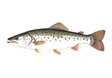
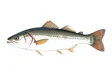
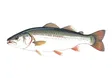
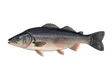
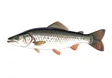
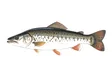
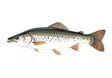
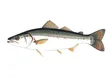
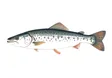
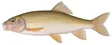
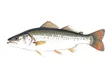
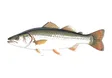
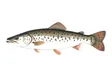
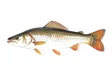
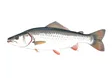
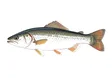
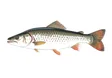
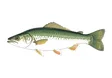
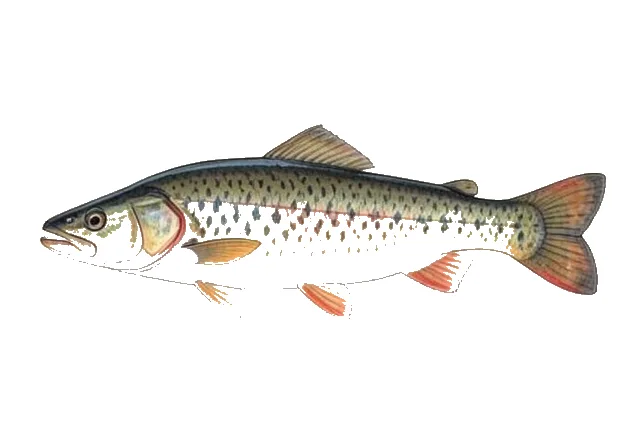
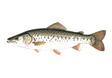
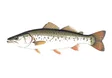
River Carpsucker field guide illustration

About River Carpsucker

The river carpsucker (Carpiodes carpio) is a long-lived freshwater fish belonging to the Catostomidae that is native to the inland United States and northern Mexico. This species has a slightly arched back and is somewhat stout and compressed. While the fins are usually opaque, in older fish they may be dark yellow. It is distributed along the Mississippi River basin from Pennsylvania to Montana. The river carpsucker, like most suckers, is benthivorous and obtains its nutrients from algae, microcrustaceans, and other various tiny planktonic plants and animals found in silty substrates. Like its congeners, the quillback and highfin carpsucker, the river carpsucker is long-lived, with a known maximum lifespan of 40 years in Colorado, 47 years in Minnesota, and 56 years in Wisconsin. It begins to reproduce typically in late spring, and the female usually releases more than 100,000 eggs. There is no parental care provided.

Distribution

The river carpsucker has historically occupied the Mississippi River basin from Pennsylvania to Montana. It also currently occupies the Gulf Slope Drainage from the Calcasieu River to the Rio Grande in Texas, Louisiana, and New Mexico. It was introduced to Lake Erie and the lower Maumee River, Ohio. It was supposedly deliberately introduced with a shipment of buffalofish as a game species, and they are currently used in sport fishing. The effects of its introduction have not been studied, so are not well known. However, failure to find more river carpsuckers in the lower Maumee River suggests this species never took hold in this area. In the spring, they migrate upstream as the water temperatures begin to rise, and then move back downstream after spawning. They have been known to travel distances of up to 10 kilometers (6.2 mi).

Description

The physical appearance of the river carpsucker is fairly distinctive. It is stout, with a somewhat compressed and arched back. The area around its dorsal fin is olive-brown before it fades to silver, with a white belly. In the young, the fins are usually opaque, while in the old, their fins are a dark yellow. The lower lip is projected in a similar fashion to a nipple at the midpoint, and big scales cover its whole body. It also has a distinctive 18 caudal fin rays. The species is frequently confused with non-native species, such as the various Asian carp species.

Ecology

The river carpsucker is classified as a suction, or filter feeder, which means it typically eats algae and small planktonic animals and plants. They get their nutrients from filtering silt and detritus. It is typically preyed on by larger carnivorous fish such as northern pike, muskellunge, walleye, and largemouth bass, but mostly in its juvenile stage. Their largest predators are humans, although some larger birds, such as great blue herons, have been known to eat them. They can be found in large rivers and reservoirs, with sand or silt bottoms in slower-moving currents. The young typically are found in small streams, or tributaries. They are more abundant in areas with slower water velocity and moderate temperatures.

Lifecycle

During breeding season, small tubercles can be observed on the body of the male. Reproduction typically occurs during late spring, in large spawning groups. A female can release more than 100,000 eggs. The eggs are typically adhesive and demersal with a diameter of about 1.7 to 2.1 millimeters (0.067 to 0.083 in), and they typically hatch within eight to 15 days. To spawn, the temperature of the water is typically around 18.3 to 19.1 °C (64.9 to 66.4 °F), and spawning ends around the beginning of summer when water temperatures begin to rise. They exhibit no parental care; instead, they broadcast their eggs onto the sand and then leave them. The lifespan of river carpsucker can span decades, much like other long-lived catostomids. River carpsucker lifespans approaching or exceeding 50 years are evident. They are schooling fish and will often be found in large groups.

Relationship with people

The river carpsucker currently has no established management plans but they are declining in Colorado, are sometimes caught by commercial fishers for food, and are increasingly being targeted by modern bowfishing for sport killing. Despite these trends they are not yet officially considered a game species. However, they are in large abundance in a few areas in their range. They are plentiful in Elephant Butte Reservoir and Caballo Lake in New Mexico. They also can be affected by humans; their population begins reducing rapidly with the introduction of toxins into their habitat. The world record for the species stands at 13.4 lb (6.1 kg) caught by bowfishing in North Dakota in 2021.

Article text: Wikipedia contributors, River carpsucker (source revision). Licensed under CC BY-SA 4.0. Retrieved 2026-10-11.
Diet and feeding

The FishTraits compilation records these diet categories for this species: algae or phytoplankton; aquatic or other vascular plants; detritus or unidentified plant material; invertebrates or larval fish. These are broad categories, not a claim that every individual consumes every example in a category.

Reported feeding positions include bottom feeding. The compilation combines published observations; diets can vary with age, locality, and available food.

Habitat preferences

Reported habitat associations include medium to large rivers, streams and small rivers, still-water habitats.

The source records associations with muck, clay or silt, sand. An association indicates reported use, rather than an exclusive requirement.

Reproduction and parental care

The compilation reports a representative maturity age of 3 years. Its maturity field summarizes mean, median, or modal estimates, usually for females; male estimates can be used when female data are unavailable. It is not a fixed age at which every fish first breeds.

Recorded spawning months are May, Jun, Jul for the source’s reporting region (NC). This is a regional calendar, not a range-wide schedule.

The reproductive-guild classification includes spawning on open substrates without guarding the brood.

Size and recorded longevity

FishTraits reports a maximum total length of 64 centimetres. Some entries use an estimated asymptotic length; this value should not be treated as a certified record catch.

Recorded longevity in the compilation is 10 years. Wild observations were preferred, but captive records were accepted where wild records were unavailable, and unspecified records were assumed wild. The value is not a guaranteed wild lifespan or an aquarium life expectancy.

Native range

Mississippi River basin from Pennsylvania to Montana and south to Louisiana; Gulf Slope drainage from Calcasieu River, Louisiana, to Rio Grande, Texas and New Mexico. Also in Mexico (Page and Burr 1991).

Introduction history

It is likely that individuals of this species were included in shipments of buffalo-fishes Ictiobus spp., which were intentionally stocked in Ohio in western Lake Erie between 1920 and 1930 (Lee et al. 1980 et seq.; Trautman 1981).

Record fish

State records in 4 states

  • Oklahoma8 lbs 11.00 ozs

    Canton · 03/18/2022 · Jarrett Sinclair · rod and line

  • Montana7.915 lbs

    Yellowstone River · 4/16/22 · Jaxson Franklin

  • Minnesota4 lb 6 oz

    Minnesota River · Carver · 11/19/2012

  • Arkansas3 lbs., 2 oz.

    Arkansas River · 06/19/2017 · Jimmy Ruple, Greenbrier, AR · other legal means

Each figure is the state agency’s own certified record. The site holds record tables for 11 states so far, so a state missing here has not been read yet. It is not a state where this fish holds no record.

Range

Where it lives

Share of 11,953 GBIF observation records with a state location, across 26 states. The orange dots are USGS stream-survey sites where this species was caught.
0%
34.6%
Share of 11,953 GBIF observation records with a state location, across 26 states. The orange dots are USGS stream-survey sites where this species was caught.

A blank area on the dot layer usually means nobody sampled there, not that the fish is absent. Turn on “every survey site” to see where the survey looked.

The USGS stream survey caught it at 1,454 of its sites, in 25 states. That survey and the GBIF records are two different counts of two different things, so the site keeps them apart.

Habitat

Water and movement

Water
WoRMS records this species in fresh water.
USGS NAS habitat
Freshwater
US status
Native transplant — native to part of the United States, moved to other waters inside it.
Migration
Migratory
Pattern

Classification

Taxonomy

Kingdom
Animalia
Phylum
Chordata
Superclass
Actinopterygii
Class
Teleostei
Order
Cypriniformes
Genus
Carpiodes
Species
Carpiodes carpio
ITIS TSN
163919
WoRMS AphiaID
890545
GBIF key
2358948
Outside the US
ITIS also files it in Mexico.

Common questions about River Carpsucker

What is the scientific name of River Carpsucker?
The scientific name is Carpiodes carpio, in the family Catostomidae. Classification follows ITIS.
Does River Carpsucker live in fresh water or salt water?
WoRMS records this species in fresh water.
Where has River Carpsucker been recorded in the United States?
GBIF has observations in 26 states, with the most records in New Mexico, Texas, Oklahoma. The map shows observation records, which do not establish the complete natural range.

Closest relatives

Other Carpiodes species

Same family

More Catostomidae

Alabama Hog Sucker6 states
Hypentelium etowanumCatostomidaeNative and introducedFresh
Bigeye Jumprock3 states
Moxostoma ariommumCatostomidaeNativeFresh
Bigmouth Buffalo26 states
Ictiobus cyprinellusCatostomidaeNative and introducedFresh
Black Buffalo26 states
Ictiobus nigerCatostomidaeNative and introducedFresh
Black Redhorse
Moxostoma duquesneiCatostomidaeNativeFresh
Blackfin Sucker2 states
Thoburnia atripinnisCatostomidaeNativeFresh
Blacktail Redhorse9 states
Moxostoma poecilurumCatostomidaeNativeFresh
Blacktip Jumprock7 states
Moxostoma cervinumCatostomidaeNative and introducedFresh
Blue Sucker22 states
Cycleptus elongatusCatostomidaeNativeFresh
Bluehead Sucker7 states
Pantosteus discobolusCatostomidaeNativeFresh
Bridgelip Sucker5 states
Catostomus columbianusCatostomidaeNativeFresh
Creek Chubsucker31 states
Erimyzon oblongusCatostomidaeNativeFresh
Cui-ui2 states
Chasmistes cujusCatostomidaeNativeFresh
Desert Sucker9 states
Pantosteus clarkiiCatostomidaeNativeFresh
Flannelmouth Sucker8 states
Catostomus latipinnisCatostomidaeNativeFresh
Golden Redhorse29 states
Moxostoma erythrurumCatostomidaeNative and introducedFresh
Gray Redhorse2 states
Moxostoma congestumCatostomidaeNative and introducedFresh
Greater Jumprock4 states
Moxostoma lachneriCatostomidaeNative and introducedFresh
Greater Redhorse11 states
Moxostoma valenciennesiCatostomidaeNativeFresh
Green Sucker4 states
Pantosteus virescensCatostomidaeNativeFresh
Highfin Carpsucker23 states
Carpiodes veliferCatostomidaeNative and introducedFresh
June Sucker1 states
Chasmistes liorusCatostomidaeNativeFresh
Klamath Largescale Sucker2 states
Catostomus snyderiCatostomidaeNativeFresh
Klamath Smallscale Sucker2 states
Catostomus rimiculusCatostomidaeNativeFresh

All 67 species in Catostomidae