Kiyi

Coregonus kiyi

Salmonidae · freshwater water fish

4 minute read · Species guide

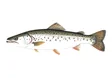
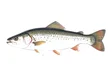
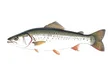
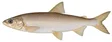
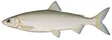
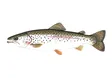
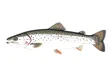
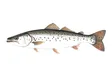
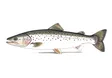
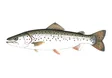
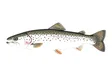
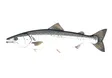
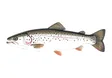
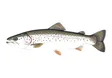
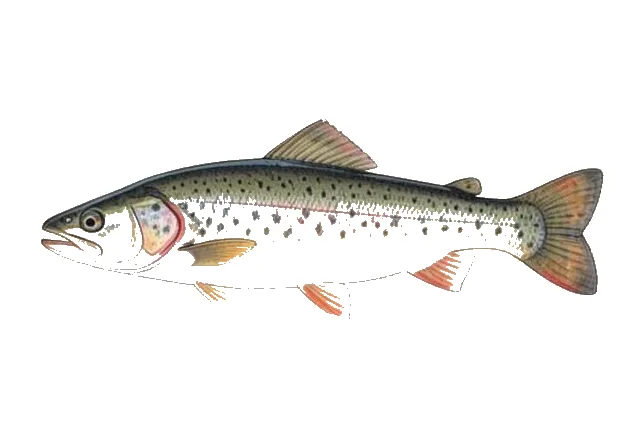
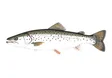
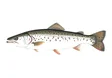
Kiyi field guide illustration

About Kiyi

The kiyi (Coregonus kiyi) is a species of freshwater whitefish, a deepwater cisco, endemic to the Great Lakes of North America. It previously inhabited Lake Superior, Lake Michigan, Lake Huron and Lake Ontario, but is now believed to persist only in Lake Superior where it is common. The various deepwater ciscos are also called chubs (not to be confused with the various species of Cyprinidae also called chubs). The kiyi is part of the large group of related northern ciscos known as the Coregonus artedi complex.

Description

The kiyi is one of the smaller ciscos. Adult kiyi average approximately 250 millimetres (9.8 in) in total length and 170 grams (6.0 oz) in weight. Individuals can reach more than 280 millimetres (11 in). They are silvery pink or purple iridescence, darker on the back and white on the belly. They may have a dark tip on the lower jaw. They have a large head and a conspicuous, large eye.

Subspecies

Two subspecies of kiyi have been recognised based on morphological characteristics and distribution. The nominate subspecies Coregonus kiyi kiyi, or the Upper Great Lakes kiyi, was found in Lakes Superior, Huron and Michigan. The Lake Ontario kiyi, C. k. orientalis, was only found in Lake Ontario. However, recent examination of the ciscos as a group using genetic techniques has suggested that some recognized species are not genetically distinct from others, and it has been suggested that the deepwater ciscos in general may be forms of the northern cisco C. artedi adapted to life in different ecological niches. The distinction between the subspecies of kiyi has been rendered academic, however, by the extinction of the Lake Ontario form, which has not been seen since the 1960s and has been extinct since 2005. The subspecies was driven to extinction by commercial exploitation, predation and competition by introduced species.

Ecology and behavior

The kiyi is reportedly most abundant at depths greater than 80 metres (260 ft) over its range, with Lake Superior kiyi said to be abundant at depths of 180 metres (590 ft).

Females are known to grow larger and live longer (10 years) than males (8 years). Age at maturity is believed to be 2 to 3 years. The minimum size at maturity is reported as 132 millimetres (5.2 in) in Lake Superior. Spawning takes place in autumn or early winter, and has been reported in depths of 106–165 metres (348–541 ft). Ciscoes are known to exhibit large fluctuations in reproductive success and will produce several years of strong year classes followed by several years of poor reproductive success.

Although not the preferred chub species owing to their relatively small size, kiyi were a substantial component of the Great Lakes chub fisheries at one time, particularly in Lake Ontario. They, along with other deepwater chubs, have been negatively affected by a combination of factors, including the invasion of the Great Lakes by several non-native species that prey on various life stages of the chubs or compete with them. Parasitic sea lamprey (Petromyzon marinus), alewife (Alosa pseudoharengus) and rainbow smelt (Osmerus mordax), in particular, have been implicated in their demise, and are believed to have stressed populations to the extent that previously sustainable levels of exploitation became unsustainable.

Article text: Wikipedia contributors, Kiyi (source revision). Licensed under CC BY-SA 4.0. Retrieved 2026-10-11.
Diet and feeding

The FishTraits compilation records these diet categories for this species: invertebrates or larval fish; larger animal prey (a source category covering fish, crayfish, crabs, or frogs); fish or frog eggs. These are broad categories, not a claim that every individual consumes every example in a category.

Reported feeding positions include bottom feeding and surface or water-column feeding. The compilation combines published observations; diets can vary with age, locality, and available food.

Habitat preferences

Reported habitat associations include still-water habitats.

The source records associations with open water. An association indicates reported use, rather than an exclusive requirement.

Reproduction and parental care

The compilation reports a representative maturity age of 3 years. Its maturity field summarizes mean, median, or modal estimates, usually for females; male estimates can be used when female data are unavailable. It is not a fixed age at which every fish first breeds.

Recorded spawning months are Sep, Oct, Nov for the source’s reporting region (WI). This is a regional calendar, not a range-wide schedule.

The reproductive-guild classification includes spawning on open substrates without guarding the brood.

Size and recorded longevity

FishTraits reports a maximum total length of 35.1 centimetres. Some entries use an estimated asymptotic length; this value should not be treated as a certified record catch.

Recorded longevity in the compilation is 10 years. Wild observations were preferred, but captive records were accepted where wild records were unavailable, and unspecified records were assumed wild. The value is not a guaranteed wild lifespan or an aquarium life expectancy.

Range

Where it lives

Share of 441 GBIF observation records with a state location, across 5 states.
0%
60.3%
Share of 441 GBIF observation records with a state location, across 5 states.

Habitat

Water and movement

Water
WoRMS records this species in fresh water.
Migration
Not migratory

Classification

Taxonomy

Kingdom
Animalia
Phylum
Chordata
Superclass
Actinopterygii
Class
Teleostei
Order
Salmoniformes
Genus
Coregonus
Species
Coregonus kiyi
ITIS TSN
161945
WoRMS AphiaID
1016849
GBIF key
2351112
Outside the US
ITIS also files it in Canada.

Common questions about Kiyi

What is the scientific name of Kiyi?
The scientific name is Coregonus kiyi, in the family Salmonidae. Classification follows ITIS.
Does Kiyi live in fresh water or salt water?
WoRMS records this species in fresh water.
Where has Kiyi been recorded in the United States?
GBIF has observations in 5 states, with the most records in Michigan, New York, Wisconsin. The map shows observation records, which do not establish the complete natural range.

Closest relatives

Other Coregonus species

Same family

More Salmonidae

Alaska Whitefish1 states
Coregonus nelsoniiSalmonidaeNativeFresh
Apache Trout5 states
Oncorhynchus apacheSalmonidaeNativeFresh
Arctic Char8 states
Salvelinus alpinusSalmonidaeNative and introducedFreshSaltBrackish
Arctic Cisco1 states
Coregonus autumnalisSalmonidaeNativeFreshSaltBrackish
Arctic Grayling16 states
Thymallus arcticusSalmonidaeNative and introducedFresh
Atlantic Salmon26 states
Salmo salarSalmonidaeNative and introducedFreshSaltBrackish
Bear Lake Whitefish2 states
Prosopium abyssicolaSalmonidaeNativeFresh
Bering Cisco1 states
Coregonus laurettaeSalmonidaeNativeFreshSaltBrackish
Blackfin Cisco6 states
Coregonus nigripinnisSalmonidaeNativeFresh
Bloater6 states
Coregonus hoyiSalmonidaeNativeFresh
Bonneville Cisco2 states
Prosopium gemmiferSalmonidaeNativeFresh
Bonneville Whitefish2 states
Prosopium spilonotusSalmonidaeNativeFresh
Broad Whitefish1 states
Coregonus nasusSalmonidaeNativeFreshBrackish
Brook Trout40 states
Salvelinus fontinalisSalmonidaeNative and introducedFreshSaltBrackish
Brown Trout41 states
Salmo truttaSalmonidaeIntroducedFreshSaltBrackish
Bull Trout8 states
Salvelinus confluentusSalmonidaeNativeFreshBrackish
Chinook Salmon18 states
Oncorhynchus tshawytschaSalmonidaeNative and introducedFreshSaltBrackish
Chum Salmon5 states
Oncorhynchus ketaSalmonidaeNativeFreshSaltBrackish
Cisco11 states
Coregonus artediSalmonidaeNative and introducedFreshSaltBrackish
Coho Salmon22 states
Oncorhynchus kisutchSalmonidaeNative and introducedFreshSaltBrackish
Cutthroat Trout18 states
Oncorhynchus clarkiiSalmonidaeNative and introducedFreshSaltBrackish
Deepwater Cisco3 states
Coregonus johannaeSalmonidaeNativeFresh
Dolly Varden9 states
Salvelinus malmaSalmonidaeNativeFreshSaltBrackish
Gila Trout2 states
Oncorhynchus gilaeSalmonidaeNative and introducedFresh

All 44 species in Salmonidae