Chum Salmon

Oncorhynchus keta

Salmonidae · freshwater and saltwater and brackish water fish

10 minute read · Species guide

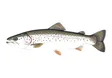
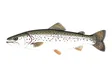
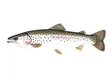
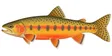
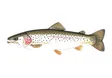
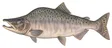
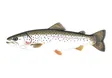
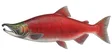
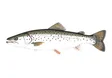
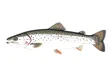
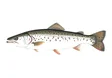
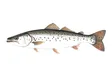
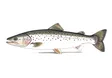
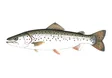
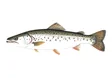
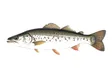
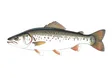
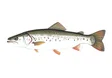
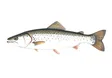
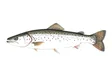
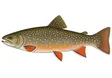
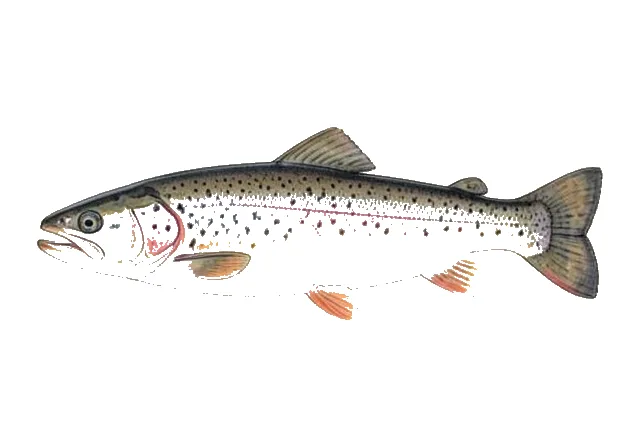
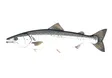
Chum Salmon field guide illustration

About Chum Salmon

The chum salmon (Oncorhynchus keta), also known as dog salmon or keta salmon, is a species of anadromous salmonid fish from the genus Oncorhynchus (Pacific salmon) native to the coastal rivers of the North Pacific and the Beringian Arctic. The English name "chum salmon"comes from the Chinook Jargon term tsəm, meaning"spotted"or"marked"; while keta in the scientific name comes from Russian, which in turn comes from the Evenki language of Eastern Siberia.

In Japan, chum salmon is also known as the white salmon (白鮭 シロサケ, shiro sake), autumn salmon (秋鮭 アキサケ, aki sake) or simply "the salmon "(鮭 サケ, sa ke), while historically it was known in kun'yomi as"stone katsura fish"(石桂魚 さけ, sa ke) up until the Meiji period. In Greater China, it is known academically as the" hook-snout salmon" (Chinese: 钩吻鲑), but is more often called the damaha fish (simplified Chinese: 大马哈鱼; traditional Chinese: 大麻哈魚), which is borrowed from dawa ịmaχa, the Nanai name of the fish used by the Hezhe minority in northern Northeast China.

Description

The body of the chum salmon is deeper than most salmonid species. In common with other species found in the Pacific, the anal fin has 12 to 20 rays, compared with a maximum of 12 in European species. Chum have an ocean coloration of silvery blue green with some indistinct spotting in a darker shade, and a rather paler belly. When they move into fresh water the color changes to dark olive green and the belly color deepens. When adults are near spawning, they have purple blotchy streaks near the caudal peduncle, darker towards the tail. Spawning males typically grow an elongated snout or kype, their lower fins become tipped with white and they have enlarged teeth. Some researchers speculate these characteristics are used to compete for mates.

Sizes

Adult chum salmon usually weigh from 4.4 to 10.0 kg (9.7 to 22.0 lb) with an average length of 60.0 cm (23.6 in). The all-tackle world record for chum recognized by the IGFA is 35 lb (15.88 kg) and 112.0 cm (44.1 in) caught by Todd Johansson on July 11, 1995 at Edye Pass (a channel between Prescott and Porcher Islands in the Hecate Strait) in the North Coast region of British Columbia; while the all-tackle length world record is 71.0 cm (28.0 in) caught by Vicki D. Martin on October 20, 2021 at Wynoochee River in Washington.

Life cycle

Chum live for an average of three to five years, and chum in Alaska mature at the age of five years.

Spawning

Most chum salmon spawn in small streams and intertidal zones. Some chum travel more than 3,200 km (2,000 mi) up the Yukon River. Chum fry migrate out to sea from March through July, almost immediately after becoming free swimmers. They spend one to three years traveling very long distances in the ocean. These are the last salmon to spawn (November to January) in some regions. In Alaska they are the first to spawn in June and August and are then followed by pink and coho salmon. They die about two weeks after they return to the freshwater to spawn. They utilize the lower tributaries of the watershed, tend to build nests called redds, really little more than protected depressions in the gravel, in shallow edges of the watercourse and at the tail end of deep pools. The female lays eggs in the redd, the male sprays milt on the eggs, and the female covers the eggs with gravel. The female can lay up to 4000 eggs.

Diet

Juvenile chum eat zooplankton and insects. Recent studies show that they also eat comb jellies. As adults, they eat smaller fish.

Distribution

Chum salmon have the largest natural range of any Pacific salmon. Chum are found all around the North Pacific, off the coasts of Japan, Korea, the Russian Far East, British Columbia in Canada, and from Alaska to California in the United States. They undergo the longest migrations within the genus Oncorhynchus, far up the Yukon River in Alaska and Canada, and deep into the Amur River basin in Northeast China and Russia. In lesser numbers they migrate thousands of kilometers up the Mackenzie River. In the Arctic Ocean they are found in limited numbers from the Laptev Sea to the Beaufort Sea. In North America chum salmon spawn from the Mackenzie River in the Arctic to as far south as the Umpqua River, Oregon, although they were also reported in the San Lorenzo River near Santa Cruz, California in 1915 and the Sacramento River in northern California in the 1950s. In fall 2017 a half dozen chum salmon were counted in Lagunitas Creek about 25 miles (40 km) north of San Francisco, California.

In the open ocean, chum salmon stay fairly high on the water column, rarely diving below 50 m (160 ft). Their typical swimming depths are 13 m (43 ft) from the surface during the day, and 5 m (16 ft) during the night.

Commercial use and value

The registered total harvest of the chum salmon in the North Pacific in 2010 was some 313,000 tons, corresponding to 91 million fish. Half of the catch was from Japan, and about a quarter each from Russia and the United States. In 2010, the chum salmon harvest was about 34% of the total harvest of all Pacific salmon species by weight.

The chum salmon is the least commercially valuable salmon in North America. Despite being extremely plentiful in Alaska, commercial fishers and sport anglers often choose not to target them because of low market value due to the fact that the chum salmon is the least desirable salmon for human consumption. Recent market developments have increased the demand for chum salmon, due to new markets developed from 1984 to 1994 in Japan and Northern Europe. They are a traditional source of dried salmon.

Conservation

Two populations of chum salmon have been listed under the Endangered Species Act as threatened species. These are the Hood Canal Summer Run population and the Lower Columbia River population.

Susceptibility to diseases

Chum are thought to be fairly resistant to whirling disease, but it is unclear.

Article text: Wikipedia contributors, Chum salmon (source revision). Licensed under CC BY-SA 4.0. Retrieved 2026-10-11.
Diet and feeding

The FishTraits compilation records these diet categories for this species: invertebrates or larval fish; larger animal prey (a source category covering fish, crayfish, crabs, or frogs). These are broad categories, not a claim that every individual consumes every example in a category.

Reported feeding positions include bottom feeding and surface or water-column feeding. The compilation combines published observations; diets can vary with age, locality, and available food.

Habitat preferences

Reported habitat associations include medium to large rivers, streams and small rivers.

The source records associations with gravel, open water. An association indicates reported use, rather than an exclusive requirement.

The species is classified as tolerant of a broad range of salinities. This flag does not specify a salinity range for aquarium care.

Reproduction and parental care

The compilation reports a representative maturity age of 4.5 years. Its maturity field summarizes mean, median, or modal estimates, usually for females; male estimates can be used when female data are unavailable. It is not a fixed age at which every fish first breeds.

Recorded spawning months are Jan, Aug, Sep, Oct, Nov, Dec for the source’s reporting region (CA). This is a regional calendar, not a range-wide schedule.

Size and recorded longevity

FishTraits reports a maximum total length of 100 centimetres. Some entries use an estimated asymptotic length; this value should not be treated as a certified record catch.

Native range

Arctic and Pacific drainages from Anderson and Mackenzie rivers, Northwest Territories, through much of Alaska south to Sacramento River drainage, California; rarely to San Lorenzo River, southern California. Also in northeastern Asia (Page and Burr 1991).

Introduction history

Authorized stockings took place in the 1930s and 1940s. The stocking in Idaho took place in 1939 (Linder 1963). The stocking in Maine took place in 1938 (Everhart 1950). The Michigan stocking occurred in 1945 (Emery 1985).

NOAA Fisheries

Life history and status

ESA Threatened
Columbia River ESU; Hood Canal summer-run ESU
Length
Up to 3.6 feet
Weight
8 to 15 pounds on average, but can weigh up to 45 pounds
Lifespan
Up to 6 years, typically 3-5 years
NOAA management region
Alaska, West Coast

About the species

U.S. wild-caught chum salmon is a smart seafood choice because it is sustainably managed and responsibly harvested under U.S. regulations.

NOAA Fisheries works in cooperation with federal, state, tribal, and Canadian officials to manage these commercial, recreational, and tribal harvest of salmon and steelhead in ocean and inland waters of the West Coast and Alaska. To learn more about management of these fisheries, visit our West Coast and Alaska fisheries management pages.

However, some chum salmon are also protected under the Endangered Species Act. Learn more about protected chum salmon .

Appearance

  • Chum salmon is one of the largest species of Pacific salmon, second only to Chinook salmon in size.
  • When in the ocean, chum salmon are metallic greenish-blue along the back with black speckles, similar to both sockeye and coho salmon.
  • As they enter fresh water, their appearance changes dramatically. Both sexes develop a tiger stripe pattern of bold red and black stripes. Males develop enormous canine-like fangs and their bodies have a striking calico pattern, with the front two-thirds of the flank marked by a bold, jagged, reddish line and the back third by a jagged black line. Spawning females are less flamboyantly colored and do not have fangs.
  • When juvenile chum salmon are about to migrate to sea, they lose their parr marks (vertical bars and spots useful for camouflage) and gain the dark back and light belly of fish living in open water.

Biology

  • Chum salmon are anadromous—they hatch in fresh water streams and rivers then migrate out to the saltwater environment of the ocean to feed and grow.
  • Chum salmon do not reside in fresh water for an extended period (unlike coho, Chinook, and sockeye salmon).
  • They can grow up to 3.6 feet and 30 to 35 pounds, but their average weight is 8 to 15 pounds.
  • Young chum salmon (fry) typically migrate directly to estuarine and marine waters soon after they are born.
  • As they grow larger, they migrate offshore across the North Pacific Ocean.
  • As they approach sexual maturity, they migrate back into coastal waters and return to the fresh water area where they were born to spawn.
  • They typically spawn between the ages of 3 and 6.
  • They spawn from late summer to March, with peak spawning concentrated in early winter when the river flows are high.
  • They usually nest in areas in the lowermost reaches of rivers and streams, within 60 miles of the ocean.
  • They prefer to nest in areas with upwelling currents to provide oxygen for their developing embryos, and they cover their nests (redds) with gravel.
  • In North America, female chum salmon typically have 2,000 to 4,000 eggs.
  • All chum salmon die after they spawn.
  • Young chum salmon feed on insects as they migrate downriver and on insects and marine invertebrates in estuaries and near-shore marine habitats.
  • Adults eat copepods, fishes, mollusks, squid, and tunicates.
  • Various fish and birds prey on juvenile chum salmon. Sharks, sea lions and seals, and orcas eat adult chum salmon.
  • After salmon spawn and die, salmon carcasses are a valuable source of energy and nutrients to the river ecosystem. Carcasses have been shown to improve newly hatched salmon growth and survival by contributing nitrogen and phosphorous compounds to streams.

Where they live

  • Chum salmon spend their early life growing and feeding in fresh water streams, estuaries, and associated wetlands.
  • They spend the remainder of their life foraging in the ocean before returning to the streams and tributaries where they were born to spawn.

Management

We listed the Columbia River and Hood Canal summer-run ESUs as threatened under the Endangered Species Act in 1999.

Learn more about the regulatory history of chum salmon

Science

NOAA Fisheries conducts various research activities on the biology, behavior, and ecology of chum salmon. The results of this research are used to inform management decisions for this species. Chum salmon have not been assessed.

Chum Salmon Research in Alaska

Our work to forecast salmon harvests, assess the impact of commercial fisheries on salmon, and evaluate how salmon populations respond to environmental changes enable us to estimate abundance and trends for chum salmon in Alaska.

More on salmon research in Alaska

Chum Salmon Research in the Pacific Northwest

Our research on Pacific salmon covers several topics including bycatch, salmon harvest forecasts, ecotoxicology, genetics, marine survival and responses to climate change.

More on chum salmon research in the Pacific Northwest

Range

Where it lives

Share of 1,452 GBIF observation records with a state location, across 5 states.
0%
51.4%
Share of 1,452 GBIF observation records with a state location, across 5 states.

Habitat

Water and movement

Water
WoRMS records this species in fresh water, brackish water and the sea.
USGS NAS habitat
Freshwater;Marine
US status
Native transplant — native to part of the United States, moved to other waters inside it.
Migration
Migratory
Pattern
  • Diadromous — moves between fresh water and the sea
  • Anadromous — spawns in fresh water, grows at sea

Classification

Taxonomy

Kingdom
Animalia
Phylum
Chordata
Superclass
Actinopterygii
Class
Teleostei
Order
Salmoniformes
Genus
Oncorhynchus
Species
Oncorhynchus keta
ITIS TSN
161976
WoRMS AphiaID
127183
GBIF key
5204014
Outside the US
ITIS also files it in Canada.

Common questions about Chum Salmon

What is the scientific name of Chum Salmon?
The scientific name is Oncorhynchus keta, in the family Salmonidae. Classification follows ITIS.
Does Chum Salmon live in fresh water or salt water?
WoRMS records this species in fresh water, brackish water and the sea.
Where has Chum Salmon been recorded in the United States?
GBIF has observations in 5 states, with the most records in Alaska, Washington, Oregon. The map shows observation records, which do not establish the complete natural range.
How long does Chum Salmon live?
NOAA Fisheries lists its lifespan as Up to 6 years, typically 3-5 years.
How big does Chum Salmon get?
NOAA Fisheries lists its length as Up to 3.6 feet and its weight as 8 to 15 pounds on average, but can weigh up to 45 pounds.

Closest relatives

Other Oncorhynchus species

Same family

More Salmonidae

Alaska Whitefish1 states
Coregonus nelsoniiSalmonidaeNativeFresh
Apache Trout5 states
Oncorhynchus apacheSalmonidaeNativeFresh
Arctic Char8 states
Salvelinus alpinusSalmonidaeNative and introducedFreshSaltBrackish
Arctic Cisco1 states
Coregonus autumnalisSalmonidaeNativeFreshSaltBrackish
Arctic Grayling16 states
Thymallus arcticusSalmonidaeNative and introducedFresh
Atlantic Salmon26 states
Salmo salarSalmonidaeNative and introducedFreshSaltBrackish
Bear Lake Whitefish2 states
Prosopium abyssicolaSalmonidaeNativeFresh
Bering Cisco1 states
Coregonus laurettaeSalmonidaeNativeFreshSaltBrackish
Blackfin Cisco6 states
Coregonus nigripinnisSalmonidaeNativeFresh
Bloater6 states
Coregonus hoyiSalmonidaeNativeFresh
Bonneville Cisco2 states
Prosopium gemmiferSalmonidaeNativeFresh
Bonneville Whitefish2 states
Prosopium spilonotusSalmonidaeNativeFresh
Broad Whitefish1 states
Coregonus nasusSalmonidaeNativeFreshBrackish
Brook Trout40 states
Salvelinus fontinalisSalmonidaeNative and introducedFreshSaltBrackish
Brown Trout41 states
Salmo truttaSalmonidaeIntroducedFreshSaltBrackish
Bull Trout8 states
Salvelinus confluentusSalmonidaeNativeFreshBrackish
Chinook Salmon18 states
Oncorhynchus tshawytschaSalmonidaeNative and introducedFreshSaltBrackish
Cisco11 states
Coregonus artediSalmonidaeNative and introducedFreshSaltBrackish
Coho Salmon22 states
Oncorhynchus kisutchSalmonidaeNative and introducedFreshSaltBrackish
Cutthroat Trout18 states
Oncorhynchus clarkiiSalmonidaeNative and introducedFreshSaltBrackish
Deepwater Cisco3 states
Coregonus johannaeSalmonidaeNativeFresh
Dolly Varden9 states
Salvelinus malmaSalmonidaeNativeFreshSaltBrackish
Gila Trout2 states
Oncorhynchus gilaeSalmonidaeNative and introducedFresh
Golden Trout8 states
Oncorhynchus aguabonitaSalmonidaeNativeFresh

All 44 species in Salmonidae