Roanoke Logperch

Percina rex

Percidae · freshwater water fish

4 minute read · Species guide

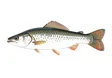
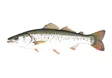
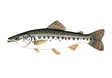
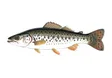
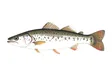
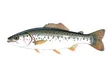
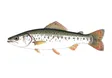
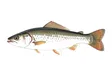
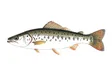
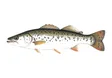
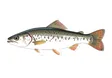
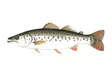
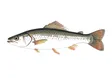
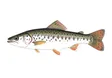
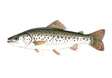
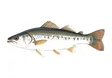
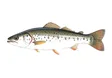
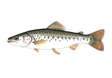
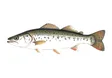
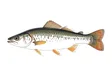
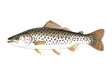
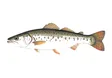
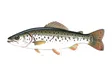
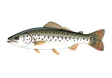
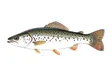
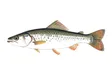
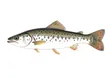
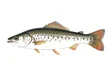
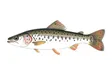
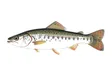
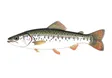
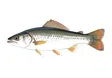
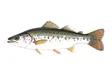
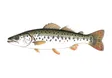
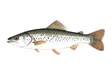
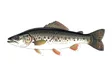
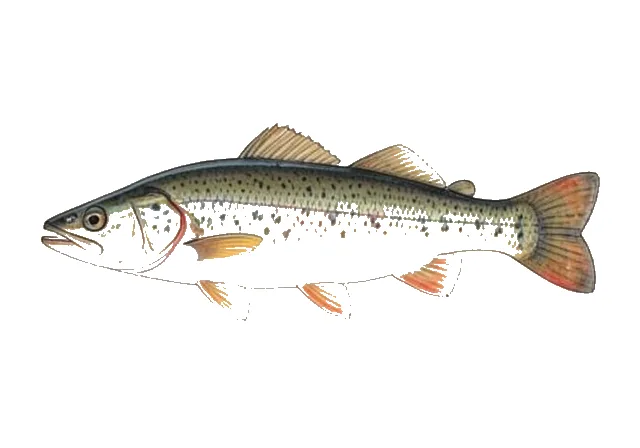
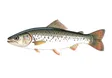
Roanoke Logperch field guide illustration

About Roanoke Logperch

The Roanoke logperch (Percina rex) is a species of freshwater ray-finned fish, a darter from the subfamily Etheostomatinae, part of the family Percidae, which also contains the perches, ruffes and pikeperches. It is found in the Roanoke and Chowan drainages in Virginia and North Carolina in the United States. It inhabits low and moderate-gradient streams and rivers in warm, clear water in mostly unsilted gravel and rubble in runs, pools, and riffles. It is primarily insectivorous. This fish was federally delisted as an endangered species in July 2025.

Description

As an adult the Roanoke logperch is between 80 and 115 millimetres (3.1 and 4.5 in) standard length, with a total length up to 140 millimetres (5.5 in). The light-colored body is somewhat stocky and elongated. There are dark, rounded, and vertically elongated blotches on the side. The fish has a long, cone-shaped snout with a bulbous or blunt tip. There are two dorsal fins, which are both very tall on adult males. The first dorsal fin has an orange band bordered on both sides by black bands. The end of the tail fin is almost straight. The fins have black or brown dark marks on them. The large eyes are near the top of the head of the fish. The fish's upper jaw is longer than its lower jaw.

Distribution and habitat

The Roanoke logperch is known only from the upper reaches of the Roanoke, Dan and Chowan river systems in Virginia, with a small population in North Carolina. It inhabits gravel and boulder runs of slow-moving, warm, small to medium-sized rivers where it is found in riffles, runs and pools with sandy, stony or boulder-strewn bottoms.

Behavior

P. rex is sexually mature by about two to three years of age. Spawning occurs from mid-April to early May in water 12–14 °C (54–57 °F). Each female may produce from 200 to 650 eggs. The eggs are adhesive to surfaces and found on the bottom of the stream or pool.

The Roanoke logperch uses its conical snout to turn over gravel and feed on exposed invertebrates. This enables it to reach prey sheltered beneath rocks that may be unavailable to other benthic fishes; however, this feeding behavior relies on the availability of loosely embedded substrate. In an ecosystem, the Roanoke logperch can be an indication that the river or lake has very low turbidity.

Conservation status

The Roanoke logperch is rated by the IUCN as being "vulnerable". The threats it faces are from urbanization, the impoundment of water resulting in the silting of waterways, and industrial and agricultural pollution. Nevertheless, the population seems fairly stable and may be increasing slightly in the Pigg River.

In popular culture

In 2023 the Roanoke logperch was featured on a United States Postal Service Forever stamp as part of the Endangered Species set, based on a photograph from Joel Sartore's Photo Ark. The stamp was dedicated at a ceremony at the National Grasslands Visitor Center in Wall, South Dakota.

Article text: Wikipedia contributors, Roanoke logperch (source revision). Licensed under CC BY-SA 4.0. Retrieved 2026-10-11.
Diet and feeding

The FishTraits compilation records these diet categories for this species: invertebrates or larval fish. These are broad categories, not a claim that every individual consumes every example in a category.
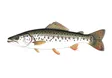
Reported feeding positions include bottom feeding. The compilation combines published observations; diets can vary with age, locality, and available food.

Habitat preferences

Reported habitat associations include medium to large rivers, streams and small rivers.

The source records associations with sand, gravel, cobble. An association indicates reported use, rather than an exclusive requirement.

Reproduction and parental care

The compilation reports a representative maturity age of 2.5 years. Its maturity field summarizes mean, median, or modal estimates, usually for females; male estimates can be used when female data are unavailable. It is not a fixed age at which every fish first breeds.

Recorded spawning months are May, Jun for the source’s reporting region (VA). This is a regional calendar, not a range-wide schedule.

The reproductive-guild classification includes spawning on open substrates without guarding the brood.

Size and recorded longevity

FishTraits reports a maximum total length of 11.6 centimetres. Some entries use an estimated asymptotic length; this value should not be treated as a certified record catch.

Recorded longevity in the compilation is 6 years. Wild observations were preferred, but captive records were accepted where wild records were unavailable, and unspecified records were assumed wild. The value is not a guaranteed wild lifespan or an aquarium life expectancy.

Range

Where it lives

Share of 94 GBIF observation records with a state location, across 2 states.
0%
89.4%
Share of 94 GBIF observation records with a state location, across 2 states.

Share of records by state

Habitat

Water and movement

Water
WoRMS records this species in fresh water.
Migration
Undetermined

Classification

Taxonomy

Kingdom
Animalia
Phylum
Chordata
Superclass
Actinopterygii
Class
Teleostei
Order
Perciformes
Family
Percidae
Genus
Percina
Species
Percina rex
ITIS TSN
168495
WoRMS AphiaID
1019720
GBIF key
2382044

Common questions about Roanoke Logperch

What is the scientific name of Roanoke Logperch?
The scientific name is Percina rex, in the family Percidae. Classification follows ITIS.
Does Roanoke Logperch live in fresh water or salt water?
WoRMS records this species in fresh water.
Where has Roanoke Logperch been recorded in the United States?
GBIF has observations in 2 states, with the most records in Virginia, North Carolina. The map shows observation records, which do not establish the complete natural range.

Closest relatives

Other Percina species

Same family

More Percidae

All 229 species in Percidae