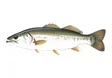
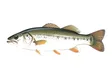
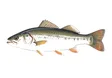
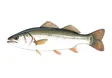
Common names

Types of bass

21 species carry bass in an English common name. They sit in 3 families, so the group is a name, not a scientific rank.

About bass

Bass (/ b æ s /; pl.: bass) is a common name shared by many species of ray-finned fish from the large clade Percomorpha, mainly belonging to the orders Perciformes and Moroniformes, encompassing both freshwater and marine species. The word bass comes from Middle English bars, meaning "perch", despite that none of the commonly referred bass species belong to the perch family Percidae.

Fishing (Black Basses)

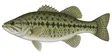
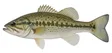
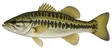
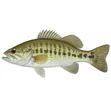
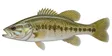
Largemouth, smallmouth, and spotted bass are the most popular game fish in North America. Appearing commonly in 33 states.

Bass fishing is also very popular in South Africa, Japan, and Cuba, in other areas where the fish are introduced. They are often found in lakes, rivers, creeks, and near dams.

When fishing, lures (bass worms), live bait, spinner baits, jig bait, jerkbait and crank bait will work well. Lures that mimic baitfish, worms, crayfish, frogs, and mice are all effective. Fishing with a small mepps or rooster tail in-line spinner is very effective for creek fishing, when bass are scouting for small baitfish. In open water, lures that cover the water quickly such as spoons, spinners and lipless crankbaits.

During the fall and winter months, bass will be less active and eat less. In this situation, one can fish with suspending lures or slow lures like ned rig, suspending jerkbaits. In the summertime, one can throw lures that float or sink 2 – 4ft since bass come to shallow areas and prefer faster lures. One of the better times to fish for bass is spawning season as they are on shallower parts of the water as well with being more aggressive towards anything near its eggs. Depending on weather conditions it causes the fish to move to different spots of water, With harsh sunlight and extreme cold they go deeper in the water whereas cooler temperatures they go to the shallow areas.
Bass species in focus

These species profiles show how members of the group differ. Their biology describes each named species, rather than every fish in the group.

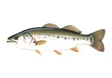
Striped Bass

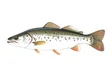
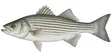
The striped bass (Morone saxatilis), also called the Atlantic striped bass, striper, linesider, rock, or rockfish, is an anadromous perciform fish of the family Moronidae found primarily along the Atlantic coast of North America. It has also been widely introduced into inland recreational fisheries across the United States. Striped bass found in the Gulf of Mexico are a separate strain referred to as Gulf Coast striped bass.

The striped bass is the state fish of Maryland, Rhode Island, and South Carolina, and the state saltwater (marine) fish of New York, New Jersey, Virginia, and New Hampshire. It is generally called the striped bass north of New Jersey, rockfish south of New Jersey, and both in New Jersey.

Morphology and lifespan

The striped bass is a typical member of the family Moronidae in shape, having a streamlined, silvery body marked with longitudinal dark stripes running from behind the gills to the base of the tail. Common mature size is 20 to 40 pounds (9–18 kg). The largest specimen recorded was 124 pounds (56 kg), netted in 1896. Striped bass are believed to live for up to 30 years. The average size in length is 20 to 35 inches (50–90 cm) and approximately 5 to 20 pounds (2–9 kg), but varies based on the fish's age and sex.

Natural distribution

Striped bass are native to the Atlantic coastline of North America from the St. Lawrence River into the Gulf of Mexico to Louisiana. They are anadromous fish that migrate between fresh and salt water. Spawning takes place in fresh water.

Introductions outside their natural range

Striped bass have been introduced to the Pacific Coast of North America and into many large reservoir impoundments across the United States by state game and fish commissions for recreational fishing and as a predator to control populations of gizzard shad. These include: Elephant Butte Lake in New Mexico; Lake Ouachita, Lake Norman in North Carolina; Lake Norfork, Beaver Lake and Lake Hamilton in Arkansas; Lake Thunderbird in Illinois; Lake Pleasant, and Lake Havasu in Arizona; Lake Powell along the Arizona/Utah border; Castaic Lake, Pyramid Lake, Silverwood Lake, Diamond Valley Lake, and San Francisco Bay -Delta in California; Lewis Smith Lake in Alabama; Lake Cumberland in Kentucky; Lake George in Florida; Lake Murray in South Carolina; Lake Lanier in Georgia; Watts Bar Lake, in Tennessee; Lake Mead, Nevada; Lake Texoma on the border of Texas and Oklahoma, Lake Tawakoni, Lake Whitney, Buffalo Springs Lake, Possum Kingdom Lake, and Lake Buchanan in Texas; Raystown Lake in Pennsylvania; Lake Wallenpaupack in Northeastern Pennsylvania; Umpqua River in Oregon and in Virginia's Smith Mountain Lake, Leesville Reservoir, and Lake Anna.

Striped bass have also been introduced into waters in Ecuador, Iran, Latvia, Mexico, Russia, South Africa, and Turkey, primarily for sport fishing and aquaculture.

Read the full species guide.

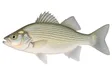
White Bass

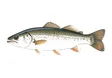
The white bass, silver bass, or sand bass (Morone chrysops) is a freshwater fish of the temperate bass family Moronidae, and is commonly around 12–15 inches long. The species' main color is silver-white to pale green. Its back is dark, with white sides and belly, and with narrow dark stripes running lengthwise on its sides. It has large, rough scales and two dorsal fins. They are widely distributed across North America, inhabiting large reservoirs and rivers. When mating in the spring, they are more often found in shallow rivers, creeks, and streams. They have been introduced in some places as sport fish and also to predate on nuisance fish, such as gizzard shad. It is the state fish of Oklahoma.

Range

White bass are distributed widely across the United States, especially in the Midwest. They are very abundant in Pennsylvania and the area around Lake Erie. Some native ranges of the white bass are the Arkansas River, western Lake Erie, the Detroit River, and Lake Poinsett in South Dakota; they are abundant in the Winnebago lakes system of Wisconsin; and they are also very abundant in Oklahoma. White bass have also been found in rivers that flow to the Mississippi. Native to many northern habitats, they have been introduced in many different waters around the United States, particularly in southern locations. They were also successfully introduced to Manitoba starting in the 1960s, where they have gained importance as a sport fish.

Description

The species' main color is silver-white to pale green. Its back is dark, with white sides and belly, and with narrow dark stripes running lengthwise on its sides. It has large, rough scales and two dorsal fins. The more anterior dorsal fin is much harder and appears to have spines on it. Although these are not true spines, this type of fin is called a spinous ray. The more posterior of the two dorsal fins is much softer, and is thus called a soft-ray. White bass can be distinguished from white perch (Morone americana) by having separated anterior and posterior dorsal fins; the spinous-ray and soft-ray portions of the dorsal fin of white perch are united and both are erected together when the spinous portion is extended. Because the vertebrae do not extend into the tail, the white bass has what is called a homocercal tail. The body is deep and compressed laterally. Most grow to a length between 10 and 12 inches (25 and 30 cm), though they can reach 17 inches (43 cm) or more. Because the dorsal and ventral portions of its tail angle inward toward a point to create a clear angle, the tail is said to be notched.

The record size for white bass caught on fishing tackle, per The International Game Fish Association, is 3.09 kilograms (6 lb 13 oz) shared by fish caught in 1989 in Orange Lake, Orange, Virginia, and in 2010 in Amite River, Louisiana.

Diet

White bass are carnivores. They have four main taxa in their diet: calanoid copepods, cyclopoid copepods, daphnia, and leptodora. They are visual feeders. When not frightened, they will bite readily at live bait such as worms and minnows. Only the largest fish will feed on other fish, and as the summer season progresses, there is an overall trend towards eating fewer fish. Fish that are able to accumulate lipids over the summer are better able to survive cold winters. When looking at midwestern white bass, particularly in South Dakota, diet overlap occurs between the bass and the walleye. As seasons progress through the summer and fall, the amount of diet overlap decreases as a result of both fish increasing in length.

Read the full species guide.

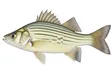
Yellow Bass

The yellow bass (Morone mississippiensis) is a freshwater ray-finned fish of the family Moronidae (temperate bass) native to the Mississippi River catchment of North America.

Description

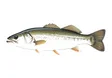
The yellow bass is a deep bodied fish that possesses five to seven dark stripes laterally along the sides, the lowest few of these are often broken or disrupted anterior to the origin of the anal fin. It is somewhat similar to two other sister species in the genus Morone, the white bass and the striped bass, and is distinguishable from both of these species by having the offset lateral stripes above the anal fin, and from not possessing tooth patches on the tongue. The yellow bass differs further from the white bass by having nine to ten anal rays in comparison to eleven or thirteen. The back of the fish is usually a dark olive green, and the abdomen and sides are often a silvery yellow.

Distribution

The yellow bass may be found in somewhat clear waters of the Mississippi River from Minnesota to Louisiana and may also be found in the Trinity River and the Tennessee River. It can also be found in lakes surrounding these rivers, especially in areas with dense vegetation and low turbidity, and may migrate into brackish estuaries.

Diet

Food exploited by juvenile yellow bass include small aquatic invertebrates such as copepods and aquatic insects. The juvenile yellow bass feed almost exclusively on aquatic invertebrates, and once they reach adulthood they feed primarily on other small fishes; the rest of their diet consists of small crustaceans.

Read the full species guide.

Range

Where bass live

How many of the 21 species are recorded in each state.
0
17
How many of the 21 species are recorded in each state.

Taxonomy

Families in this group

Species

All 21 bass species

Alabama Bass11 states
Micropterus henshalliCentrarchidaeNative and introducedFresh
Butterfly Peacock Bass3 states
Cichla ocellarisCichlidaeIntroducedFreshBrackish
Cahaba Bass1 states
Micropterus cahabaeCentrarchidaeNativeFresh
Chattahoochee Bass2 states
Micropterus chattahoochaeCentrarchidaeNativeFresh
Florida Largemouth Bass9 states
Micropterus floridanusCentrarchidaeNative and introducedFresh
Guadalupe Bass2 states
Micropterus treculiiCentrarchidaeNative and introducedFresh
Largemouth Bass48 states
Micropterus salmoidesCentrarchidaeNative and introducedFresh
Ozark Bass3 states
Ambloplites constellatusCentrarchidaeNativeFresh
Redeye Bass12 states
Micropterus coosaeCentrarchidaeNative and introducedFresh
Roanoke Bass2 states
Ambloplites cavifronsCentrarchidaeNative and introducedFresh
Rock Bass44 states
Ambloplites rupestrisCentrarchidaeNative and introducedFresh
Shadow Bass11 states
Ambloplites ariommusCentrarchidaeNativeFresh
Shoal Bass4 states
Micropterus cataractaeCentrarchidaeNative and introducedFresh
Smallmouth Bass47 states
Micropterus dolomieuCentrarchidaeNative and introducedFresh
Spotted Bass30 states
Micropterus punctulatusCentrarchidaeNative and introducedFresh
Striped Bass39 states
Morone saxatilisMoronidaeNative and introducedFreshSaltBrackish
Suwannee Bass3 states
Micropterus notiusCentrarchidaeNativeFresh
Tallapoosa Bass2 states
Micropterus tallapoosaeCentrarchidaeNativeFresh
Warrior Bass1 states
Micropterus warriorensisCentrarchidaeNativeFresh
White Bass37 states
Morone chrysopsMoronidaeNative and introducedFresh
Yellow Bass19 states
Morone mississippiensisMoronidaeNative and introducedFresh