Butterfly Peacock Bass

Cichla ocellaris

Cichlidae · freshwater and brackish water fish

6 minute read · Species guide

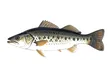
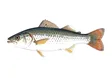
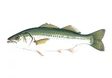
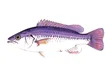
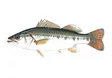
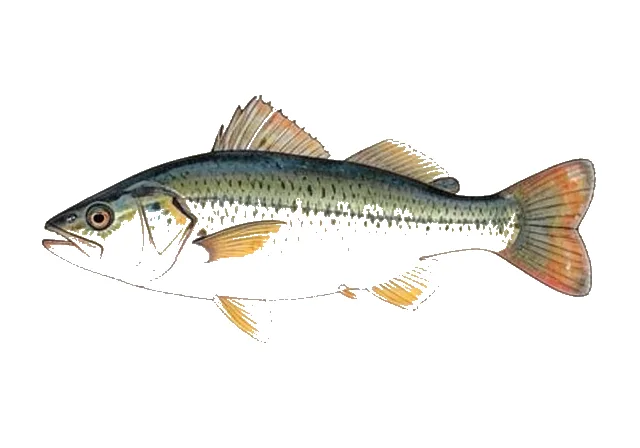
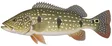
Butterfly Peacock Bass field guide illustration

About Butterfly Peacock Bass

Cichla ocellaris, sometimes known as the butterfly peacock bass ("peacock bass" is also used for some of its relatives), is a very large species of cichlid from South America, and a prized game fish. It reaches 74 cm (29 in) in length. It is native to the Marowijne and Essequibo drainages in the Guianas, and the Branco River in Brazil. It has also been introduced to regions outside its natural range (e.g., Florida, Hawaii, and Puerto Rico), but some uncertainty exists over the exact identity, and at least some of the introductions may involve another Cichla species or hybrids. It is frequently confused with C. monoculus. Studies conclude that the introduction of Cichla ocellaris does not negatively impact fish communities in Florida, making it an effective fisheries management tool.

Appearance and identification

Similarly shaped in body size compared to the largemouth bass, the butterfly peacock bass can reach lengths of up to 29 in (740 mm), but averages 12–14 in (300–360 mm) in length. Body and fin colors range from yellows, greens, and light red to orange. While color is extremely variable, the most prominent physical characteristics are the three vertical black lines along the sides of the body. With having the tendency to fade, these lines may not be found on some older fish. The common name of the fish originates from the black spot with a yellow halo surrounding. This spot is located on the caudal fin and resembles the feathers of a peacock.

Spawning habits and locations

Spawning season for the fish is between April and September, with a height in May and June. Like other bass, adult fish create large flat surfaces that are hardened down near the shore in order to serve as a spawn location. Once the eggs are laid, both adults are responsible for protecting them from prey.

Growth and age

The growth from spawn to the average length of 12–14 inches progresses rapidly throughout the first 16–18 months of life. Upon additional growth beyond the average, a fish can potentially add up to 1.5 pounds of weight with every extra inch grown. Average lifespan for the Butterfly Peacock Bass is 6–10 years.

Origins and habitat

Native to the tropical Americas, the true Cichla ocellaris is restricted to the Guianas. The species thrives in warm, slow-moving bodies of water including lakes, ponds, canals, and rock pits. Like other species of bass, they tend to inhabit shaded areas under trees, bridges, and culverts. Butterfly peacock bass cannot survive in salinities exceeding 18 ppt, nor can they live in temperatures less than 60 degrees Fahrenheit.

Current distribution

In 1984, the Florida Fish and Game Commission introduced the species to the lakes and rivers of Miami-Dade County, in south Florida. Upon introduction, roughly 10,000 young fish were introduced to the Miami-Dade County area via releasing the juveniles into the lakes and canals. Distribution throughout the area can be attributed to the travel of this species through the warm, freshwater canals of Florida. It is thought that these fish inhabit up to 300 miles (500 km) of canals specifically. Due to the fish's inability to tolerate salt water and low water temperatures, this species of fish is typically found only in the Miami-Dade and Broward County areas of Florida, with a few sightings in Texas and Louisiana.

This species has also been introduced in large numbers to Trị An Lake in Vietnam

Ecological and feeding habits

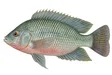
The introduction of the butterfly peacock bass to Florida has successfully aided in managing and controlling tilapia and oscar populations that once were a threat via overpopulation. The fish primarily feeds on fish allowing for them to be roleplayers in the balancing of a habitat. These fish typically feed during daylight hours where visibility is better for hunting. Like other bass, they use their incredible speed and large mouth to capture prey.

Game fishing

Regarded as the most popular sportfish in south Florida, millions of game fishermen travel each year to fish for Butterfly Peacock Bass, spending about 8 million dollars combined in resources and efforts. The fish is available to boat fishermen along with fishermen located on the shore. The species is fished similarly to largemouth bass, with shiners used as live bait and topwater jigs and jerkbaits as suggested tackle. Florida includes a daily bag limit of two fish, with a maximum length of 17 in (430 mm).

Edibility

The edibility of the fish is considered to be very good, as it provides a clean and flaky white filet. Many people refer to it as having a "non-fishy" taste.

Article text: Wikipedia contributors, Cichla ocellaris (source revision). Licensed under CC BY-SA 4.0. Retrieved 2026-10-11.
Identification and appearance

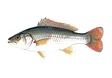
Currently, systematists recognize five Cichla species; however, taxonomic problems still exist, and several species require description (Kullander and Nijssen 1989). The genus is currently being revised by Sven Kullander of Sweden. Willis et al. (2007) published results of molecular inquiry into systematic relationships within Cichla. Many fish currently called C. ocellaris by state resource agencies may be members of another Cichla species or possibly hybrids. Photographs of C. ocellaris, or of closely related forms, appeared in Kullander and Nijssen (1989), Axelrod (1993), and in Larsen (1993).

Native range

Tropical America. Although the genus Cichla is widespread in the Amazon and Orinoco basins of South America, true Cichla ocellaris apparently is restricted to the Guianas (Kullander 1986; Kullander and Nijssen 1989).

Habitat and ecology

Members of the genus Cichla are large, diurnal piscivores that consume a wide variety of prey (Winemiller et al. 1997). Cichla ocellaris is a pair-forming substrate spawner, with spawning occurring on flat surfaces and newly hatched larvae moved by the parents to nests in small shallow depressions in the sediment or on rocks or logs (Zaret 1980)

Introduction history

Peacock cichlids have been stocked by state agencies as a sport fish. The Florida Game and Fresh Water Fish Commission obtained breeding stock from several regions of South America. The progeny were released into open waters primarily as a sport fish, but also with the hope that it would prey on and thus control other introduced cichlids (Courtenay and Robins 1989; Shafland 1995). About 10,000 juveniles were released in the Fort Lauderdale area of Dade County, Florida, in 1964 (Moe 1964), but apparently those fish did not survive the cold winter of 1964-1965 (Courtenay et al. 1974; Courtenay and Robins 1989). More recent introductions into canals in Broward and Miami-Dade counties, starting in late 1984, resulted in established populations (Larsen 1993; Shafland 1995). The Hawaiian Division of Fish and Game obtained their broodstock from an aquatic supply dealer in New York, ca. 1957 (Kanayama 1968). These fish reportedly came from Guyana (Larsen 1993). The first Texas populations were released by the Texas Parks and Wildlife Department in 1978. Texas stock came from Colombia and possibly Brazil, and from the Florida Game and Fresh Water Fish Commission. The single fish reported from Arizona was likely an aquarium release or illegal stocking, as no authorized stocking of this fish has occurred in that state.

Ecological impacts

Summary of species impacts derived from literature review. Click on an icon to find out more... Largely unknown. Introduced Cichla in Florida include native fishes in their diets (Nico, unpublished data) although Shafland (1999) claimed no evidence for adverse effects on native communities. There is some evidence that it may exclude largemouth bass from spawning aread in Florida canals. The introduction of peacock cichlids into Lake Gatun, Panama, was followed by largescale changes in food-web structure and aquatic community composition (Zaret and Paine 1973).

Record fish

The Florida state record

  • Florida9.11 lb

    Broward · 10/8/2021 · Felipe Prieto

Each figure is the state agency’s own certified record. The site holds record tables for 11 states so far, so a state missing here has not been read yet. It is not a state where this fish holds no record.

Range

Where it lives

Share of 948 GBIF observation records with a state location, across 3 states.
0%
97.5%
Share of 948 GBIF observation records with a state location, across 3 states.

Share of records by state

Habitat

Water and movement

Water
WoRMS records this species in fresh water and brackish water.
USGS NAS habitat
Freshwater
US status
Exotic — the USGS Nonindigenous Aquatic Species database lists it as introduced from outside North America.
Migration
Not migratory

Classification

Taxonomy

Kingdom
Animalia
Phylum
Chordata
Superclass
Actinopterygii
Class
Teleostei
Order
Perciformes
Family
Cichlidae
Genus
Cichla
Species
Cichla ocellaris
ITIS TSN
169857
WoRMS AphiaID
280183
GBIF key
5208153
Outside the US
ITIS also files it in Caribbean Territories, Central Pacific Territories.

Common questions about Butterfly Peacock Bass

What is the scientific name of Butterfly Peacock Bass?
The scientific name is Cichla ocellaris, in the family Cichlidae. Classification follows ITIS.
Does Butterfly Peacock Bass live in fresh water or salt water?
WoRMS records this species in fresh water and brackish water.
Where has Butterfly Peacock Bass been recorded in the United States?
GBIF has observations in 3 states, with the most records in Florida, Texas, Hawaii. The map shows observation records, which do not establish the complete natural range.

Closest relatives

Other Cichla species

Same family

More Cichlidae