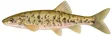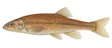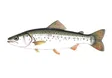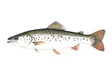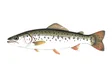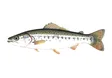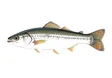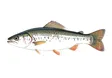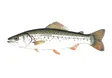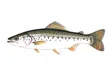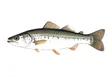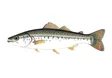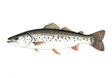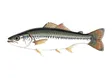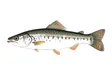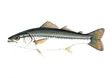
Habitat and ecology
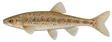
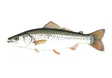
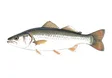
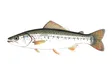
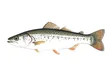
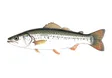
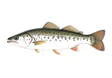
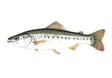
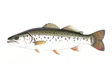
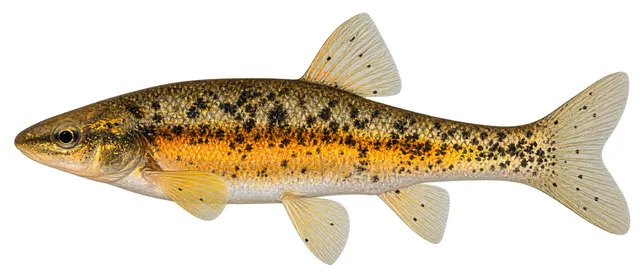
The western blacknose dace inhabits the upper Mississippi, Ohio, and Great Lakes drainages, from as far north as south-central Canada to northern Alabama and Georgia and east to eastern Lake Erie. Young daces prefer to inhabit shallower, quiet pools with silty bottoms while more mature daces prefer streams with consistently high turbulence patterns and plenty of places to hide since they are a prey species. Most often they occupy water depths ranging from 100 to 200 mm with gravel or cobble bottoms. They can also be found in riffles hiding under large rocks or boulders.
Reproduction
Spawning begins in spring and continues to mid-summer depending on water temperature. The western blacknose dace spawn in areas with gravel bottoms unlike other daces who spawn in the beds of other Cyprinids. Since the western blacknose dace is so short lived, only living up to four years, daces begin reproducing after 2 years. Unlike other species of dace the two Ohio Rhinichthys species do not spawn in the nests of larger minnow species.
Food and feeding habits
Western blacknose dace are mostly carnivorous and exhibit changes in diet as they grow older. Young dace diets consist mostly of Dipteran larvae. Mature daces continue to feed on Dipteran larvae when available but a large portion of their diet also include amphipods. The change in diet is thought to be because of the change in the areas that they inhabit once the daces mature.
Article text: Wikipedia contributors, Western blacknose dace (source revision). Licensed under CC BY-SA 4.0. Retrieved 2026-10-11.