Mississippi Silvery Minnow

Hybognathus nuchalis

Leuciscidae · freshwater water fish

4 minute read · Species guide

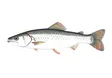
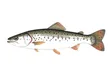
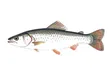
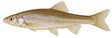
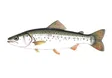
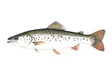
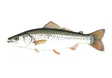
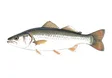
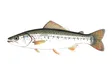
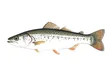
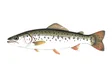
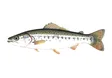
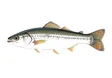
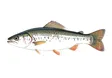
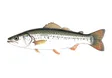
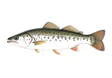
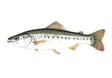
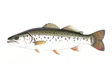
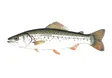
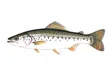
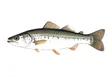
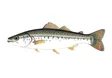
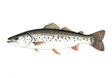
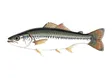
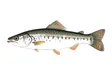
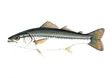
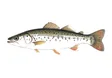
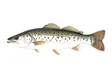
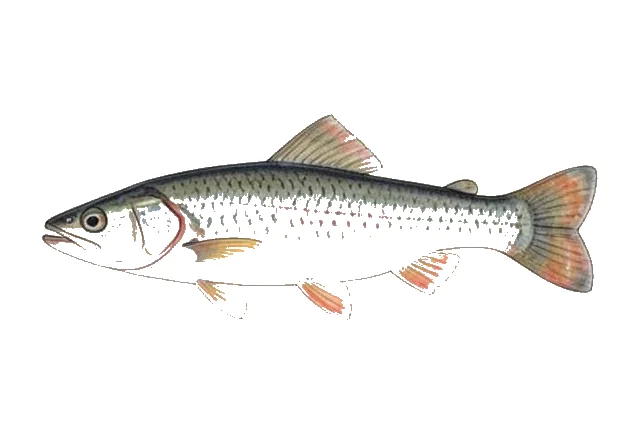
Mississippi Silvery Minnow field guide illustration

About Mississippi Silvery Minnow

The Mississippi silvery minnow (Hybognathus nuchalis) is a species of freshwater ray-finned fish belonging to the family Leuciscidae, the shiners, daces and minnows. It is one of the 324 fish species found in Tennessee. Relative to other minnows, the Mississippi Silvery Minnow is a large minnow. These minnows require a body of water with little to no current. The most documentation of these minnows is from the Little and Great Miami river along with the Ohio river and tributes off these rivers. In terms of conservation, the population in Ohio is at an all-time low, but overall there is little conservation concern about this specific minnow. In general there has been little research done on the Mississippi silvery minnow.

Distribution

The Mississippi silvery minnow is native to North America. These fish have been documented to live in lowland areas of the Mississippi River basin. This stretches from Minnesota down to Ohio. There is also documentation of these minnows in the Mississippi River all the way to the Gulf of Mexico. It is very common to find these fish in smaller streams right before the stream connects to a larger stream/river. Other states that have records of the Mississippi silvery minnow include Illinois, Alabama, Texas, Pennsylvania and New Mexico.

Physical description

The Mississippi silvery minnow gets its name in part due to its appearance. The majority of this fish is covered in silver scales that are very reflective with a large dark stripe down the center of their back. The average minnow length is between 12 and 13 centimetres (4.7 and 5.1 in). The Mississippi silvery minnow has a lateral line on each side of its body. These minnows have a pair of pectoral fins, along with a pair of small pelvic fins. The Mississippi silvery minnow, like many other minnows, have an anal fin, dorsal fin, and a powerful caudal fin. The dorsal fin is very centered between the head and the caudal fin. All fins on the fish have no markings and are transparent. The Mississippi silvery minnow closely resembles the Cypress minnow.

Habitat and diet

The Mississippi silvery minnow mainly lives in freshwater river basins and shallow ponds/streams. These shallow streams are usually low gradient streams. These fish are categorized as benthopelagic feeders. The Mississippi silvery minnow feeds in large schools of other silvery minnows and feed mainly on benthos, which is the flora and fauna found on the bottom or in the sediment, and also small swimming organisms.

Reproduction

The female Mississippi silvery minnow spreads her eggs along the bottom in soft mud. The offspring will spawn in early summer, dates vary depending on location. For example, in Wisconsin they spawn in late April. Eggs are on average 0.8mm in diameter. Mississippi silvery minnows do not provide any sort of parental care from either the male or female. These minnows have also never been documented defending any sort of territory.

Other notes

There is little to no information/research done on the Mississippi silvery minnow. This is most likely due to how many different types of minnows populate the United States. If there's any question to what the Mississippi silvery minnow looks like Google Images will provide adequate photos; Due to copyright issues, no pictures were able to be inserted onto this page.

Article text: Wikipedia contributors, Mississippi silvery minnow (source revision). Licensed under CC BY-SA 4.0. Retrieved 2026-10-11.
Diet and feeding

The FishTraits compilation records these diet categories for this species: algae or phytoplankton; aquatic or other vascular plants; detritus or unidentified plant material; invertebrates or larval fish. These are broad categories, not a claim that every individual consumes every example in a category.

Reported feeding positions include bottom feeding. The compilation combines published observations; diets can vary with age, locality, and available food.

Habitat preferences

Reported habitat associations include medium to large rivers, streams and small rivers.

The source records associations with muck, clay or silt, sand, gravel. An association indicates reported use, rather than an exclusive requirement.

Reproduction and parental care

The compilation reports a representative maturity age of 1 years. Its maturity field summarizes mean, median, or modal estimates, usually for females; male estimates can be used when female data are unavailable. It is not a fixed age at which every fish first breeds.

Recorded spawning months are Apr, May, Jun, Jul for the source’s reporting region (WI). This is a regional calendar, not a range-wide schedule.

The reproductive-guild classification includes spawning on open substrates without guarding the brood.

Size and recorded longevity

FishTraits reports a maximum total length of 18 centimetres. Some entries use an estimated asymptotic length; this value should not be treated as a certified record catch.

Recorded longevity in the compilation is 3 years. Wild observations were preferred, but captive records were accepted where wild records were unavailable, and unspecified records were assumed wild. The value is not a guaranteed wild lifespan or an aquarium life expectancy.

Range

Where it lives

Share of 4,771 GBIF observation records with a state location, across 36 states. The orange dots are USGS stream-survey sites where this species was caught.
0%
17.5%
Share of 4,771 GBIF observation records with a state location, across 36 states. The orange dots are USGS stream-survey sites where this species was caught.

A blank area on the dot layer usually means nobody sampled there, not that the fish is absent. Turn on “every survey site” to see where the survey looked.

The USGS stream survey caught it at 188 of its sites, in 13 states. That survey and the GBIF records are two different counts of two different things, so the site keeps them apart.

Habitat

Water and movement

Water
WoRMS records this species in fresh water.
USGS NAS habitat
Freshwater
US status
Native transplant — native to part of the United States, moved to other waters inside it.
Migration
Undetermined

Classification

Taxonomy

Kingdom
Animalia
Phylum
Chordata
Superclass
Actinopterygii
Class
Teleostei
Order
Cypriniformes
Genus
Hybognathus
Species
Hybognathus nuchalis
ITIS TSN
163360
WoRMS AphiaID
1021474
GBIF key
2364395

Common questions about Mississippi Silvery Minnow

What is the scientific name of Mississippi Silvery Minnow?
The scientific name is Hybognathus nuchalis, in the family Leuciscidae. Classification follows ITIS.
Does Mississippi Silvery Minnow live in fresh water or salt water?
WoRMS records this species in fresh water.
Where has Mississippi Silvery Minnow been recorded in the United States?
GBIF has observations in 36 states, with the most records in Mississippi, Illinois, Texas. The map shows observation records, which do not establish the complete natural range.

Closest relatives

Other Hybognathus species

Same family

More Leuciscidae

Alabama Shiner4 states
Cyprinella callistiaLeuciscidaeNativeFresh
Allegheny Pearl Dace19 states
Margariscus margaritaLeuciscidaeNative and introducedFresh
Altamaha Shiner1 states
Cyprinella xaenuraLeuciscidaeNativeFresh
Alvord Chub2 states
Siphateles alvordensisLeuciscidaeNativeFresh
Apalachee Shiner3 states
Pteronotropis grandipinnisLeuciscidaeNativeFresh
Arkansas River Shiner5 states
Notropis girardiLeuciscidaeNative and introducedFresh
Arroyo Chub1 states
Gila orcuttiiLeuciscidaeNative and introducedFresh
Bandfin Shiner5 states
Luxilus zonistiusLeuciscidaeNative and introducedFresh
Bannerfin Shiner5 states
Cyprinella leedsiLeuciscidaeNativeFresh
Beautiful Shiner3 states
Cyprinella formosaLeuciscidaeNativeFresh
Bedrock Shiner3 states
Notropis rupestrisLeuciscidaeNativeFresh
Bigeye Chub25 states
Hybopsis amblopsLeuciscidaeNative and introducedFresh
Bigeye Shiner17 states
Notropis boopsLeuciscidaeNative and introducedFresh
Bigmouth Chub3 states
Nocomis platyrhynchusLeuciscidaeNativeFresh
Bigmouth Shiner21 states
Notropis dorsalisLeuciscidaeNative and introducedFresh
Blackchin Shiner13 states
Notropis heterodonLeuciscidaeNativeFresh
Blackmouth Shiner3 states
Notropis melanostomusLeuciscidaeNativeFresh
Blacknose Shiner21 states
Notropis heterolepisLeuciscidaeNative and introducedFresh
Blackside Dace2 states
Chrosomus cumberlandensisLeuciscidaeNativeFresh
Blackspot Shiner5 states
Notropis atrocaudalisLeuciscidaeNativeFresh
Blacktail Shiner14 states
Cyprinella venustaLeuciscidaeNative and introducedFresh
Blacktip Shiner4 states
Lythrurus atrapiculusLeuciscidaeNative and introducedFresh
Bleeding Shiner8 states
Luxilus zonatusLeuciscidaeNativeFresh
Blotched Chub6 states
Erimystax insignisLeuciscidaeNativeFresh

All 267 species in Leuciscidae