Cypress Minnow

Hybognathus hayi

Leuciscidae · freshwater water fish

4 minute read · Species guide

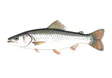
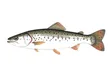
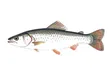
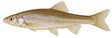
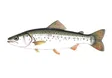
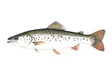
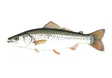
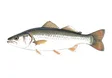
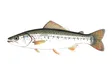
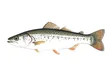
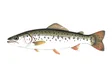
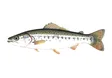
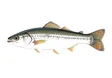
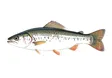
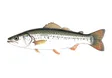
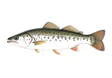
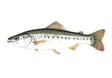
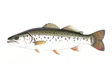
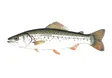
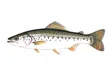
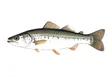
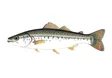
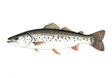
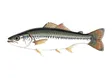
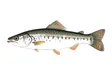
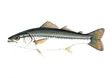
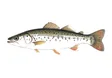
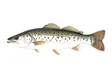
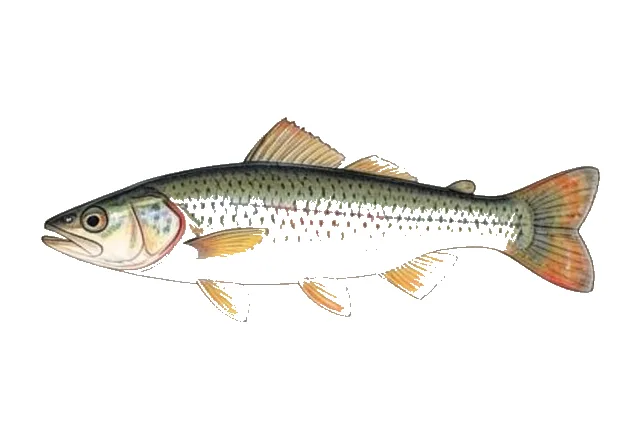
Cypress Minnow field guide illustration

About Cypress Minnow

The Cypress minnow (Hybognathus hayi) is a species of freshwater ray-finned fish belonging to the family Leuciscidae, the shiners, daces and minnows. It is endemic to the United States where it occurs in the Mississippi and Ohio drainages as well as some other rivers which drain into the Gulf of Mexico.

Description

The Cypress minnow is a rather stout-bodied, silvery fish which had reasonably large eyes and a small, upward pointing mouth. The scales on anterior portion of the flanks have prominent dark edges which form an obvious diamond-shaped pattern. There are no barbels. There is a distinct dusky or greenish-golden strip down the centre of the yellowish-olive back, this stripe is wider than the base of the dorsal fin, the back also has emerald spots. The flanks are silvery, lacking any dusky stripe while the belly is. The fins lack any markings. The males develop tubercles over most of the body when breeding. Adults are 76.2 to 152.4 millimetres (3 to 6 in) in length.

Distribution

The Cypress minnow is endemic to the United States where it is found in the Ohio and River basins from south western Indiana to southern Illinois south to Louisiana. It is also found in the Escambia River in Florida and Alabama and in the Sabine River in Texas.

Habitat

The Cypress minnow is a lowland species which occurs in the backwaters of large, sluggish rivers and in oxbow lakes over substrates of sand, silt and organic debris. It avoids areas with faster currents.

Biology

The Cypress minnow has a lengthy intestine, which loops a number of times and the length intestinal tract is suggestive of a herbivorous diet digesting plant matter. This is supported by a study in Kentucky which found that these fish consumed sand, detritus, algae and other plant materials. These fish reach sexual maturity at around a year old, at a length of 50.8 to 76.2 millimetres (2 to 3 in). They appear to spawn in the spring, and as in its congeners the eggs are likely that to be scattered over the substrate with no parental care of either the eggs or the young.

Conservation

The Cypress minnow is not common and has been described as being sporadic or rare, and to have declined drastically in abundance at the edges of its range in the states of Indiana, Illinois, Kentucky, Missouri, Oklahoma, Florida, and Arkansas. However, its historical range within most of these states was rather limited in extent. The species was collected in Indiana since the early 1940s where it is known from 4 localities and it was only recently rediscovered in Missouri and Illinois. Cypress minnows may have become extinct in the southern bend of the Tennessee River in Alabama. In the core parts of the range, recent surveys indicate that the species is apparently maintaining its populations. The population trend is uncertain but the Cypress minnow probably has a relatively stable or slowly declining population.

Article text: Wikipedia contributors, Cypress minnow (source revision). Licensed under CC BY-SA 4.0. Retrieved 2026-10-11.
Diet and feeding

The FishTraits compilation records these diet categories for this species: algae or phytoplankton; aquatic or other vascular plants; detritus or unidentified plant material; invertebrates or larval fish. These are broad categories, not a claim that every individual consumes every example in a category.

Reported feeding positions include bottom feeding. The compilation combines published observations; diets can vary with age, locality, and available food.

Habitat preferences

Reported habitat associations include medium to large rivers, streams and small rivers.

The source records associations with muck, organic debris, large woody material. An association indicates reported use, rather than an exclusive requirement.

Reproduction and parental care

The compilation reports a representative maturity age of 1 years. Its maturity field summarizes mean, median, or modal estimates, usually for females; male estimates can be used when female data are unavailable. It is not a fixed age at which every fish first breeds.

Recorded spawning months are Apr for the source’s reporting region (KY). This is a regional calendar, not a range-wide schedule.

The reproductive-guild classification includes spawning on open substrates without guarding the brood.

Size and recorded longevity

FishTraits reports a maximum total length of 12 centimetres. Some entries use an estimated asymptotic length; this value should not be treated as a certified record catch.

Recorded longevity in the compilation is 3.5 years. Wild observations were preferred, but captive records were accepted where wild records were unavailable, and unspecified records were assumed wild. The value is not a guaranteed wild lifespan or an aquarium life expectancy.

Range

Where it lives

Share of 582 GBIF observation records with a state location, across 12 states. The orange dots are USGS stream-survey sites where this species was caught.
0%
33.5%
Share of 582 GBIF observation records with a state location, across 12 states. The orange dots are USGS stream-survey sites where this species was caught.

A blank area on the dot layer usually means nobody sampled there, not that the fish is absent. Turn on “every survey site” to see where the survey looked.

The USGS stream survey caught it at 23 of its sites, in 7 states. That survey and the GBIF records are two different counts of two different things, so the site keeps them apart.

Habitat

Water and movement

Water
WoRMS records this species in fresh water.
Migration
Undetermined

Classification

Taxonomy

Kingdom
Animalia
Phylum
Chordata
Superclass
Actinopterygii
Class
Teleostei
Order
Cypriniformes
Genus
Hybognathus
Species
Hybognathus hayi
ITIS TSN
163364
WoRMS AphiaID
1019834
GBIF key
2364404

Common questions about Cypress Minnow

What is the scientific name of Cypress Minnow?
The scientific name is Hybognathus hayi, in the family Leuciscidae. Classification follows ITIS.
Does Cypress Minnow live in fresh water or salt water?
WoRMS records this species in fresh water.
Where has Cypress Minnow been recorded in the United States?
GBIF has observations in 12 states, with the most records in Mississippi, Alabama, Arkansas. The map shows observation records, which do not establish the complete natural range.

Closest relatives

Other Hybognathus species

Same family

More Leuciscidae

Alabama Shiner4 states
Cyprinella callistiaLeuciscidaeNativeFresh
Allegheny Pearl Dace19 states
Margariscus margaritaLeuciscidaeNative and introducedFresh
Altamaha Shiner1 states
Cyprinella xaenuraLeuciscidaeNativeFresh
Alvord Chub2 states
Siphateles alvordensisLeuciscidaeNativeFresh
Apalachee Shiner3 states
Pteronotropis grandipinnisLeuciscidaeNativeFresh
Arkansas River Shiner5 states
Notropis girardiLeuciscidaeNative and introducedFresh
Arroyo Chub1 states
Gila orcuttiiLeuciscidaeNative and introducedFresh
Bandfin Shiner5 states
Luxilus zonistiusLeuciscidaeNative and introducedFresh
Bannerfin Shiner5 states
Cyprinella leedsiLeuciscidaeNativeFresh
Beautiful Shiner3 states
Cyprinella formosaLeuciscidaeNativeFresh
Bedrock Shiner3 states
Notropis rupestrisLeuciscidaeNativeFresh
Bigeye Chub25 states
Hybopsis amblopsLeuciscidaeNative and introducedFresh
Bigeye Shiner17 states
Notropis boopsLeuciscidaeNative and introducedFresh
Bigmouth Chub3 states
Nocomis platyrhynchusLeuciscidaeNativeFresh
Bigmouth Shiner21 states
Notropis dorsalisLeuciscidaeNative and introducedFresh
Blackchin Shiner13 states
Notropis heterodonLeuciscidaeNativeFresh
Blackmouth Shiner3 states
Notropis melanostomusLeuciscidaeNativeFresh
Blacknose Shiner21 states
Notropis heterolepisLeuciscidaeNative and introducedFresh
Blackside Dace2 states
Chrosomus cumberlandensisLeuciscidaeNativeFresh
Blackspot Shiner5 states
Notropis atrocaudalisLeuciscidaeNativeFresh
Blacktail Shiner14 states
Cyprinella venustaLeuciscidaeNative and introducedFresh
Blacktip Shiner4 states
Lythrurus atrapiculusLeuciscidaeNative and introducedFresh
Bleeding Shiner8 states
Luxilus zonatusLeuciscidaeNativeFresh
Blotched Chub6 states
Erimystax insignisLeuciscidaeNativeFresh

All 267 species in Leuciscidae