Rio Grande Silvery Minnow

Hybognathus amarus

Leuciscidae · freshwater water fish

4 minute read · Species guide

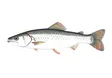
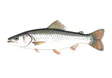
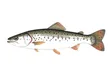
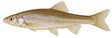
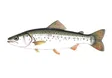
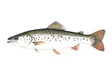
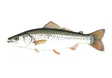
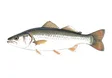
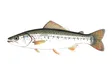
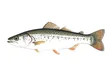
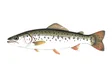
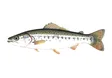
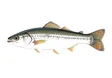
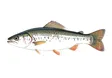
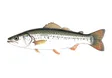
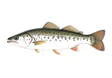
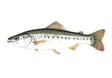
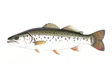
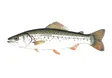
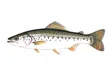
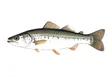
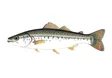
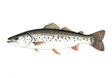
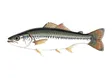
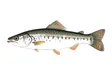
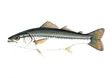
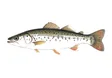
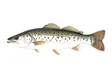
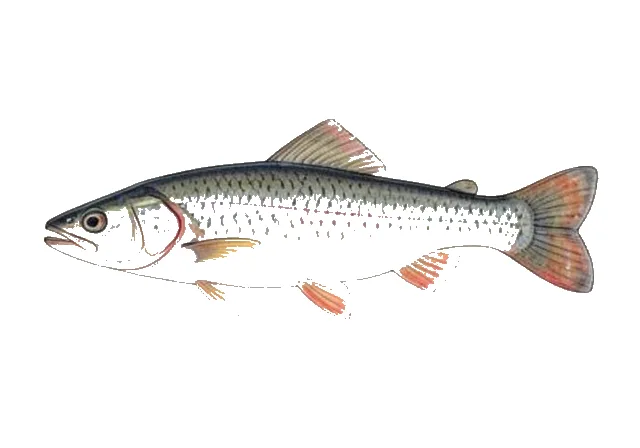
Rio Grande Silvery Minnow field guide illustration

About Rio Grande Silvery Minnow

The Rio Grande silvery minnow (Hybognathus amarus) or Rio Grande minnow, is a species of freshwater ray-finned fish belonging to the family Leuciscidae, the shiners, daces, and minnows. This is a small, herbivorous, North American fish, one of the seven North American members of the genus Hybognathus.

The Rio Grande silvery minnow is one of the most endangered fish in North America, according to the U. S. Fish and Wildlife Service (USFWS). It was classified as endangered in the U.S. in 1994 and now is found in less than 5% of its natural habitat in the Rio Grande. Historically, the minnow was found from Española, New Mexico, to the Gulf of Mexico in Texas. Now, it can only be seen between Cochiti Dam and Elephant Butte Reservoir. It can also be found in a small pond in North Carolina.

Description

It is a stout, silvery minnow with moderately small eyes and a small mouth. Adults may reach 3.5 in (89 mm) in total length.

Diet and behavior

Rio Grande silvery minnows are herbivores whose diet is believed to consist of river plants and benthic macroinvertebrates, though little research has been conducted into their diet due to the difficulty of getting into their stomachs. They play a role in keeping water clean by eating algae.

Silvery minnows tend to skim the bottom of rivers and streams and are prolific spawners. They serve as food source for other animals.

Reproduction

The Rio Grande silvery minnow's eggs hatch in about 24 hours into larvae that can swim in just 3 to 4 days. A species so programmed for survival, unsurprisingly, once dominated a biological niche that spanned roughly 3,000 meandering miles (4,825 km) in New Mexico and Texas.

Classification under the Endangered Species Act

The Rio Grande silvery minnow was first listed on July 20, 1994. It is currently designated as endangered in its entire range. The population decline of the Rio Grande silvery minnow has been almost directly proportional to recent alterations to the Rio Grande over the past century. Multiple diversions for municipal and agricultural uses have occurred, including alteration of the natural hydrograph (no spring runoff to cue spawning), habitat degradation from river narrowing and canalization, and construction of diversion dams that prevent migration. Even with the minnow's listing in 1994, its population has continued to drop at a great rate. Minnow numbers are now considerably below their 1994 population, and the Rio Grande silvery minnow is found in only 5% of its former habitat.

Alterations of the Rio Grande include not only the modification of the flow of water by dams and channels, but also the unintentional pollution of the water, which can originate from many factors, the major ones being effluents by the military and industrial companies and wastewater from nearby cities and towns.

Restoration efforts

In 2000, the USFWS initiated a silvery minnow egg salvage pilot project. Biologists from the service, Bureau of Reclamation, and University of New Mexico collect minnow eggs and reproductively ready adult minnows near Elephant Butte, where these efforts do not disturb upstream populations. Captured adult minnows are induced to spawn, either at the Albuquerque Biological Park or the USFWS's New Mexico Fishery Resources Office. Biologists then either return the resulting fry to the Rio Grande or hold them for captive propagation.

The silvery minnow refugium

as taken from the Van H. Gilbert Architect PC official page:

Article text: Wikipedia contributors, Rio Grande silvery minnow (source revision). Licensed under CC BY-SA 4.0. Retrieved 2026-10-11.
Diet and feeding

The FishTraits compilation records these diet categories for this species: algae or phytoplankton; aquatic or other vascular plants; detritus or unidentified plant material; invertebrates or larval fish. These are broad categories, not a claim that every individual consumes every example in a category.

Reported feeding positions include bottom feeding and surface or water-column feeding. The compilation combines published observations; diets can vary with age, locality, and available food.

Habitat preferences

Reported habitat associations include medium to large rivers, streams and small rivers.

The source records associations with muck, clay or silt, sand, gravel. An association indicates reported use, rather than an exclusive requirement.

Reproduction and parental care

The compilation reports a representative maturity age of 1.5 years. Its maturity field summarizes mean, median, or modal estimates, usually for females; male estimates can be used when female data are unavailable. It is not a fixed age at which every fish first breeds.

Recorded spawning months are Mar, Apr, May, Jun, Jul for the source’s reporting region (NM). This is a regional calendar, not a range-wide schedule.

The reproductive-guild classification includes spawning on open substrates without guarding the brood.

Size and recorded longevity

FishTraits reports a maximum total length of 8.2 centimetres. Some entries use an estimated asymptotic length; this value should not be treated as a certified record catch.

Recorded longevity in the compilation is 5 years. Wild observations were preferred, but captive records were accepted where wild records were unavailable, and unspecified records were assumed wild. The value is not a guaranteed wild lifespan or an aquarium life expectancy.

Range

Where it lives

Share of 3,157 GBIF observation records with a state location, across 2 states.
0%
95%
Share of 3,157 GBIF observation records with a state location, across 2 states.

Share of records by state

Habitat

Water and movement

Water
WoRMS records this species in fresh water.
Migration
Migratory
Pattern

Classification

Taxonomy

Kingdom
Animalia
Phylum
Chordata
Superclass
Actinopterygii
Class
Teleostei
Order
Cypriniformes
Genus
Hybognathus
Species
Hybognathus amarus
ITIS TSN
163365
WoRMS AphiaID
1419452
GBIF key
2364398
Outside the US
ITIS also files it in Mexico.

Common questions about Rio Grande Silvery Minnow

What is the scientific name of Rio Grande Silvery Minnow?
The scientific name is Hybognathus amarus, in the family Leuciscidae. Classification follows ITIS.
Does Rio Grande Silvery Minnow live in fresh water or salt water?
WoRMS records this species in fresh water.
Where has Rio Grande Silvery Minnow been recorded in the United States?
GBIF has observations in 2 states, with the most records in New Mexico, Texas. The map shows observation records, which do not establish the complete natural range.

Closest relatives

Other Hybognathus species

Same family

More Leuciscidae

Alabama Shiner4 states
Cyprinella callistiaLeuciscidaeNativeFresh
Allegheny Pearl Dace19 states
Margariscus margaritaLeuciscidaeNative and introducedFresh
Altamaha Shiner1 states
Cyprinella xaenuraLeuciscidaeNativeFresh
Alvord Chub2 states
Siphateles alvordensisLeuciscidaeNativeFresh
Apalachee Shiner3 states
Pteronotropis grandipinnisLeuciscidaeNativeFresh
Arkansas River Shiner5 states
Notropis girardiLeuciscidaeNative and introducedFresh
Arroyo Chub1 states
Gila orcuttiiLeuciscidaeNative and introducedFresh
Bandfin Shiner5 states
Luxilus zonistiusLeuciscidaeNative and introducedFresh
Bannerfin Shiner5 states
Cyprinella leedsiLeuciscidaeNativeFresh
Beautiful Shiner3 states
Cyprinella formosaLeuciscidaeNativeFresh
Bedrock Shiner3 states
Notropis rupestrisLeuciscidaeNativeFresh
Bigeye Chub25 states
Hybopsis amblopsLeuciscidaeNative and introducedFresh
Bigeye Shiner17 states
Notropis boopsLeuciscidaeNative and introducedFresh
Bigmouth Chub3 states
Nocomis platyrhynchusLeuciscidaeNativeFresh
Bigmouth Shiner21 states
Notropis dorsalisLeuciscidaeNative and introducedFresh
Blackchin Shiner13 states
Notropis heterodonLeuciscidaeNativeFresh
Blackmouth Shiner3 states
Notropis melanostomusLeuciscidaeNativeFresh
Blacknose Shiner21 states
Notropis heterolepisLeuciscidaeNative and introducedFresh
Blackside Dace2 states
Chrosomus cumberlandensisLeuciscidaeNativeFresh
Blackspot Shiner5 states
Notropis atrocaudalisLeuciscidaeNativeFresh
Blacktail Shiner14 states
Cyprinella venustaLeuciscidaeNative and introducedFresh
Blacktip Shiner4 states
Lythrurus atrapiculusLeuciscidaeNative and introducedFresh
Bleeding Shiner8 states
Luxilus zonatusLeuciscidaeNativeFresh
Blotched Chub6 states
Erimystax insignisLeuciscidaeNativeFresh

All 267 species in Leuciscidae