Chihuahua Shiner

Notropis chihuahua

Leuciscidae · freshwater water fish

4 minute read · Species guide

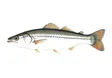
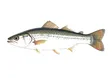
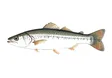
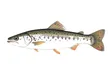
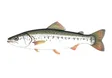
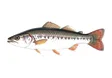
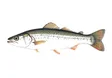
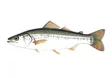
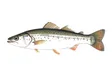
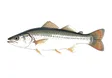
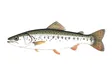
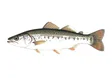
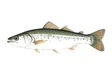
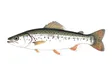
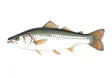
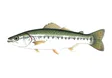
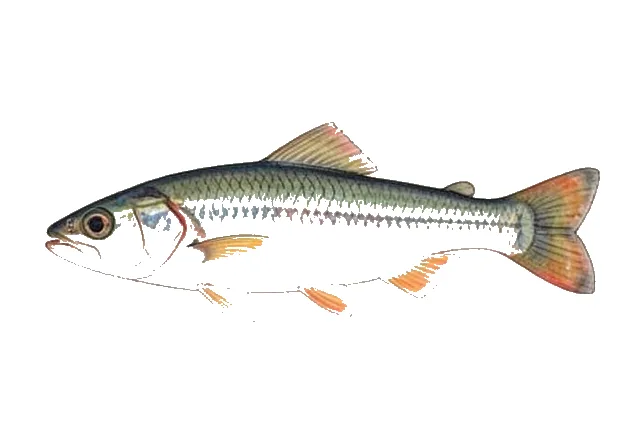
Chihuahua Shiner field guide illustration

About Chihuahua Shiner

The Chihuahua shiner (Miniellus chihuahua) is a species of freshwater ray-finned fish belonging to the family Leuciscidae, the shiners, daces and minnows. It is found in southern Texas and northern Mexico.

Description

The Chihuahua shiner has a stout, barely compressed body which is deepest under its nape with the mouth being horizontal and situated under the rather rounded snout. It has a complete lateral line; there are normally less than 10 rays in the dorsal fin and the longest ray is twice the length of the last ray and the first ray is a tiny splinter-like ray which is closely attached to the second ray, which is a well developed unbranched ray. The origin of the dorsal fin is directly over that of the pelvic fin. The anal fin has 7 soft rays. It has a thin lower lip which lacks any fleshy lobes. The lateral line has 33-37 scales and is normally straight or it is a broad arch. Breeding males develop tubercles but these are less marked in non-breeding males and are absent in females. It has numerous large black spots widely scattered over the straw yellow back, the opercle, the area beneath the eye and the sides of snout; there is a black wedge on the caudal peduncle. The lateral line pores at front are outlined in black while the lips are yellow to pale orange as are the dorsal, caudal, and pectoral fins. It often shows a dusky stripe along the back with another stripe along the silvery flank which is dusky at the head end shading to black at the rear. It is white below with a silvery peritoneum. It grows to 64 mm (2.5 in) in standard length or 8 cm (3.1 in) total length.

Distribution

The Chihuahua shiner is found in the Rio Grande drainage from near the mouth to the mouth of the Rio Conchos and lower Pecos River in Texas. It is also found in the smaller tributaries of the Rio Conchos in Chihuahua and Durango in Mexico where it is abundant.

Habitat and ecology

The Chihuahua shiner is a species of small to medium sized streams where it occurs in areas with gravel to sand substrates, in clear, cool, flowing waters; it has also been recorded over rubble bottoms with some boulders, bedrock and silt. It may occur where vegetation is present. Areas where it is found are often associated with springs. It has a long spawning season which lasts from March through to early August. The females have 400 to 900 mature ova in their ovaries and there are usually more males than females with the sex ratio varying from 1.3 males: 1 female to 1.6 males:1 female. Examination of the gut contents show that these fish prey mostly on small aquatic insects. The most common intestinal parasite is a nematode. They are known to live for up to two years.

Conservation

Threats to the Chihuahua shiner include the depletion of water in the tributary creeks which are critical to the breeding and rearing of young and the introduction of exotic fish which may compete with or prey on this species.

Article text: Wikipedia contributors, Chihuahua shiner (source revision). Licensed under CC BY-SA 4.0. Retrieved 2026-10-12.


Diet and feeding

The FishTraits compilation records these diet categories for this species: invertebrates or larval fish. These are broad categories, not a claim that every individual consumes every example in a category.

Reported feeding positions include bottom feeding and surface or water-column feeding. The compilation combines published observations; diets can vary with age, locality, and available food.

Habitat preferences

Reported habitat associations include streams and small rivers.

The source records associations with muck, sand, gravel, cobble, boulders, bedrock, vegetation. An association indicates reported use, rather than an exclusive requirement.

Reproduction and parental care

Recorded spawning months are Mar, Apr, May, Jun, Jul, Aug for the source’s reporting region (TX). This is a regional calendar, not a range-wide schedule.

Size and recorded longevity

FishTraits reports a maximum total length of 6.4 centimetres. Some entries use an estimated asymptotic length; this value should not be treated as a certified record catch.

Recorded longevity in the compilation is 3 years. Wild observations were preferred, but captive records were accepted where wild records were unavailable, and unspecified records were assumed wild. The value is not a guaranteed wild lifespan or an aquarium life expectancy.

Range

Where it lives

Share of 205 GBIF observation records with a state location, across 1 states.
0%
100%
Share of 205 GBIF observation records with a state location, across 1 states.

Share of records by state

Habitat

Water and movement

Water
WoRMS records this species in fresh water.
USGS NAS habitat
Freshwater
US status
Native transplant — native to part of the United States, moved to other waters inside it.
Migration
Undetermined

Classification

Taxonomy

Kingdom
Animalia
Phylum
Chordata
Superclass
Actinopterygii
Class
Teleostei
Order
Cypriniformes
Genus
Notropis
Species
Notropis chihuahua
ITIS TSN
163434
WoRMS AphiaID
1019540
GBIF key
2362238
Outside the US
ITIS also files it in Mexico.

Common questions about Chihuahua Shiner

What is the scientific name of Chihuahua Shiner?
The scientific name is Notropis chihuahua, in the family Leuciscidae. Classification follows ITIS.
Does Chihuahua Shiner live in fresh water or salt water?
WoRMS records this species in fresh water.
Where has Chihuahua Shiner been recorded in the United States?
GBIF has observations in 1 states, with the most records in Texas. The map shows observation records, which do not establish the complete natural range.

Closest relatives

Other Notropis species

Arkansas River Shiner5 states
Notropis girardiLeuciscidaeNative and introducedFresh
Bedrock Shiner3 states
Notropis rupestrisLeuciscidaeNativeFresh
Bigeye Shiner17 states
Notropis boopsLeuciscidaeNative and introducedFresh
Bigmouth Shiner21 states
Notropis dorsalisLeuciscidaeNative and introducedFresh
Blackchin Shiner13 states
Notropis heterodonLeuciscidaeNativeFresh
Blackmouth Shiner3 states
Notropis melanostomusLeuciscidaeNativeFresh
Blacknose Shiner21 states
Notropis heterolepisLeuciscidaeNative and introducedFresh
Blackspot Shiner5 states
Notropis atrocaudalisLeuciscidaeNativeFresh
Bluntnose Shiner3 states
Notropis simusLeuciscidaeNativeFresh
Bridle Shiner22 states
Notropis bifrenatusLeuciscidaeNativeFresh
Burrhead Shiner3 states
Notropis asperifronsLeuciscidaeNativeFresh
Cahaba Shiner1 states
Notropis cahabaeLeuciscidaeNativeFresh
Cape Fear Shiner1 states
Notropis mekistocholasLeuciscidaeNativeFresh
Carmine Shiner16 states
Notropis percobromusLeuciscidaeNativeFresh
Channel Shiner15 states
Notropis wickliffiLeuciscidaeNativeFresh
Chub Shiner4 states
Notropis potteriLeuciscidaeNative and introducedFresh
Coastal Shiner8 states
Notropis petersoniLeuciscidaeNativeFresh
Comely Shiner11 states
Notropis amoenusLeuciscidaeNative and introducedFresh
Coosa Shiner9 states
Notropis xaenocephalusLeuciscidaeNative and introducedFresh
Dusky Shiner6 states
Notropis cummingsaeLeuciscidaeNativeFresh
Emerald Shiner35 states
Notropis atherinoidesLeuciscidaeNative and introducedFresh
Fluvial Shiner3 states
Notropis edwardraneyiLeuciscidaeNativeFresh
Ghost Shiner16 states
Notropis buchananiLeuciscidaeNative and introducedFresh
Greenhead Shiner6 states
Notropis chlorocephalusLeuciscidaeNativeFresh

Same family

More Leuciscidae

Alabama Shiner4 states
Cyprinella callistiaLeuciscidaeNativeFresh
Allegheny Pearl Dace19 states
Margariscus margaritaLeuciscidaeNative and introducedFresh
Altamaha Shiner1 states
Cyprinella xaenuraLeuciscidaeNativeFresh
Alvord Chub2 states
Siphateles alvordensisLeuciscidaeNativeFresh
Apalachee Shiner3 states
Pteronotropis grandipinnisLeuciscidaeNativeFresh
Arkansas River Shiner5 states
Notropis girardiLeuciscidaeNative and introducedFresh
Arroyo Chub1 states
Gila orcuttiiLeuciscidaeNative and introducedFresh
Bandfin Shiner5 states
Luxilus zonistiusLeuciscidaeNative and introducedFresh
Bannerfin Shiner5 states
Cyprinella leedsiLeuciscidaeNativeFresh
Beautiful Shiner3 states
Cyprinella formosaLeuciscidaeNativeFresh
Bedrock Shiner3 states
Notropis rupestrisLeuciscidaeNativeFresh
Bigeye Chub25 states
Hybopsis amblopsLeuciscidaeNative and introducedFresh
Bigeye Shiner17 states
Notropis boopsLeuciscidaeNative and introducedFresh
Bigmouth Chub3 states
Nocomis platyrhynchusLeuciscidaeNativeFresh
Bigmouth Shiner21 states
Notropis dorsalisLeuciscidaeNative and introducedFresh
Blackchin Shiner13 states
Notropis heterodonLeuciscidaeNativeFresh
Blackmouth Shiner3 states
Notropis melanostomusLeuciscidaeNativeFresh
Blacknose Shiner21 states
Notropis heterolepisLeuciscidaeNative and introducedFresh
Blackside Dace2 states
Chrosomus cumberlandensisLeuciscidaeNativeFresh
Blackspot Shiner5 states
Notropis atrocaudalisLeuciscidaeNativeFresh
Blacktail Shiner14 states
Cyprinella venustaLeuciscidaeNative and introducedFresh
Blacktip Shiner4 states
Lythrurus atrapiculusLeuciscidaeNative and introducedFresh
Bleeding Shiner8 states
Luxilus zonatusLeuciscidaeNativeFresh
Blotched Chub6 states
Erimystax insignisLeuciscidaeNativeFresh

All 267 species in Leuciscidae