Ironcolor Shiner

Notropis chalybaeus

Leuciscidae · freshwater water fish

4 minute read · Species guide

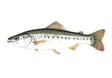
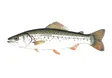
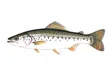
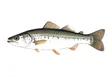
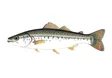
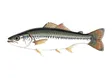
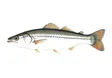
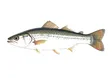
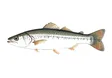
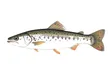
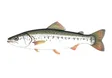
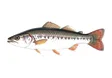
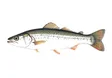
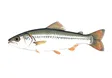
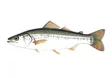
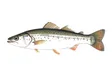
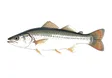
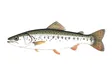
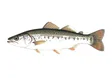
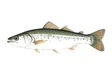
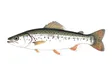
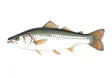
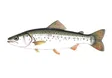
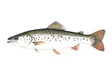
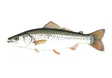
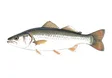
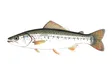
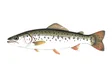
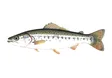
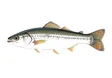
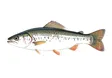
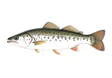
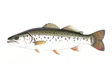
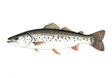
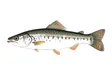
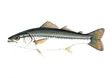
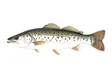
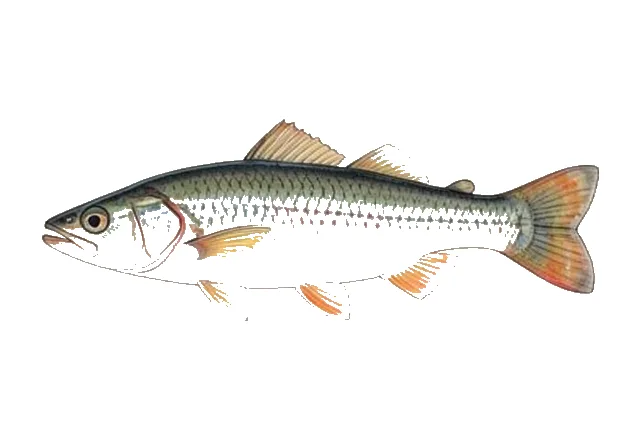
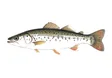
Ironcolor Shiner field guide illustration

About Ironcolor Shiner

The ironcolor shiner (Alburnops chalybaeus) is a species of freshwater ray-finned fish from the family Leuciscidae, the shiners, daces and minnows. It is a widespread species in streams and rivers in eastern North America.

Description

The ironcolor shiner is a relatively small fish with a total length ranging from 45–65 millimetres (1.8–2.6 in). It has a yellowish back and sides with a well-defined black lateral stripe stretching from the caudal peduncle to the snout and there us some pigmentation on the chin and lips. It has a shorter snout than the width of its eye and the small mouth has a black palate. When breeding the males develop a bright orange stripe above their black lateral stripes as well as frequently having orange spots above and below the black spot on the caudal fin. The fins are almost unpigmented and lack any distinct markings but breeding males may develop orange coloration on the fins and over the body. Males also develop tiny tubercles around mouth, snout and the first few pectoral fin rays. The underside from the breast to the pectoral fin base has no scales. The lateral line has 31–36 cycloid scales which are rounded in shape.

Distribution

The ironcolor shiner is endemic to the eastern United States where it occurs from New York south to Florida and west to the Mississippi Basin with outlying populations in the San Marcos River, Texas; the Illinois River drainage in Illinois and Indiana; the Cedar River in Iowa; and the Wisconsin River and Lake Winnebago drainage system in Wisconsin; and the Lake Michigan drainage of southern Michigan and northern Indiana. It has been extirpated from Iowa and once thought to be extirpated from Pennsylvania. The only existing population left in Pennsylvania is in Marshalls Creek. In South Carolina it is widespread but patchily distributed, while in New York the only known population is in the Bashakill wetlands near Port Jervis.

Habitat

The ironcolor shiner is found in the pools and slow stretches of clear, oligotrophic creeks and small rivers which have sandy beds but which have well-developed submerged vegetation. They can also occur in swamps over soft substrates in Illinois. They occur in areas vegetated with plants such as bladderwort, pondweed and Elodea while the presence of sand appears to be important for spawning. They are not normally found in groundwater supplied streams but there is a relict, disjunct population in the San Marcos River basin in Texas which occurs in the spring-fed upper reaches of the river.

Biology

In the northern parts of its range the ironcolor shiner spawns from mid-April into July while in Florida it starts as late as September. The males chase the females in areas with little or no current and the eggs are broadcast over the substrate and sink into the sand. They hatch after two days and the fish attain sexual maturity at one year of age. They swim in medium-sized schools made up of fish from different age classes in open water and they feed on small invertebrates. Food items recorded include small crustaceans such as amphipods, cladocerans, and ostracods;, aquatic insects including caddis fly, midge, and mayfly larvae, as well as corixids, and ants. Filamentous algae is also consumed but this is not digested.

Conservation

The ironcolor shiner has a large range in the lowlands of the eastern and central United States but in the western parts of its range there are many disjunct populations and these have suffered declines and extirpations caused by stream siltation and water pollution. It has also declined in the northern parts of its range but the population in New York's Bashakill wetlands is currently stable.

Article text: Wikipedia contributors, Ironcolor shiner (source revision). Licensed under CC BY-SA 4.0. Retrieved 2026-10-12.
Diet and feeding

The FishTraits compilation records these diet categories for this species: algae or phytoplankton; invertebrates or larval fish. These are broad categories, not a claim that every individual consumes every example in a category.
Reported feeding positions include bottom feeding and surface or water-column feeding. The compilation combines published observations; diets can vary with age, locality, and available food.

Habitat preferences

Reported habitat associations include streams and small rivers, creeks.

Reproduction and parental care

The compilation reports a representative maturity age of 1 years. Its maturity field summarizes mean, median, or modal estimates, usually for females; male estimates can be used when female data are unavailable. It is not a fixed age at which every fish first breeds.

Batch or serial spawning has been reported somewhere in the species’ range. This does not establish the same spawning pattern for every population.

Recorded spawning months are May, Jun for the source’s reporting region (NC). This is a regional calendar, not a range-wide schedule.

The reproductive-guild classification includes spawning on open substrates without guarding the brood.

Size and recorded longevity

FishTraits reports a maximum total length of 6.5 centimetres. Some entries use an estimated asymptotic length; this value should not be treated as a certified record catch.

Recorded longevity in the compilation is 3 years. Wild observations were preferred, but captive records were accepted where wild records were unavailable, and unspecified records were assumed wild. The value is not a guaranteed wild lifespan or an aquarium life expectancy.

Range

Where it lives

Share of 1,755 GBIF observation records with a state location, across 22 states. The orange dots are USGS stream-survey sites where this species was caught.
0%
29.6%
Share of 1,755 GBIF observation records with a state location, across 22 states. The orange dots are USGS stream-survey sites where this species was caught.

A blank area on the dot layer usually means nobody sampled there, not that the fish is absent. Turn on “every survey site” to see where the survey looked.

The USGS stream survey caught it at 51 of its sites, in 12 states. That survey and the GBIF records are two different counts of two different things, so the site keeps them apart.

Habitat

Water and movement

Water
WoRMS records this species in fresh water.
Migration
Undetermined

Classification

Taxonomy

Kingdom
Animalia
Phylum
Chordata
Superclass
Actinopterygii
Class
Teleostei
Order
Cypriniformes
Genus
Notropis
Species
Notropis chalybaeus
ITIS TSN
163403
WoRMS AphiaID
1020810
GBIF key
2362302

Common questions about Ironcolor Shiner

What is the scientific name of Ironcolor Shiner?
The scientific name is Notropis chalybaeus, in the family Leuciscidae. Classification follows ITIS.
Does Ironcolor Shiner live in fresh water or salt water?
WoRMS records this species in fresh water.
Where has Ironcolor Shiner been recorded in the United States?
GBIF has observations in 22 states, with the most records in Florida, North Carolina, Texas. The map shows observation records, which do not establish the complete natural range.

Closest relatives

Other Notropis species

Arkansas River Shiner5 states
Notropis girardiLeuciscidaeNative and introducedFresh
Bedrock Shiner3 states
Notropis rupestrisLeuciscidaeNativeFresh
Bigeye Shiner17 states
Notropis boopsLeuciscidaeNative and introducedFresh
Bigmouth Shiner21 states
Notropis dorsalisLeuciscidaeNative and introducedFresh
Blackchin Shiner13 states
Notropis heterodonLeuciscidaeNativeFresh
Blackmouth Shiner3 states
Notropis melanostomusLeuciscidaeNativeFresh
Blacknose Shiner21 states
Notropis heterolepisLeuciscidaeNative and introducedFresh
Blackspot Shiner5 states
Notropis atrocaudalisLeuciscidaeNativeFresh
Bluntnose Shiner3 states
Notropis simusLeuciscidaeNativeFresh
Bridle Shiner22 states
Notropis bifrenatusLeuciscidaeNativeFresh
Burrhead Shiner3 states
Notropis asperifronsLeuciscidaeNativeFresh
Cahaba Shiner1 states
Notropis cahabaeLeuciscidaeNativeFresh
Cape Fear Shiner1 states
Notropis mekistocholasLeuciscidaeNativeFresh
Carmine Shiner16 states
Notropis percobromusLeuciscidaeNativeFresh
Channel Shiner15 states
Notropis wickliffiLeuciscidaeNativeFresh
Chihuahua Shiner1 states
Notropis chihuahuaLeuciscidaeNative and introducedFresh
Chub Shiner4 states
Notropis potteriLeuciscidaeNative and introducedFresh
Coastal Shiner8 states
Notropis petersoniLeuciscidaeNativeFresh
Comely Shiner11 states
Notropis amoenusLeuciscidaeNative and introducedFresh
Coosa Shiner9 states
Notropis xaenocephalusLeuciscidaeNative and introducedFresh
Dusky Shiner6 states
Notropis cummingsaeLeuciscidaeNativeFresh
Emerald Shiner35 states
Notropis atherinoidesLeuciscidaeNative and introducedFresh
Fluvial Shiner3 states
Notropis edwardraneyiLeuciscidaeNativeFresh
Ghost Shiner16 states
Notropis buchananiLeuciscidaeNative and introducedFresh

Same family

More Leuciscidae

Alabama Shiner4 states
Cyprinella callistiaLeuciscidaeNativeFresh
Allegheny Pearl Dace19 states
Margariscus margaritaLeuciscidaeNative and introducedFresh
Altamaha Shiner1 states
Cyprinella xaenuraLeuciscidaeNativeFresh
Alvord Chub2 states
Siphateles alvordensisLeuciscidaeNativeFresh
Apalachee Shiner3 states
Pteronotropis grandipinnisLeuciscidaeNativeFresh
Arkansas River Shiner5 states
Notropis girardiLeuciscidaeNative and introducedFresh
Arroyo Chub1 states
Gila orcuttiiLeuciscidaeNative and introducedFresh
Bandfin Shiner5 states
Luxilus zonistiusLeuciscidaeNative and introducedFresh
Bannerfin Shiner5 states
Cyprinella leedsiLeuciscidaeNativeFresh
Beautiful Shiner3 states
Cyprinella formosaLeuciscidaeNativeFresh
Bedrock Shiner3 states
Notropis rupestrisLeuciscidaeNativeFresh
Bigeye Chub25 states
Hybopsis amblopsLeuciscidaeNative and introducedFresh
Bigeye Shiner17 states
Notropis boopsLeuciscidaeNative and introducedFresh
Bigmouth Chub3 states
Nocomis platyrhynchusLeuciscidaeNativeFresh
Bigmouth Shiner21 states
Notropis dorsalisLeuciscidaeNative and introducedFresh
Blackchin Shiner13 states
Notropis heterodonLeuciscidaeNativeFresh
Blackmouth Shiner3 states
Notropis melanostomusLeuciscidaeNativeFresh
Blacknose Shiner21 states
Notropis heterolepisLeuciscidaeNative and introducedFresh
Blackside Dace2 states
Chrosomus cumberlandensisLeuciscidaeNativeFresh
Blackspot Shiner5 states
Notropis atrocaudalisLeuciscidaeNativeFresh
Blacktail Shiner14 states
Cyprinella venustaLeuciscidaeNative and introducedFresh
Blacktip Shiner4 states
Lythrurus atrapiculusLeuciscidaeNative and introducedFresh
Bleeding Shiner8 states
Luxilus zonatusLeuciscidaeNativeFresh
Blotched Chub6 states
Erimystax insignisLeuciscidaeNativeFresh

All 267 species in Leuciscidae