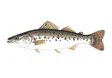
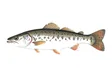
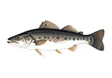
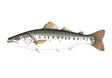
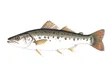
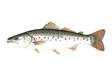
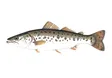
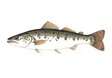
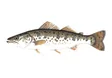
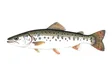
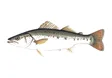
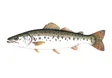
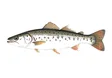
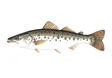
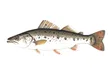
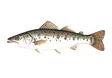
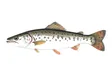
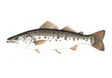
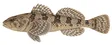
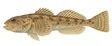
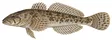
These species profiles show how members of the group differ. Their biology describes each named species, rather than every fish in the group.
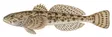
Clinocottus acuticeps, the sharpnose sculpin, is a species of marine ray-finned fish belonging to the family Cottidae, the typical sculpins. This sculpin is found in the eastern Pacific Ocean.
Taxonomy
Clinocottus acuticeps was first formally described as Oligocottus acuticeps in 1896 by the American ichthyologist Charles Henry Gilbert with its type locality given as Unalaska harbor, Unalaska in the Aleutian Islands. The genus Clinocottus has been resolved as paraphyletic or polyphyletic by some workers and that this species is apparently not closely related to the other species included in the genus. This species is the only species subgenus Oxycottus which was proposed as a genus by David Starr Jordan and Evermann in 1898. The specific name, acuticeps, means "pointed head", alluding to the sharply pointed snout.
Description
Clinocottus acuticeps is identified by its flattened, three branched papilla near the anus and the possession of cirri on the eyeballs, head, the lateral line and at the tip of each spine in the dorsal fin. The lateral line is high near the head, curves down along the middle of the flanks and straightens as it nears the caudal peduncle. Each of the first 15 pores has a slender cirrus. The penultimate ray in the anal fin is the longest. The pectoral fins extend as far as or just beyond the origin of the anal fin. The caudal fin is rounded. The dorsal fins are supported by between 7 and 9 spines and 14 and 16 soft rays while the anal fin has 13 to 16 soft rays. They reach a maximum published total length of 6.4 cm (2.5 in). They vary on color, depending upon their habitat, sometimes the color is an almost uniform bright green, however, the typical color is green to light brown on the upper body marked with dark wedge-shaped saddles, the widest part being the lowest. They sometimes have a dark horizontal stripe along the lateral line which may be broken by pale spots. The underside is creamy to white. there are three dark radiating lines running from the eye, the first runs to the snout, the next down to the rear of the mouth and the third backwards to the base of the spine on the preoperculum. There is a dark blotch on the spiny dorsal fin between the first and the third spine. All the other fins, other than the plain pelvic fins, are typically dusky with indistinct mottling or barring.
Distribution and habitat
Clinocottus acuticeps is found in the Eastern Pacific Ocean along the North American Pacific coast from the Bering Sea to the Big Sur River in central California. It is found at depths of between 0 and 20 m where it is common in rocky intertidal and subtidal areas, as well as on sand and among Zostera and macroalgae. They may desert tidal pools if the condition of the water becomes unsuitable and this species sometimes enters fresh water. This species shows a preference for substrates of sand, gravel and rock with mussels of the genus Mytilus.
 Read the full species guide.
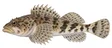
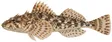
The Coastrange sculpin (Cottus aleuticus) is a freshwater sculpin of the genus Cottus. They are commonly found near the ocean in western North America, namely Canada and the United States. It is also known as the Aleutian sculpin.
Taxonomy
While the name Uranidea microstoma has been used since 1880, it is unclear whether or not it corresponds to the Coastrange sculpin. The species was first officially described by Charles Henry Gilbert in 1896 from specimens he collected in streams of Unalaska island the year before. Cottus protrusus was described in 1933, but it has since been found to be a synonym.
Description
The Coastrange sculpin can be distinguished from other species due to several unique traits. It only has one pore under its chin, no palatine teeth, and no distinct gap between the two dorsal fins. Adults can grow to be as long as 17 cm, although their average length is only 6 cm. Their maximum reported life span is 8 years. Breeding female Coastrange sculpins are generally larger than males. Breeding males are almost entirely black with a tiny bit of orange trim on the first dorsal fin.
Cultus Lake population
At Cultus Lake in British Columbia, one of the three areas where isolated populations of Coastrange sculpin exist, there exists a form smaller than the norm that lives in the lake depths and migrates to the surface at night to feed. The Adults of this subtype, while smaller are fully mature save for the enlarged head pores that juveniles of the main form exhibit. There is no clear explanation for what produced this phenotype, which differs from all other populations.
 Read the full species guide.
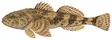
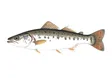
The slimy sculpin (Cottus cognatus) is a freshwater species of fish belonging to the family Cottidae, which is the largest sculpin family. They usually inhabit cold rocky streams or lakes across North America, ranging from the Great Lakes, southeast Minnesota, northeast Iowa, southwest Wisconsin and northeast Canada. Slimy sculpins have also been found roaming the cold streams of eastern Siberia. They are commonly confused with their closely related relatives, Mottled sculpin (Cottus bairdi), and with tubenose gobies who are both freshwater fishes as well. The slimy sculpin is a nocturnal fish that usually spends most of its time on the stream bottom and seeks shelter under rocks and logs, especially during spawning season. When it swims, it sometimes appears to be "hopping" along the bottom because of its inefficient ability to swim. This is partly due to the absence of a swim bladder, which normally gives buoyancy to a fish.
The fish has been studied in waters where there is current freshwater acidification. Sculpin were found to be less active and have lower rates of reproduction when found in these waters. For these reasons, slimy sculpin have been identified as a good indicator species for changes in acidification among lakes, ponds, and streams.
Distribution
Slimy sculpin are native to the United States, Canada, and the Russian Federation. In North America, slimy sculpins are found mainly in Lake Superior and its tributaries, Lake Michigan, and small cold streams found in southwestern Wisconsin, as well as the upper Mississippi River basin. They have also been found in other areas of North America such as southeast Minnesota (mostly in the Mississippi River), northeast Iowa, the upper Columbia River, Alaska, and most all of Canada. Slimy sculpins have also been found in eastern Siberia, Russia.
Physical description
The slimy sculpin can easily be distinguished by its pair of free and independent pelvic fins, as well as not possessing any scales. The first and second lobed dorsal fins are narrow and touch; the first dorsal fin has 7–9 soft spines while the second has 16–18 fin rays. The lateral line ends below the second dorsal fin and is incomplete, but the lateral line system still helps orient the slimy sculpin in streams by balancing the pressure of currents. The anal fin has 11–13 fin rays and the pelvic fins possess 13–14 fin rays and is in the thoracic position. The mouth and snout are terminal and very wide, and also contain a band of fine conical teeth in both the upper and lower jaw, but do not possess barbels. Adults weigh in around 3–7 g (0.11–0.25 oz) and measure up to 6.3–9.1 cm (2.5–3.6 in) long. The maximum weight of a slimy sculpin is 16.86 g (0.595 oz) and the maximum length is 12.8 cm (5.0 in). When the fish moves, it is an inconsistently rapid and darter-like motion that looks like it's hopping due to its irregular compressed body shape. The sides, back and head of slimy sculpins are dark brown/olive and are mottled with dark irregular blotches and a light cream/white belly. If slimy sculpins lie motionless for a while they camouflage in so well with their surroundings that it is almost impossible to distinguish them. Although they don't have any scales, they do have a few fine prickles anteriorly below the lateral line. Slimy sculpins often look very similar to the tubenose goby as well.
Habitat
Slimy sculpins often inhabit swift rocky-bottomed cold streams, oligotrophic lakes, and even brackish waters at a preferred temperature range of 9–14 °C (48–57 °F). Nocturnally active fishes, they usually roam around in deeper waters ranging from 37–108 metres (120–350 ft) deep. During the breeding season, females often lay their eggs under sheltered areas like large objects such as rocks or tree roots found at the bottom of lakes or streams that males will guard.
 Read the full species guide.