Riffle Sculpin

Cottus gulosus

Cottidae · freshwater water fish

3 minute read · Species guide

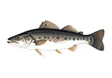
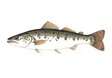
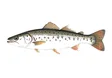
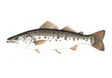
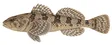
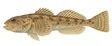
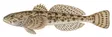
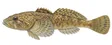
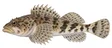
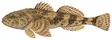
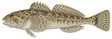
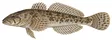
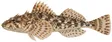
Riffle Sculpin field guide illustration

About Riffle Sculpin

The inland riffle sculpin (Cottus gulosus) is a species of fish in the family Cottidae. It is found in the United States, inhabiting the lower Columbia River drainage in Washington, to Morro Bay in California. It is also found in the Puget Sound drainage in Washington. It reaches a maximum length of 11.0 cm. It prefers rocky riffles of headwaters and creeks.

Taxonomy

The inland riffle sculpin was first formally described as Cottopsis gulosus by the French biologist Charles Frédéric Girard with its type locality given as the San Joaquin River in California. This species is classified by some authorities in the subgenus Cottopsis.

Description

Inland riffle sculpins have a brown/tan coloration mottled with dark brown spots and reddish hues around their fins. They have large mouths with a single median chin pore, and often times will feature joined dorsal fins. Despite not being considered particularly definitive in their appearance, riffle sculpins can still be identified through notes regarding specific spotting and ray numbers. In addition to their mottled color, riffle sculpins have a large black spot near the end of the first dorsal fin. They have 16-19 rays in their second dorsal fin, 15-16 rays in each of their pectoral fins, and 12-16 rays in their anal fin. Spawning male riffle sculpins can be seen to have a darker appearance coupled with an orange hue at the edge of the first dorsal fin.

Habitat

Inland riffle sculpins can often be found in headwater streams with riffles. When cohabiting alongside prickly sculpin, riffle sculpin choose to move towards the cooler areas of the stream. However, they are also found to have a preference for permanent streams with stable temperatures of 25-26 °C. When available, riffle sculpins will move towards areas of cover, such as rocks or overhanging banks.

Riffles act as preferred habitats to multiple species due to the many prey organisms that live in the area. However, the division of habitat within riffle sculpin and other species such as the speckled dace is driven primarily by temperature, as the metabolic rates of the sculpin rapidly increase alongside it.

Diet

Inland riffle sculpins maintain a diet primarily built of benthic invertebrates and active insect larvae. This includes insects like mayflies and caddisflies. If easily available, riffle sculpins will prey on small fish and amphipods, typically feeding during the night.

Article text: Wikipedia contributors, Inland riffle sculpin (source revision). Licensed under CC BY-SA 4.0. Retrieved 2026-10-11.
Diet and feeding

The FishTraits compilation records these diet categories for this species: invertebrates or larval fish; larger animal prey (a source category covering fish, crayfish, crabs, or frogs). These are broad categories, not a claim that every individual consumes every example in a category.

Reported feeding positions include bottom feeding. The compilation combines published observations; diets can vary with age, locality, and available food.

Habitat preferences

Reported habitat associations include streams and small rivers, creeks.

The source records associations with sand, gravel. An association indicates reported use, rather than an exclusive requirement.

The species is classified as tolerant of a broad range of salinities. This flag does not specify a salinity range for aquarium care.

Reproduction and parental care

The compilation reports a representative maturity age of 2 years. Its maturity field summarizes mean, median, or modal estimates, usually for females; male estimates can be used when female data are unavailable. It is not a fixed age at which every fish first breeds.

Recorded spawning months are Feb, Mar, Apr for the source’s reporting region (CA). This is a regional calendar, not a range-wide schedule.

The reproductive-guild classification includes guarding eggs or young at a spawning substrate or nest.

Size and recorded longevity

FishTraits reports a maximum total length of 11 centimetres. Some entries use an estimated asymptotic length; this value should not be treated as a certified record catch.

Recorded longevity in the compilation is 6 years. Wild observations were preferred, but captive records were accepted where wild records were unavailable, and unspecified records were assumed wild. The value is not a guaranteed wild lifespan or an aquarium life expectancy.

Range

Where it lives

Share of 537 GBIF observation records with a state location, across 4 states. The orange dots are USGS stream-survey sites where this species was caught.
0%
45.1%
Share of 537 GBIF observation records with a state location, across 4 states. The orange dots are USGS stream-survey sites where this species was caught.

A blank area on the dot layer usually means nobody sampled there, not that the fish is absent. Turn on “every survey site” to see where the survey looked.

The USGS stream survey caught it at 120 of its sites, in 3 states. That survey and the GBIF records are two different counts of two different things, so the site keeps them apart.

Habitat

Water and movement

Water
WoRMS records this species in fresh water.
Migration
Not migratory

Classification

Taxonomy

Kingdom
Animalia
Phylum
Chordata
Superclass
Actinopterygii
Class
Teleostei
Order
Scorpaeniformes
Family
Cottidae
Genus
Cottus
Species
Cottus gulosus
ITIS TSN
167234
WoRMS AphiaID
1021621
GBIF key
2334097

Common questions about Riffle Sculpin

What is the scientific name of Riffle Sculpin?
The scientific name is Cottus gulosus, in the family Cottidae. Classification follows ITIS.
Does Riffle Sculpin live in fresh water or salt water?
WoRMS records this species in fresh water.
Where has Riffle Sculpin been recorded in the United States?
GBIF has observations in 4 states, with the most records in Washington, Oregon, California. The map shows observation records, which do not establish the complete natural range.

Closest relatives

Other Cottus species

Same family

More Cottidae

Banded Sculpin17 states
Cottus carolinaeCottidaeNativeFresh
Bear Lake Sculpin2 states
Cottus extensusCottidaeNativeFresh
Black Sculpin4 states
Cottus baileyiCottidaeNativeFresh
Coastrange Sculpin4 states
Cottus aleuticusCottidaeNativeFreshSaltBrackish
Deepwater Sculpin7 states
Myoxocephalus thompsoniiCottidaeNativeFresh
Fourhorn Sculpin4 states
Myoxocephalus quadricornisCottidaeNativeFreshSaltBrackish
Klamath Lake Sculpin1 states
Cottus princepsCottidaeNativeFresh
Marbled Sculpin2 states
Cottus klamathensisCottidaeNativeFresh
Margined Sculpin2 states
Cottus marginatusCottidaeNativeFresh
Mottled Sculpin33 states
Cottus bairdiiCottidaeNative and introducedFreshSalt
Ozark Sculpin4 states
Cottus hypselurusCottidaeNativeFresh
Pacific Staghorn Sculpin4 states
Leptocottus armatusCottidaeNativeSaltBrackish
Paiute Sculpin8 states
Cottus beldingiiCottidaeNativeFresh
Pit Sculpin2 states
Cottus pitensisCottidaeNativeFresh
Potomac Sculpin4 states
Cottus girardiCottidaeNativeFresh
Prickly Sculpin5 states
Cottus asperCottidaeNative and introducedFreshSaltBrackish
Reticulate Sculpin3 states
Cottus perplexusCottidaeNativeFresh
Rough Sculpin1 states
Cottus asperrimusCottidaeNativeFresh
Sharpnose Sculpin4 states
Clinocottus acuticepsCottidaeNativeFreshSaltBrackish
Shorthead Sculpin5 states
Cottus confususCottidaeNativeFresh
Shoshone Sculpin1 states
Cottus greeneiCottidaeNativeFresh
Slender Sculpin1 states
Cottus tenuisCottidaeNativeFresh
Slimy Sculpin23 states
Cottus cognatusCottidaeNativeFreshBrackish
Spoonhead Sculpin8 states
Cottus riceiCottidaeNativeFresh

All 28 species in Cottidae