Deepwater Sculpin

Myoxocephalus thompsonii

Cottidae · freshwater water fish

4 minute read · Species guide

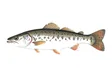
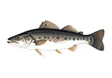
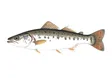
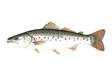
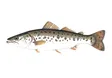
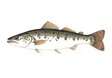
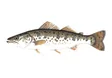
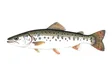
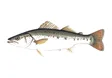
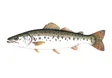
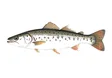
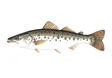
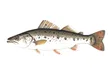
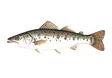
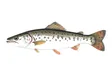
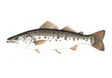
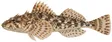
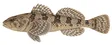
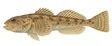
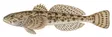
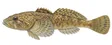
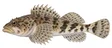
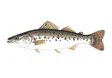
Deepwater Sculpin field guide illustration

About Deepwater Sculpin

The deepwater sculpin (Myoxocephalus thompsonii) is a North American freshwater fish in the family Psychrolutidae of suborder Cottoidei of Perciformes. It is a glacial relict, native to a limited number of deep, cold lakes in Canada and the United States.

Taxonomy

The deepwater sculpin was first described in 1851 by Charles Frédéric Girard under the name Triglopsis thompsonii. The description was based on specimens obtained by Spencer Fullerton Baird for the Smithsonian Institution from the stomachs of burbot (Lota lota) caught by anglers on Lake Ontario. The name Triglopsis referred to its resemblance to the piper gurnard (Trigla lyra). The specific epithet honored fellow naturalist Rev. Zadock Thompson of Burlington, Vermont.

The deepwater sculpin is morphologicallly and ecologically similar to the fourhorn sculpin (Myoxocephalus quadricornis), an Arctic and Eurasian species, and it was often considered to be a subspecies (Myoxocephalus quadricornis thompsonii). Other authors maintained it as a separate species within the same genus (Myoxocephalus thompsonii). Mitochondrial DNA analysis supported the view that the two species were distinct and that the deepwater sculpin evolved from the fourhorn sculpin during the early Pleistocene era.

Description

The deepwater sculpin is a small fish on average between 51–76 millimetres (2.0–3.0 in) in total length. Its body is generally flattened in shape and tapers from the head to the caudal peduncle. It does not have true scales but some spines are present on the opercle, body, and fins. The skin is mottled green, gray and brown on the back and whitish underneath. The deepwater sculpin can be distinguished from other freshwater sculpins in its range by a distinct gap between the two dorsal fins. It is most similar in appearance to the fourhorn sculpin, a fish found in salt and brackish water in the arctic but lacks the four bony spines found on the head of that species. Age estimation with otoliths suggests that deepwater sculpin can live up to nine years.

Distribution and habitat

The deepwater sculpin is found from the Gatineau through the Laurentian Great Lakes, Manitoba, and Saskatchewan to the Great Slave and Great Bear Lakes. It is also found in Waterton Lake within Waterton Lakes National Park and Glacier National Park. Within its range, it is limited to deep, well-oxygenated lakes with ties to former Wisconsinan glacial lakes or the Champlain Sea.

The deepwater sculpin inhabits the demersal zone. It prefers water temperatures that remain less than 5 °C (41 °F). In lakes in the southern part of its range, it has been observed only in deep water where temperature remains cold annually.

Diet

The deepwater sculpin feeds primarily on small crustaceans Mysis diluviana and Diporeia. They will also take chironomid larvae. Zooplankton are likely prey at the larval stage.

Reproduction

Spawning of deepwater sculpin is poorly described, but evaluations of gonadal development suggests that spawning consists of a singular event over a prolonged period in Lake Ontario. Deepwater sculpin eggs hatch from November to August, peaking in March. Larvae are initially pelagic, staying in the water column above the reach of their adults. Beginning in July, larvae that have grown to 2 centimetres (0.79 in) go through metamorphosis and settle to the bottom. Fish are thought to reach maturity at three years for females and two years for males.

Management

The deepwater sculpin is classified as of Least Concern by the IUCN based on the apparent stability populations globally. In Canada, it is considered a species at risk under the Species at Risk Act. Current threats include habitat loss, lake eutrophication, invasive species, and water pollution.

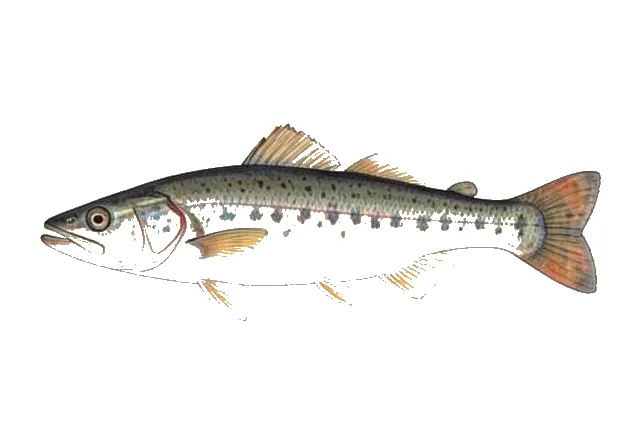
Although not directly used by humans, deepwater sculpin are a significant food source for other fish including lake trout (Salvelinus namaycush) and burbot. They are also an intermediate host for the parasites Bothriocephalus cuspidatus, and Proteocephalus sp. which are found in crustaceans they consume and other fish that prey upon them. The deepwater sculpin is also an indicator species for deepwater lake communities where it occurs. It is considered a model organism to those interested in zoogeography.

Article text: Wikipedia contributors, Deepwater sculpin (source revision). Licensed under CC BY-SA 4.0. Retrieved 2026-10-11.
Diet and feeding

The FishTraits compilation records these diet categories for this species: invertebrates or larval fish; fish or frog eggs. These are broad categories, not a claim that every individual consumes every example in a category.

Reported feeding positions include bottom feeding. The compilation combines published observations; diets can vary with age, locality, and available food.

Habitat preferences

Reported habitat associations include still-water habitats.

Reproduction and parental care

The compilation reports a representative maturity age of 3 years. Its maturity field summarizes mean, median, or modal estimates, usually for females; male estimates can be used when female data are unavailable. It is not a fixed age at which every fish first breeds.

Recorded spawning months are Jan, Feb, Mar, Apr, May, Jun, Jul, Aug, Sep, Oct, Nov, Dec for the source’s reporting region (Great Lakes). This is a regional calendar, not a range-wide schedule.

The reproductive-guild classification includes guarding eggs or young at a spawning substrate or nest.

Size and recorded longevity

FishTraits reports a maximum total length of 23.5 centimetres. Some entries use an estimated asymptotic length; this value should not be treated as a certified record catch.

Recorded longevity in the compilation is 7 years. Wild observations were preferred, but captive records were accepted where wild records were unavailable, and unspecified records were assumed wild. The value is not a guaranteed wild lifespan or an aquarium life expectancy.

Range

Where it lives

Share of 134 GBIF observation records with a state location, across 7 states.
0%
53.7%
Share of 134 GBIF observation records with a state location, across 7 states.

Habitat

Water and movement

Water
WoRMS records this species in fresh water.
Migration
Not migratory

Classification

Taxonomy

Kingdom
Animalia
Phylum
Chordata
Superclass
Actinopterygii
Class
Teleostei
Order
Scorpaeniformes
Family
Cottidae
Genus
Myoxocephalus
Species
Myoxocephalus thompsonii
ITIS TSN
167323
WoRMS AphiaID
567535
GBIF key
2333811
Outside the US
ITIS also files it in Canada.

Common questions about Deepwater Sculpin

What is the scientific name of Deepwater Sculpin?
The scientific name is Myoxocephalus thompsonii, in the family Cottidae. Classification follows ITIS.
Does Deepwater Sculpin live in fresh water or salt water?
WoRMS records this species in fresh water.
Where has Deepwater Sculpin been recorded in the United States?
GBIF has observations in 7 states, with the most records in Michigan, Wisconsin, Minnesota. The map shows observation records, which do not establish the complete natural range.

Closest relatives

Other Myoxocephalus species

Same family

More Cottidae

Banded Sculpin17 states
Cottus carolinaeCottidaeNativeFresh
Bear Lake Sculpin2 states
Cottus extensusCottidaeNativeFresh
Black Sculpin4 states
Cottus baileyiCottidaeNativeFresh
Coastrange Sculpin4 states
Cottus aleuticusCottidaeNativeFreshSaltBrackish
Fourhorn Sculpin4 states
Myoxocephalus quadricornisCottidaeNativeFreshSaltBrackish
Klamath Lake Sculpin1 states
Cottus princepsCottidaeNativeFresh
Marbled Sculpin2 states
Cottus klamathensisCottidaeNativeFresh
Margined Sculpin2 states
Cottus marginatusCottidaeNativeFresh
Mottled Sculpin33 states
Cottus bairdiiCottidaeNative and introducedFreshSalt
Ozark Sculpin4 states
Cottus hypselurusCottidaeNativeFresh
Pacific Staghorn Sculpin4 states
Leptocottus armatusCottidaeNativeSaltBrackish
Paiute Sculpin8 states
Cottus beldingiiCottidaeNativeFresh
Pit Sculpin2 states
Cottus pitensisCottidaeNativeFresh
Potomac Sculpin4 states
Cottus girardiCottidaeNativeFresh
Prickly Sculpin5 states
Cottus asperCottidaeNative and introducedFreshSaltBrackish
Reticulate Sculpin3 states
Cottus perplexusCottidaeNativeFresh
Riffle Sculpin4 states
Cottus gulosusCottidaeNativeFresh
Rough Sculpin1 states
Cottus asperrimusCottidaeNativeFresh
Sharpnose Sculpin4 states
Clinocottus acuticepsCottidaeNativeFreshSaltBrackish
Shorthead Sculpin5 states
Cottus confususCottidaeNativeFresh
Shoshone Sculpin1 states
Cottus greeneiCottidaeNativeFresh
Slender Sculpin1 states
Cottus tenuisCottidaeNativeFresh
Slimy Sculpin23 states
Cottus cognatusCottidaeNativeFreshBrackish
Spoonhead Sculpin8 states
Cottus riceiCottidaeNativeFresh

All 28 species in Cottidae