Slimy Sculpin

Cottus cognatus

Cottidae · freshwater and brackish water fish

6 minute read · Species guide

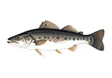
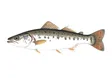
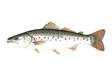
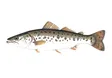
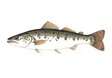
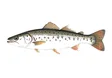
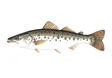
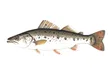
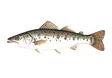
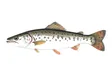
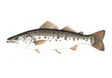
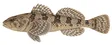
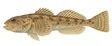
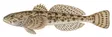
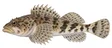
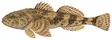
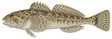
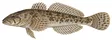
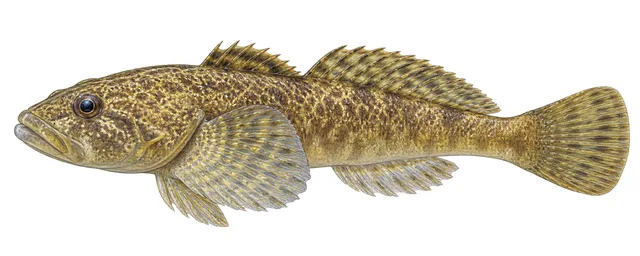
Slimy Sculpin field guide illustration

About Slimy Sculpin

The slimy sculpin (Cottus cognatus) is a freshwater species of fish belonging to the family Cottidae, which is the largest sculpin family. They usually inhabit cold rocky streams or lakes across North America, ranging from the Great Lakes, southeast Minnesota, northeast Iowa, southwest Wisconsin and northeast Canada. Slimy sculpins have also been found roaming the cold streams of eastern Siberia. They are commonly confused with their closely related relatives, Mottled sculpin (Cottus bairdi), and with tubenose gobies who are both freshwater fishes as well. The slimy sculpin is a nocturnal fish that usually spends most of its time on the stream bottom and seeks shelter under rocks and logs, especially during spawning season. When it swims, it sometimes appears to be "hopping" along the bottom because of its inefficient ability to swim. This is partly due to the absence of a swim bladder, which normally gives buoyancy to a fish.

The fish has been studied in waters where there is current freshwater acidification. Sculpin were found to be less active and have lower rates of reproduction when found in these waters. For these reasons, slimy sculpin have been identified as a good indicator species for changes in acidification among lakes, ponds, and streams.

Distribution

Slimy sculpin are native to the United States, Canada, and the Russian Federation. In North America, slimy sculpins are found mainly in Lake Superior and its tributaries, Lake Michigan, and small cold streams found in southwestern Wisconsin, as well as the upper Mississippi River basin. They have also been found in other areas of North America such as southeast Minnesota (mostly in the Mississippi River), northeast Iowa, the upper Columbia River, Alaska, and most all of Canada. Slimy sculpins have also been found in eastern Siberia, Russia.

Physical description

The slimy sculpin can easily be distinguished by its pair of free and independent pelvic fins, as well as not possessing any scales. The first and second lobed dorsal fins are narrow and touch; the first dorsal fin has 7–9 soft spines while the second has 16–18 fin rays. The lateral line ends below the second dorsal fin and is incomplete, but the lateral line system still helps orient the slimy sculpin in streams by balancing the pressure of currents. The anal fin has 11–13 fin rays and the pelvic fins possess 13–14 fin rays and is in the thoracic position. The mouth and snout are terminal and very wide, and also contain a band of fine conical teeth in both the upper and lower jaw, but do not possess barbels. Adults weigh in around 3–7 g (0.11–0.25 oz) and measure up to 6.3–9.1 cm (2.5–3.6 in) long. The maximum weight of a slimy sculpin is 16.86 g (0.595 oz) and the maximum length is 12.8 cm (5.0 in). When the fish moves, it is an inconsistently rapid and darter-like motion that looks like it's hopping due to its irregular compressed body shape. The sides, back and head of slimy sculpins are dark brown/olive and are mottled with dark irregular blotches and a light cream/white belly. If slimy sculpins lie motionless for a while they camouflage in so well with their surroundings that it is almost impossible to distinguish them. Although they don't have any scales, they do have a few fine prickles anteriorly below the lateral line. Slimy sculpins often look very similar to the tubenose goby as well.

Habitat

Slimy sculpins often inhabit swift rocky-bottomed cold streams, oligotrophic lakes, and even brackish waters at a preferred temperature range of 9–14 °C (48–57 °F). Nocturnally active fishes, they usually roam around in deeper waters ranging from 37–108 metres (120–350 ft) deep. During the breeding season, females often lay their eggs under sheltered areas like large objects such as rocks or tree roots found at the bottom of lakes or streams that males will guard.

Reproduction

Males often become dark on their backs and sides, and orange on their first dorsal fin during mating season. Males having orange on their first dorsal fin during breeding season is a survival disadvantage, meaning that they can be more easily preyed upon, yet still survive- showing to females that they are fit and have high reproductive success, therefore females are more attracted to these visually distinctive males. Males find nesting sites about 12 cm (4.7 in) wide for females, and attract them to these nesting sites until spawning occurs which usually takes place in late April and May under protected areas such as stones or tree roots. Once the eggs are laid, males drive the females out and lure a new female into the nest to lay her eggs. Males then protect the nest for 3–4 weeks containing many females' eggs until all of the eggs hatch. Male slimy sculpins have also been seen protecting their young after hatching as well. Slimy sculpins live up to 4–7 years.

Diet

The primary food slimy sculpin prey on is invertebrate benthic insects, which make up 85% or more of their diet, but has also been known to eat crustaceans, fish eggs, and small fish. The invertebrate benthic insects on which the sculpin prey includes aquatic insects such as mayflies, caddis flies, stoneflies, and dragonflies. Predaceous fish that eat slimy sculpin are lake trout, brook trout, salmon, northern pike, and burbot that are native to cool freshwater streams just like the slimy sculpin. There is speculation that sculpins have been known to prey on trout egg that were loose from the redds. However, sculpins predation on stoneflies has reduced stonefly predation on trout eggs and their young.

Conservation status

This species is currently at low concern for conservative action and does not need protection or major management plans.

Article text: Wikipedia contributors, Slimy sculpin (source revision). Licensed under CC BY-SA 4.0. Retrieved 2026-10-11.
Diet and feeding

The FishTraits compilation records these diet categories for this species: aquatic or other vascular plants; invertebrates or larval fish; larger animal prey (a source category covering fish, crayfish, crabs, or frogs). These are broad categories, not a claim that every individual consumes every example in a category.

Reported feeding positions include bottom feeding. The compilation combines published observations; diets can vary with age, locality, and available food.

Habitat preferences

Reported habitat associations include streams and small rivers, creeks, still-water habitats, springs or subterranean waters.

The source records associations with clay or silt, sand, gravel, cobble, boulders, bedrock, vegetation. An association indicates reported use, rather than an exclusive requirement.

Reproduction and parental care

The compilation reports a representative maturity age of 3 years. Its maturity field summarizes mean, median, or modal estimates, usually for females; male estimates can be used when female data are unavailable. It is not a fixed age at which every fish first breeds.

Recorded spawning months are Apr for the source’s reporting region (WI). This is a regional calendar, not a range-wide schedule.

The reproductive-guild classification includes guarding eggs or young at a spawning substrate or nest.

Size and recorded longevity

FishTraits reports a maximum total length of 12.1 centimetres. Some entries use an estimated asymptotic length; this value should not be treated as a certified record catch.

Recorded longevity in the compilation is 7 years. Wild observations were preferred, but captive records were accepted where wild records were unavailable, and unspecified records were assumed wild. The value is not a guaranteed wild lifespan or an aquarium life expectancy.

Record fish

The Wisconsin state record

  • Wisconsin0 lbs. 0.8 oz.

    Kinnickinnic River · St. Croix · 05/21/2016

Each figure is the state agency’s own certified record. The site holds record tables for 11 states so far, so a state missing here has not been read yet. It is not a state where this fish holds no record.

Range

Where it lives

Share of 3,558 GBIF observation records with a state location, across 23 states. The orange dots are USGS stream-survey sites where this species was caught.
0%
35.2%
Share of 3,558 GBIF observation records with a state location, across 23 states. The orange dots are USGS stream-survey sites where this species was caught.

A blank area on the dot layer usually means nobody sampled there, not that the fish is absent. Turn on “every survey site” to see where the survey looked.

The USGS stream survey caught it at 1,080 of its sites, in 17 states. That survey and the GBIF records are two different counts of two different things, so the site keeps them apart.

Habitat

Water and movement

Water
WoRMS records this species in fresh water and brackish water.
Migration
Not migratory

Classification

Taxonomy

Kingdom
Animalia
Phylum
Chordata
Superclass
Actinopterygii
Class
Teleostei
Order
Scorpaeniformes
Family
Cottidae
Genus
Cottus
Species
Cottus cognatus
ITIS TSN
167232
WoRMS AphiaID
159512
GBIF key
2334185
Outside the US
ITIS also files it in Canada.

Common questions about Slimy Sculpin

What is the scientific name of Slimy Sculpin?
The scientific name is Cottus cognatus, in the family Cottidae. Classification follows ITIS.
Does Slimy Sculpin live in fresh water or salt water?
WoRMS records this species in fresh water and brackish water.
Where has Slimy Sculpin been recorded in the United States?
GBIF has observations in 23 states, with the most records in New York, Vermont, Michigan. The map shows observation records, which do not establish the complete natural range.

Closest relatives

Other Cottus species

Same family

More Cottidae

Banded Sculpin17 states
Cottus carolinaeCottidaeNativeFresh
Bear Lake Sculpin2 states
Cottus extensusCottidaeNativeFresh
Black Sculpin4 states
Cottus baileyiCottidaeNativeFresh
Coastrange Sculpin4 states
Cottus aleuticusCottidaeNativeFreshSaltBrackish
Deepwater Sculpin7 states
Myoxocephalus thompsoniiCottidaeNativeFresh
Fourhorn Sculpin4 states
Myoxocephalus quadricornisCottidaeNativeFreshSaltBrackish
Klamath Lake Sculpin1 states
Cottus princepsCottidaeNativeFresh
Marbled Sculpin2 states
Cottus klamathensisCottidaeNativeFresh
Margined Sculpin2 states
Cottus marginatusCottidaeNativeFresh
Mottled Sculpin33 states
Cottus bairdiiCottidaeNative and introducedFreshSalt
Ozark Sculpin4 states
Cottus hypselurusCottidaeNativeFresh
Pacific Staghorn Sculpin4 states
Leptocottus armatusCottidaeNativeSaltBrackish
Paiute Sculpin8 states
Cottus beldingiiCottidaeNativeFresh
Pit Sculpin2 states
Cottus pitensisCottidaeNativeFresh
Potomac Sculpin4 states
Cottus girardiCottidaeNativeFresh
Prickly Sculpin5 states
Cottus asperCottidaeNative and introducedFreshSaltBrackish
Reticulate Sculpin3 states
Cottus perplexusCottidaeNativeFresh
Riffle Sculpin4 states
Cottus gulosusCottidaeNativeFresh
Rough Sculpin1 states
Cottus asperrimusCottidaeNativeFresh
Sharpnose Sculpin4 states
Clinocottus acuticepsCottidaeNativeFreshSaltBrackish
Shorthead Sculpin5 states
Cottus confususCottidaeNativeFresh
Shoshone Sculpin1 states
Cottus greeneiCottidaeNativeFresh
Slender Sculpin1 states
Cottus tenuisCottidaeNativeFresh
Spoonhead Sculpin8 states
Cottus riceiCottidaeNativeFresh

All 28 species in Cottidae