Description
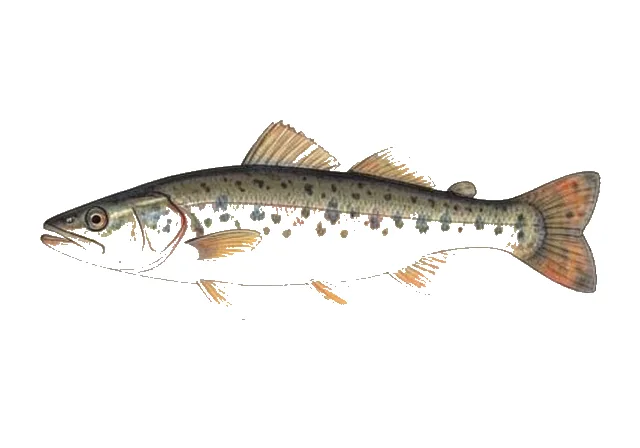
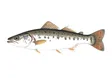
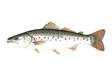
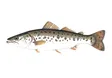
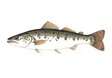
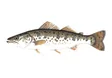
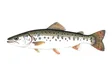
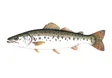
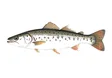
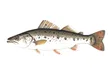
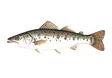
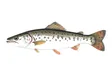
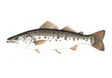
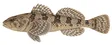
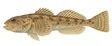
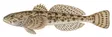
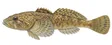
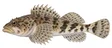
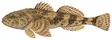
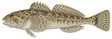
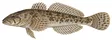
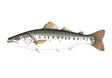
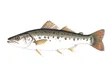
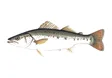
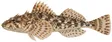
The Potomac sculpin has a large head and mouth, with the eyes located on the upper part of the head. It has fan-like pectoral fins, and connected dorsal fins. It has twenty-six or fewer lateral-lines pores. In addition, it has four pelvic fins and fifteen pectoral fins. It has spots of coloration on its chin. The sculpin has an average length of 7.8 centimeters (3.1 in) and has been recorded with a length of up to 14 centimeters (5.5 in).
Habitat
It lives in James River drainage area in Virginia, as well as the Potomac River drainage system in Virginia, West Virginia, Maryland and Pennsylvania. The sculpin lives in small to medium-sized streams, and is relatively tolerant of warm water temperatures. The stream conditioned favored by this species varies depending on sex. Male sculpins tend to live in silt or in aquatic plant growth. Female sculpins tend to live in streams with faster currents. C. girardi juveniles tend to live in streams with minimal current.
Behavior
The sculpin is a carnivore. It consumes copepods, mayflies nymphs and chironomids. Cottus girardi also occasionally consumes other species of fish.
The fish reproduces through spawning. They are believed to spawn in early spring or late winter.
Conservation status
This sculpin is considered to be of least concern by the International Union for Conservation of Nature because it has a large natural range, a large population and a number of subpopulations, and a relatively stable population trend over time. In addition, there are no major threats to the survival of the sculpin.
Article text: Wikipedia contributors, Potomac sculpin (source revision). Licensed under CC BY-SA 4.0. Retrieved 2026-10-11.
Diet and feeding
The FishTraits compilation records these diet categories for this species: invertebrates or larval fish; larger animal prey (a source category covering fish, crayfish, crabs, or frogs). These are broad categories, not a claim that every individual consumes every example in a category.
Reported feeding positions include bottom feeding. The compilation combines published observations; diets can vary with age, locality, and available food.
Habitat preferences
Reported habitat associations include medium to large rivers, streams and small rivers, creeks.
The source records associations with muck, clay or silt, sand, gravel, cobble, boulders, bedrock, vegetation, organic debris, large woody material. An association indicates reported use, rather than an exclusive requirement.
Reproduction and parental care
The compilation reports a representative maturity age of 2 years. Its maturity field summarizes mean, median, or modal estimates, usually for females; male estimates can be used when female data are unavailable. It is not a fixed age at which every fish first breeds.
Recorded spawning months are Feb, Mar, Apr for the source’s reporting region (VA). This is a regional calendar, not a range-wide schedule.
The reproductive-guild classification includes guarding eggs or young at a spawning substrate or nest.
Size and recorded longevity
FishTraits reports a maximum total length of 14 centimetres. Some entries use an estimated asymptotic length; this value should not be treated as a certified record catch.
Recorded longevity in the compilation is 5 years. Wild observations were preferred, but captive records were accepted where wild records were unavailable, and unspecified records were assumed wild. The value is not a guaranteed wild lifespan or an aquarium life expectancy.