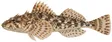
Coastrange Sculpin

Cottus aleuticus

Cottidae · freshwater and saltwater and brackish water fish

5 minute read · Species guide

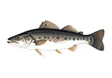
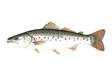
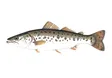
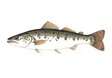
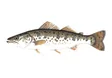
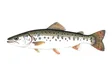
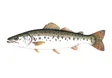
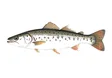
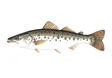
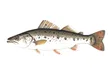
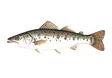
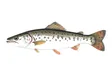
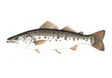
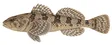
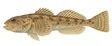
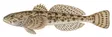
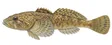
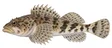
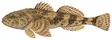
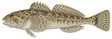
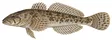
Coastrange Sculpin field guide illustration

About Coastrange Sculpin

The Coastrange sculpin (Cottus aleuticus) is a freshwater sculpin of the genus Cottus. They are commonly found near the ocean in western North America, namely Canada and the United States. It is also known as the Aleutian sculpin.

Taxonomy

While the name Uranidea microstoma has been used since 1880, it is unclear whether or not it corresponds to the Coastrange sculpin. The species was first officially described by Charles Henry Gilbert in 1896 from specimens he collected in streams of Unalaska island the year before. Cottus protrusus was described in 1933, but it has since been found to be a synonym.

Description

The Coastrange sculpin can be distinguished from other species due to several unique traits. It only has one pore under its chin, no palatine teeth, and no distinct gap between the two dorsal fins. Adults can grow to be as long as 17 cm, although their average length is only 6 cm. Their maximum reported life span is 8 years. Breeding female Coastrange sculpins are generally larger than males. Breeding males are almost entirely black with a tiny bit of orange trim on the first dorsal fin.

Cultus Lake population

At Cultus Lake in British Columbia, one of the three areas where isolated populations of Coastrange sculpin exist, there exists a form smaller than the norm that lives in the lake depths and migrates to the surface at night to feed. The Adults of this subtype, while smaller are fully mature save for the enlarged head pores that juveniles of the main form exhibit. There is no clear explanation for what produced this phenotype, which differs from all other populations.

Distribution and habitat

The Coastrange sculpin is found exclusively along the Pacific coast of North America. They range from Bristol bay and the Aleutian Islands of Alaska, south to Santa Barbara County, California, Though they can also be found sporadically in streams as far south as Mendocino County There are also isolated populations in Alaska's Kobuk river, Lake Washington of Washington state, and British Columbia's Cultus Lake.

Living mostly in rivers and streams, Coastrange sculpins are found in riffles and glides with coarse or cobble stone bottoms from.20m to 1.0m in depth. At night, they move into shallower, calmer waters on the edges of rivers. It occurs in virtually the same habitats as the Prickly sculpin (Cottus asper) and the two species encounter one another and interact regularly. They also tend to encounter salmon and the Three-spined stickleback as well.

Behavior

Coastrange sculpins are solitary, nocturnal carnivores and known to eat nymphs and larvae of insects such as mayflies, stoneflies, and chironomids (and other aquatic invertebrates). They are also known to eat the eggs and fry of the pink and chum salmon. Their larvae are free swimming/floating and feed mostly on plankton, however they become bottom dwellers after they transform and eat the same diet as the adults, except that they take smaller organisms as prey. They are also eaten by coastal cutthroat trout, coho and sockeye salmon, and Dolly Varden trout.

Spawning

Coastrange sculpins normally spawn in spring, when the water warms past 6 degrees C, though eggs have been found as early as January in British Columbia. During spawning both males and females migrate downstream, stopping just short of estuaries. Males both excavate and defend the nesting site, which is normally under flat rocks. During courtship, a female approaches the nesting site and the male begins a series of head nods, shakes and flares of the gill covers. Sometimes the body undulates during the head movements, sometimes the undulations exist without head motion altogether. Several of these movements are not for visual effect but for producing a distinct sound to attract the female. If the male has gained interest, the female will move closer into the nest site and the male will bite her on the cheek, side, tail, or pectoral fin; the male may even take the female's head into his mouth. If the female is able to lay eggs, she will always enter the nest after being bitten. Inside the nest, the female turns upside down and releases eggs that the male fertilizes. Males will spawn with multiple females this way, and may also spawn with each female multiple times.

Coastrange sculpin eggs are yellow to orange in color and are deposited on the underside of the flat rock at the top of the nest. They are less prolific than other sculpins and only produce an average of ~1000 eggs. Larvae are active immediately after hatching and begin a nocturnal migration further downstream, where they usually grow for about a year in estuaries before returning to freshwater.

Article text: Wikipedia contributors, Coastrange sculpin (source revision). Licensed under CC BY-SA 4.0. Retrieved 2026-10-11.
Diet and feeding

The FishTraits compilation records these diet categories for this species: invertebrates or larval fish; larger animal prey (a source category covering fish, crayfish, crabs, or frogs); fish or frog eggs. These are broad categories, not a claim that every individual consumes every example in a category.

Reported feeding positions include bottom feeding. The compilation combines published observations; diets can vary with age, locality, and available food.

Habitat preferences

Reported habitat associations include medium to large rivers, still-water habitats.

The source records associations with gravel, cobble, organic debris, large woody material. An association indicates reported use, rather than an exclusive requirement.

The species is classified as tolerant of a broad range of salinities. This flag does not specify a salinity range for aquarium care.

Reproduction and parental care

The compilation reports a representative maturity age of 2.5 years. Its maturity field summarizes mean, median, or modal estimates, usually for females; male estimates can be used when female data are unavailable. It is not a fixed age at which every fish first breeds.

Recorded spawning months are Jan, Feb, Mar, Apr for the source’s reporting region (CA). This is a regional calendar, not a range-wide schedule.

Size and recorded longevity

FishTraits reports a maximum total length of 17 centimetres. Some entries use an estimated asymptotic length; this value should not be treated as a certified record catch.

Recorded longevity in the compilation is 8 years. Wild observations were preferred, but captive records were accepted where wild records were unavailable, and unspecified records were assumed wild. The value is not a guaranteed wild lifespan or an aquarium life expectancy.

Spawning movements

The compilation records significant spawning-related movement. Its combined migration flag covers movements within fresh water as well as between rivers and the sea; this flag alone does not establish which migration pattern applies.

Range

Where it lives

Share of 709 GBIF observation records with a state location, across 4 states. The orange dots are USGS stream-survey sites where this species was caught.
0%
33.6%
Share of 709 GBIF observation records with a state location, across 4 states. The orange dots are USGS stream-survey sites where this species was caught.

A blank area on the dot layer usually means nobody sampled there, not that the fish is absent. Turn on “every survey site” to see where the survey looked.

The USGS stream survey caught it at 82 of its sites, in 3 states. That survey and the GBIF records are two different counts of two different things, so the site keeps them apart.

Habitat

Water and movement

Water
WoRMS records this species in fresh water, brackish water and the sea.
Migration
Migratory
Pattern
Disagreement
3 published references do not agree on the pattern: Amphidromous, Catadromous, Potamodromous. The site shows every assignment rather than picking one.

Classification

Taxonomy

Kingdom
Animalia
Phylum
Chordata
Superclass
Actinopterygii
Class
Teleostei
Order
Scorpaeniformes
Family
Cottidae
Genus
Cottus
Species
Cottus aleuticus
ITIS TSN
167230
WoRMS AphiaID
274366
GBIF key
2334078
Outside the US
ITIS also files it in Canada.

Common questions about Coastrange Sculpin

What is the scientific name of Coastrange Sculpin?
The scientific name is Cottus aleuticus, in the family Cottidae. Classification follows ITIS.
Does Coastrange Sculpin live in fresh water or salt water?
WoRMS records this species in fresh water, brackish water and the sea.
Where has Coastrange Sculpin been recorded in the United States?
GBIF has observations in 4 states, with the most records in Alaska, Washington, California. The map shows observation records, which do not establish the complete natural range.

Closest relatives

Other Cottus species

Same family

More Cottidae

Banded Sculpin17 states
Cottus carolinaeCottidaeNativeFresh
Bear Lake Sculpin2 states
Cottus extensusCottidaeNativeFresh
Black Sculpin4 states
Cottus baileyiCottidaeNativeFresh
Deepwater Sculpin7 states
Myoxocephalus thompsoniiCottidaeNativeFresh
Fourhorn Sculpin4 states
Myoxocephalus quadricornisCottidaeNativeFreshSaltBrackish
Klamath Lake Sculpin1 states
Cottus princepsCottidaeNativeFresh
Marbled Sculpin2 states
Cottus klamathensisCottidaeNativeFresh
Margined Sculpin2 states
Cottus marginatusCottidaeNativeFresh
Mottled Sculpin33 states
Cottus bairdiiCottidaeNative and introducedFreshSalt
Ozark Sculpin4 states
Cottus hypselurusCottidaeNativeFresh
Pacific Staghorn Sculpin4 states
Leptocottus armatusCottidaeNativeSaltBrackish
Paiute Sculpin8 states
Cottus beldingiiCottidaeNativeFresh
Pit Sculpin2 states
Cottus pitensisCottidaeNativeFresh
Potomac Sculpin4 states
Cottus girardiCottidaeNativeFresh
Prickly Sculpin5 states
Cottus asperCottidaeNative and introducedFreshSaltBrackish
Reticulate Sculpin3 states
Cottus perplexusCottidaeNativeFresh
Riffle Sculpin4 states
Cottus gulosusCottidaeNativeFresh
Rough Sculpin1 states
Cottus asperrimusCottidaeNativeFresh
Sharpnose Sculpin4 states
Clinocottus acuticepsCottidaeNativeFreshSaltBrackish
Shorthead Sculpin5 states
Cottus confususCottidaeNativeFresh
Shoshone Sculpin1 states
Cottus greeneiCottidaeNativeFresh
Slender Sculpin1 states
Cottus tenuisCottidaeNativeFresh
Slimy Sculpin23 states
Cottus cognatusCottidaeNativeFreshBrackish
Spoonhead Sculpin8 states
Cottus riceiCottidaeNativeFresh

All 28 species in Cottidae