Topeka Shiner

Notropis topeka

Leuciscidae · freshwater water fish

3 minute read · Species guide

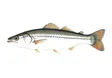
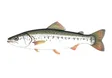
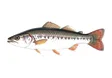
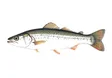
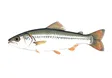
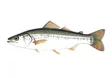
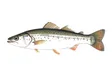
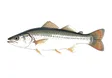
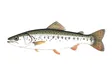
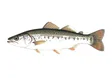
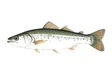
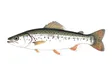
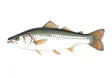
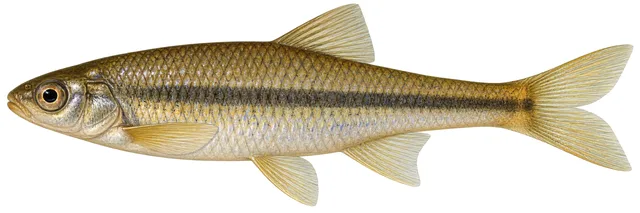
Topeka Shiner field guide illustration

About Topeka Shiner

The Topeka shiner (Miniellus topeka) is a species of freshwater ray-finned fish belonging to the family Leuciscidae, the shiners, daces and minnows. This species is found in North America.

Description

The Topeka shiner is a type of minnow that does not grow longer than a few inches. This minnow is a shiny silver color. Its main physical characteristic is the black colored stripe that runs along the side of the body.

Distribution and habitat

Miniellus topeka was formerly broadly distributed in the northwestern Mississippi River basin, from southern Minnesota and eastern South Dakota south to central Missouri and western Kansas.

The Topeka shiner lives mainly in prairie streams. In order for the Topeka shiner to survive the water must be cold and clear. The streams in which this Minnow lives are typically consistent and run year long. In cases in which the stream does dry up, the Topeka Shiner needs to find a new stream or permanent body of water to survive. Oxbow lakes are especially important habitat for Topeka shiners, as in faster moving bodies of water, they are easily picked off.

Conservation and threats

The Topeka shiner was listed as Endangered by the U.S. Fish and Wildlife Service in 1998. The species is endangered primarily because of the water quality need. This species relies on clean water to survive. When the streams water quality changes the Topeka shiner has difficulty adjusting to the changes. The water quality can change due to both environmental and human impact. A main cause for the decline in population is human activity. The water quality changes and the minnow are impacted when natural plant life is taken away. Any type of construction such as road work, new homes and other types of development can affect the habitat in which the Topeka shiner lives.

In particular, the infilling of oxbow lakes due to agricultural runoff -induced erosion and channelization robbed the shiners of slow currents and vegetation to spawn in and hide from predators. However, thanks to oxbow restoration efforts by the Iowa Topeka Shiner Recovery Partnership, comprising the Iowa Soybean Association, the United States Fish and Wildlife Service, the Practical Farmers of Iowa, and The Nature Conservancy of Iowa, the US Fish and Wildlife Service recommended that the Topeka shiners be downlisted to Threatened status in 2021. Oxbow restoration can be as simple as digging out excess sediment and connecting rivers to oxbows.

Article text: Wikipedia contributors, Topeka shiner (source revision). Licensed under CC BY-SA 4.0. Retrieved 2026-10-12.


Diet and feeding

The FishTraits compilation records these diet categories for this species: invertebrates or larval fish. These are broad categories, not a claim that every individual consumes every example in a category.

Reported feeding positions include bottom feeding. The compilation combines published observations; diets can vary with age, locality, and available food.

Habitat preferences

Reported habitat associations include creeks.

The source records associations with sand, gravel. An association indicates reported use, rather than an exclusive requirement.

Reproduction and parental care

The compilation reports a representative maturity age of 2 years. Its maturity field summarizes mean, median, or modal estimates, usually for females; male estimates can be used when female data are unavailable. It is not a fixed age at which every fish first breeds.

Recorded spawning months are May, Jun, Jul for the source’s reporting region (KS). This is a regional calendar, not a range-wide schedule.

The reproductive-guild classification includes hiding a brood without subsequent guarding.

Size and recorded longevity

FishTraits reports a maximum total length of 7.6 centimetres. Some entries use an estimated asymptotic length; this value should not be treated as a certified record catch.

Recorded longevity in the compilation is 3 years. Wild observations were preferred, but captive records were accepted where wild records were unavailable, and unspecified records were assumed wild. The value is not a guaranteed wild lifespan or an aquarium life expectancy.

Range

Where it lives

Share of 569 GBIF observation records with a state location, across 6 states. The orange dots are USGS stream-survey sites where this species was caught.
0%
70.5%
Share of 569 GBIF observation records with a state location, across 6 states. The orange dots are USGS stream-survey sites where this species was caught.

A blank area on the dot layer usually means nobody sampled there, not that the fish is absent. Turn on “every survey site” to see where the survey looked.

The USGS stream survey caught it at 27 of its sites, in 2 states. That survey and the GBIF records are two different counts of two different things, so the site keeps them apart.

Habitat

Water and movement

Water
WoRMS records this species in fresh water.
Migration
Undetermined

Classification

Taxonomy

Kingdom
Animalia
Phylum
Chordata
Superclass
Actinopterygii
Class
Teleostei
Order
Cypriniformes
Genus
Notropis
Species
Notropis topeka
ITIS TSN
163471
WoRMS AphiaID
1019788
GBIF key
2362289

Common questions about Topeka Shiner

What is the scientific name of Topeka Shiner?
The scientific name is Notropis topeka, in the family Leuciscidae. Classification follows ITIS.
Does Topeka Shiner live in fresh water or salt water?
WoRMS records this species in fresh water.
Where has Topeka Shiner been recorded in the United States?
GBIF has observations in 6 states, with the most records in Kansas, Minnesota, Missouri. The map shows observation records, which do not establish the complete natural range.

Closest relatives

Other Notropis species

Arkansas River Shiner5 states
Notropis girardiLeuciscidaeNative and introducedFresh
Bedrock Shiner3 states
Notropis rupestrisLeuciscidaeNativeFresh
Bigeye Shiner17 states
Notropis boopsLeuciscidaeNative and introducedFresh
Bigmouth Shiner21 states
Notropis dorsalisLeuciscidaeNative and introducedFresh
Blackchin Shiner13 states
Notropis heterodonLeuciscidaeNativeFresh
Blackmouth Shiner3 states
Notropis melanostomusLeuciscidaeNativeFresh
Blacknose Shiner21 states
Notropis heterolepisLeuciscidaeNative and introducedFresh
Blackspot Shiner5 states
Notropis atrocaudalisLeuciscidaeNativeFresh
Bluntnose Shiner3 states
Notropis simusLeuciscidaeNativeFresh
Bridle Shiner22 states
Notropis bifrenatusLeuciscidaeNativeFresh
Burrhead Shiner3 states
Notropis asperifronsLeuciscidaeNativeFresh
Cahaba Shiner1 states
Notropis cahabaeLeuciscidaeNativeFresh
Cape Fear Shiner1 states
Notropis mekistocholasLeuciscidaeNativeFresh
Carmine Shiner16 states
Notropis percobromusLeuciscidaeNativeFresh
Channel Shiner15 states
Notropis wickliffiLeuciscidaeNativeFresh
Chihuahua Shiner1 states
Notropis chihuahuaLeuciscidaeNative and introducedFresh
Chub Shiner4 states
Notropis potteriLeuciscidaeNative and introducedFresh
Coastal Shiner8 states
Notropis petersoniLeuciscidaeNativeFresh
Comely Shiner11 states
Notropis amoenusLeuciscidaeNative and introducedFresh
Coosa Shiner9 states
Notropis xaenocephalusLeuciscidaeNative and introducedFresh
Dusky Shiner6 states
Notropis cummingsaeLeuciscidaeNativeFresh
Emerald Shiner35 states
Notropis atherinoidesLeuciscidaeNative and introducedFresh
Fluvial Shiner3 states
Notropis edwardraneyiLeuciscidaeNativeFresh
Ghost Shiner16 states
Notropis buchananiLeuciscidaeNative and introducedFresh

Same family

More Leuciscidae

Alabama Shiner4 states
Cyprinella callistiaLeuciscidaeNativeFresh
Allegheny Pearl Dace19 states
Margariscus margaritaLeuciscidaeNative and introducedFresh
Altamaha Shiner1 states
Cyprinella xaenuraLeuciscidaeNativeFresh
Alvord Chub2 states
Siphateles alvordensisLeuciscidaeNativeFresh
Apalachee Shiner3 states
Pteronotropis grandipinnisLeuciscidaeNativeFresh
Arkansas River Shiner5 states
Notropis girardiLeuciscidaeNative and introducedFresh
Arroyo Chub1 states
Gila orcuttiiLeuciscidaeNative and introducedFresh
Bandfin Shiner5 states
Luxilus zonistiusLeuciscidaeNative and introducedFresh
Bannerfin Shiner5 states
Cyprinella leedsiLeuciscidaeNativeFresh
Beautiful Shiner3 states
Cyprinella formosaLeuciscidaeNativeFresh
Bedrock Shiner3 states
Notropis rupestrisLeuciscidaeNativeFresh
Bigeye Chub25 states
Hybopsis amblopsLeuciscidaeNative and introducedFresh
Bigeye Shiner17 states
Notropis boopsLeuciscidaeNative and introducedFresh
Bigmouth Chub3 states
Nocomis platyrhynchusLeuciscidaeNativeFresh
Bigmouth Shiner21 states
Notropis dorsalisLeuciscidaeNative and introducedFresh
Blackchin Shiner13 states
Notropis heterodonLeuciscidaeNativeFresh
Blackmouth Shiner3 states
Notropis melanostomusLeuciscidaeNativeFresh
Blacknose Shiner21 states
Notropis heterolepisLeuciscidaeNative and introducedFresh
Blackside Dace2 states
Chrosomus cumberlandensisLeuciscidaeNativeFresh
Blackspot Shiner5 states
Notropis atrocaudalisLeuciscidaeNativeFresh
Blacktail Shiner14 states
Cyprinella venustaLeuciscidaeNative and introducedFresh
Blacktip Shiner4 states
Lythrurus atrapiculusLeuciscidaeNative and introducedFresh
Bleeding Shiner8 states
Luxilus zonatusLeuciscidaeNativeFresh
Blotched Chub6 states
Erimystax insignisLeuciscidaeNativeFresh

All 267 species in Leuciscidae